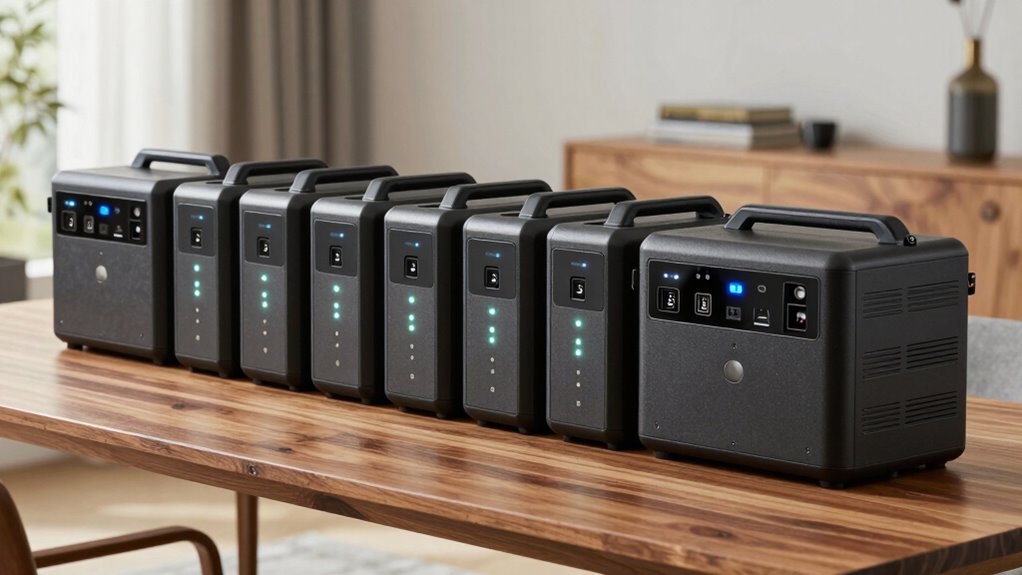

When selecting a home backup battery power station, the main challenge lies in balancing capacity, portability, and affordability. The Jackery Explorer 1000 v2 stands out as the best overall due to its reliable performance and user-friendly design. For those prioritizing sheer capacity, the PECRON F5000LFP offers massive power output, while the Jackery HomePower 3000 provides a great middle ground with solid features at a reasonable price. The tradeoffs often come down to size, weight, and price versus power capacity and longevity. Continue reading for a detailed breakdown of these options to find the best fit for your backup needs.

Get the latest gadgets delivered free with Prime
- Fast, free delivery on millions of items
- Prime Video, Amazon Music and more included
- Member-only deals all year
Complete the kit


Key Takeaways
- Top picks balance capacity and portability, with the Jackery Explorer 1000 v2 leading as the most versatile option.
- Massive capacity models like PECRON F5000LFP are ideal for prolonged outages but are bulkier and more expensive.
- LiFePO4 battery technology provides longer lifespan and safer operation, favored in premium models.
- Price varies significantly based on capacity and features; high-capacity units tend to be more costly but offer more power.
- User needs—whether for emergency backup, outdoor use, or regular home use—determine the best choice, with some units excelling in portability and others in raw power.
| UDPOWER S1200 1190Wh Solar Generator Kit with 120W Foldable Solar Panel |  | Best Overall Home Backup Power Station | Capacity: 1190Wh | Running Wattage: 1200W | Peak Wattage: 1800W | VIEW ON AMAZON | See Our Full Breakdown |
| Jackery Explorer 1000 v2 Portable Power Station, 1070Wh, 1500W |  | Best for Portability and Fast Charging | Capacity: 1070Wh | AC Output: 1500W | Battery Type: LFP (LiFePO4) | VIEW ON AMAZON | See Our Full Breakdown |
| LIBRIDS Portable Power Station 640Wh, 1200W Surge, Solar Generator with 4 AC Outlets |  | Best Compact Backup with Fast Recharge | Capacity: 640Wh | Output Power: 600W | Surge Power: 1200W | VIEW ON AMAZON | See Our Full Breakdown |
| ABOK Ark3600 Portable Power Station 3600W, 3840Wh LiFePO4 Battery |  | Best Large Capacity for Whole House Backup | Capacity: 3840Wh (expandable to 11520Wh) | Rated Output: 3600W | Peak Power: 4500W | VIEW ON AMAZON | See Our Full Breakdown |
| STARYLINE 1000W Portable Power Station, 1024Wh LiFePO4 Solar Generator for Outdoor & Home Backup |  | Best Balanced Power for Daily Use | Capacity: 1024Wh | Continuous Output: 1000W | Peak/Surge Output: 2000W | VIEW ON AMAZON | See Our Full Breakdown |
| Jackery HomePower 3000 Portable Power Station, 3072Wh, 3600W AC Output |  | Best Overall for Home Backup Balance of Power and Portability | Capacity: 3072Wh | AC Output: 3600W | Surge Power: 7200W | VIEW ON AMAZON | See Our Full Breakdown |
| PECRON F5000LFP Power Station – 5120Wh LiFePO4 Solar Generator with 7200W AC Output |  | Best for Heavy-Duty, Multi-Day Whole-Home Backup | Capacity: 5120Wh (expandable to 35.8kWh) | AC Output: 7200W | Voltage: 120V/240V dual | VIEW ON AMAZON | See Our Full Breakdown |
| BLUETTI AC180 Portable Power Station 1152Wh 1800W LiFePO4 Solar Generator |  | Best Compact and Fast-Charging for Emergency & Outdoor Use | Capacity: 1152Wh | AC Output: 1800W | Boosted Power: 2700W | VIEW ON AMAZON | See Our Full Breakdown |
| Anker SOLIX S2000 Portable Power Station – 2,010Wh, 3,000W Peak, Home Backup |  | Best for Long-Lasting, Compact Home Backup with Extended Battery Life | Capacity: 2010Wh | Peak Output: 3000W | Battery Type: LFP | VIEW ON AMAZON | See Our Full Breakdown |
| Jackery HomePower 3600 Plus Power Station, 3584Wh, 3600W AC Output |  | Best for Expandable High-Capacity Home Backup with Speed | Capacity: 3584Wh | AC Output: 3600W | Parallel Output: 7200W | VIEW ON AMAZON | See Our Full Breakdown |
| home backup battery power station | Capacity | Battery Type | Weight | AC Output |
|---|---|---|---|---|
| UDPOWER S1200 1190Wh Solar Gen | 1190Wh | LiFePO4 (4,000+ cycles) | 25.8 lbs | — |
| Jackery Explorer 1000 v2 Porta | 1070Wh | LFP (LiFePO4) | 23.8 lbs | 1500W |
| LIBRIDS Portable Power Station | 640Wh | LiFePO4 | — | — |
| ABOK Ark3600 Portable Power St | 3840Wh (expandable to 11520Wh) | EV-Grade LiFePO4 | — | — |
| STARYLINE 1000W Portable Power | 1024Wh | LiFePO4 | 27.73 lbs | — |
| Jackery HomePower 3000 Portabl | 3072Wh | — | 59.5 pounds | 3600W |
| PECRON F5000LFP Power Station | 5120Wh (expandable to 35.8kWh) | — | — | 7200W |
| BLUETTI AC180 Portable Power S | 1152Wh | — | — | 1800W |
| Anker SOLIX S2000 Portable Pow | 2010Wh | LFP | 35.7 lbs | — |
| Jackery HomePower 3600 Plus Po | 3584Wh | — | — | 3600W |
More Details on Our Top Picks
UDPOWER S1200 1190Wh Solar Generator Kit with 120W Foldable Solar Panel
The UDPOWER S1200 stands out for its impressive capacity and versatile charging features, making it ideal for reliable home backup or off-grid use. Its 1190Wh LiFePO4 battery offers a long lifespan of over 4,000 cycles, surpassing many competitors like the Jackery Explorer 1000 v2, which has a similar battery but slightly less capacity. The 14 ports provide ample device charging options, and the sub-0.01s UPS switch ensures critical devices like CPAP machines stay powered during outages. The included 120W waterproof foldable solar panel enhances renewable energy options, though its weight at 25.8 lbs makes it less portable, and components arriving separately could delay full setup. This pick makes the most sense for users needing dependable, high-capacity backup that can handle multiple devices simultaneously with renewable charging flexibility.
Pros:- Long-lasting LiFePO4 battery with 15+ year lifespan and 4,000+ cycles
- Fast UPS switchover (<0.01s) for critical device protection
- 14 ports for charging multiple devices simultaneously
- Weather-resistant 120W foldable solar panel for renewable energy
Cons:- Heavy at 25.8 lbs, limiting portability for frequent movers
- Solar panel ships separately, potentially delaying full use
Best for: Homeowners seeking a robust, all-in-one backup system capable of powering multiple devices during outages or off-grid scenarios.
Not ideal for: Individuals prioritizing lightweight, ultra-portable units for frequent travel or camping due to its weight and size.
- Capacity:1190Wh
- Running Wattage:1200W
- Peak Wattage:1800W
- Battery Type:LiFePO4 (4,000+ cycles)
- AC Outlets:5
- Solar Panel:120W foldable, waterproof
- UPS Switchover:<0.01s
- Weight:25.8 lbs
Our verdict“This model is best for users who need a durable, high-capacity backup power station with renewable options and multiple device support.”
Jackery Explorer 1000 v2 Portable Power Station, 1070Wh, 1500W
The Jackery Explorer 1000 v2 emphasizes portability with its lightweight 23.8 lbs design and quick recharge capabilities, making it ideal for camping, RV trips, or emergency use. Its 1070Wh capacity and 1500W AC output (with 3000W surge) power a wide range of appliances, including fridge and small appliances, similar to the larger ABOK Ark3600 but in a much more portable form. The fast charging in just 1.7 hours (or 1 hour in emergency mode) is a major advantage, though the need to manually enable fast charging via app can be a minor hassle. Its LFP battery promises over 4,000 cycles and a lifespan exceeding 10 years, yet solar charging requires Jackery panels, which adds to the cost. This makes the Explorer 1000 v2 perfect for users who prioritize quick recharge and ease of transport over sheer capacity or solar versatility.
Pros:- Fast recharge: 0-100% in 1.7 hours via AC or emergency mode
- Lightweight at 23.8 lbs with foldable handle for portability
- Long lifespan with 4,000+ cycles and 10+ years durability
- Versatile outputs including three AC outlets and 100W USB-C
Cons:- Solar charging only compatible with Jackery panels, limiting flexibility
- Fast charging feature must be manually activated via app each time
Best for: Campers and outdoor enthusiasts who need reliable power on the go with fast recharge times and portable design.
Not ideal for: Home users seeking maximum capacity or off-grid solar flexibility, as solar panels are not included and the capacity is moderate.
- Capacity:1070Wh
- AC Output:1500W
- Battery Type:LFP (LiFePO4)
- Battery Lifespan:4000+ cycles, 10+ years
- Weight:23.8 lbs
- Full Charge Time:1.7 hours
- Ports:3 AC, 2 USB-C, USB-A, DC
Our verdict“This pick is ideal for outdoor users who need a portable, fast-charging power station with reliable long-term battery life.”
LIBRIDS Portable Power Station 640Wh, 1200W Surge, Solar Generator with 4 AC Outlets
The LIBRIDS 640Wh offers a compact yet capable solution for critical device backup, especially with its 10ms UPS that keeps essentials like WiFi routers or CPAP machines running seamlessly. Its 4 AC outlets and 8 total ports provide enough flexibility for small appliances and electronics, though its 600W continuous output limits larger devices, unlike the higher capacity ABOK Ark3600. The ultra-fast 1.5-hour AC recharge makes it appealing for quick turnarounds, but its smaller battery capacity makes it less suitable for extended outages. The pure sine wave inverter ensures safe power for sensitive electronics, and the 5-year warranty adds confidence. This unit is ideal for users who need reliable, fast backup for essential devices without the bulk of larger systems.
Pros:- Rapid 1.5-hour recharge for quick turnaround
- 10ms UPS backup preserves critical device operation
- Pure sine wave inverter safe for sensitive electronics
- Compact design with multiple ports
Cons:- Limited continuous output of 600W restricts larger devices
- Not suitable for long-term or high-power use due to capacity
Best for: Homeowners or small office users needing quick, reliable backup for critical electronics during brief outages.
Not ideal for: Those needing to power high-wattage appliances or for long-term off-grid setups, as its capacity and continuous power are limited.
- Capacity:640Wh
- Output Power:600W
- Surge Power:1200W
- Battery Type:LiFePO4
- AC Outlets:4
- AC Charge Time:1.5 hours
- UPS Switch Time:10ms
- Warranty:5 years
Our verdict“This unit fits well for users seeking a small, fast-charging backup for essential devices during brief outages.”
ABOK Ark3600 Portable Power Station 3600W, 3840Wh LiFePO4 Battery
The ABOK Ark3600 is designed for serious power needs, with a massive 3840Wh capacity and expandable up to 11,520Wh, making it suitable for whole-house backup or large RV setups. Its 3600W rated output (peaking at 4500W) can handle most household appliances, outperforming smaller capacities like the LIBRIDS or Jackery in sheer power. The fast recharge in just 1.29 hours with AC and solar combined adds convenience, while the 15 ports support a wide range of devices. Despite its size and weight, the unit’s portability features like wheels and a telescoping handle make it manageable. However, its large size and weight mean it’s less suited for frequent transport, and solar panels are sold separately. This is perfect for users who need high capacity and expandable power for home or large RV use.
Pros:- High capacity, expandable up to 11520Wh for extensive backup needs
- Fast recharge in just 1.29 hours with AC + solar combined
- 15 versatile output ports supporting most household devices
- Durable LiFePO4 battery rated for 4000+ cycles, long lifespan
Cons:- Heavy and large despite wheels, less portable for frequent moving
- Solar panels sold separately, adding to overall cost
Best for: Homeowners or RV users who need a high-capacity, expandable backup system capable of powering most household appliances.
Not ideal for: Those looking for a lightweight, portable solution for frequent travel or small-scale emergency backups.
- Capacity:3840Wh (expandable to 11520Wh)
- Rated Output:3600W
- Peak Power:4500W
- Battery Type:EV-Grade LiFePO4
- AC Charging:1500W
- Solar Charging:2000W
- Recharge Time:1.29 hours (AC + PV)
- Portability:Wheels, telescoping handle
Our verdict“This system is best suited for users needing high, expandable capacity for comprehensive home or RV backup solutions.”
STARYLINE 1000W Portable Power Station, 1024Wh LiFePO4 Solar Generator for Outdoor & Home Backup
The STARYLINE 1024Wh strikes a balance between capacity and portability, making it a practical choice for daily backup or outdoor use. Its 1000W continuous output supports common household devices like lights, routers, and small fridges, similar to the LIBRIDS but with slightly more capacity. The solar input of up to 300W allows for off-grid recharging, though solar panels are sold separately, similar to the Jackery Explorer. The unit’s 6-layer BMS ensures safety during operation, and the long 3000+ cycle lifespan offers extended reliability. Due to its weight of nearly 28 lbs, it’s somewhat less portable than smaller units like the Jackery, but still manageable for most users. This makes it a reasonable option for those needing moderate power with outdoor flexibility.
Pros:- Long 3000+ cycle lifespan with LiFePO4 battery
- Supports solar input up to 300W for off-grid charging
- Long-lasting BMS safety protections
- Supports multiple devices simultaneously
Cons:- Relatively heavy at nearly 28 lbs for portable use
- Solar panels sold separately, increasing total cost
Best for: Home users or outdoor adventurers needing a reliable, balanced backup for essential devices with solar recharge ability.
Not ideal for: Users requiring high-wattage appliances or long-term off-grid power, given its moderate capacity and weight.
- Capacity:1024Wh
- Continuous Output:1000W
- Peak/Surge Output:2000W
- Battery Type:LiFePO4
- AC Outlets:2
- Max Solar Input:300W
- Battery Cycles:3000+
- Weight:27.73 lbs
Our verdict“This unit suits users needing a reliable, moderate-capacity backup with outdoor charging flexibility and safety features.”
Jackery HomePower 3000 Portable Power Station, 3072Wh, 3600W AC Output
The Jackery HomePower 3000 stands out for its high capacity of 3072Wh combined with a robust 3600W AC output, making it suitable for powering essential home devices during outages. Compared to the PECRON F5000LFP, it offers a smaller, more portable form factor, though at a slightly lower maximum output. Its UL-certified ≤20ms UPS ensures seamless power transfer for critical electronics like security cameras or medical refrigerators, a feature not all models provide. Recharging in under 2.2 hours via hybrid AC/DC and supporting solar charging up to 80% in 9 hours makes it flexible for emergencies and outdoor use. The LiFePO4 batteries boast 4,000 cycles, promising long-term reliability, but the unit’s weight and size may still challenge portability for some users. Overall, this pick makes the most sense for those needing reliable, home-focused backup with some outdoor versatility, balanced with ease of use.
Pros:- High capacity of 3072Wh supports multiple essential devices
- Fast recharging in under 2.2 hours
- Seamless ≤20ms UPS for critical appliances
- Versatile charging options including solar and car power
Cons:- Relatively heavy at 59.5 pounds, reducing portability
- Higher price point compared to smaller, less capable models
Best for: Homeowners seeking a reliable, portable backup for essential appliances during outages, with occasional outdoor use.
Not ideal for: Small apartment dwellers or those needing ultra-lightweight solutions, as the unit weighs nearly 60 pounds.
- Capacity:3072Wh
- AC Output:3600W
- Surge Power:7200W
- Recharge Time:2.2 hours via hybrid
- Battery Chemistry:LiFePO4
- Cycles:4000
- Weight:59.5 pounds
Our verdict“This is ideal for home users who want a dependable backup that balances power, portability, and long-term reliability.”
PECRON F5000LFP Power Station – 5120Wh LiFePO4 Solar Generator with 7200W AC Output
The PECRON F5000LFP offers a massive 5120Wh capacity with a 7200W AC output, capable of supporting high-demand appliances like dryers, heaters, and water pumps—making it perfect for extensive, multi-day backup needs. Unlike the Jackery HomePower 3000, it features expandable capacity up to 35.8kWh with additional batteries, suitable for large homes or RVs requiring continuous power. Its 0ms online UPS ensures reliable protection for sensitive electronics, and smart app controls allow scheduled charging aligned with solar or grid power. Although very heavy and large, the unit’s rugged design and quiet operation (30dB) make it suitable for emergency situations or remote locations where long-lasting, high-capacity power is critical. The major tradeoff is the substantial upfront cost and the need for extra batteries for full expansion, but it provides unmatched power for demanding backup scenarios.
Pros:- Massive 7200W peak AC output handles heavy appliances
- Expandable to 35.8kWh for extensive backup
- True 0ms UPS protection for critical devices
- Smart app for scheduling and solar prioritization
Cons:- Very heavy and bulky, less portable
- High initial investment, especially with additional batteries
- Full capacity expansion requires purchasing multiple batteries
Best for: Large households, RV owners, or facilities needing multi-day, high-demand backup with expansion capabilities.
Not ideal for: Urban apartment residents with limited space or those seeking portable, lightweight solutions due to its weight and size.
- Capacity:5120Wh (expandable to 35.8kWh)
- AC Output:7200W
- Voltage:120V/240V dual
- UPS:0ms online
- Solar Input:6400W max
- Battery Chemistry:LiFePO4
- Noise Level:30dB
Our verdict“This is best suited for users needing a durable, scalable solution capable of powering large or multiple loads for extended periods.”
BLUETTI AC180 Portable Power Station 1152Wh 1800W LiFePO4 Solar Generator
The BLUETTI AC180 offers a well-rounded 1152Wh capacity with an impressive 1-hour full charge at 1440W AC input, making it ideal for quick replenishment. Its 1800W continuous output, boosted to 2700W via app, supports most household appliances and outdoor tools. The solar input of 500W allows recharging in approximately 2.8-3.3 hours solely with solar, or just 1 hour combined with AC power. Its UPS function provides reliable backup, and the rugged design makes it suitable for outdoor adventures or as a home emergency backup. Compared to larger units like the Jackery HomePower 3000, it trades capacity for faster recharge and portability, though it can’t power heavy-duty appliances for extended periods. Its compact size and quick charging make it a strong option for users prioritizing speed and mobility.
Pros:- Fast recharge in just 1 hour
- Supports high wattage appliances up to 1800W
- Rugged design suitable for outdoor use
- Reliable UPS for essential devices
Cons:- Limited capacity for long-term backup
- Lacks larger output options for heavy-duty appliances
- No expansion capability
Best for: Outdoor enthusiasts and small households needing rapid recharge and reliable emergency power without bulk.
Not ideal for: Homes with high power demands or long-term backup needs, as 1152Wh may be insufficient for extended outages.
- Capacity:1152Wh
- AC Output:1800W
- Boosted Power:2700W
- Recharge Time:1 hour with AC
- Battery Chemistry:LiFePO4
- Solar Input:500W
- Noise Level:Not specified
Our verdict“This makes a strong choice for users who need quick, portable power for outdoor or emergency use with moderate power demands.”
Anker SOLIX S2000 Portable Power Station – 2,010Wh, 3,000W Peak, Home Backup
The Anker SOLIX S2000 provides a practical 2,010Wh capacity with a high-performance 10,000-cycle LFP battery rated for 15 years, making it an excellent long-term investment for home backup. Its 3,000W peak output covers most essential appliances, and its compact design at just 35.7 pounds offers easier handling compared to larger models like the Jackery HomePower 3600 Plus. With six recharge options, including up to 400W solar input, it supports versatile recharging methods. The seamless <10ms UPS switch protects sensitive electronics during outages. However, the continuous 1,500W output limits some high-power tools or appliances, and it lacks a 12VDC port, which could be a drawback for some users. This unit is ideal for those wanting a reliable, efficient, and space-conscious home backup system.
Pros:- Long lifespan with 10,000 cycles
- Compact and lightweight for its capacity
- Seamless UPS switchover
- Multiple recharge options, including solar
Cons:- Limited continuous output of 1500W
- No 12V DC port
- Price may be higher relative to capacity
Best for: Home users needing long-lasting, reliable backup power with a focus on longevity and portability.
Not ideal for: High-demand appliances like large water pumps or high-power tools that exceed 1500W continuous output.
- Capacity:2010Wh
- Peak Output:3000W
- Battery Type:LFP
- Cycles:10,000
- Weight:35.7 lbs
- Recharge Methods:AC, solar, generator
Our verdict“This is an excellent choice for users prioritizing long-term durability and space efficiency for home backup.”
Jackery HomePower 3600 Plus Power Station, 3584Wh, 3600W AC Output
The Jackery HomePower 3600 Plus offers a substantial 3584Wh capacity, expandable to 43kWh with multiple units, making it suitable for extensive home backup needs. Its high output of 3600W, with parallel operation reaching 7200W, can support larger appliances like pumps, heaters, or dryers. The unit features ceramic membrane LFP batteries tested at 302°F for exceptional durability, supporting 6,000 cycles and a 10-year lifespan—an advantage over traditional lithium batteries. Recharging in as little as 2 hours with hybrid AC/DC power adds to its flexibility, and its luggage-style design with wheels simplifies portability despite its size. The main tradeoff is the need for multiple units for full capacity, which increases cost and complexity. Overall, it’s an excellent option for users who want a scalable, fast-charging backup system for large loads.
Pros:- Expandable to 43kWh with additional units
- Fast recharge in 2 hours
- High 3600W output in single or parallel mode
- Ceramic membrane batteries for longevity
Cons:- Requires multiple units for maximum capacity
- Bulkier and heavier than smaller models
- Higher initial cost for multi-unit setup
Best for: Large households or small businesses seeking scalable, fast-charging backup with high power output.
Not ideal for: Individuals with limited space or those seeking a lightweight, all-in-one portable solution.
- Capacity:3584Wh
- AC Output:3600W
- Parallel Output:7200W
- Recharge Time:2 hours
- Battery Chemistry:LiFePO4
- Expansion:Up to 43kWh
- Lifespan:10 years
Our verdict“This system suits users who need scalable, high-capacity backup with quick recharge and support for large appliances.”
How We Picked
These products were selected based on a combination of capacity, power output, battery chemistry, usability, and overall value. Priority was given to units with proven reliability, safe battery technology like LiFePO4, and features that ease use during power outages. We also considered portability for home use scenarios and the ability to handle critical appliances. The ranking reflects a balance between price, performance, and versatility, ensuring options suitable for different types of buyers from homeowners to outdoor enthusiasts.| home backup battery power station | Battery Type |
|---|---|
| UDPOWER S1200 1190Wh Solar Gen | LiFePO4 (4,000+ cycles) |
| Jackery Explorer 1000 v2 Porta | LFP (LiFePO4) |
| LIBRIDS Portable Power Station | LiFePO4 |
| ABOK Ark3600 Portable Power St | EV-Grade LiFePO4 |
| STARYLINE 1000W Portable Power | LiFePO4 |
| Jackery HomePower 3000 Portabl | — |
| PECRON F5000LFP Power Station | — |
| BLUETTI AC180 Portable Power S | — |
| Anker SOLIX S2000 Portable Pow | LFP |
| Jackery HomePower 3600 Plus Po | — |
Factors to Consider When Choosing Home Backup Battery Power Station
Choosing a home backup battery power station involves understanding several key factors. Capacity determines how long your home can run essential devices, while power output ensures your appliances can operate effectively. Battery chemistry impacts longevity and safety, and usability features influence how straightforward it is to manage during emergencies. Considering these factors helps you avoid common pitfalls like underestimating capacity needs or overpaying for features you won’t use. Let’s explore the main elements to keep in mind when selecting your ideal backup station.Capacity and Runtime
Capacity, measured in watt-hours (Wh), directly affects how long your backup station can power your essential devices. A higher capacity means longer runtime but often results in increased weight and cost. To determine your needs, list critical appliances and their wattages, then estimate how many hours you want them to run during an outage. Overestimating capacity can lead to unnecessary expense, so balancing your typical power needs with realistic expectations is key. Remember, larger units might be less portable but provide peace of mind for extended outages.
Power Output and Surge Capacity
Power output, indicated in watts (W), determines what appliances your station can run simultaneously. For home backup, you’ll want a unit that can handle the startup surge of appliances like refrigerators or sump pumps—often requiring higher surge capacity. Choosing a station with a surge rating significantly above your critical devices’ startup wattage ensures reliable operation. Be cautious not to overspend on a unit with excessive power for your needs, but avoid underpowering, which can lead to appliance shutdowns or damage during power surges.
Battery Chemistry and Longevity
Battery chemistry plays a crucial role in durability and safety. LiFePO4 (lithium iron phosphate) batteries offer longer cycle life and are safer compared to traditional lithium-ion units. Investing in LiFePO4 technology means your station will last for many more charge cycles, which is especially important for frequent use or long-term backup. However, these batteries tend to be more expensive upfront. Understanding the tradeoff between initial cost and long-term durability can help you make a smarter investment.
Portability and Size
Portability is often overlooked but essential, especially if you plan to move the station around or store it easily. Larger capacity units tend to be bulkier and heavier, which can limit placement options or make them harder to handle during emergencies. Consider your space constraints and whether you’ll need to carry or wheel the unit. Some models include handles or wheels, making them more manageable, but ensure that increased portability doesn’t compromise power capacity or runtime.
Additional Features and Usability
Extras like solar compatibility, multiple AC outlets, USB ports, and user-friendly interfaces can enhance your experience. Solar input allows for recharging during outages or outdoor use, adding versatility. Multiple outlets provide flexibility for different devices, and clear display panels help monitor remaining runtime and battery health. However, extra features often add to the cost, so prioritize those that align with your backup plans. Investing in intuitive controls and safety features like overload protection can prevent mishaps during power emergencies.
Frequently Asked Questions
How much capacity do I need for my home backup station?
The amount of capacity needed depends on your critical appliances and how long you want them to run during an outage. For basic needs, such as charging phones and powering small devices, 500-1000Wh may suffice. For essential appliances like refrigerators or sump pumps, 2000Wh or more is recommended. Carefully list your essential devices, note their wattages, and estimate the duration you want backup power. Overestimating slightly provides extra assurance without significantly increasing costs.
Can I run my entire home on a backup power station?
Running an entire home usually requires a very high-capacity system, often with multiple units or very large models like the PECRON F5000LFP. Most portable stations are designed for critical, short-term power needs rather than full-home coverage. For comprehensive backup, you might need a professionally installed inverter system, but for essential circuits or smaller homes, carefully choosing a high-capacity portable station can suffice. Always check your home’s total wattage and surge requirements before committing.
Is lithium iron phosphate (LiFePO4) better than traditional lithium-ion batteries?
LiFePO4 batteries generally outperform traditional lithium-ion in lifespan, safety, and thermal stability. They typically offer 2000-5000 charge cycles compared to 500-1000 cycles for lithium-ion. This makes them cost-effective over time, especially if you plan frequent use or long-term storage. However, LiFePO4 units tend to be heavier and more expensive initially. For a reliable, long-lasting backup station, LiFePO4 technology provides significant advantages, but consider your budget and portability needs.
How important are solar inputs on a backup power station?
Solar input capability can be a valuable addition, allowing you to recharge your station during an outage without relying on grid power. This feature greatly enhances independence and sustainability, especially in remote or prolonged outage scenarios. However, solar panels are an additional investment and depend on sunlight availability. If you live in an area with consistent sunlight or want a more eco-friendly solution, models with solar compatibility make sense. Otherwise, a station with ample battery capacity might suffice for short-term backups.
What safety features should I look for in a backup power station?
Safety features like overload protection, short-circuit prevention, and thermal management are vital to prevent damage during use. A clear display of battery status and warnings helps manage the station effectively. Units with built-in fuses or circuit breakers add an extra layer of security. Good safety features not only protect your appliances but also extend the lifespan of the power station, making them a worthwhile consideration even if they add to the initial cost.
Conclusion
For most homeowners seeking a reliable, all-around backup power solution, the Jackery Explorer 1000 v2 offers the best balance of capacity, portability, and value. Those prioritizing long-term durability should consider models with LiFePO4 batteries like the BLUETTI AC180. If your focus is on maximum capacity for extended outages, the PECRON F5000LFP stands out despite its size and price. Beginners or casual users will find the Jackery HomePower 3000 straightforward and affordable, while power users needing the most robust solution should look at premium options like the PECRON F5000LFP. Ultimately, your choice depends on your specific power needs, budget, and portability preferences.