
TL;DR

Get the latest gadgets delivered free with Prime
- Fast, free delivery on millions of items
- Prime Video, Amazon Music and more included
- Member-only deals all year
A detailed comparison reveals that Apple Silicon hardware, such as the M5 MacBook Pro, is more expensive than OpenRouter for local AI inference, depending on usage lifespan and performance. While Apple Silicon can match OpenRouter’s costs at high efficiency over long periods, it generally costs more upfront and in ongoing energy expenses.
Recent analysis shows that Apple Silicon hardware, such as the M5 MacBook Pro, costs more than OpenRouter for running large language models locally, depending on usage lifespan and performance. This finding challenges assumptions about the cost-effectiveness of using consumer-grade Apple hardware for AI inference, with potential implications for individual developers and organizations considering local deployment.
The analysis compares the costs of running AI models on Apple Silicon hardware versus OpenRouter. A 64GB M5 MacBook Pro priced at $4,299 is estimated to have an annual cost of approximately $860 over five years, translating to around $0.098 per hour for hardware depreciation. Electricity costs, based on US averages at $0.18 per kWh, add roughly $0.02 per hour for inference at 100 watts. The total hardware and energy costs result in an estimated cost per million tokens ranging from about $1.61 to $4.79, depending on usage duration and token throughput. In contrast, OpenRouter offers similar models at approximately $0.50 per million tokens, making it significantly cheaper in most scenarios. However, at high efficiency and long-term use, Apple Silicon can reach parity or near parity with OpenRouter, especially when amortized over 10 years and at higher token speeds. The key factor remains inference speed; OpenRouter providers report speeds of 60-70 tokens per second, whereas Apple Silicon tests show around 10-20 tokens per second, impacting overall cost-effectiveness.
Why It Matters
This comparison is significant for developers, researchers, and organizations considering local AI deployment. While Apple Silicon offers the convenience of running models on consumer hardware, its higher costs—both upfront and ongoing—may outweigh benefits compared to dedicated solutions like OpenRouter. The analysis underscores the importance of speed and efficiency in AI inference costs, influencing hardware choices and deployment strategies.
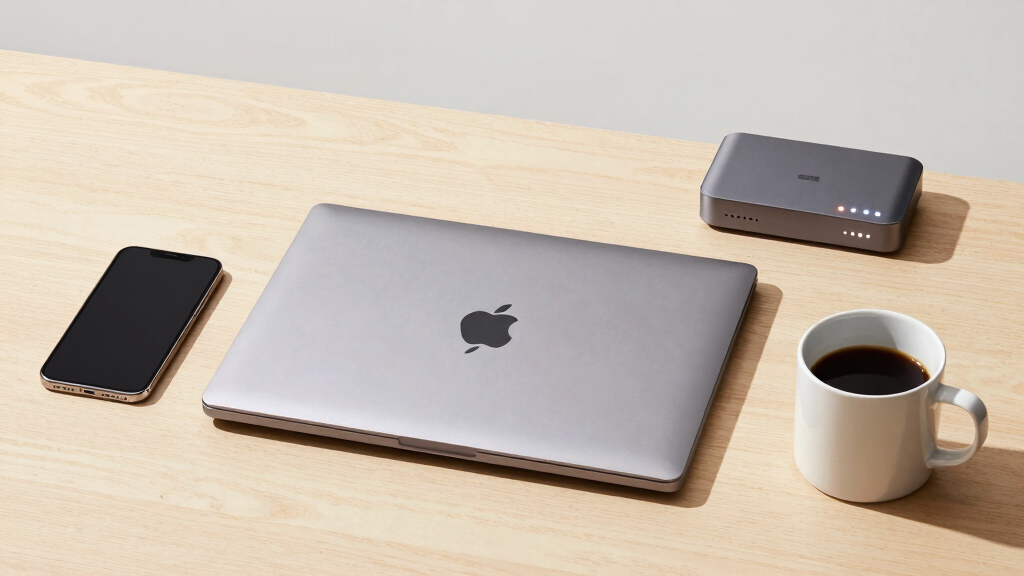
Apple Silicon MacBook Pro for AI inference
As an affiliate, we earn on qualifying purchases.
As an affiliate, we earn on qualifying purchases.
Background
In recent years, the cost of AI inference has become a critical factor in model deployment. Cloud services have traditionally dominated due to scalability and speed, but local inference is gaining interest for privacy and cost reasons. Apple Silicon, particularly the M5 MacBook Pro, has been noted for its impressive performance capabilities, enabling near-competitive inference speeds with dedicated hardware. This analysis builds on prior discussions about hardware costs, energy consumption, and token throughput, providing a detailed financial comparison relevant as AI models grow larger and more complex.
“On the optimistic side, Apple Silicon can match OpenRouter’s costs over a 10-year lifespan at high token speeds, but generally, it remains more expensive upfront and in energy costs.”
— William Angel, analyst
“Our Gemma4 31b model runs at 60-70 tokens per second, making it significantly faster and cheaper per token than consumer hardware like Apple Silicon.”
— OpenRouter provider
What Remains Unclear
It is still unclear how ongoing hardware improvements, software optimizations, or energy prices will influence the cost dynamics in the future. Additionally, real-world performance may vary based on specific models, workloads, and system configurations. Exact long-term cost comparisons depend on assumptions about hardware lifespan, token throughput, and energy costs, which can fluctuate.
What’s Next
Next steps include monitoring hardware advancements, software optimization efforts, and real-world deployment costs. Further detailed studies could clarify the long-term economic viability of consumer hardware for AI inference and whether newer models or energy-efficient designs will alter current cost structures.
Key Questions
Why does Apple Silicon cost more than OpenRouter for AI inference?
Apple Silicon hardware, such as the M5 MacBook Pro, has higher upfront costs and energy expenses, especially when amortized over typical device lifespans. While it can match or approach OpenRouter’s costs at high efficiency over long periods, the initial investment and energy consumption generally make it more expensive per token.
Can Apple Silicon hardware be a cost-effective solution for AI inference?
It can be, under specific conditions such as long device lifespan (around 10 years) and high token throughput (40+ tokens per second). However, for most practical purposes, dedicated hardware like OpenRouter remains more economical due to lower costs per token and higher inference speeds.
How do energy costs impact the overall expense of running models locally?
Energy costs, based on US averages (~$0.18 per kWh), add approximately $0.02 per hour for inference at 100 watts. Over long durations, this can significantly influence total costs, especially when combined with hardware depreciation.
What factors influence the speed of inference on consumer hardware?
Inference speed depends on hardware performance, model size, and software optimization. Tests show Apple Silicon achieves around 10-20 tokens per second, whereas dedicated inference hardware can reach 60-70 tokens per second, greatly affecting cost efficiency.
Halloween Picks
halloween
As an affiliate, we earn on qualifying purchases.