
TL;DR

Get the latest gadgets delivered free with Prime
- Fast, free delivery on millions of items
- Prime Video, Amazon Music and more included
- Member-only deals all year
A user has created a bootable Debian 12 system on an $80 RK3562-powered Android tablet. The process involves booting from an SD card, with most hardware functioning. This demonstrates the device’s potential as a Linux workstation, despite lack of official support.
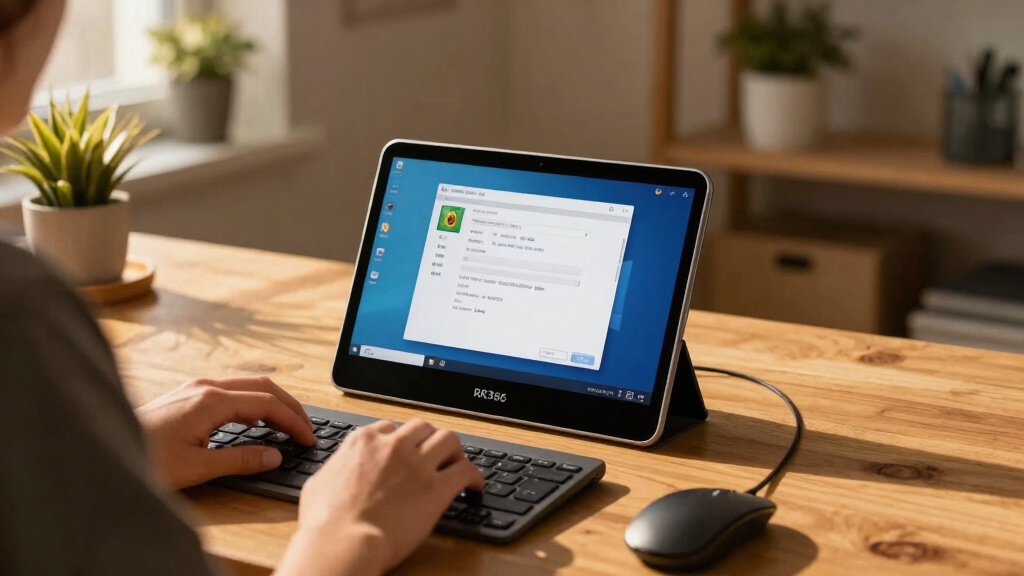
A hobbyist has successfully turned an $80 Android tablet powered by the RK3562 chip into a Debian Linux workstation, booting directly from an SD card without modifying the device’s internal storage.
The user created a complete Debian 12 Bookworm image compatible with the Doogee U10 tablet, which is powered by the Rockchip RK3562 SoC. The image, available as a pre-release, allows users to boot Debian on the device by inserting an SD card, which can be removed to revert to stock Android. The process involves no bootloader unlocking or internal modifications, making it accessible for hobbyists.
The image was built from scratch without vendor support or official documentation, relying on open-source repositories and community efforts. Most hardware components, including display, Wi-Fi, Bluetooth, audio, and sensors, function reliably, though some features like 3D acceleration and camera calibration are partial or still under development. The project demonstrates that even low-cost devices can be repurposed for Linux workloads, including local large language model inference using Rockchip’s RKLLM stack.
Why It Matters
This achievement illustrates the potential for repurposing affordable Android devices as Linux workstations, expanding the possibilities for hobbyists and developers. It also highlights the growing capabilities of open-source firmware and community-driven projects to extend hardware lifespan and functionality without vendor support. Such developments could influence future DIY projects and encourage broader adoption of Linux on low-cost hardware.
Android tablet to Linux bootable SD card
As an affiliate, we earn on qualifying purchases.
As an affiliate, we earn on qualifying purchases.
Background
The RK3562 chip is a relatively recent SoC used in budget tablets like the Doogee U10. Prior to this, official support for Linux on such devices was limited, often requiring complex modifications or remaining unsupported. The current project is part of a broader trend of community efforts to port Linux to ARM-based tablets, leveraging open-source repositories and custom build systems. The pre-release image is available publicly, with ongoing development to improve hardware support and usability.
“This pre-release image proves that even low-cost tablets can run a full Debian environment, opening new avenues for DIY Linux projects.”
— Project developer
“Building this image involved reverse engineering from scratch, with no vendor documentation, demonstrating the power of open-source collaboration.”
— Community contributor
What Remains Unclear
It is not yet clear how stable or complete the hardware support will be in the long term, especially for features like 3D acceleration and camera calibration. The project is still in pre-release, and future updates may improve or alter functionality.
What’s Next
Developers plan to refine hardware support, add features like full 3D acceleration, and improve camera calibration. The community will likely release updated images and documentation, encouraging more users to experiment with similar devices.
Key Questions
Can I install Debian on my own RK3562 tablet?
Yes, if your device is similar to the Doogee U10 and you are comfortable with technical procedures, you can attempt to use the pre-release image and follow the provided instructions.
Will all hardware features work perfectly?
Most features like display, Wi-Fi, Bluetooth, and audio are functional, but some, such as 3D acceleration and camera calibration, are partial or still under development.
Is this process safe for my device?
Since the process involves booting from an SD card without modifying internal storage, it is relatively safe, but users should follow instructions carefully to avoid bricking their devices.
Will this affect my device’s warranty?
Using community-built images and booting from SD cards generally does not void warranties, but this depends on the manufacturer’s policies.
Halloween Picks
halloween
As an affiliate, we earn on qualifying purchases.