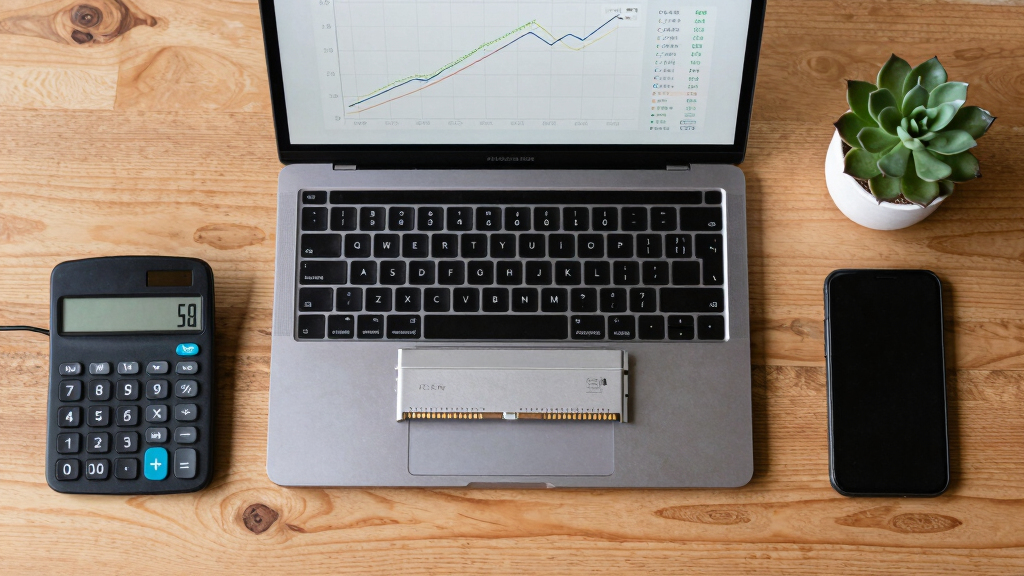

📊 Full opportunity report: The Memory Squeeze: Why Your RAM Bill Doubled on ThorstenMeyerAI.com — validation score, market gap, and execution plan.
Open a free Amazon Business account
Business pricing, bulk buying and tax-exempt orders.
Create a free accountAs an affiliate, we earn on qualifying purchases.
TL;DR
Memory prices have doubled or more in 2026 as manufacturers prioritize AI-related DRAM like HBM over consumer DDR5. This shift is driven by higher profits and physics constraints, causing shortages and price hikes across the industry.
DRAM prices have surged by 90% in the first quarter of 2026, with the cost of 32GB DDR5 kits rising from about $80–$120 to nearly $375, and 64GB kits exceeding $600. This sharp increase makes RAM the most expensive component in many PC builds, according to industry reports.
The primary driver of this price hike is a strategic shift by the three main DRAM manufacturers—Samsung, SK Hynix, and Micron—who are reallocating their wafer capacity from consumer-grade DDR5 to high-margin, AI-focused memory like High Bandwidth Memory (HBM). HBM modules now sell for $60–$100, compared to $5–$10 for DDR5, incentivizing manufacturers to prioritize HBM production despite its inefficiency.
This reallocation is driven by the higher profitability of HBM and other AI memory products, which consume more wafer area per unit and are more lucrative per chip. As a result, around 23% of all DRAM wafers are now dedicated to HBM, up from 19% last year, with AI applications expected to absorb about 20% of DRAM capacity in 2026.
Industry insiders note that this is a deliberate, sustained choice rather than a temporary supply issue. Unlike past shortages, which eased when new capacity was added, current conditions are characterized by limited supply growth—projected at only 16% for DRAM in 2026—and long lead times for new fabs, not expected to come online before 2027–2028. Moreover, manufacturers are intentionally managing scarcity to maintain high margins, with little incentive to flood the market with cheaper consumer RAM.
Why your RAM bill doubled
“Doubled” is the polite version — consumer DRAM is running 3–6× its 2024 lows. The boom-bust cycle that always brought cheap RAM back isn’t coming this time, because the factories that make your RAM now make something far more profitable instead.
HBM
This is the quiet tax on the whole AI era. Relief isn’t forecast before 2028, and even then prices may settle 30–50% above pre-crisis levels. Buy what you genuinely need now; don’t panic-buy capacity you won’t use. You can’t out-wait the fab math — but, as this series will show, you can shrink what you need. Next: HBM Ate the Fab.
Impact of Capacity Reallocation on Consumer and Enterprise Markets
This shift has profound implications for consumers, who face rising costs for PCs, laptops, and peripherals, and for enterprise buyers, who encounter supply constraints and long wait times. The industry’s focus on high-margin AI memory means fewer chips are available for standard consumer products, leading to a sustained shortage and elevated prices that are unlikely to revert quickly.
Manufacturers’ strategic management of supply—favoring high-margin products and long-term contracts—raises questions about market competition and transparency, though no collusion has been publicly confirmed. The result is a structural change in the memory market, with a lasting impact on pricing and availability.
As an affiliate, we earn on qualifying purchases.
2026 Memory Market Dynamics and Industry Shift
Over the past year, DRAM prices have more than doubled, with a significant increase in the cost of consumer RAM. Historically, shortages eased when capacity was increased, but 2026 marks a departure—driven by a deliberate reallocation of wafer capacity toward AI memory products like HBM, which are far more profitable. The three dominant manufacturers—Samsung, SK Hynix, and Micron—control about 95% of the market and have prioritized high-margin, AI-related memory over consumer-grade RAM.
This trend is compounded by physics constraints, as HBM consumes more wafer area per bit, and by long lead times for new capacity expansion, which is not expected to significantly alleviate shortages before 2027–2028. Industry insiders note that manufacturers are managing scarcity to preserve margins, not increasing supply to meet rising demand.
“Our focus is on enterprise AI markets; consumer memory is no longer our priority.”
— Micron representative
Unresolved Questions About Market Behavior and Collusion
While current prices are attributed to genuine capacity reallocation driven by AI demand, questions remain about whether market concentration and past collusion influence current supply management. No antitrust actions are known to be underway, but the extent to which supply discipline is a strategic choice versus tacit coordination remains unclear.
Future Supply, Pricing Trends, and Industry Adjustments
Manufacturers are expected to continue prioritizing high-margin AI memory, with new capacity expansions not expected before 2027–2028. Consumers and enterprises should anticipate ongoing shortages and elevated prices for the foreseeable future. Industry analysts suggest that prices may stabilize or decline only if demand slows or new supply comes online in the coming years.
Additionally, the industry may see further shifts in product mix, with more emphasis on enterprise and AI memory solutions, potentially limiting the availability of consumer RAM even further.
Key Questions
Why have RAM prices increased so dramatically in 2026?
Prices have surged because manufacturers are reallocating wafer capacity from consumer RAM to more profitable AI memory products like HBM, driven by higher margins and physics constraints, not just supply shortages.
Will consumer RAM prices go back down soon?
Likely not in the near term. Capacity expansions are years away, and manufacturers are managing supply to maximize margins, which sustains high prices and shortages.
How does AI demand affect the availability of regular memory modules?
AI demand leads to a significant portion of DRAM capacity being dedicated to high-margin products, reducing supply for consumer and standard enterprise memory, causing shortages and price increases.
Are there any signs of collusion or anti-competitive behavior influencing prices?
There are no current antitrust cases, and prices are attributed to genuine capacity reallocation. However, market concentration raises questions about the potential influence of past collusion and current supply management practices.
Source: ThorstenMeyerAI.com
NFL season / tailgating Picks
team gear
As an affiliate, we earn on qualifying purchases.