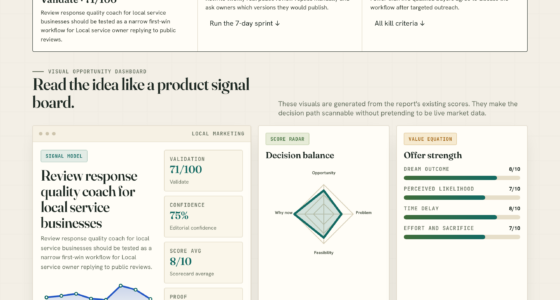
📊 Full opportunity report: CTOs Are Escaping on ThorstenMeyerAI.com — validation score, market gap, and execution plan.

Get the latest gadgets delivered free — and shop member deals
- Fast, free delivery on millions of items
- Access to Prime Big Deal Days deals on October 6–7
- Prime Video, Amazon Music and more included
TL;DR
Several senior CTOs and technical executives from major SaaS and consumer companies are leaving their roles to join Anthropic in technical positions. This trend indicates a shift in power from traditional software hierarchies to model-centric innovation. The move highlights the growing importance of AI development over conventional software management.
Multiple senior technology executives, including former CTOs from companies like Workday, You.com, and Instagram, have recently transitioned into technical roles at Anthropic, signaling a notable shift in the tech industry’s leadership landscape.
In March 2026, Peter Bailis left his role as CTO at Workday to join Anthropic as a Member of Technical Staff, working on reinforcement learning engineering. Similarly, Bryan McCann, co-founder and CTO of You.com, and Mike Krieger, co-founder of Instagram, have also moved into Anthropic roles. Henry Shi, formerly COO/CTO of Super.com, and Niki Parmar, co-founder of Adept AI Labs, are among other senior leaders now associated with Anthropic. These moves are not characterized as demotions but rather as a shift towards more direct involvement with AI model development and frontier research.
This trend reflects a broader pattern where senior technical talent is prioritizing proximity to AI models and research over traditional executive authority within SaaS and enterprise software firms. While some ambiguity remains around certain moves, the overall picture indicates a significant change in where influential technical leaders are choosing to work.
Implications of CTOs Moving to AI Frontier Roles
This migration signifies a fundamental shift in tech leadership priorities, emphasizing model-layer access and research involvement over conventional organizational authority. It underscores AI’s growing strategic importance and suggests that talent and influence are increasingly tied to direct work on AI systems rather than traditional management roles. For the industry, this could accelerate innovation in AI products and reshape corporate hierarchies, with more leaders seeking hands-on AI development roles.As an affiliate, we earn on qualifying purchases.
Recent Leadership Movements and Industry Trends
The trend began with notable figures like Mike Krieger joining Anthropic in 2024, but has gained momentum in early 2026. These leaders come from diverse backgrounds—SaaS, social media, and AI startups—and are now choosing roles that place them at the core of AI model development. This shift reflects a broader industry transition, where the traditional SaaS software stack is being challenged by agentic AI systems capable of reasoning, tool use, and automation. Deloitte’s 2026 outlook predicts SaaS applications becoming more intelligent and autonomous, aligning with this movement towards model-centric work.
Historically, CTOs managed mature software estates, but in the AI era, senior builders are engaging directly with models, training, reinforcement learning, and product experimentation. This represents a revaluation of influence, where proximity to the model’s core loop offers more leverage than managing large teams or legacy architectures.
“Joining Anthropic allows me to work directly on the frontier of AI, where the real innovation is happening.”
— Henry Shi, former COO/CTO of Super.com
Extent and Future of the CTO Exodus to AI Labs
It remains unclear how widespread this trend will become across the entire tech industry or whether it is a temporary shift. Some moves may be strategic career choices rather than long-term industry shifts, and not all CTOs are leaving their roles permanently. The full impact on organizational hierarchies and industry leadership is still developing.
Next Steps for Industry Leadership and Talent Flows
Observing whether this pattern accelerates or stabilizes will be key. Companies may adapt by restructuring leadership roles or creating new career paths that blend research, engineering, and product development. Further moves by other senior executives could reinforce or challenge this emerging trend, shaping the future landscape of AI and enterprise software leadership.
Key Questions
Why are CTOs leaving their traditional roles for AI-focused positions?
Many CTOs are seeking closer involvement with AI models and frontier research, where they believe they can have a greater impact on innovation and product development.
Is this trend limited to certain types of companies?
No, it spans SaaS, consumer tech, AI startups, and enterprise software, indicating a broad industry shift towards model-centric work.
Does this mean traditional SaaS companies are declining?
Not necessarily. While their interface and influence may weaken, these companies remain vital. The trend suggests a change in influence and innovation focus, not immediate decline.
What does this mean for future tech leadership?
Leadership may increasingly be defined by expertise in AI, research, and model development rather than organizational hierarchy or management of large teams.
Source: ThorstenMeyerAI.com
Halloween Picks
halloween
As an affiliate, we earn on qualifying purchases.