
🔍 Read the full analysis: Hollow House: How We Made An AI Horror-Comedy In One Night, And Why Version One Was Boring on ThorstenMeyerAI.com

Get the latest gadgets delivered free with Prime
- Fast, free delivery on millions of items
- Prime Video, Amazon Music and more included
- Member-only deals all year
TL;DR
Hollow House is a 97-second AI-generated horror-comedy made overnight on October 27–28, 2026, according to its creator, Thorsten Meyer. Meyer says the first two versions failed to deliver the intended comic pacing; the third used three longer segments and a shared cast reference. The account is a creator’s production report, not an independent evaluation of the tools or costs.
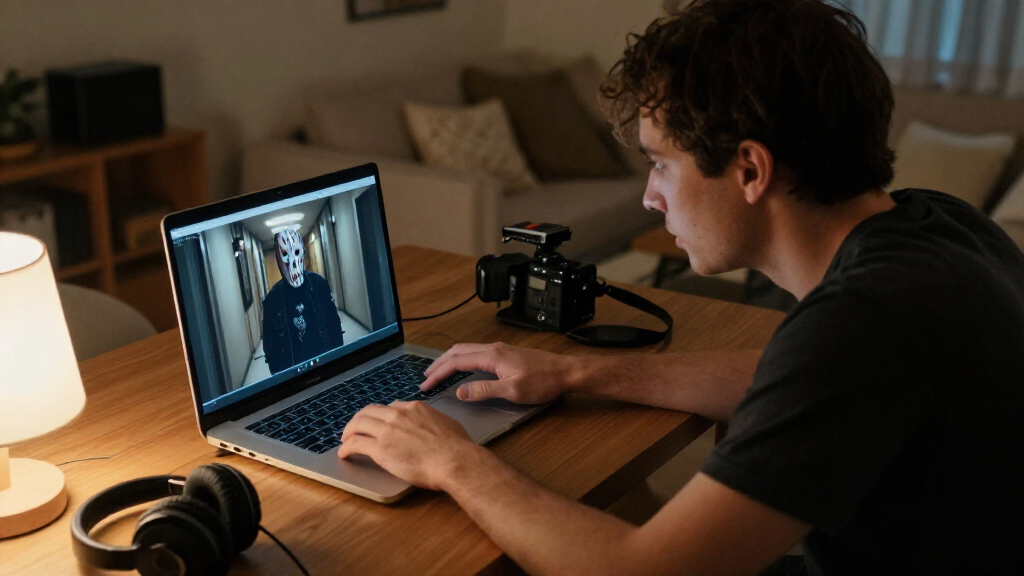
Creator Thorsten Meyer says he made Hollow House, a 97-second AI-generated horror-comedy, overnight on October 27–28, but only after abandoning two versions whose pacing did not work. His account, published October 28, describes a production built from AI-generated characters, images, video, voices and sound, with the central problem proving to be comic timing rather than visual quality.
The short imagines an extreme haunted attraction where a real ghost joins the scare crew. When a guest says the safe word, the scaring does not stop; the staff respond by treating the apparition as a workplace and safety problem. Meyer says the script, characters and jokes are original, while the structure was inspired by an AI horror-comedy shared on X. The film and its production materials are linked in his account.
Meyer describes three cuts made during the night. The first used 20 shots and ran 2 minutes 15 seconds; the second had 66 fast cuts and ran 2 minutes 21 seconds. The final 1:37 version used three roughly 30-second segments generated with one model supplied with references for the whole cast. He says only the third version worked. These figures and assessments come from the filmmaker’s own production account.
For the first version, Meyer made character reference images, generated a start frame for each shot and animated them with Google’s Veo 3.1 fast mode. He says the images and costumes looked consistent, but the average shot lasted 5.6 seconds, compared with about 1.8 seconds in the short that inspired the project, based on his count. He estimated the project used 2,220 Higgsfield credits across all versions, worth about $95 at his plan price, and around 2,100 ElevenLabs characters for music and effects.
Creator production report · October 27–28, 2026
Hollow House: How We Made an AI Horror-Comedy in One Night
A 97-second haunted-attraction comedy took three cuts to find its rhythm. Creator Thorsten Meyer says visual quality was never the main obstacle: pacing, timing, and editorial choices shaped the final version.
“The pictures were never the problem. The rhythm was.”
Thorsten Meyer · creator01 / The edit changed everything
Three cuts, one working rhythm
Meyer describes rejecting two versions before settling on three longer generated segments, made with one model supplied with references for the full cast. Durations and judgments below are reported by the creator.
Version 01 · Rejected
Good-looking, too slow
Twenty shots with long holds and static camera work. Meyer says the cut felt “terribly boring and amateurish.”
2:15 runtimeVersion 02 · Rejected
Too many fast cuts
The second pass accelerated the edit, reaching 66 cuts, but it still did not deliver the comic pacing Meyer wanted.
2:21 runtimeVersion 03 · Final
Longer generated segments
Three roughly 30-second segments, with the whole cast provided as references. Meyer says this was the version that worked.
1:37 runtime02 / The overnight workflow
From character sheets to final cut
The production account describes a hands-on process: generate assets, review each result, revise prompts and frames, then make the final editorial calls.
Build the cast
Eight character reference images made with Nano Banana 2 through Higgsfield. Meyer says the set took under two minutes.
Generate the shots
Create a start frame for each shot, then animate with Google Veo 3.1 fast mode for the first cut.
Review and repair
Check dialogue and actions; adjust prompts or frames when lines, movement, or performance miss the brief.
Re-edit and grade
Reject two cuts, change the generation approach, and apply the final colour grade.
03 / Where generation stumbled
Visuals were only part of the job
In Meyer’s account, reference images helped keep appearances and costumes consistent. The edit still needed close review: an intended shouted “HEY!” appeared as spelled-out letters, a requested head turn failed, and a floating character barely left the ground.
Other attempts produced a crawling pose instead of a planned backward bend. Meyer says a content filter blocked an initial lifting attempt. For the failed head turn, he used a reversed-head still frame and a crack sound effect as a workaround.
These examples come from one production, not a systematic test. They show how generated footage can still require correction, workaround shots, and editorial judgment.
Dialogue
A shouted word rendered as the letters “H-E-Y.” Speech recognition helped check generated lines.
Movement
Requested head turns and levitation did not consistently appear as prompted.
Comic timing
Shots averaging 5.6 seconds felt slow beside Meyer’s estimate of 1.8 seconds in the inspiration short.
04 / What the figures cover
Reported inputs, limited accounting
The numbers come from Meyer’s production report and should be read as his estimates, not independently verified totals.
Tool use estimate
About 2,220 Higgsfield credits across all versions, valued by Meyer at roughly $95 at his plan price.
Audio estimate
Around 2,100 ElevenLabs characters for music and sound effects.
Not a full budget
The estimate does not account for labour, subscriptions, equipment, or every other production expense.
No audience assessment
The account provides no viewer figures, independent review, or evidence of how the short was received.
05 / The story and release
A ghost joins the scare crew
Hollow House imagines an extreme haunted attraction where a real ghost joins the staff. When a guest says the safe word, the scaring carries on and the crew treats the apparition as a workplace and safety problem.
Meyer says the script, characters, and jokes are original, while the structure drew inspiration from an AI horror-comedy shared on X. His October 28 account links to the 1:37 short and behind-the-scenes materials, including character sheets, start frames, failed attempts, and a final-cut contact sheet.
Watch the short
Compare the creator’s account of the three versions with the finished film and production materials.
06 / Key questions
What this one-night production shows
When was it made?
Meyer says work began in the early evening of October 27, 2026, and continued until about 1:30 a.m. the next day.
Why did the first cut miss?
He says it looked good but felt slow and amateurish: 20 shots averaged 5.6 seconds, compared with his estimate of about 1.8 seconds per cut in the inspiration short.
Did AI replace the editor?
In this account, tools generated much of the material, while Meyer chose what to reject, revised the approach, checked outputs, and graded the final cut.
What remains unverified?
Tool use, costs, comparisons, and creative judgments are the creator’s report. No independent cost check or audience figures are provided.
Why the First Cut Fell Flat
The account offers a concrete example of a constraint in AI-assisted short filmmaking: generating attractive shots does not automatically produce a coherent or funny edit. Meyer says the first version looked good but was “terribly boring and amateurish”, attributing the problem to long shots, static camera work and a lack of musical scoring. That is his creative judgment, not a general finding about AI video.
The revisions also show how much work remained with the filmmaker. Meyer says he made the consequential choices: rejecting the first edit, changing the generation approach and applying the final colour grade. He also checked generated dialogue with speech recognition and adjusted prompts or frames when actions and lines came out wrong. The case is relevant to creators weighing whether AI tools reduce production work: in this account, they generated much of the material, but did not replace editorial decisions or quality control.
Products Worth Considering

Jackery HomePower 3000 Portable Power Station, 3072Wh, 3600W

Bose QuietComfort Headphones (2nd Gen), Wireless Noise-Cancelling Over-Ear Headphones, Black

LG UltraGear 34-Inch Curved QHD Gaming Monitor, 160Hz, FreeSync Premium
As an affiliate, we earn on qualifying purchases.
From Character Sheets to Final Cut
Before generating video, Meyer created one reference image for each of the film’s eight characters using Nano Banana 2 through Higgsfield. He says each image cost two credits and the set took less than two minutes to make. The references were used to keep appearances and costumes consistent across subsequent frames and clips, addressing a recurring production challenge in which a character’s look can drift between generations.
The first cut’s technical problems included a shouted “HEY!” rendered as the letters “H-E-Y,” a head-turn action that the model did not produce as requested, and a floating character whose feet barely left the ground after a rewritten prompt. Meyer says a content filter blocked an initial attempt at lifting the character, and that a planned backward bend instead produced a crawling pose. These are reported outcomes from this project, not a systematic test of the models. He says a reversed-head still frame and a crack sound effect served as a workaround for the failed turn.
““terribly boring and amateurish””
— Thorsten Meyer, creator of Hollow House
What the Account Does Not Establish
The production details, costs, comparisons and creative judgments are provided by Meyer; the source material does not include independent verification, receipts or a separate assessment of the finished film. The reported $95 is an estimate based on his Higgsfield plan price, not a full accounting of labor, subscriptions, equipment or other expenses. The comparison with the inspiration short is also Meyer’s cut count and timing estimate.
The account does not provide a detailed breakdown of how the second version changed from the first, or specify which model generated the final three segments beyond describing one model with the cast as references. It also does not establish how the short has been received by viewers. The source says the video is available, but gives no audience or performance figures.
The Film Is Available to Watch
Meyer’s October 28 account links to Hollow House, described as a 1:37 Halloween horror-comedy short, and presents behind-the-scenes images including character sheets, start frames, failed attempts and a contact sheet of the final cut. No further release, follow-up project or additional production milestone is specified in the source. Readers can compare the creator’s account of the three versions with the finished short, while treating the reported workflow and costs as his own figures.
Key Questions
What is Hollow House?
Hollow House is a 97-second horror-comedy about a ghost joining the staff of an extreme haunted attraction. Its creator says every character, voice and set was AI-generated.
When was the short made?
Meyer says production began in the early evening of October 27, 2026, and continued until about 1:30 a.m. the next day.
Why did the first version not work?
Meyer says the first cut looked good but felt slow and amateurish. It had 20 shots averaging 5.6 seconds each, while he estimated the short that inspired it averaged about 1.8 seconds per cut.
How much did the production cost?
Meyer reports using 2,220 Higgsfield credits, which he valued at roughly $95 at his plan price, plus about 2,100 ElevenLabs characters for music and sound effects. This is his estimate and not a full production-cost accounting.
What remains unverified?
The workflow, tool usage, costs, edit comparisons and assessment of the film come from the creator’s account. The source provides no independent cost check, audience figures or outside evaluation of the finished short.
Source: ThorstenMeyerAI.com