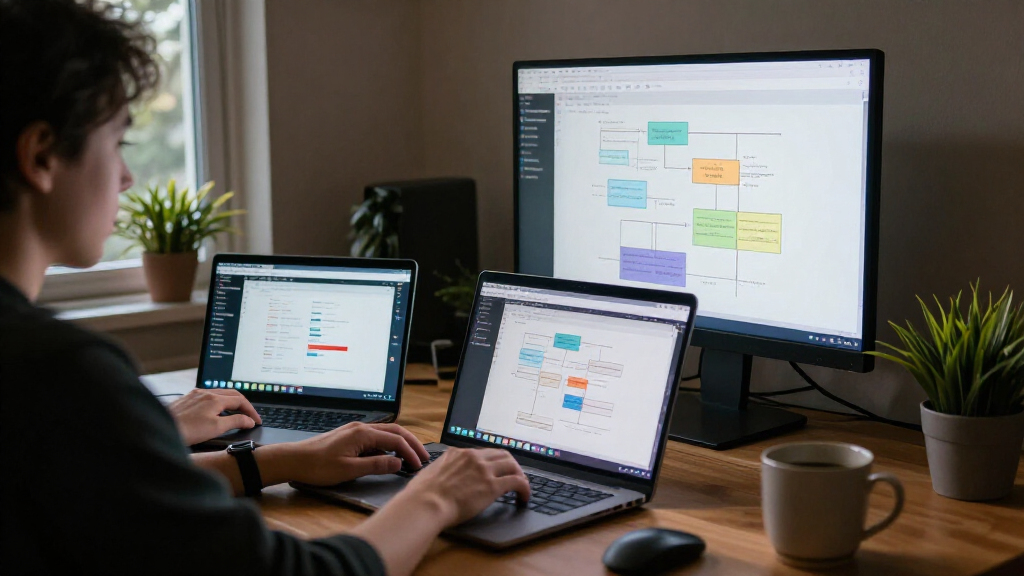

🔍 Read the full analysis: What Is A Second Brain? How My AI Agents Share One Memory on ThorstenMeyerAI.com

Get the latest gadgets delivered free with Prime
- Fast, free delivery on millions of items
- Prime Video, Amazon Music and more included
- Member-only deals all year
TL;DR
Thorsten Meyer says he built a shared memory system so his AI agents can use the same persistent knowledge across sessions. His setup uses Markdown files, Git and an index rather than a vector database or cloud service; as of Nov. 21, 2026, it held 1,278 pages and reported a 97.4% top-one recall score. Those figures and the system’s performance are the author’s own measurements, not an independently verified evaluation.
Thorsten Meyer has described a shared memory system that lets the AI agents he runs consult and add to one persistent knowledge base, rather than starting each session without the context of previous work. In an article published November 21, 2026, Meyer said the system contains 1,278 pages and recorded 1,363 recalls; he reported a 97.4% top-one recall score, a measure he defines as how often the first page selected is the right one.
Meyer calls the setup his Second Brain. Its contents are plain Markdown files stored in Git, with each page covering a cluster of related facts, such as a project or a decision. A single file, INDEX.md, lists each memory in one line. Meyer says the system uses no vector database or cloud service, and that the files can be opened and edited in a standard text editor.
When an agent needs information, a script called recall.py scores the index lines first, then opens the highest-scoring page and returns the relevant section with its source. Meyer says this makes it possible to check where an answer came from by opening the cited page. A separate script, remember.py, adds a new fact, its index entry and a log entry together, a design intended to keep the catalogue synchronized with the pages.
As of November 21, Meyer reported 1,278 pages, 1,761 links and 1,363 recalls. The article also describes nine system views, including a map of connected pages, a daily summary, a triage process for session notes and a live display of agent activity. The published description does not provide an independent audit or a detailed test protocol for the reported recall score.
The system addresses a practical limitation of session-based agents: information available in one conversation may not be available in the next. A shared, editable memory could let multiple agents reuse project decisions and preferences without requiring a user to restate them each time. Meyer’s design also makes the stored material inspectable, unlike memory features that may be difficult for users to read or revise.
That approach could matter to people or organizations running several agents, but the article presents one person’s system, not a tested product or a team-wide deployment. Keeping files locally and tracking changes in Git offers a visible history, while also placing responsibility on the owner to organize, review and protect the information. Meyer describes the setup as built for one owner rather than a team; access controls, shared editing and organizational governance are not detailed.
Products Worth Considering

Jackery Explorer 300 Portable Power Station, 292Wh

Logitech MX Mechanical Wireless Illuminated Keyboard, Tactile Quiet, Graphite

Sony WH-1000XM4 Wireless Noise Cancelling Headphones (Silver)
As an affiliate, we earn on qualifying purchases.
From Session Notes to Persistent Memory
Meyer frames the project around the gap between an agent’s current context and long-term knowledge. In his account, an agent can use information visible during a session, but that context does not automatically carry over after the session ends. He says existing memory features can be hard to inspect or may be separate across tools, motivating his choice to keep a single record that he and his agents can access.
The workflow includes steps beyond retrieval and storage. Meyer says sessions can leave behind captures that are reviewed through a triage view: some become lasting memories, some are merged into existing pages, and others are discarded. Git records changes over time, while the log tracks them in sequence. These are descriptions of the author’s implementation; the article does not compare its results with other memory systems or report a controlled benchmark.
“One memory, shared by every agent I run, that I can open and read myself.”
— Thorsten Meyer, describing the system
How the Recall Score Was Measured
The article does not explain how the 97.4% top-one score was calculated, how many questions were tested, or how the correct page was judged. The figure is Meyer’s own measure and should not be treated as an independently validated benchmark. It is also unclear how recall performs when information is ambiguous, spread across several pages or out of date.
The description does not specify the system’s access controls, backup arrangements, privacy protections or behavior when several agents edit the memory at once. Meyer says personal information in the accompanying video and frames is protected, but the article does not explain the method. The reported page, link and recall totals are snapshots as of November 21, 2026, rather than evidence of long-term reliability.
Maintaining and Testing the Memory
Meyer’s article describes the system as it stood on November 21, 2026, and does not announce a release date, public product or formal evaluation. The next steps visible in his account are ongoing maintenance: reviewing captured information, merging or removing entries, and using the system’s views to monitor changes and activity.
For readers considering a similar setup, the article’s own description points to the practical questions that would need answers before wider use: how facts are checked and corrected, how sensitive information is protected, and whether the index remains useful as the collection grows. Meyer has not stated whether he plans to adapt the system for multiple owners or publish independent performance results.
Key Questions
What is Meyer’s Second Brain?
It is a persistent knowledge base that Meyer says he and his AI agents share. It consists of Markdown pages, an index and logs stored in Git.
How do the agents find information?
According to Meyer, recall.py scores entries in the index, opens the best-matching page and returns the relevant section with its source. The process is described as index first, files second.
How large was the system on November 21, 2026?
Meyer reported 1,278 pages, 1,761 links and 1,363 recalls as of that date. These are figures supplied by the author, not independently audited totals.
Is the 97.4% recall score independently verified?
No independent verification or detailed test method is provided in the article. Meyer defines the figure as how often the first page selected is the right one, but does not describe the sample or evaluation process.
Can a team use the system as described?
Meyer says the setup is designed for one owner, not a team. The article does not detail team access, simultaneous editing or organizational controls.
Source: ThorstenMeyerAI.com