
Robot vacuum navigation systems vary from simple random patterns to advanced mapping with obstacle detection. Basic models bump into furniture and cover areas randomly, while upgraded units create detailed maps of your home, allowing precise cleaning routes and zone control. Combining mapping and obstacle sensors ensures faster, more efficient cleaning with fewer mishaps. Curious about which type suits your home best? Keep exploring to discover how each system works and what options are available to you.

Get the latest gadgets delivered free with Prime
- Fast, free delivery on millions of items
- Prime Video, Amazon Music and more included
- Member-only deals all year
Key Takeaways
- Navigation systems include random movement, bump sensors, and advanced mapping with sensors or cameras.
- Mapping technology creates detailed digital layouts for systematic cleaning and route planning.
- Obstacle detection sensors prevent collisions and adapt to dynamic environments in real-time.
- Combining mapping and obstacle detection offers precise, efficient, and autonomous cleaning.
- Understanding these types helps choose a robot vacuum that fits your home layout and cleaning needs.

Robot vacuum cleaners have revolutionized home cleaning by offering different navigation systems that determine how they move around your space. One of the key aspects that sets these devices apart is their navigation technology, which directly impacts their efficiency and cleaning performance. Understanding how mapping technology and obstacle detection work can help you choose the right model for your needs.
Mapping technology is at the core of many advanced robot vacuums. It allows the device to create a detailed map of your home as it cleans. This process involves sensors and cameras that scan your environment, enabling the robot to recognize walls, furniture, and other obstacles. Instead of wandering aimlessly, a robot with mapping technology plans an efficient route, covering your floors systematically. This not only speeds up cleaning but also ensures that no spot gets missed. Plus, with a digital map in hand, you can often customize cleaning areas, set no-go zones, or schedule specific rooms to be cleaned. This level of control saves you time and guarantees a thorough clean every time.
Mapping technology enables robot vacuums to create detailed home maps, plan efficient routes, and customize cleaning zones for thorough results.
Obstacle detection is another crucial feature that enhances navigation. It involves sensors that help the robot identify objects in its path, preventing collisions and damage. These sensors typically include infrared, ultrasonic, or lidar technology, which detect objects and measure distances in real-time. When the robot encounters an obstacle, it pauses, reroutes, or navigates around it smoothly. This prevents your furniture, cables, or fragile items from getting knocked over or scratched. Obstacle detection also contributes to the robot’s ability to adapt to dynamic environments, like pet toys or unexpected clutter, making it more reliable and user-friendly.
Together, mapping technology and obstacle detection give your robot vacuum a high level of autonomy and precision. While basic models might rely on random patterns or bump sensors, more sophisticated versions leverage these systems to deliver better coverage and fewer mishaps. You’ll notice that with advanced navigation, your robot spends less time cleaning the same spot repeatedly and more time efficiently covering your entire home. This means a faster, more consistent clean with less manual intervention.
Ultimately, understanding how these navigation features work helps you pick a robot vacuum that suits your home’s unique layout and your cleaning priorities. Whether you want quick, casual cleans or meticulous coverage, models equipped with effective mapping technology and obstacle detection will serve you better, making your life easier and your home cleaner.
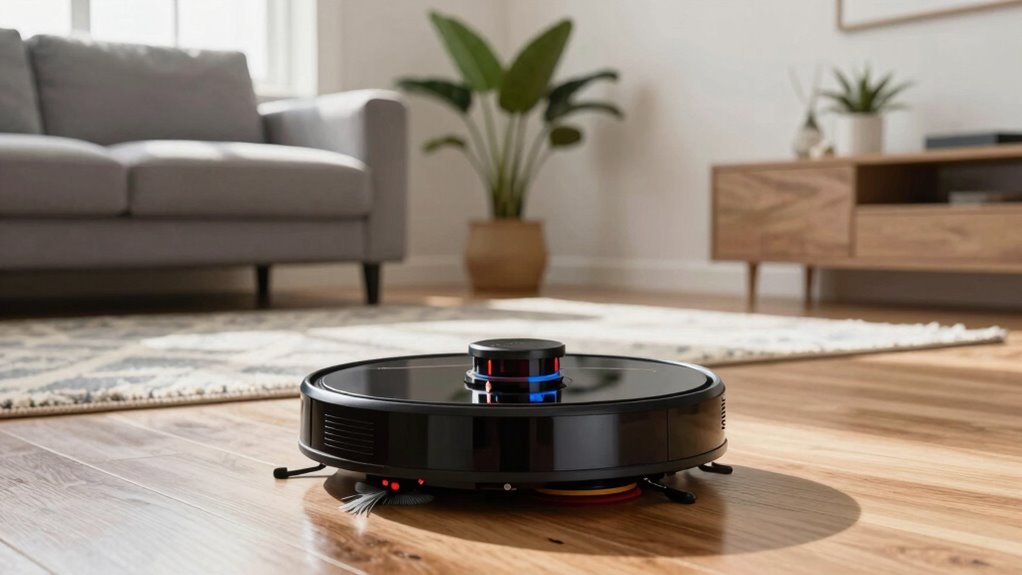
robot vacuum with mapping technology
As an affiliate, we earn on qualifying purchases.
As an affiliate, we earn on qualifying purchases.
Frequently Asked Questions
How Do Robot Vacuums Handle Complex Home Layouts?
You can rely on your robot vacuum to handle complex home layouts using advanced mapping algorithms and obstacle detection. It scans your space, creating detailed maps that help it navigate efficiently. When it encounters furniture or other obstacles, its sensors detect them instantly, allowing it to adjust its path and avoid collisions. This combination ensures thorough cleaning, even in intricate areas, so you don’t have to worry about missed spots or bumping into things.
Are Certain Navigation Types Better for Pet Hair Removal?
If you’re after better pet hair removal, opt for robot vacuums with systematic or laser navigation. These types improve navigation efficiency, ensuring thorough coverage of your space, especially where pet hair tends to accumulate. Their precise mapping helps them target problem areas and avoid missed spots, making them more effective at cleaning pet hair compared to random navigation models. This way, you get a cleaner home and less hair lingering around.
Can Navigation Technology Improve Vacuum Battery Life?
Yes, navigation technology can enhance your vacuum’s battery life. Advanced navigation algorithms optimize cleaning paths, reducing unnecessary movements and conserving battery power. When your robot uses efficient navigation, it minimizes energy consumption, which improves battery efficiency. This means your vacuum can clean longer between charges and cover more ground without draining the battery quickly. Investing in models with smart navigation algorithms ensures you get better performance and extended battery life.
Do Advanced Navigation Systems Increase the Vacuum’s Cost?
Advanced navigation systems do increase the vacuum’s cost, but their improved mapping accuracy and sensor sophistication often outweigh the expense. For example, models with sophisticated sensors can better detect obstacles, reducing missed spots and cleaning time. While you might pay more upfront, you benefit from precise navigation, fewer maintenance issues, and more efficient cleaning. So, investing in advanced tech can save you time and money in the long run.
How Do Robot Vacuums Adapt to Furniture Rearrangements?
You’ll find that robot vacuums adapt to furniture rearrangements through improved mapping efficiency and obstacle detection. When you move furniture, the vacuum’s sensors identify new obstacles and update its maps accordingly. This allows it to navigate efficiently around the altered layout, avoiding missed spots or collisions. Regularly running the vacuum helps it learn your space, ensuring best cleaning even after furniture changes.
Conclusion
Now that you understand the different robot vacuum navigation types, you might worry about choosing the perfect one. Remember, no single method is flawless; each has its strengths and weaknesses. The key is selecting a model that fits your space and lifestyle. Don’t get stuck overthinking—trust that with a little research, you’ll find a vacuum that simplifies your cleaning routine and keeps your home spotless, no matter which navigation type it uses.
Columbus Day / Indigenous Peoples' Day Picks
long weekend sales
As an affiliate, we earn on qualifying purchases.