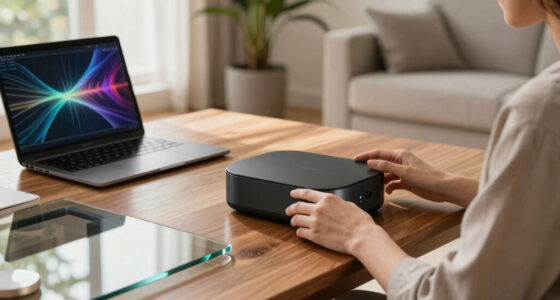
Understanding watt-hours and watts helps you choose the right portable power station for your needs. Watt-hours measure the total energy capacity, indicating how long devices can run, while watts show the power output at any moment, determining how much you can run simultaneously. Larger watt-hour capacities and wattage mean longer use and more devices powered. Keep in mind, knowing these specs helps you pick a station that fits your essential gadgets perfectly—if you keep exploring, you’ll find all the details you need.

Get the latest gadgets delivered free with Prime
- Fast, free delivery on millions of items
- Prime Video, Amazon Music and more included
- Member-only deals all year
Key Takeaways
- Watt-hours (Wh) measure total energy capacity, indicating how long a power station can run devices; higher Wh equals longer runtime.
- Watts (W) reflect the power output at a specific moment, determining how many devices or appliances can operate simultaneously.
- Portable power stations with higher Wh and wattage can run larger devices like refrigerators or multiple gadgets at once.
- Solar-compatible units often include built-in MPPT controllers, enabling eco-friendly recharging from sunlight.
- Key features like a strong BMS and stable power output ensure safe, reliable operation for various devices.
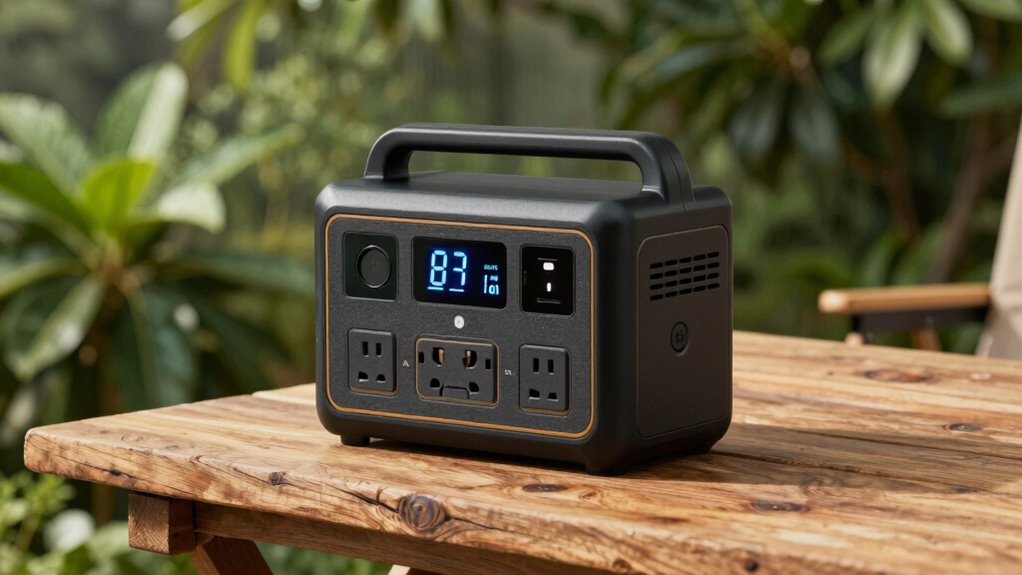
Portable power stations are versatile devices that provide reliable electricity wherever you need it. Whether you’re camping off-grid, during a power outage, or on a remote job site, these stations guarantee your essential devices stay powered. Understanding their watt-hours (Wh) and watt (W) ratings helps you determine what they can run and for how long. Watt-hours measure the total energy capacity of the station, so a higher Wh means you can run devices longer. Wattage, on the other hand, indicates how much power the station can deliver at once, which is vital when powering multiple devices or high-demand appliances.
Portable power stations keep your essential devices running off-grid or during outages.
When choosing a portable power station, solar compatibility is a key feature to contemplate. A station with solar compatibility can be recharged using solar panels, making it an eco-friendly and sustainable option. This is especially useful if you plan to use it for extended periods or in remote locations where traditional power sources are unavailable. Solar-compatible stations often come with built-in MPPT (Maximum Power Point Tracking) charge controllers, maximizing solar energy intake and speeding up recharging times. This way, you can harness the sun’s energy efficiently, reducing your reliance on batteries and grid power.
Battery management is another critical aspect of portable power stations. Good battery management systems (BMS) protect the device from overcharging, overheating, and discharging too deeply—factors that can shorten the lifespan of the battery. A well-designed BMS ensures your station operates safely and maintains ideal performance over time. It also helps balance the cells within the battery pack, preventing uneven wear and maximizing capacity. When evaluating a power station, check for features like automatic shutoff, temperature regulation, and real-time battery status updates. These features give you greater control and peace of mind, especially during extended use.
The watt-hour capacity of a portable power station directly influences what you can run and how long. For instance, a 500 Wh station can power a small refrigerator for about 8-10 hours or charge your smartphone hundreds of times. If you need to run larger devices like laptops, CPAP machines, or small appliances, look for stations with higher Wh ratings and sufficient continuous wattage. Remember, the surge wattage— the peak power needed when starting devices like refrigerators or power tools— must also be within the station’s capabilities. Additionally, understanding the importance of power output stability can help ensure your devices operate smoothly without interruptions.
portable power station with high watt-hour capacity
As an affiliate, we earn on qualifying purchases.
As an affiliate, we earn on qualifying purchases.
Frequently Asked Questions
How Do I Properly Maintain My Portable Power Station?
To keep your portable power station in top shape, regularly perform battery calibration by fully charging and draining it periodically. Store it in a cool, dry place, following storage best practices to prevent battery degradation. Avoid leaving it unused for long periods, and recharge every few months if not in use. Proper maintenance guarantees longer battery life and reliable performance whenever you need it most.
Can Portable Power Stations Be Used for Medical Devices?
Yes, portable power stations can power medical devices, but you must verify medical device compatibility first. Look for power stations with proper power ratings and certifications, guaranteeing safe, steady support. Confirm that your device’s wattage and voltage match the station’s output. Carefully consider critical factors like safety standards and device demands to prevent power problems. Proper planning and precise pairing protect your health and ensure reliable device operation.
What Is the Lifespan of a Typical Portable Power Station?
A typical portable power station lasts about 3 to 5 years, depending on usage and care. You’ll experience some battery degradation over time, which can reduce capacity. To protect your investment, check the warranty coverage, as many brands offer limited warranties that cover battery issues. Properly maintaining and avoiding overcharging can extend its lifespan, ensuring you get the most out of your power station for years to come.
Are Portable Power Stations Safe for Outdoor Use?
Your portable power station is like a trusty sidekick in the great outdoors, making it safe for outdoor use. It’s designed with safety features, and many models are compatible with solar panels, enhancing eco-friendliness. Consider weight and portability—lighter units are easier to carry on adventures. Just make certain you follow manufacturer guidelines, keep it dry, and avoid overloading, so your outdoor escapades stay powered and worry-free.
How Do Temperature Extremes Affect Power Station Performance?
Temperature extremes can impact your power station’s performance by affecting its thermal regulation and battery efficiency. When it’s too hot or cold, the device may struggle to operate effectively, leading to reduced runtime or potential shutdowns. To keep it working well, avoid exposing it to extreme temperatures, and store it in a cool, dry place. Proper thermal regulation helps maintain battery health and ensures reliable power when you need it most.
Conclusion
Now that you know how watt-hours and watts work, choosing a portable power station becomes less like deciphering a foreign language. Think of it as finding the right key to open your outdoor adventures or emergency needs. With the right info, you’ll power up smoothly, like a well-oiled machine ready to tackle whatever comes your way. So go ahead, pick the station that fits your life—your next adventure is waiting just around the corner!
Evergreen bestsellers Picks
bestsellers
As an affiliate, we earn on qualifying purchases.