After a week, you’ll notice your cat becoming more confident and comfortable using the automatic litter box. They’ll start showing more consistent habits, with less hesitation and scatter outside the box. The system’s automatic cleaning and odor control become more effective, keeping your home tidier. Your cat may even prefer the automatic setup over traditional boxes. If you keep observing, you’ll discover even more ways this system benefits both your cat and home environment.

Get the latest gadgets delivered free with Prime
- Fast, free delivery on millions of items
- Prime Video, Amazon Music and more included
- Member-only deals all year
Key Takeaways
- Cats become more comfortable and consistent in using the automatic litter box over time.
- They adapt quickly to the automatic cleaning process, often waiting for it to finish.
- Litter scatter decreases as cats prefer cleaner, more maintained environments.
- Maintenance issues like sensor cleanliness or malfunctions become more apparent and need monitoring.
- Overall home odor and mess are significantly reduced, enhancing cleanliness and cat satisfaction.
Automatic litter boxes have revolutionized how pet owners manage cat waste, offering a hassle-free solution that keeps your home cleaner and odor-free. After the first week of use, you’ll start noticing subtle but important changes in how your cat interacts with the new setup. Initially, cats might be cautious or hesitant, but as they get used to the automatic features, their behavior patterns typically shift toward more consistent use of the box. This shift can be a relief, especially if you’ve struggled with litter scatter or lingering smells.
Automatic litter boxes make home maintenance easier and keep your cat happier and cleaner.
One of the key aspects you’ll observe post-week one is a change in litter box maintenance. Automatic models handle scooping and cleaning on their own, so your involvement drops considerably. Still, it’s essential to check the unit regularly for clogs, low battery levels, or any malfunctions. If you notice your cat avoiding the box, it could indicate a need to adjust the settings or clean the sensors. Cats are sensitive to changes, and their behavior patterns can reflect discomfort or dissatisfaction with the litter box environment. Ensuring the box is clean and functioning properly encourages regular use, which is essential for your cat’s health and cleanliness. Additionally, automatic litter box functionality is often appreciated by cats, who prefer a clean environment for their bathroom habits.
By this point, you’ll also see your cat’s habits becoming more predictable. Many cats adapt quickly to the automatic system, but some may need a little extra encouragement. For example, if your cat used to dig or scratch before covering waste, they might still do so, but now they may wait for the box to automatically clean itself. You might notice less litter scatter outside the box, as automatic models often contain the waste more effectively, improving overall litter box maintenance. This not only saves you time but also keeps your home tidier and reduces odors.
In terms of behavior patterns, cats tend to appreciate the cleanliness and reduced smell, which can lead to more consistent use of the box. If your cat was previously avoiding the litter box due to odor or mess, they may now feel more comfortable and confident using it regularly. Some cats might even demonstrate a preference for the automatic system over traditional litter boxes, especially if they’re particular about cleanliness. However, if your cat still shows signs of discomfort or avoidance, it’s worth experimenting with different litter types or adjusting the system’s settings.
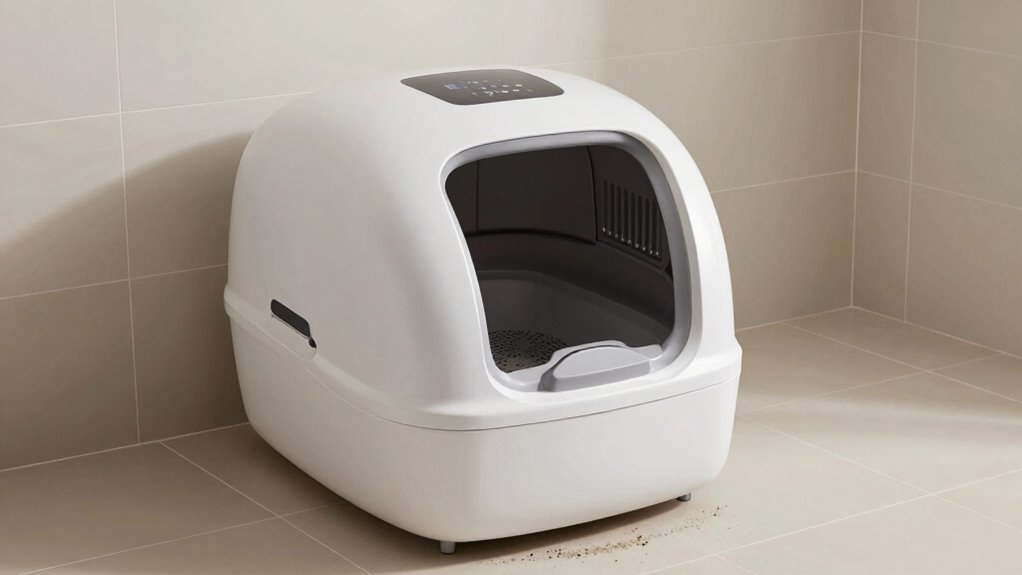
automatic cat litter box with odor control
As an affiliate, we earn on qualifying purchases.
As an affiliate, we earn on qualifying purchases.
Frequently Asked Questions
How Often Should I Clean the Automatic Litter Box After Week One?
After week one, you should clean your automatic litter box more frequently, ideally every day or every other day, to maintain good hygiene and prevent odor. Litter box design influences how often it needs cleaning, and observing your cat’s behavior helps you gauge maintenance needs. If your cat starts avoiding the box or there’s a strong smell, increase cleaning frequency. Regular upkeep keeps your cat comfortable and encourages proper use.
What Are Common Issues That Arise After the First Week?
You might find that odor control becomes a challenge, and litter tracking increases as your cat gets used to the box. Some common issues include persistent smells and litter outside the box, which can be frustrating. To tackle this, make sure you’re cleaning it regularly, replacing filters, and using mats. Remember, a well-maintained box keeps both odor and litter tracking in check, making life easier for both you and your feline friend.
Can I Change the Litter Type After Initial Setup?
Yes, you can change the litter type after initial setup. Litter customization helps you find the best option for your cat and improves odor control. When switching, do it gradually by mixing the new litter with the old one to prevent stress. This approach allows your cat to adapt comfortably while guaranteeing effective odor management. Keep an eye on their reaction to ensure a smooth change.
How Do I Troubleshoot Malfunctions After the First Week?
If your automatic litter box malfunctions after the first week, start by checking the sensor calibration to guarantee it detects waste properly. Also, examine odor control features—clean or replace filters if needed. Make sure the litter level is appropriate, and clear any clogs or debris. Regular maintenance helps prevent issues, keeping the box functioning smoothly and odor-free. If problems persist, consult the manufacturer’s troubleshooting guide.
Is There a Recommended Maintenance Schedule Beyond Week One?
You should establish a maintenance schedule beyond week one to keep your automatic litter box functioning well. For example, every two weeks, check the litter level, clean the litter box accessories, and replace odor control filters. Regular maintenance prevents malfunctions and odor buildup, ensuring your cat stays comfortable and healthy. Staying proactive with cleaning and replacing parts helps extend the lifespan of your litter box and maintain a fresh environment.
Conclusion
Just like a well-tuned garden, your automatic litter box settles into a new rhythm after week one. What once felt unfamiliar now blooms with reliability and ease. As the moon guides the tides, patience guides your understanding—trust that, soon, this quiet sentinel will work seamlessly, keeping your space fresh and your cat content. Embrace the change, and let the gentle cycle of progress unfold, turning a new leaf in your feline care journey.
Halloween Picks
halloween
As an affiliate, we earn on qualifying purchases.