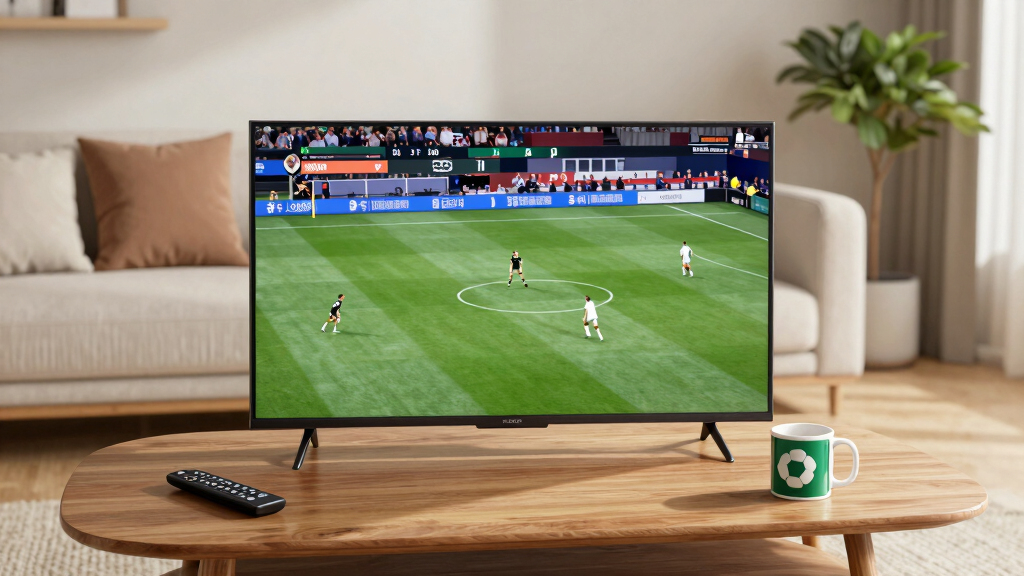

The Samsung S95F is my best overall pick among these 4K OLED TVs for sports, pairing a fast 164Hz refresh rate with a glare-conscious screen that suits bright rooms and quick action. The LG G5 is a strong premium alternative, while the LG C4 offers a more straightforward all-around OLED choice. The main tradeoffs are screen size, room brightness, motion handling, and whether OLED’s contrast matters more to you than the lower cost or bright-room flexibility of Mini LED and QLED alternatives. Read on for the full breakdown of all 15 options and how I’d match each one to a sports-viewing setup.

Get the latest gadgets delivered free with Prime
- Fast, free delivery on millions of items
- Prime Video, Amazon Music and more included
- Member-only deals all year
Complete the kit



Key Takeaways
- The Samsung S95F leads this group for mixed sports setups: its 164Hz refresh specification and glare-conscious screen make it the strongest fit for fast action in brighter rooms.
- Refresh rates vary even among the OLED picks: the S95F lists 164Hz, the S90F 144Hz, and the Roku Pro 120Hz, so check your sources and devices before paying extra for a higher ceiling.
- Screen size changes the recommendation: the Panasonic Z8’s 77-inch panel suits a large viewing area, while the Samsung and LG 48-inch options fit closer seating or smaller rooms.
- OLED is not the only practical choice: the Samsung M70H and Hisense U6 Pro use Mini LED, and the Roku Select uses QLED, giving buyers alternatives when budget or bright-room viewing outweighs OLED contrast.
- Brand and model names can hide meaningful differences: the C4, C6, G5, S85F, S90F, S90H, and S95F occupy distinct positions; compare the exact model’s size, refresh capability, and feature set rather than assuming a series name tells the whole story.
| Samsung 65-Inch Class OLED S95F 4K Smart TV (2025 Model) |  | Best Overall for Bright-Room Sports | Screen size: 65 inches | Resolution: 4K | Display technology: OLED | VIEW LATEST PRICE | See Our Full Breakdown |
| Samsung 55-Inch Class Mini LED M70H Series Smart TV (2026 Model, 55M70H) |  | Best Non-OLED Alternative for Sports | Screen size: 55 inches | Resolution: 4K | Display technology: Mini LED | VIEW LATEST PRICE | See Our Full Breakdown |
| Samsung 65-Inch Class OLED S90F 4K Smart TV (2025 Model) |  | Best for Fast-Motion Value | Screen size: 65 inches | Display technology: OLED | Resolution: 4K | VIEW LATEST PRICE | See Our Full Breakdown |
| LG 65-Inch Class OLED evo C4 Series Smart TV 4K |  | Best for Dolby Vision and Console Gaming | Screen size: 65 inches | Resolution: 4K | Display technology: Self-lit OLED pixels | VIEW LATEST PRICE | See Our Full Breakdown |
| Sony BRAVIA XR8B 55-Inch OLED 4K HDR Smart Google TV (K-55XR8B) |  | Best for a Smaller Viewing Space | Screen size: 55 inches | Resolution: 4K | Display technology: OLED | VIEW LATEST PRICE | See Our Full Breakdown |
| LG 65-Inch OLED evo C6 Series 4K Smart TV (2026) |  | Best Overall for Sports and Gaming | Screen size: 65 inches | Display technology: OLED evo | Resolution: 4K | VIEW LATEST PRICE | See Our Full Breakdown |
| Samsung 48-Inch S90F OLED 4K AI Smart TV Bundle |  | Best Compact Sports TV | Screen size: 48 inches | Resolution: 4K UHD | Processor: NQ4 AI Gen3 | VIEW LATEST PRICE | See Our Full Breakdown |
| Samsung 48-Inch S90H Series OLED 4K Smart TV (2026) |  | Best for Bright, Compact Rooms | Screen size: 48 inches | Display technology: OLED | Resolution: 4K | VIEW LATEST PRICE | See Our Full Breakdown |
| LG 55-Inch OLED evo AI 4K G5 Series Smart TV (OLED55G5WUA, 2025) |  | Best for Bright Living Rooms | Screen size: 55 inches | Model year: 2025 | Display technology: OLED evo | VIEW LATEST PRICE | See Our Full Breakdown |
| Panasonic Z8 Series 77-inch OLED 4K Ultra HD Smart Fire TV |  | Best for Big-Group Sports Viewing | Screen size: 77 inches | Resolution: 4K Ultra HD | HDR formats: HDR10, HDR10+, Dolby Vision, HLG | VIEW LATEST PRICE | See Our Full Breakdown |
| Roku Pro Series 55-Inch 4K OLED Smart TV, 120Hz |  | Best for Simple Sports Streaming | Screen size: 55 inches | Display technology: OLED | Resolution: 4K | VIEW LATEST PRICE | See Our Full Breakdown |
| Samsung 55-Inch Class OLED 4K S85F Series Smart TV (2025 Model) |  | Best for Upscaling Broadcast Sports | Screen size: 55 inches | Resolution: 4K | Series: S85F | VIEW LATEST PRICE | See Our Full Breakdown |
| LG 48-Inch Class OLED evo AI 4K C6 Series Smart TV with Dolby Atmos and Dolby Vision |  | Best Compact Pick for Sports Gaming | Screen size: 48 inches | Resolution: 4K | Processor: Alpha 11 AI Processor Gen3 | VIEW LATEST PRICE | See Our Full Breakdown |
| Roku 55-Inch Select Series 4K QLED Smart TV |  | Best Simple Streaming Alternative | Screen size: 55 inches | Resolution: 4K (2160p) | Display technology: QLED | VIEW LATEST PRICE | See Our Full Breakdown |
| Hisense 65-inch U6 Pro Series Mini-LED ULED 4K UHD HDR Gaming AI Smart Fire TV |  | Best for Large, Bright Rooms | Screen size: 65 inches | Display technology: Mini-LED, Hi-QLED | Resolution: 4K UHD | VIEW LATEST PRICE | See Our Full Breakdown |
| 4K OLED TVs for sport | Screen size | Resolution | Display technology | Refresh rate |
|---|---|---|---|---|
| Samsung 65-Inch Class OLED S95 | 65 inches | 4K | OLED | 164Hz |
| Samsung 55-Inch Class Mini LED | 55 inches | 4K | Mini LED | 120Hz |
| Samsung 65-Inch Class OLED S90 | 65 inches | 4K | OLED | 144Hz |
| LG 65-Inch Class OLED evo C4 S | 65 inches | 4K | Self-lit OLED pixels | 144Hz |
| Sony BRAVIA XR8B 55-Inch OLED | 55 inches | 4K | OLED | 120Hz |
| LG 65-Inch OLED evo C6 Series | 65 inches | 4K | OLED evo | — |
| Samsung 48-Inch S90F OLED 4K A | 48 inches | 4K UHD | — | 144Hz |
| Samsung 48-Inch S90H Series OL | 48 inches | 4K | OLED | 120Hz |
| LG 55-Inch OLED evo AI 4K G5 S | 55 inches | — | OLED evo | — |
| Panasonic Z8 Series 77-inch OL | 77 inches | 4K Ultra HD | — | 144Hz |
| Roku Pro Series 55-Inch 4K OLE | 55 inches | 4K | OLED | 120 Hz |
| Samsung 55-Inch Class OLED 4K | 55 inches | 4K | — | — |
| LG 48-Inch Class OLED evo AI 4 | 48 inches | 4K | — | 165Hz |
| Roku 55-Inch Select Series 4K | 55 inches | 4K (2160p) | QLED | — |
| Hisense 65-inch U6 Pro Series | 65 inches | 4K UHD | Mini-LED, Hi-QLED | 144Hz |
More Details on Our Top Picks
Samsung 65-Inch Class OLED S95F 4K Smart TV (2025 Model)
I rank the Samsung S95F first for sports because its glare-free screen addresses a problem that can matter more during daytime games than another small bump in motion specs. Its 164Hz refresh rate and VRR support are geared toward fluid action, while the NQ4 AI Gen3 processor can upscale lower-resolution broadcasts for a sharper-looking picture. Compared with the Samsung S90F, this is the stronger fit for a bright room; both offer 65-inch OLED viewing and fast refresh rates, but the S95F’s glare handling is its clearest distinction. The tradeoff is that picture processing depends on the source, and the listed 4K 165Hz gaming capability requires compatible PC hardware. I’d choose it for mixed live sports and gaming, not just as a screen for ordinary cable viewing.
Pros:- Glare-free screen is suited to rooms with substantial ambient light.
- 164Hz refresh rate and VRR support target smooth sports and gaming motion.
- NQ4 AI Gen3 processor provides AI upscaling for lower-resolution sources.
- Dolby Atmos audio and Alexa are built in.
Cons:- Upscaling results depend on the quality of the broadcast or stream.
- 4K 165Hz gaming requires a compatible PC graphics card.
- Some Samsung Vision AI features may vary by model.
Best for: Sports fans watching daytime games in a bright room who also want fast-refresh gaming features.
Not ideal for: Viewers who mainly watch standard-resolution broadcasts and do not need glare control or advanced gaming support.
- Screen size:65 inches
- Resolution:4K
- Display technology:OLED
- Processor:NQ4 AI Gen3
- HDR:HDR Pro
- Refresh rate:164Hz
- Audio:Dolby Atmos
- Voice assistant:Alexa built-in
Our verdict“Choose the S95F for bright-room sports viewing with strong motion and gaming support; skip its extra capabilities if you mainly watch basic broadcasts.”
Samsung 55-Inch Class Mini LED M70H Series Smart TV (2026 Model, 55M70H)
The Samsung M70H earns a place here as the only Mini LED option in this group, rather than as a direct OLED substitute. Its 120Hz refresh rate and Soccer Mode suit live action, while Mini LED HDR is designed to deliver bright highlights that can help games stand out in a lit room. Compared with the 65-inch Samsung S95F, this is a smaller 55-inch screen and uses Mini LED rather than OLED; buyers choosing between them are weighing display type and screen size, not just motion. The M70H also includes Samsung TV Plus and Gaming Hub. Its software-based dimming may not match full-array hardware dimming, and its picture can vary with content and settings. I’d put it on the shortlist for viewers who prioritize bright, sports-focused features over OLED’s self-lit pixels.
Pros:- 120Hz refresh rate is suited to fast-moving sports.
- Soccer Mode offers a sports-focused viewing option.
- Mini LED HDR and Pure Spectrum Color target bright highlights and vivid color.
- Samsung TV Plus and Gaming Hub add streaming and gaming options.
Cons:- Mini LED technology does not provide the same display approach as the OLED models in this roundup.
- Software-based dimming may not match full-array hardware performance.
- Full smart features require an internet connection and Samsung account.
Best for: Viewers who want a 55-inch Samsung TV with a 120Hz panel, Soccer Mode, and Mini LED display technology.
Not ideal for: Buyers specifically seeking an OLED panel, a larger 65-inch screen, or hardware-based full-array dimming.
- Screen size:55 inches
- Resolution:4K
- Display technology:Mini LED
- HDR:Mini LED HDR
- Refresh rate:120Hz
- Color technology:Pure Spectrum Color
- Dimming:Mini LED software-based dimming
- Smart features:Samsung TV Plus, Gaming Hub, Knox Security
- Sports mode:Soccer Mode
Our verdict“Pick the M70H if you want a 55-inch Mini LED set with sports and streaming features, but choose an OLED model if OLED is a firm requirement.”
Samsung 65-Inch Class OLED S90F 4K Smart TV (2025 Model)
The Samsung S90F makes the most sense for buyers who want a 65-inch OLED with a fast panel but do not need the S95F’s bright-room emphasis. Its 144Hz refresh rate, deep OLED contrast, and NQ4 AI Gen3 processing suit rapid plays and can help make lower-resolution material look more detailed. Against the LG OLED evo C4, the S90F offers a higher listed refresh rate, while the LG specifies Dolby Vision, four HDMI 2.1 ports, G-Sync, and FreeSync. That makes the S90F a compelling motion-focused choice, but not the obvious pick for every gaming setup or HDR preference. Upscaling depends on the source, and using the listed high-refresh gaming features requires compatible PC hardware. I’d choose it for sports fans who also game, provided its feature set matches their devices.
Pros:- 144Hz refresh rate supports fast-moving sports and compatible gaming.
- OLED provides deep contrast and vivid color.
- NQ4 AI Gen3 processing supports AI-enhanced upscaling.
- Alexa is built in for voice control.
Cons:- Upscaling quality varies with the source content.
- 144Hz gaming features require compatible PC hardware.
- Does not list the S95F’s glare-free screen feature.
Best for: Sports viewers who want a 65-inch OLED with a 144Hz refresh rate and also play games on compatible hardware.
Not ideal for: Buyers who need Dolby Vision or want a TV whose stated selling point is glare-free bright-room viewing.
- Screen size:65 inches
- Display technology:OLED
- Resolution:4K
- Processor:NQ4 AI Gen3
- HDR:HDR+
- Refresh rate:144Hz
- Smart feature:Alexa built-in
- Model year:2025
Our verdict“Choose the S90F for a fast 65-inch OLED suited to sports and PC gaming, and favor the S95F if glare control matters more.”
LG 65-Inch Class OLED evo C4 Series Smart TV 4K
I’d steer sports fans toward the LG OLED evo C4 when their viewing also includes console gaming and Dolby Vision content. Its self-lit OLED pixels provide the contrast buyers expect from this display type, while the 144Hz refresh rate and 0.1ms response time are suited to quick movement. Compared with the Samsung S90F, the C4 lists four HDMI 2.1 ports plus NVIDIA G-Sync and AMD FreeSync Premium, giving buyers specific connectivity and synchronization details to match against their setup. Dolby Vision is another distinction; the Samsung models listed here specify HDR Pro or HDR+ instead. The tradeoff is that the feature set may take more time to configure, and the provided product details flag a premium price point without giving a price. I’d pick the C4 for a multi-device gaming setup, not solely for basic sports streaming.
Pros:- Self-lit OLED pixels support deep contrast.
- 144Hz refresh rate and 0.1ms response time suit fast action.
- Four HDMI 2.1 ports provide room for multiple compatible devices.
- Supports Dolby Vision, G-Sync, and FreeSync Premium.
Cons:- The broad feature set may take time to learn and configure.
- Its premium positioning may not suit buyers seeking a basic sports screen.
Best for: Sports fans who also use multiple HDMI 2.1 gaming devices and want Dolby Vision support.
Not ideal for: Viewers who want the simplest setup or do not need the C4’s gaming connections and advanced features.
- Screen size:65 inches
- Resolution:4K
- Display technology:Self-lit OLED pixels
- Refresh rate:144Hz
- HDR:Dolby Vision
- Processor:A9 AI Processor Gen7
- HDMI:4 HDMI 2.1 ports
- Gaming features:NVIDIA G-Sync, AMD FreeSync Premium, VRR
- Smart platform and remote:webOS with Magic Remote
Our verdict“Choose the C4 if Dolby Vision and a well-equipped multi-device gaming setup matter alongside sports; otherwise, a simpler OLED may fit better.”
Sony BRAVIA XR8B 55-Inch OLED 4K HDR Smart Google TV (K-55XR8B)
The Sony BRAVIA XR8B is the compact pick for a sports room where 65 inches would be too large. Its 55-inch OLED display, XR Processor, and 120Hz refresh rate provide the core ingredients for detailed picture processing and fluid action. Compared with the 65-inch LG C4, the XR8B gives up screen size and the LG’s listed 144Hz rate, but it brings Google TV along with Apple AirPlay 2 and Google Cast for flexible streaming. Dolby Vision and Dolby Atmos are also specified. The product details do not list VRR or the gaming synchronization features found on the LG, so I would not rank it above the C4 for a gaming-heavy setup. I’d choose Sony when room fit and streaming flexibility matter more than a larger screen or higher stated refresh rate.
Pros:- 55-inch OLED screen suits spaces where a larger TV may not fit.
- 120Hz refresh rate supports smoother sports motion.
- Google TV, Apple AirPlay 2, and Google Cast offer several streaming routes.
- Supports Dolby Vision and Dolby Atmos.
Cons:- The 120Hz refresh rate is lower than the 144Hz LG C4 and Samsung S90F.
- VRR and gaming synchronization features are not listed in the supplied specifications.
- One USB port may limit connections for some device setups.
Best for: Sports fans furnishing a smaller room who want a 55-inch OLED with Google TV and casting support.
Not ideal for: Buyers who prioritize a 65-inch screen, a 144Hz refresh rate, or listed VRR and PC-gaming synchronization features.
- Screen size:55 inches
- Resolution:4K
- Display technology:OLED
- Refresh rate:120Hz
- Processor:XR Processor
- HDR formats:Dolby Vision, HDR10, HDR10+
- Operating system:Google TV
- HDMI and USB:4 HDMI ports, 1 USB port
- Wireless connectivity:Bluetooth, Wi-Fi
Our verdict“Pick the XR8B for a smaller sports room and broad casting support, but favor the LG C4 if you want a larger screen and specified gaming features.”
LG 65-Inch OLED evo C6 Series 4K Smart TV (2026)
I’d put the 65-inch LG OLED evo C6 first for buyers who want one screen for live sports, films, and gaming. Its self-lit pixels deliver deep blacks and crisp contrast, while the 120Hz native refresh rate supports smooth sports motion without relying on the PC-only 165Hz mode. Against the smaller Samsung 48-inch S90H, the C6 gives a more immersive view from a typical living-room sofa; the Samsung counters with Glare Free technology, which may suit bright, reflection-prone rooms better. Four HDMI 2.1 inputs make it easier to connect multiple consoles and devices, and Dolby Vision support broadens its HDR appeal. The tradeoff is that OLED can be less compelling in very bright rooms than a high-brightness display, and the headline 165Hz gaming mode needs a compatible PC.
Pros:- 65-inch OLED evo screen combines large-field viewing with self-lit pixel contrast.
- Native 120Hz refresh rate supports smooth motion for live sports.
- Four HDMI 2.1 inputs simplify connections for consoles and other equipment.
- Dolby Vision, Dolby Atmos, and Filmmaker Mode cover varied viewing preferences.
Cons:- The 165Hz VRR mode is for compatible PC gaming, not a guaranteed sports-broadcast refresh rate.
- Glare Free technology is not listed, so reflections may be distracting in bright rooms.
Best for: Sports fans who want a large living-room screen with smooth native 120Hz motion, strong contrast, and several HDMI 2.1 connections.
Not ideal for: Viewers in sunlit rooms with persistent screen reflections, or buyers seeking 165Hz gaming from a console rather than a compatible PC.
- Screen size:65 inches
- Display technology:OLED evo
- Resolution:4K
- Native refresh rate:120Hz
- Maximum PC VRR refresh rate:Up to 165Hz
- Processor:Alpha 11 AI Processor Gen3
- HDMI inputs:4 HDMI 2.1
- HDR and audio formats:Dolby Vision and Dolby Atmos
Our verdict“Choose the C6 if you want a versatile 65-inch OLED for sports and gaming, but pick the smaller S90H if reflection control matters more than screen size.”
Samsung 48-Inch S90F OLED 4K AI Smart TV Bundle
The 48-inch Samsung S90F makes the most sense when seating distance or room layout limits screen size but you still want OLED contrast and fast motion. Its listed 144Hz refresh rate and Motion Xcelerator target fluid gameplay and action, while AI upscaling can help lower-resolution broadcasts look cleaner on the 4K panel. Compared with the 77-inch Panasonic Z8, this is far easier to fit in a bedroom or smaller den, but it cannot deliver the same stadium-like scale for a group watching from across a large room. Dolby Atmos and Object Tracking Sound Lite add audio features, though the provided details do not specify speaker output. Samsung’s Tizen platform also has more features to learn than a simple streaming interface, and this listing gives limited information about bundle accessories and setup.
Pros:- Compact 48-inch OLED size fits rooms where 55- or 77-inch models may overwhelm the space.
- Listed 144Hz refresh rate and Motion Xcelerator support smooth gaming and action.
- AI upscaling can improve the presentation of lower-resolution sources on the 4K screen.
- Dolby Atmos and Object Tracking Sound Lite are supported.
Cons:- Its 48-inch screen offers less impact for group viewing than the Panasonic Z8 or LG C6.
- The listing provides limited information about included bundle accessories and setup.
- The range of smart and picture features may take time to configure.
Best for: Apartment dwellers, bedroom viewers, or solo sports fans who need a compact OLED with a high refresh rate and gaming features.
Not ideal for: Households watching from a long distance or in groups who want a large, shared sports-screen experience.
- Screen size:48 inches
- Resolution:4K UHD
- Processor:NQ4 AI Gen3
- Refresh rate:144Hz
- HDR:OLED HDR+
- Gaming features:Motion Xcelerator 144Hz, G-SYNC, FreeSync Premium Pro
- Audio:Dolby Atmos and Object Tracking Sound Lite
- Smart platform:Tizen with Samsung Vision AI
Our verdict“Pick the S90F if room size makes a 48-inch screen the practical choice, but choose a larger OLED for shared viewing from farther away.”
Samsung 48-Inch S90H Series OLED 4K Smart TV (2026)
For a small room where daylight and reflections are part of the viewing setup, the 48-inch Samsung S90H has a specific advantage over the S90F: its listed Glare Free screen is designed to reduce reflections. That can make a match easier to follow when lamps or windows sit opposite the TV. OLED contrast, AI upscaling, and Dolby Atmos add versatility beyond sports, while the 120Hz listed refresh rate covers the standard panel specification. Samsung also lists gaming up to 165Hz with compatible PC games, but that figure should not be confused with native sports-broadcast frame rates. Compared with the LG 65-inch C6, the S90H is much easier to place in a compact space and has reflection-reducing treatment, but its smaller screen is less suited to a full living room. Its HDR specification is HDR10+, rather than the C6’s Dolby Vision support.
Pros:- Glare Free technology is intended to reduce distracting reflections.
- 48-inch OLED panel combines 4K resolution with self-lit pixel contrast.
- AI upscaling can improve lower-resolution video presentation.
- Supports Dolby Atmos and PC gaming features including G-SYNC and FreeSync Premium Pro.
Cons:- The 48-inch screen is less immersive for distant seating than the LG C6 or Panasonic Z8.
- HDR is listed as HDR10+, not Dolby Vision.
- The 165Hz maximum gaming rate requires compatible PC hardware and games.
Best for: Viewers fitting a TV into a bright bedroom or compact den who value reduced reflections and want OLED contrast.
Not ideal for: Buyers who need a large screen for group sports viewing or want Dolby Vision HDR support.
- Screen size:48 inches
- Display technology:OLED
- Resolution:4K
- Refresh rate:120Hz
- Maximum gaming refresh rate:Up to 165Hz
- HDR format:HDR10+
- Audio:2.1-channel, 40W, Dolby Atmos
- VESA mount:300 × 200 mm
Our verdict“Choose the S90H for a compact, reflection-prone room; opt for the larger LG C6 if screen scale and Dolby Vision matter more.”
LG 55-Inch OLED evo AI 4K G5 Series Smart TV (OLED55G5WUA, 2025)
The LG G5 is the premium pick here for sports rooms where screen brightness matters alongside OLED contrast. LG says its Brightness Booster Ultimate is 45% brighter than its predecessor, a useful distinction from the C6 when the room is bright and the match is on during the day. The 55-inch size also sits between the C6’s 65 inches and Samsung’s compact 48-inch models, giving buyers a middle ground for space and viewing distance. Its 0.1ms response time, VRR, and up-to-165Hz gaming support suit PC play, while four HDMI 2.1 ports are useful for a multi-device setup. The premium, flush One Wall design is most compelling when wall-mounted; compared with the simpler C6, buyers may pay for brightness and design benefits they do not need in a dim room.
Pros:- Brightness Booster Ultimate is specified as 45% brighter than its predecessor.
- 55-inch OLED evo panel provides a middle size between compact 48-inch sets and the LG C6.
- Four HDMI 2.1 inputs support a multi-device gaming setup.
- Dolby Vision, Filmmaker Mode, and up to five years of webOS Re:New updates are listed.
Cons:- The One Wall design has less value for buyers who do not plan to wall-mount it.
- The 165Hz maximum refresh rate is a gaming feature and should not be read as a broadcast frame rate.
- Its premium features may be unnecessary for sports viewers in a light-controlled room.
Best for: Sports viewers with a bright living room who want a premium 55-inch OLED, flexible gaming connections, and a flush wall-mount look.
Not ideal for: Buyers watching mainly in a dark room, prioritizing a larger screen, or planning to use the TV on a stand without benefiting from its wall-mounted design.
- Screen size:55 inches
- Model year:2025
- Display technology:OLED evo
- Processor:Alpha 11 AI Processor Gen2
- Brightness feature:Brightness Booster Ultimate; stated 45% brighter than predecessor
- Refresh rate and response time:Up to 165Hz; 0.1ms response time
- HDMI inputs:4 HDMI 2.1
- HDR and audio:Dolby Vision and Dolby Atmos
- Smart platform:webOS with up to 5 years of Re:New updates
Our verdict“Choose the G5 if daytime brightness and a flush wall-mounted presentation matter more than the C6’s larger 65-inch screen.”
Panasonic Z8 Series 77-inch OLED 4K Ultra HD Smart Fire TV
When the priority is making a game easy to follow from across a large room, the 77-inch Panasonic Z8 has the clearest role in this group. Its expansive OLED screen gives a crowd more room to watch comfortably than the 55-inch LG G5 or either 48-inch Samsung, while Dolby Vision, HDR10+, HDR10, and HLG cover a broad range of HDR sources. The 144Hz refresh rate, VRR, and Game Mode Extreme add gaming flexibility, but the listed refresh rate alone does not promise that a sports broadcast will arrive at 144 frames per second. Fire TV and hands-free Alexa simplify streaming and voice control. The tradeoffs are practical: this set needs a large room and suitable viewing distance, and its footprint can dominate spaces where the LG C6’s 65-inch size is easier to accommodate.
Pros:- 77-inch OLED screen is the largest option in this batch for shared viewing.
- Supports Dolby Vision, HDR10+, HDR10, and HLG.
- 144Hz refresh rate, HDMI 2.1, and VRR support gaming features.
- Fire TV and hands-free Alexa provide built-in streaming and voice control.
Cons:- The 77-inch screen needs substantial wall or furniture space and suitable viewing distance.
- Its size is less practical for small rooms than the 55-inch LG G5 or 48-inch Samsung models.
- The listed 144Hz rate does not mean standard sports broadcasts play at 144 frames per second.
Best for: Families and groups who watch live sports together from a spacious living room and want a large OLED with broad HDR format support.
Not ideal for: People furnishing a small room, sitting close to the screen, or seeking a compact set that is easy to place.
- Screen size:77 inches
- Resolution:4K Ultra HD
- HDR formats:HDR10, HDR10+, Dolby Vision, HLG
- Refresh rate:144Hz
- Gaming features:HDMI 2.1, VRR, AMD FreeSync Premium, NVIDIA G-SYNC, Game Mode Extreme
- Processor:HCX Pro AI Processor MKII
- Audio:Dolby Atmos and 360 Soundscape Pro
- Smart platform:Fire TV
- Voice assistant:Hands-Free Alexa
Our verdict“Choose the Panasonic Z8 for group sports viewing in a spacious room, but favor the LG C6 if a 77-inch screen would overwhelm your space.”
Roku Pro Series 55-Inch 4K OLED Smart TV, 120Hz
I’d put the Roku Pro Series near the top for viewers who want OLED contrast and a straightforward route to live sports. Its 120Hz refresh rate, VRR, and FreeSync Premium are useful for keeping fast action smooth, while the 55-inch screen suits a typical living room without requiring a huge wall. Roku’s simple streaming interface and voice remote with backlit buttons make channel changes easier during a game. Compared with the LG 48-inch C6, it gives you a larger screen but not the same stated 165Hz refresh rate or gaming-focused specification set. The tradeoff is that the product details don’t identify a processor or provide much picture-processing information, so buyers seeking more detailed performance credentials may prefer a better-documented alternative. Its OLED format also means it is not the pick here for the largest viewing area.
Pros:- OLED panel delivers deep blacks and vivid colors for night games and sports films.
- 120Hz refresh rate, VRR, and FreeSync Premium support smoother motion and gaming.
- Dolby Vision and HDR10+ support provide multiple HDR format options.
- Backlit voice remote includes a remote finder for easier use in a busy living room.
Cons:- At 55 inches, it offers less viewing area than the 65-inch Hisense U6 Pro.
- The supplied product details do not specify a processor or picture-processing capabilities.
- The listed 120Hz refresh rate is below the LG 48-inch C6’s stated 165Hz.
Best for: Sports fans who want a 55-inch OLED for live games and an easy-to-use Roku streaming experience.
Not ideal for: Buyers who want a screen larger than 55 inches or detailed evidence of advanced picture processing and motion features beyond 120Hz VRR.
- Screen size:55 inches
- Display technology:OLED
- Resolution:4K
- Refresh rate:120 Hz
- HDR formats:Dolby Vision, HDR10+, HLG
- HDMI ports:4
- Audio technology:Dolby Atmos
- Connectivity:Bluetooth 5.2, Ethernet, Wi-Fi
Our verdict“Choose the Roku Pro if you want a 55-inch OLED with 120Hz motion and uncomplicated streaming controls.”
Samsung 55-Inch Class OLED 4K S85F Series Smart TV (2025 Model)
The Samsung S85F is the sensible match for viewers who watch a mix of live broadcasts and streaming sports, where much of the source material is below 4K. Its NQ4 AI Gen2 processor uses neural-network upscaling to sharpen lower-resolution content, helping older broadcasts look more polished on a 4K screen. Color Booster Pro and Pantone-validated color also make team uniforms and rink or field tones a focus. Compared with the Roku Pro Series 55-inch, Samsung gives more detail about its image processing, but the Roku has a stated 120Hz refresh rate and VRR features that are not specified for this S85F listing. That gap matters to buyers prioritizing motion credentials or console gaming. The S85F’s 55-inch OLED size is also less suited to a large room than the 65-inch Hisense, which trades OLED for Mini-LED.
Pros:- NQ4 AI Gen2 processing upscales non-4K sports feeds to 4K.
- OLED display technology supports strong contrast for evening viewing.
- Pantone-validated color and Color Booster Pro target realistic, vivid images.
- Built-in Alexa and Dolby Atmos add smart-home and audio features.
Cons:- The supplied specifications do not state a refresh rate or VRR support.
- At 55 inches, it is a smaller choice than the 65-inch Hisense U6 Pro for a wide seating area.
- Advanced processing features may take time to configure to personal preferences.
Best for: Viewers who watch many HD sports broadcasts and want AI upscaling, OLED contrast, and built-in Alexa in a 55-inch set.
Not ideal for: Sports gamers who need a clearly specified high refresh rate and VRR, or households looking for a 65-inch screen.
- Screen size:55 inches
- Resolution:4K
- Series:S85F
- Model year:2025
- Processor:NQ4 AI Gen2
- Sound features:Object Tracking Sound Lite, Dolby Atmos
- Picture features:Color Booster Pro, Pantone-validated color
- Voice assistant:Alexa built-in
Our verdict“Pick the S85F if you value OLED contrast and AI upscaling for everyday sports broadcasts more than specified gaming motion features.”
LG 48-Inch Class OLED evo AI 4K C6 Series Smart TV with Dolby Atmos and Dolby Vision
For a bedroom, den, or gaming desk, I’d choose the LG 48-inch OLED evo C6 over the larger sets in this group. Its 165Hz refresh rate, 0.1ms response time, and G-Sync and FreeSync Premium support are unusually strong motion and gaming credentials for this screen size; they can also help sports games feel responsive between live broadcasts. Self-lit OLED pixels deliver deep contrast, while Dolby Vision and Filmmaker Mode offer options for cinematic sports documentaries as well as games. The Roku Pro 55-inch gives you more screen area and a simpler Roku-focused setup, but its stated refresh rate is lower. In return, the LG is easier to place in a compact space. The compromise is clear: 48 inches can feel undersized for a large, shared viewing room, and its extensive AI and gaming options may need setup time.
Pros:- 165Hz refresh rate and 0.1ms response time suit fast gaming and responsive motion.
- G-Sync and FreeSync Premium support a range of gaming hardware.
- OLED evo panel and Dolby Vision deliver high-contrast 4K viewing.
- Compact 48-inch screen is easier to place than the 55-inch Roku models.
Cons:- The 48-inch screen provides less viewing area than the Roku Pro 55-inch or Hisense 65-inch.
- Advanced picture and gaming settings can make setup more involved.
- Full use of smart features depends on internet access and streaming subscriptions.
Best for: Sports gamers and solo viewers furnishing a bedroom, office, or compact den who want high refresh capability in a smaller OLED.
Not ideal for: Families watching together from across a large living room, or buyers who prefer a simpler feature set and larger screen.
- Screen size:48 inches
- Resolution:4K
- Processor:Alpha 11 AI Processor Gen3
- Refresh rate:165Hz
- Response time:0.1ms
- HDR formats:Dolby Vision, HDR10
- Gaming features:NVIDIA G-Sync, AMD FreeSync Premium
- Audio:Dolby Atmos
Our verdict“Choose the LG C6 if your sports viewing doubles as gaming and you need high refresh performance in a compact OLED.”
Roku 55-Inch Select Series 4K QLED Smart TV
The Roku Select Series is the straightforward choice for sports viewers who value easy access to streaming over OLED-level contrast. Its 55-inch 4K QLED display is listed with HDR10, while Roku’s platform, easy setup, and voice control make finding games less complicated. Compared with the Roku Pro Series 55-inch OLED, this model gives up OLED blacks, Dolby Vision, and the Pro’s specified 120Hz motion and VRR features. That makes it a less compelling match for fast action in a dark room, but its simpler feature set may suit viewers who mainly want a large screen for casual watching. The product information does not list a refresh rate or detailed audio system, so I would not choose it for motion-focused sports gaming or room-filling sound without checking those needs against an alternative.
Pros:- 55-inch 4K QLED screen offers a large viewing area for casual sports watching.
- Roku platform supports easy streaming access and setup.
- Voice control works with Roku, Siri, Alexa, and Google Assistant.
- HDR10 support adds high-dynamic-range content compatibility.
Cons:- QLED does not provide the OLED pixel-level black control of the Roku Pro or LG C6.
- The supplied product details do not state a refresh rate or VRR support.
- Limited sound-system details may leave some viewers wanting external speakers.
Best for: Casual sports streamers who want a 55-inch 4K screen with an uncomplicated Roku interface and voice control.
Not ideal for: Sports fans who prioritize OLED contrast, Dolby Vision, specified high-refresh motion, or built-in audio suited to a larger room.
- Screen size:55 inches
- Resolution:4K (2160p)
- Display technology:QLED
- HDR:HDR10
- Smart TV platform:Roku
- Voice control:Roku, Siri, Alexa, Google Assistant
Our verdict“Choose the Roku Select if easy streaming and a 55-inch screen matter more to you than OLED contrast and documented high-refresh motion.”
Hisense 65-inch U6 Pro Series Mini-LED ULED 4K UHD HDR Gaming AI Smart Fire TV
For a large room or a wide seating layout, the 65-inch Hisense U6 Pro offers the biggest screen in this batch and a stated 144Hz refresh rate for smooth sports motion. Mini-LED and Hi-QLED aim for bright, high-contrast color, while its anti-reflection coating can help when daylight is a problem. A built-in subwoofer adds more audio presence than the product details specify for the Roku Select Series. The important qualification is that this is not an OLED television: the Roku Pro and LG C6 use OLED, which is the more direct fit for shoppers specifically seeking self-lit pixels and deep blacks. Hisense instead trades OLED’s panel type for a larger screen, glare-handling features, and a faster stated refresh rate than the Roku Pro. Its extensive features may also take more adjustment.
Pros:- 65-inch screen gives distant or group viewers more picture area than the 48- and 55-inch options.
- Native 144Hz refresh rate supports smooth sports and gaming motion.
- Mini-LED and Hi-QLED aim for vivid color and strong contrast.
- Anti-reflection features and a built-in subwoofer support bright-room viewing and fuller sound.
Cons:- This is Mini-LED ULED, not OLED, unlike the Roku Pro and LG C6.
- The listed anti-reflection coating may not remove glare in every very bright room.
- The range of picture and smart-TV features can add setup complexity.
Best for: Sports fans with a large or bright living room who prioritize a 65-inch picture, 144Hz motion, and anti-reflection features over OLED.
Not ideal for: Buyers who specifically want an OLED panel, or viewers in very bright spaces who need guaranteed glare-free performance in every lighting condition.
- Screen size:65 inches
- Display technology:Mini-LED, Hi-QLED
- Resolution:4K UHD
- HDR formats:Dolby Vision IQ, HDR10+, HDR10, HLG
- Refresh rate:144Hz
- Audio:Dolby Atmos, built-in subwoofer
- Smart platform:Fire TV with Alexa
- Additional features:Anti-reflection, glare-free, IMAX Enhanced
Our verdict“Choose the Hisense U6 Pro if room size and bright-room sports viewing matter more than owning an OLED panel.”

How We Picked
I ranked these TVs around how well they suit sports viewing: motion capability, screen size choices, expected room fit, picture technology, and day-to-day usability. A fast refresh specification can help show quick movement cleanly, but it is only useful when the broadcast, streaming source, and connected equipment can supply compatible content. I also weighed whether each model’s strengths match a recognizable buyer need, such as a bright room, a compact setup, a large shared viewing space, or a simpler smart-TV experience.
The OLED models lead because their pixel-level contrast and strong motion-oriented specifications make them the most focused fits for the title. Within that group, I give the highest position to options that pair speed with practical flexibility, rather than ranking on one headline spec alone. The Mini LED and QLED TVs appear as alternatives, not as OLED equivalents: they can make sense for buyers prioritizing other tradeoffs, but they do not meet the OLED part of the brief. Model-specific details vary, so I avoid treating a brand or product family as proof of features not stated for that exact TV.
| 4K OLED TVs for sport | Display technology |
|---|---|
| Samsung 65-Inch Class OLED S95 | OLED |
| Samsung 55-Inch Class Mini LED | Mini LED |
| Samsung 65-Inch Class OLED S90 | OLED |
| LG 65-Inch Class OLED evo C4 S | Self-lit OLED pixels |
| Sony BRAVIA XR8B 55-Inch OLED | OLED |
| LG 65-Inch OLED evo C6 Series | OLED evo |
| Samsung 48-Inch S90F OLED 4K A | — |
| Samsung 48-Inch S90H Series OL | OLED |
| LG 55-Inch OLED evo AI 4K G5 S | OLED evo |
| Panasonic Z8 Series 77-inch OL | — |
| Roku Pro Series 55-Inch 4K OLE | OLED |
| Samsung 55-Inch Class OLED 4K | — |
| LG 48-Inch Class OLED evo AI 4 | — |
| Roku 55-Inch Select Series 4K | QLED |
| Hisense 65-inch U6 Pro Series | Mini-LED, Hi-QLED |
Factors to Consider When Choosing 4K OLED TVs For Sports
Choosing a sports TV is about matching the screen to how and where you watch, not simply picking the highest refresh figure. I’d settle the room, seating distance, sources, and budget questions first; those choices can rule out unsuitable sizes or technologies before brand preferences enter the picture.
Match Refresh Capability to Your Sports Sources
Refresh rate is relevant to sports because fast pans, players crossing the frame, and rapidly moving balls can expose motion limitations. Still, a TV’s listed maximum does not mean every game will arrive at that rate: broadcasts and streaming services commonly have their own frame-rate limits, and your devices must support the format too. Check the TV’s exact model specifications and the output capabilities of your console, streaming box, or receiver before treating a higher number as a reason to spend more. Motion interpolation can smooth lower-frame-rate material, but some viewers dislike its altered look or processing artifacts. If you mainly watch live broadcasts, prioritize clean, natural motion and a setup that handles your actual sources well over a number you may rarely use.
Choose Screen Size Around Seating, Not Team Loyalty
A larger screen can make distant details easier to follow in a group, but it can also overwhelm a small room or force uncomfortable head movement from close seats. Measure the viewing distance and the width available on your stand or wall before deciding between 48, 55, 65, and 77 inches. The 48-inch OLED choices in this lineup suit smaller spaces, while the 77-inch Panasonic is aimed at buyers building a more expansive viewing area. Also account for seating spread: side seats may benefit from OLED’s viewing characteristics, but no panel can fix a poor viewing angle caused by room layout. Choose the biggest size that fits your space and viewing habits comfortably, rather than treating screen size as a proxy for picture quality.
Let Room Light Shape Your Panel Choice
OLED is attractive for sports because dark scenes and high-contrast graphics can look distinct, but a bright room can make reflections and perceived brightness more noticeable. Think about windows, lamps, daytime viewing, and whether you can control light during games before deciding. The S95F is the standout OLED here for buyers who want a more glare-conscious setup, while the Mini LED alternatives may be worth comparing if your room is consistently bright or you want to explore a different technology. Do not assume every OLED in a brand’s lineup handles reflections or brightness the same way. When possible, compare the exact screen finish and brightness behavior for the model and size you plan to buy.
Separate Live Broadcast Quality From TV Processing
Many sporting events are delivered at less than 4K resolution, even when viewed on a 4K television. That makes upscaling and processing important: the TV has to make lower-resolution feeds look presentable without creating harsh edges, distracting noise, or an overly processed image. A premium panel cannot restore detail that was never captured or transmitted, so do not buy on the assumption that every game will look like native 4K. If most of your viewing comes from a cable box or a particular streaming service, look for information on how that source behaves with the TV you are considering. Better source quality, a reliable connection, and sensible picture settings can matter as much as moving up within a product family.
Budget for the Whole Setup, Not Just the Panel
Price is not the only ownership tradeoff: stands, wall mounting, sound equipment, and extra streaming or gaming devices can all affect the final setup. Built-in smart platforms differ, so check whether your preferred sports apps are available and easy to use before adding a separate streamer to the plan. A TV with strong built-in audio may be convenient, but crowds and commentary can still sound clearer through a suitable soundbar or home audio system. Keep ventilation and placement in mind, especially if the TV will sit in a cabinet or share space with other electronics. Paying more makes the most sense when the upgrade addresses a real need—such as screen size, glare handling, or motion capability—not merely a higher tier name.
Treat Non-OLED Options as Alternatives, Not Like-for-Like Picks
This roundup includes Mini LED and QLED models alongside OLED TVs, but the technologies offer different compromises. The Samsung M70H and Hisense U6 Pro are Mini LED options, while the Roku Select is QLED; they may suit buyers whose priorities lead away from OLED, but they do not meet the OLED request. A lower-cost alternative can be sensible when the viewing room, household use, or budget matters more than OLED’s contrast characteristics. Compare the exact model’s motion features, smart platform, and available sizes before deciding that a different panel type is a better fit. If OLED is non-negotiable, focus on the OLED entries and use the others only as reference points for deciding which tradeoffs you are willing to make.
Frequently Asked Questions
Is a 164Hz TV worth choosing if I mostly watch live sports?
It depends on the sources you watch and whether your other devices can send compatible high-refresh content. A higher maximum can matter for supported gaming and some connected-device use, but many live sports feeds do not arrive at that rate. For broadcast viewing, motion processing, upscaling, and the quality of the feed may shape the picture more than the TV’s maximum refresh figure. I’d treat the S95F’s 164Hz specification as a useful advantage, not a guarantee that every game will display at 164Hz. Check the formats supported by your broadcast or streaming equipment before paying extra for the headline number.
Should I pick an OLED or Mini LED TV for sports in a bright room?
Start by checking how much daylight and reflected light reach the screen during the games you watch. OLED remains a strong choice for contrast, and the S95F is the lineup’s clearest OLED option for buyers concerned about glare. Mini LED alternatives such as the Samsung M70H and Hisense U6 Pro may be worth comparing if your room is bright and OLED is not a firm requirement. The right answer depends on the exact model, screen finish, and placement, not just the technology label. If you cannot dim the room, prioritize a screen that stays comfortable to view under your real lighting conditions.
Do I need a 65-inch TV to follow sports comfortably?
No; the right size depends on seating distance, room layout, and how many people watch together. This roundup includes 48-inch models for tighter spaces, 55-inch choices for many everyday rooms, 65-inch options for larger viewing areas, and a 77-inch Panasonic for buyers seeking a much bigger screen. A larger picture can help make details easier to see from farther away, but it is not automatically more comfortable at close range. Measure your room and viewing distance before choosing. If you often host a group, also check that the screen can be seen clearly from the side seats.
Will sports broadcasts look like native 4K on these TVs?
Not necessarily. A 4K panel can display native 4K content, but many live sports feeds are delivered at lower resolutions and depend on the TV’s processing to scale the image. That means the broadcast source, streaming service, and connection can affect clarity as much as the screen itself. Upscaling may improve presentation, but it cannot recreate detail missing from the original feed. Before buying, check the resolution and streaming quality available for the leagues and services you watch most.
Which pick should I choose if I want OLED but have limited space?
The 48-inch Samsung S90F bundle, Samsung S90H, and LG C6 are the compact OLED choices in this lineup. Compare the exact model’s features and included accessories rather than assuming the shared screen size makes them interchangeable. A smaller OLED can work well at closer seating distances and take up less wall or stand space, but it will not deliver the same group-viewing scale as the 65-inch options. Measure the available width and check the stand or mounting requirements before choosing. If the room is bright, weigh glare and screen placement alongside size.
Conclusion
For the best overall sports fit, I’d choose the Samsung S95F for its combination of a fast listed refresh rate and glare-conscious design. For a premium alternative, consider the LG G5; for buyers who want an OLED without stepping into the flagship tier, the LG C4 is my best-value-style pick in this lineup, though value depends on the model’s current terms and availability. The LG C4 is also my best choice for beginners who want a familiar all-around OLED option rather than a niche screen size or feature set. For smaller rooms, compare the 48-inch Samsung S90F, S90H, and LG C6; for a big-screen setup, look at the 77-inch Panasonic Z8. If OLED is not a requirement and bright-room flexibility or another technology is your priority, consider the Mini LED Samsung M70H or Hisense U6 Pro, or the Roku Select QLED. Choose by room, source quality, and viewing distance first, then use refresh capability and brand features to settle the final comparison.
Halloween Picks
halloween
As an affiliate, we earn on qualifying purchases.