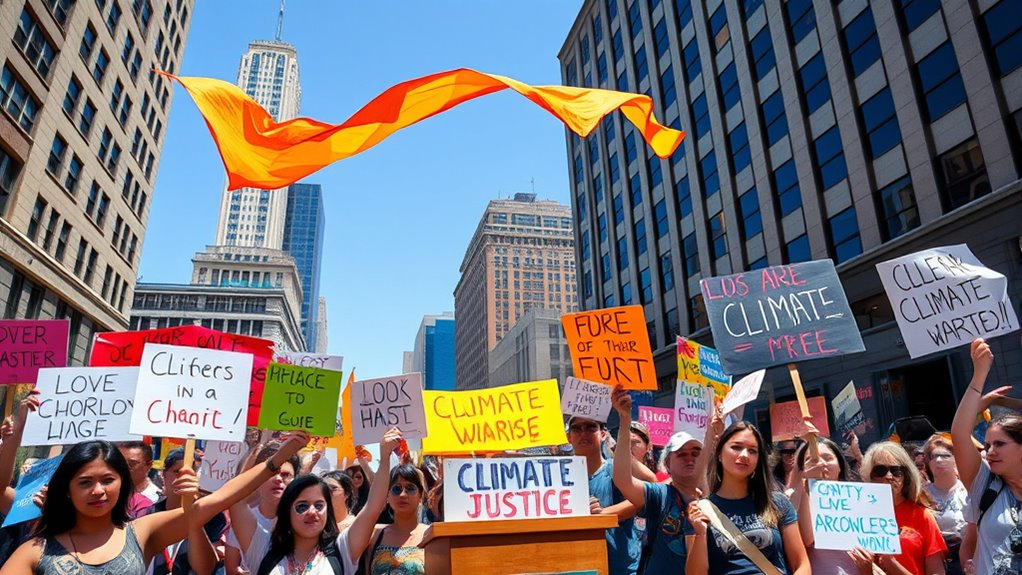

Youth climate strikes have led to real changes, with millions participating globally and putting pressure on governments to act. Your involvement has helped shift societal norms and inspired policy shifts in countries like Madagascar. Social media amplifies your voice, making climate action a shared priority across generations. These protests are not just symbolic—they’re driving systemic reforms and long-term societal shifts. If you want to understand exactly how your activism impacts the world, keep exploring the findings ahead.
Key Takeaways
- Youth climate strikes have mobilized millions worldwide, raising awareness and fostering a culture of environmental responsibility.
- Protests have significantly pressured governments, leading to more serious policy debates and tangible climate commitments.
- Digital activism via social media amplifies youth voices, normalizing climate action as a societal priority.
- Youth-led campaigns have contributed to policy shifts, such as climate reforms in countries like Madagascar.
- The movement drives systemic change by challenging norms, motivating intergenerational dialogue, and fostering long-term societal shifts.
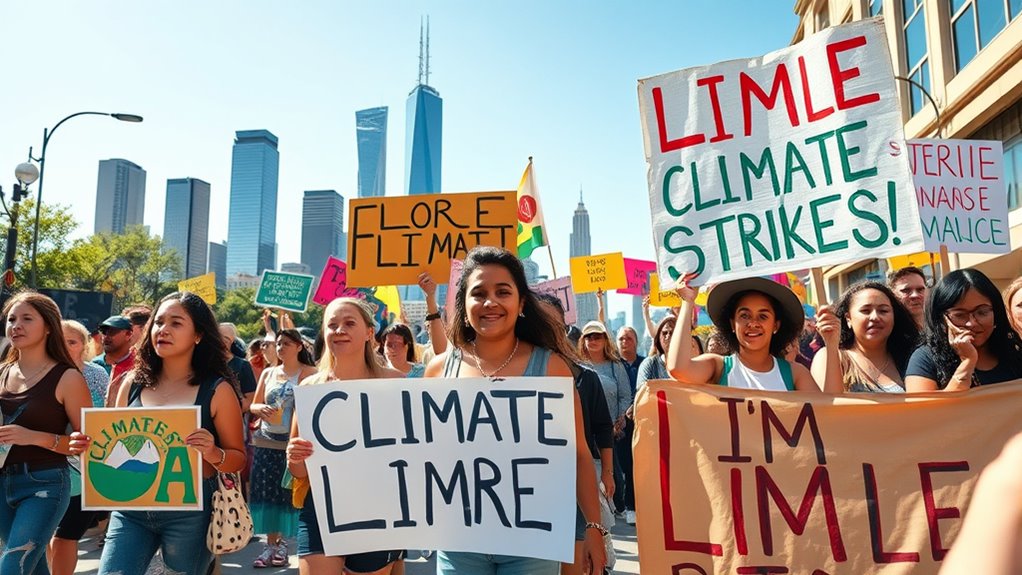
Have you ever wondered how young people are shaping the future of climate action? Their voices are loud, clear, and increasingly effective, influencing both policy effectiveness and cultural norms worldwide. The youth-led movement has grown exponentially, with millions participating in protests and strikes that demand urgent government action. For instance, the September 2019 Global Climate Strike saw around 7.6 million people across 185 countries taking a stand. This level of mobilization illustrates that youth activism isn’t just about numbers; it’s about making a tangible impact on policy discussions. When millions march together, they create pressure that governments can’t ignore, pushing climate change higher on political agendas. These protests often lead to more serious policy debates, encouraging leaders to commit to more robust climate measures. The effectiveness of these movements lies partly in their ability to influence policy directly, compelling governments to implement or accelerate climate policies that might have otherwise faced resistance or delay. Additionally, research from Western Sydney University showed that protests like these can lead to actual policy changes, demonstrating their tangible political influence (policy change). Beyond policy influence, youth climate activism also shapes cultural perceptions of environmental responsibility. Generation Z, in particular, has emerged as a dominant force, using social media to spread awareness and inspire action. Hashtags like #ClimateStrike2025 and #YouthForEarth trend worldwide, helping to normalize climate activism as a core societal value. This digital mobilization creates a cultural shift, where caring for the environment becomes a shared identity among young people. It’s not just about protesting; it’s about embedding environmental consciousness into everyday life, consumer choices, and social norms. The movement’s reach extends beyond traditional protests—campaigns like Plastic Free July engage over 100 million individuals in 190 countries, emphasizing sustainability as a cultural priority. Such widespread participation fosters a sense of collective responsibility, transforming climate action from isolated protests into a cultural movement that influences attitudes across generations.
Youth participation isn’t limited to large-scale protests; it’s also about challenging societal norms and demanding systemic change. Surveys show that over one-third of protest participants are under 19, many taking time off school to join strikes, underlining their commitment and sense of urgency. Their motivations stem from intergenerational concerns and frustrations with older generations’ inaction, pushing for policies rooted in social justice and sustainability. The protests have led to real political outcomes, including government shifts in countries like Madagascar, where youth activism spurred policy change. This illustrates that youth activism isn’t just symbolic; it’s shaping tangible political realities. The combination of digital influence, cultural shifts, and strategic activism is transforming youth climate strikes into a powerful force for long-term change, making them a crucial part of the global fight against climate change.

Parades Slogan Poles with White Board,Answer Paddle Warning Signs Support Placards with Handle for Ceremonies Sale Vote Sports, Small Sign Board Yard Signs Protest Sign Holders Double Sided
Airport Pick Up, Yard Signs Stakes Protest Sign Holders,Parades Sologan Poles,Lawn Signs,Billboard,Placards with Handle for Grand Ceremonies Sports…
As an affiliate, we earn on qualifying purchases.
As an affiliate, we earn on qualifying purchases.
Frequently Asked Questions
How Do Youth Climate Strikes Influence Policy Changes?
Youth climate strikes directly influence policy changes by increasing public pressure and raising awareness, which in turn pushes legislators to act. You see these strikes spotlight systemic issues, demanding stronger climate commitments and legislative change. Your activism encourages policymakers to prioritize climate issues, participate in international negotiations, and introduce concrete laws, such as stricter emission targets. Ultimately, your efforts help shape a more ambitious, inclusive, and urgent policy response to climate crisis.
What Long-Term Effects Have Youth Strikes Achieved so Far?
You’ve seen how youth strikes, with over 7.6 million protesters at their peak, foster generational influence, shaping future climate policies. Their emotional impact mobilizes communities and pushes governments to act. Long-term, these strikes have normalized youth leadership, increased public awareness, and inspired legislative proposals like divestment and climate targets. Your generation’s activism continues to challenge inaction, ensuring climate justice remains central in ongoing debates and policy development.
How Do Youth-Led Protests Compare Globally?
You can see that youth-led protests compare globally through their focus on intergenerational equity, emphasizing that today’s youth demand a sustainable future. Social media plays a huge role, amplifying messages and organizing strikes across continents. This widespread reach boosts visibility, inspires global solidarity, and puts pressure on leaders to act. So, your participation in these protests contributes to a powerful, interconnected movement advocating for climate justice worldwide.
What Challenges Do Young Activists Face During Strikes?
You might feel teen activist fatigue and face community resistance, like when youth protesters in a small town struggle to gain support or get permits. These challenges make organizing strikes tough, as social friction and burnout set in. Restrictions on protests, safety risks, and limited resources add to the difficulty. Despite your passion, balancing activism with personal life and overcoming skepticism can hinder your movement’s momentum.
Are Youth Climate Strikes Sustainable Without Broader Support?
Yes, youth climate strikes can be sustainable with broader support through intergenerational responsibility and community engagement. You need allies across generations to push for systemic change and maintain momentum. When older generations and communities actively participate and advocate alongside youth, it strengthens the movement, ensuring it’s not just symbolic but leads to real policy action. Building strong connections and shared responsibility keeps your activism resilient and impactful over time.

Hot Takes: Every Journalist's Guide to Covering Climate Change
As an affiliate, we earn on qualifying purchases.
As an affiliate, we earn on qualifying purchases.
Conclusion
Your voice has ignited a global revolution, turning the tide on climate change in ways no one thought possible. With every strike, you’ve sparked a wildfire of change that’s unstoppable, shaking governments and inspiring millions. Your courage has proven that youth aren’t just the future—they’re the unstoppable present force capable of rewriting history. Keep striking, keep fighting, because your impact is so huge it could move mountains and change the course of the entire planet!

AmazingSpark 72 Pcs/ 18 Sets Earth Day Gifts Set, Earth Day Party Favors Kit, Include Mini Notebooks Globe Pens Bookmark Silicone Bracelet for Environmental Awareness Gifts Prizes Party Supplies Items
Complete Earth Day Party Favor Bundle: you will receive 72 pcs/ 18 sets of Earth Day accessories, including…
As an affiliate, we earn on qualifying purchases.
As an affiliate, we earn on qualifying purchases.

3dRose End Poverty Protest Wine Bag
13.5 inch high by 8.5 inch wide, suitable for 1 or 2 (750ml) bottles
As an affiliate, we earn on qualifying purchases.
As an affiliate, we earn on qualifying purchases.