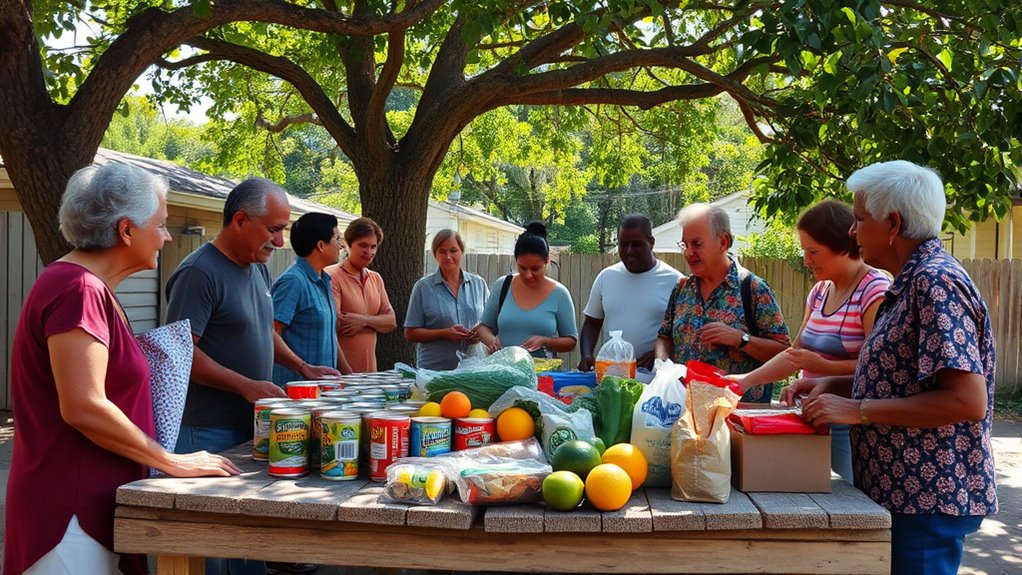

A neighborhood free pantry allows you and your neighbors to easily share surplus food and essentials, strengthening your community and reducing hunger. These small, accessible structures operate 24/7, with no questions or applications required, making support immediate and stigma-free. Located in safe, visible spots, they usually contain non-perishables, hygiene supplies, and household items. To learn how to set up and maintain one effectively, keep exploring the key points that can help you get started.

Get the latest gadgets delivered free with Prime
- Fast, free delivery on millions of items
- Prime Video, Amazon Music and more included
- Member-only deals all year
Key Takeaways
- Neighborhood free pantries allow residents to share surplus food openly without questions or fees.
- These community-led structures promote mutual aid and reduce food insecurity locally.
- Placement should be safe, accessible, and approved by neighbors, considering local regulations.
- Contents typically include non-perishable foods, household items, and hygiene products.
- Regular maintenance and security are essential to prevent theft, vandalism, and ensure food safety.

Have you ever wondered how a simple, community-driven idea can make a real difference in fighting food insecurity? The Neighborhood Free Pantry (NFP) is a perfect example. It’s a small, accessible structure placed in your neighborhood where neighbors can share food and essentials—giving what they can and taking what they need. Unlike traditional food pantries, it operates 24/7, with no application, no questions asked, making it easy for anyone to access immediate support. Inspired by the Little Free Library model, the NFP has been adapted to address local food needs, whether it’s emergency supplies, after-school snacks, or forgotten ingredients. Its focus is on nurturing community spirit and mutual aid while reducing the stigma often associated with asking for help. Additionally, the success of such initiatives can be supported by understanding food insecurity and its impact on communities.
Placement of the pantry is vital. You want it to be safe, visible, and easy to access—ideally on public property or with neighbor approval. It’s important to avoid high-crime areas or private residential zones unless the community is strongly supportive. Checking local regulations and permits is necessary to guarantee everything complies with legal requirements. Climate considerations matter too; adding shade or weather protection helps maintain the freshness and usability of the contents. Having multiple sites can be a good strategy in case the first choice isn’t available or suitable.
The typical contents of an NFP include non-perishable foods like canned goods, pasta, rice, cereal, and snacks, along with household essentials such as paper products and cleaning supplies. Hygiene items like soap, toothpaste, and feminine products are also common, along with occasional fresh produce or water, depending on what’s available locally. The goal is to provide a broad range of items that meet everyday needs without the barriers of income verification or appointments. This open access encourages trust, compassion, and a sense of mutual support among neighbors.
Running an NFP does come with operational challenges. Theft, vandalism, or misuse can threaten its success, so choosing a secure, well-maintained location is essential. Food safety is another concern—perishables need regular monitoring to prevent spoilage, especially in extreme weather. Wildlife can also be attracted if the pantry isn’t properly secured. Organizers must consider liability and insurance, and commit to ongoing stewardship—refilling, cleaning, and maintaining the structure.
Compared to traditional food pantries with set hours and application processes, the NFP offers a more immediate, stigma-free solution. It acts as a grassroots supplement to larger assistance programs, encouraging community engagement and local participation. The mini-pantry movement is growing globally, driven by youth efforts, partnerships with local organizations, and neighborhood support. Its success depends on visibility, regular donations, and community buy-in, making it a powerful tool for neighbors helping neighbors in times of need.
outdoor food pantry storage cabinet
As an affiliate, we earn on qualifying purchases.
As an affiliate, we earn on qualifying purchases.
Frequently Asked Questions
How Can I Start a Neighborhood Free Pantry?
To start a neighborhood free pantry, you should begin with community outreach to gauge local interest and needs. Connect with neighbors, hold meetings, or distribute surveys. Then, identify potential funding sources like local businesses, grants, or donations. Build a team of volunteers to help with organization and maintenance. Once you have support and resources, select a accessible location, stock it with food, and promote it to guarantee residents know it’s available.
What Safety Measures Are in Place for Food Handling?
Your food safety measures are like a fortress protecting every bite. You follow strict handling protocols, ensuring all foods are stored at proper temperatures and inspected for spoilage or contamination. Handwashing, glove use, and avoiding cross-contact keep everything hygienic. During transport, you use insulated containers and protective coverings, never placing food directly on the ground. These safety practices help prevent foodborne illnesses and keep your community’s food safe and trustworthy.
Are There Specific Foods That Should or Shouldn’t Be Donated?
You should follow donation guidelines to guarantee food safety and avoid donating perishable items like fresh meats and dairy, which can spoil quickly. Stick to shelf-stable, unopened foods such as canned goods, pasta, and grains. Avoid expired, homemade, or foods with allergens unless clearly labeled. By adhering to these guidelines, you help keep the community safe and ensure that donations are useful and safe for recipients.
How Often Are the Pantry Supplies Restocked?
You should anticipate the pantry supplies to be replenished based on the supply schedule and food storage needs. Typically, restocking happens as shelves get depleted, often on a monthly cycle since most clients visit once a month. However, for perishable items, more frequent, smaller restocking occurs due to limited food storage space and the need to keep fresh and frozen foods available. This flexible approach ensures a steady supply aligned with demand.
Can Minors Volunteer or Donate to the Pantry?
You’re in luck—youth volunteering and minor donation are both welcome at many pantries. Minors as young as 12 or 14 can help with sorting, packing, or greeting, often with adult supervision. Minor donation, like surplus food, is usually permitted without restrictions, but larger contributions might need parental oversight. Always check specific pantry rules, and remember, your involvement can make a huge impact in fighting food insecurity.
Conclusion
You see it every day—the pantry filled with hope, the shelves stocked with kindness, and neighbors coming together, sharing surplus food. It’s a place where generosity flows freely, where your small act can make a big difference. As you contribute or take what’s needed, remember you’re part of a cycle—giving, receiving, supporting—creating a community rooted in compassion. Together, you build more than a pantry—you build a neighborhood where no one faces hunger alone.
Fall Picks
fall essentials
As an affiliate, we earn on qualifying purchases.