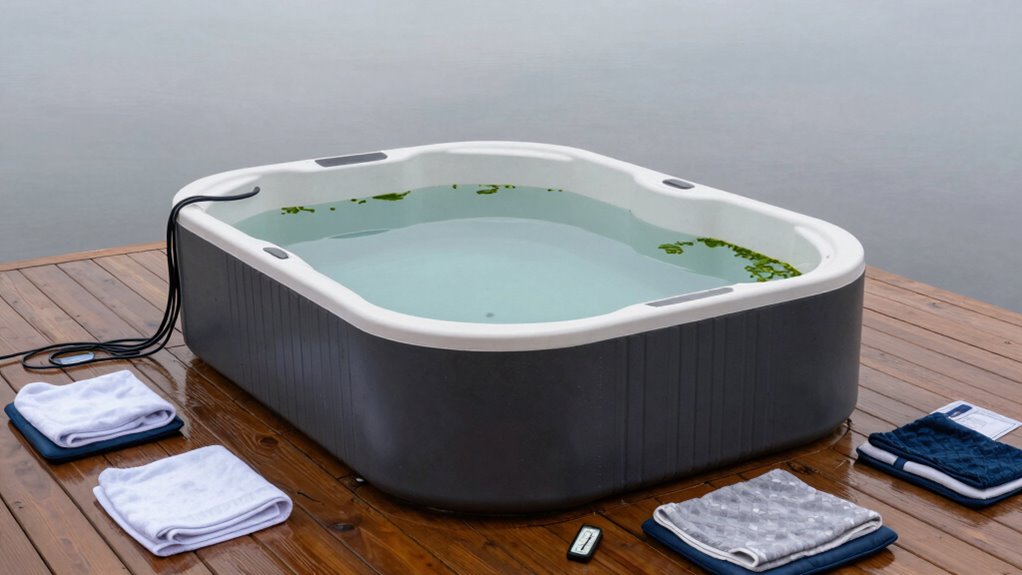
If you don’t properly insulate your cold plunge tub, the water temperature can fluctuate, making recovery less effective and causing discomfort. Failing to monitor and control water temperature can lead to cold-related injuries or insufficient therapy benefits. Poor drainage setup risks leaks and bacteria growth, while neglecting regular cleaning diminishes hygiene and safety. Ensuring correct setup and maintenance is essential; keep these mistakes in mind to maximize recovery and safety, and you’ll discover how to avoid common pitfalls.
Key Takeaways
- Inadequate temperature regulation causes discomfort, reducing the therapy’s effectiveness.
- Poor insulation leads to temperature fluctuations, compromising recovery benefits.
- Improper drainage setup risks leaks and water stagnation, affecting hygiene and safety.
- Skipping regular cleaning and water changes increases bacteria growth and diminishes health benefits.
- Ignoring safety guidelines and exposure times heightens risk of cold-related injuries.

Setting up a cold plunge tub might seem straightforward, but skipping key steps can lead to costly mistakes and safety hazards. If you rush through the process, you might not only compromise the effectiveness of your recovery routine but also put yourself at risk. One of the main reasons people invest in cold plunge tubs is to experience the benefits of cold therapy, which include reduced inflammation, faster muscle recovery, and improved circulation. However, these benefits only come when the setup is done correctly and safety guidelines are followed. Ignoring essential steps can make recovery harder instead of easier, defeating the purpose of owning a cold plunge tub in the first place.
Skipping key steps can compromise safety and effectiveness in cold plunge setup and recovery.
The first mistake you want to avoid is improper temperature control. If the water isn’t cold enough, you won’t get the full benefits of cold therapy. Conversely, water that’s too cold can cause discomfort or even cold-related injuries. Invest in a reliable thermometer and a quality cooling system to maintain precise water temperatures. Without proper temperature regulation, you risk prolonging recovery times and increasing discomfort. Additionally, neglecting safety guidelines, such as limiting your time in the tub, can lead to hypothermia or other health issues. It’s crucial to understand your body’s limits and always stay within recommended exposure times—usually no more than 10-15 minutes at a time. Ensuring your setup includes proper insulation can also help maintain consistent water temperatures, especially in colder climates. Proper insulation is a key factor in preventing heat loss and maintaining optimal conditions for cold therapy.
Another common mistake is poor insulation or improper drainage setup. If you don’t insulate your tub properly, especially in colder climates, the water temperature can fluctuate, reducing the effectiveness of cold therapy sessions. Furthermore, if your drainage system isn’t installed correctly, you could face leaks or water damage, which complicates maintenance and increases safety hazards. Always double-check your setup instructions and use high-quality fittings to ensure a secure and effective installation. Regularly inspecting your drainage system can prevent unexpected issues, saving you time and resources in the long run. Additionally, proper drainage helps avoid water stagnation, which can promote bacterial growth if not managed correctly.
Lastly, neglecting regular maintenance can turn your cold plunge tub into a breeding ground for bacteria and mold. Skipping filtration or cleaning routines not only diminishes the benefits of cold therapy but also poses health risks. Clean your tub regularly, change the water as recommended, and use appropriate sanitizers. Doing so keeps the water safe and ensures you’re getting the maximum recovery benefits without unnecessary health concerns. Proper maintenance extends the lifespan of your equipment and guarantees a safe, hygienic experience. Incorporating routine cleaning into your maintenance schedule is essential for a healthy and effective cold plunge routine.

Silicone Cover Ice Bath Thermometer with Timer, Waterproof Floating Water Thermometer for Cold Plunge, Works with Ice Bath Tub Hot Tub Accurate Recovery(Black)
- Thermometer with Timer: Real-time temperature and time tracking
- Easy Temp and Timer Control: Switch units and set 20-minute timer
- Waterproof and Floating: Waterproof design with floating capability
As an affiliate, we earn on qualifying purchases.
As an affiliate, we earn on qualifying purchases.
Frequently Asked Questions
How Often Should I Clean My Cold Plunge Tub?
You should clean your cold plunge tub weekly to maintain ideal water quality. Regular cleaning prevents bacteria buildup and keeps water filtration effective. Check and adjust the temperature regulation system to ensure consistent cold water, which helps you recover faster. Drain and scrub the tub, replace filters, and add fresh water as needed to keep your cold plunge safe and hygienic. Proper maintenance maximizes your recovery benefits.
What’s the Ideal Water Temperature for Recovery?
The ideal water temperature for recovery is typically between 50-59°F (10-15°C). Proper temperature regulation helps reduce muscle inflammation and speeds up recovery. To guarantee safe use, focus on water sanitation, maintaining consistent temperatures, and avoiding sudden temperature changes. Regularly monitor the water, and make adjustments as needed to keep it within this best range. This way, you maximize recovery benefits while keeping your cold plunge safe and effective.
Can Improper Setup Cause Health Issues?
Yes, improper setup can cause health risks. Setup errors like incorrect water temperature, poor insulation, or inadequate drainage can lead to skin irritation, hypothermia, or mold growth. These issues may compromise your recovery process and pose safety concerns. To avoid health risks, make sure your cold plunge tub is installed correctly, with proper temperature control, ventilation, and maintenance. Always follow manufacturer instructions and regularly check your setup for any potential errors.
How Long Should I Stay in the Cold Plunge?
You should stay in the cold plunge for about 1 to 3 minutes, like riding a fleeting wave before it crashes. Pushing beyond this can trigger cold shock, risking dizziness or discomfort, and worsen muscle fatigue instead of aiding recovery. Listen to your body’s signals; if you start shivering or feeling numb, it’s time to exit. Proper timing helps you harness benefits without overdoing it.
Is It Necessary to Use a Water Filtration System?
Yes, using a water filtration system is necessary to keep your cold plunge clean and safe. It helps remove bacteria, debris, and algae, ensuring healthy water. Regular system maintenance is essential; clean or replace filters as recommended and check for any clogs. Proper filtration maintains water clarity and hygiene, making your recovery process more effective and preventing potential skin irritations or infections caused by unfiltered water.
Conclusion
So, avoid these cold plunge tub setup mistakes, or you’ll be turning your recovery into a full-blown circus! Imagine your muscles crying for help as you sit in a tub that’s more like an iceberg than a recovery tool. Get it right, and you’ll reveal the secret to feeling like a superhero after every dip. Don’t let these tiny errors turn your chill session into a nightmare — keep it simple, safe, and icy!