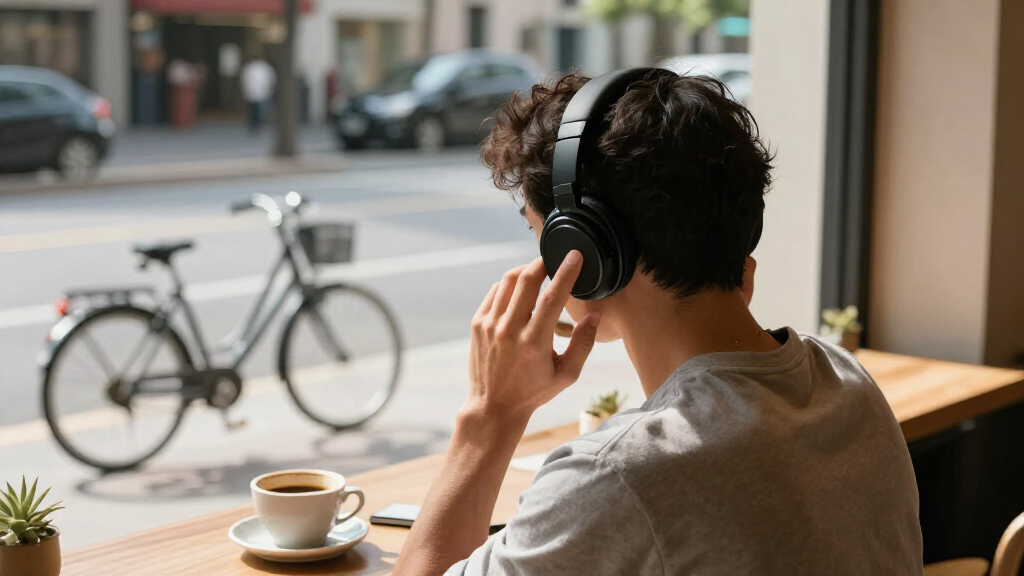
Wireless noise-canceling headphones are often bought for the same reasons: quieter commutes, focused work, and more comfortable listening on flights. Sony WH-1000XM5 and Bose QuietComfort Ultra Headphones sit near the top of that market, but they put their strengths in different places. Sony combines effective noise cancellation with longer battery life, useful everyday features, and a usually lower price. Bose takes the lead for many listeners in blocking noise and staying comfortable over long sessions.

Get the latest gadgets delivered free with Prime
- Fast, free delivery on millions of items
- Prime Video, Amazon Music and more included
- Member-only deals all year

Bose QuietComfort Ultra Headphones (2nd Gen), Wireless Over-Ear Noise-Cancelling, Black
- ✔ Design: Wireless over-ear
- ✔ Noise and awareness modes: Quiet, Aware, Immersion
- ✔ Audio features: Spatialized audio, Cinema Mode, CustomTune

Bose QuietComfort Headphones (2nd Gen), Wireless Over-Ear Noise-Cancelling Headphones, Black
- ✔ Type: Wireless over-ear headphones
- ✔ Noise cancelling: Active noise cancelling with ActiveSense
- ✔ Listening modes: Quiet, Aware, Immersion, Cinema, ANR off

Soundcore by Anker Q20i Hybrid Active Noise Cancelling Headphones, Black
- ✔ Design: Folding wireless over-ear
- ✔ Drivers: 40 mm with BassUp technology
- ✔ Noise cancellation: Hybrid ANC with two internal and two external microphones
The decision is not simply which pair sounds better. It is whether the Bose advantage in quiet and comfort matters enough to pay more, or whether Sony’s more balanced feature set is the smarter purchase. Frequent flyers and people sensitive to pressure or background noise should look closely at Bose. Buyers who want dependable cancellation, flexible controls, and more listening time per charge will usually get better value from Sony.
At a Glance
| Criteria | Sony WH-1000XM5 | Bose QuietComfort Ultra Headphones | Winner |
|---|---|---|---|
| Noise cancellation | Very effective adaptive cancellation; strong across common travel and office noise | Among the strongest at reducing low-frequency and changing noise | B |
| Comfort and fit | Light, soft fit, though the headband can create pressure for some users | Plush ear cushions and a secure, comfortable fit for extended sessions | B |
| Sound and spatial audio | Full, lively sound with app EQ and 360 Reality Audio support | Balanced sound with Immersive Audio spatial modes | Depends |
| Battery life | Up to 30 hours with ANC on | Up to 24 hours with ANC on; less with Immersive Audio | A |
| Calls and connectivity | Multipoint Bluetooth and clear call pickup in many environments | Multipoint Bluetooth and solid call quality, though wind can affect microphones | A |
| Controls and features | Touch controls, speak-to-chat, wear detection, and fold-flat design | Physical controls, modes, and spatial audio; does not fold as compactly | A |
| Value | Usually less expensive while offering a broad feature set | Premium price is easiest to justify for cancellation and comfort | A |
Bose QuietComfort Ultra Headphones (2nd Gen), Wireless Over-Ear Noise-Cancelling, Black
The Bose QuietComfort Ultra Headphones (2nd Gen) make the strongest all-around case because they give us more ways to shape a listening session than either competitor. Quiet, Aware and Immersion modes cover focused listening, hearing more of our surroundings, and spatialized playback; CustomTune adapts sound to our ears, adding a personal adjustment absent from the Q20i’s preset and custom EQ approach. Cinema Mode also gives video a dedicated option rather than treating headphones as music-only gear.Comfort and calls are part of the package: plush ear cushions and a metal headband are designed for longer wear, while built-in noise-rejecting microphones support calls and video meetings. Bluetooth multipoint helps us move between two devices without making this model a desk-only or travel-only choice. Compared with the standard QuietComfort (2nd Gen), the Ultra’s appeal is its CustomTune-led sound adaptation and Immersive Audio, rather than a documented USB-C lossless playback feature. That makes it the more compelling choice for varied listening, while the regular QuietComfort may fit better if wired lossless audio matters more.The tradeoff is runtime. Bose lists up to 30 hours, but that drops to 23 hours with Immersive Audio; Soundcore’s Q20i claims up to 40 hours with ANC active. The Ultra also has a stated Bluetooth range of up to 30 feet, so buyers who roam far from a source should keep that limit in mind. We rank it first for the broadest blend of noise-control modes, personalization and everyday features, not for maximum battery life.
Pros:
- Quiet, Aware and Immersion modes cover focused listening, awareness and spatialized audio.
- CustomTune adapts sound to the shape of the listener’s ears.
- Up to 30 hours of stated battery life with USB-C charging.
- Plush cushions, a metal headband, and noise-rejecting microphones support wear and calls.
Cons:
- Stated battery life falls to up to 23 hours with Immersive Audio.
- Bluetooth range is listed as up to 30 feet.
Best for: Listeners who want adaptable noise and awareness modes, spatialized audio, and comfortable over-ear headphones for music, video and calls.
Not ideal for: Buyers whose top priority is the longest stated ANC runtime, or who specifically want wired USB-C lossless playback.
Bottom line: We rank the QuietComfort Ultra first for its combination of adjustable noise control, CustomTune and spatial audio, provided immersive listening’s shorter runtime suits your routine.
“We rank the QuietComfort Ultra first for its combination of adjustable noise control, CustomTune and spatial audio, provided immersive listening’s shorter runtime suits your routine.”
Bose QuietComfort Headphones (2nd Gen), Wireless Over-Ear Noise-Cancelling Headphones, Black
The Bose QuietComfort Headphones (2nd Gen) are the pick for buyers who want adjustable noise control plus a clear wired-listening option. They provide Quiet, Aware, Immersion and Cinema modes, with ActiveSense described as smoothing unwanted noise spikes in Aware Mode. The standout difference from the Ultra is lossless playback over USB-C, which gives a wired listener a specific reason to choose this model. Cinema Mode also gives video a dedicated listening profile.For day-to-day wear, the redesigned headband and synthetic-leather earcups are intended to provide a secure, comfortable fit. The supplied hard-shell case and both 3.5 mm-to-USB-C and USB-C-to-USB-C cables make the set ready for packed commutes or wired use. Compared with the Q20i, the QuietComfort offers more named listening modes and a USB-C lossless path; in exchange, it has a shorter stated runtime and fewer stated sound-customization controls than the Soundcore app’s 22 EQ presets and custom EQ.Battery life is up to 24 hours with noise cancelling enabled, falling to 18 hours with TrueSpatial audio. A full charge takes three hours, although a 15-minute quick charge is listed to provide up to two and a half hours of playback. The Ultra lasts longer on paper in standard use and adds CustomTune, so buyers who want the broadest adaptive experience may prefer that step up. We place this Bose second because its combination of comfort, Cinema Mode and wired USB-C playback is appealing, but its battery tradeoff is more restrictive than the Q20i’s.
Pros:
- Quiet, Aware, Immersion and Cinema modes support different listening situations.
- USB-C wired playback supports lossless audio.
- ActiveSense is designed to smooth noise spikes in Aware Mode.
- Includes a hard-shell case and two audio or charging cables.
Cons:
- Stated runtime drops to up to 18 hours with TrueSpatial audio.
- A full charge takes three hours.
Best for: Listeners who want Bose noise-control modes, a hard-shell case, Cinema Mode and the option of USB-C lossless wired playback.
Not ideal for: People who want the longest ANC battery life or who plan to use TrueSpatial audio for extended listening between charges.
Bottom line: We recommend the QuietComfort (2nd Gen) for listeners who value Bose’s mode selection and wired USB-C lossless playback more than maximum runtime.
“We recommend the QuietComfort (2nd Gen) for listeners who value Bose’s mode selection and wired USB-C lossless playback more than maximum runtime.”
Soundcore by Anker Q20i Hybrid Active Noise Cancelling Headphones, Black
The Soundcore Q20i stands apart through endurance and app-based sound control. Its stated battery life reaches up to 40 hours with ANC on and 60 hours in Normal mode, a useful distinction for travel or stretches between charging opportunities. A five-minute charge is listed to deliver up to four hours of listening, and dual-device connectivity lets us switch between two paired sources. The Bose Ultra and QuietComfort offer more elaborate listening-mode lineups, while the Q20i emphasizes practical runtime and personalization.Hybrid ANC uses two internal and two external microphones, and the headphones include ANC, Normal and Transparency modes. The Soundcore app adds 22 EQ presets and customizable EQ, so listeners who want to adjust the balance have more explicit controls than the supplied descriptions of either Bose model specify. The 40 mm drivers and BassUp technology signal a bass-focused option, while the foldable design and listed 9.12-ounce weight make it easier to pack than a rigid over-ear set.Those advantages come with boundaries. The 60-hour figure applies in Normal mode; with ANC active, the stated maximum is 40 hours, still longer than either Bose model’s listed ANC runtime. Hi-Res audio support is available via the AUX cable, rather than being described as wireless playback. Compared with the QuietComfort (2nd Gen), the Q20i gives us more EQ presets and a longer quoted ANC run, but fewer named noise and video modes. We rank it third overall because its strongest case is endurance and tuning flexibility, rather than the broader mode and call features described for the Bose picks.
Pros:
- Up to 40 hours of stated battery life with ANC on and up to 60 hours in Normal mode.
- Five minutes of charging provides up to four hours of listening.
- Connects to two Bluetooth devices at once.
- Soundcore app provides 22 EQ presets and customizable EQ.
Cons:
- The 60-hour maximum applies in Normal mode; stated ANC runtime is up to 40 hours.
- Hi-Res audio support is available through the AUX cable.
Best for: Listeners who want long stated battery life with ANC on, fast charging, app EQ and a foldable over-ear design.
Not ideal for: Buyers who prioritize a wider range of dedicated listening modes, Bose’s CustomTune, or wireless Hi-Res playback.
Bottom line: We choose the Q20i for long stretches between charges and app-based EQ, while Bose’s two models suit listeners who want more varied named modes.
“We choose the Q20i for long stretches between charges and app-based EQ, while Bose’s two models suit listeners who want more varied named modes.”
As an Amazon Associate we earn from qualifying purchases.
Key Differences
The clearest Bose advantage is how quiet and comfortable the headphones can feel over a long journey. Its cancellation is especially persuasive in steady aircraft, train, and ventilation noise, and the plush fit suits listeners who keep headphones on for hours. Sony is also very capable at reducing noise, but the distinction matters to people who prioritize the quietest possible cabin or office. For everyone else, Sony’s performance is already strong enough that the Bose improvement may not change daily use.
Sony wins the practical ownership comparison. It lasts longer between charges, packs more conveniently, and includes a particularly useful set of everyday features. Multipoint lets it stay connected to two devices, while speak-to-chat can pause playback when the wearer talks. Bose has its own appeal in Immersive Audio and straightforward physical controls, but these features do not outweigh Sony’s battery and flexibility for most buyers. The Bose premium makes sense when its comfort and cancellation solve a real problem; otherwise, Sony is the safer value choice.
Detailed Comparison
Noise cancellation (Bose QuietComfort Ultra Headphones wins — moderate)
Bose QuietComfort Ultra wins, with a moderate advantage. Both headphones substantially reduce common commuting and office noise, but Bose is particularly effective against continuous low rumbles and changing surroundings. That can mean less fatigue on long flights or in a noisy workspace. Sony is still quiet enough for most people, so the difference is most meaningful to frequent travelers and listeners who are easily distracted.
Comfort and fit (Bose QuietComfort Ultra Headphones wins — moderate)
Bose wins by a moderate margin for extended wear. Its soft cushions and secure fit are a strong match for long listening sessions. Sony is light and comfortable for many users, but headband pressure can bother some people, and fit is personal for both models. If possible, try the pair on before buying; comfort can matter more than a small sound or feature difference when the headphones stay on all day.
Sound and spatial audio (minor difference)
This is a preference call. Sony provides energetic, customizable sound, with app EQ and support for its 360 Reality Audio format. Bose offers a balanced presentation and Immersive Audio, which creates a spatial effect with compatible listening modes. The Bose feature is not a universal upgrade: some listeners prefer conventional stereo, and spatial processing can affect battery life. Choose by the sound you enjoy rather than assuming one has a clear across-the-board lead.
Battery life (Sony WH-1000XM5 wins — moderate)
Sony wins by a moderate margin: its rated battery life is up to 30 hours with noise cancellation on, compared with up to 24 hours for Bose, and Bose runs down faster with Immersive Audio enabled. In practice, both can cover many commutes and workdays, but Sony offers more room for long trips between charges. That extra time is useful for frequent travelers and anyone who forgets to charge regularly.
Calls and connectivity (Sony WH-1000XM5 wins — minor)
Sony takes a minor edge for everyday flexibility. Both support multipoint connections, so a listener can pair a phone and computer, and both can deliver good call quality in suitable conditions. Sony’s microphone processing and device handoff make it a strong work companion, though neither pair should be treated as a dedicated headset in heavy wind or loud surroundings. For ordinary calls, the gap is small.
Controls and features (Sony WH-1000XM5 wins — moderate)
Sony wins by a moderate margin for breadth. It combines touch controls with speak-to-chat, wear detection, an adjustable ambient mode, and a fold-flat design. Bose counters with easy-to-use physical controls, listening modes, and Immersive Audio, which some users may prefer for reliability. Sony’s feature list is more useful to people switching between travel, work, and home listening; Bose’s simpler approach suits those who want fewer interactions.
Value (Sony WH-1000XM5 wins — major)
Sony wins for most shoppers. Both are premium headphones, but Sony is commonly available for less while delivering strong cancellation, longer battery life, and more everyday conveniences. Bose earns its higher price when its extra quiet and more comfortable fit provide a clear benefit, especially on frequent flights or long listening sessions. If the price difference is substantial and those strengths are not priorities, paying more is hard to justify.
Sony WH-1000XM5: Pros and Cons
Pros:
- Longer rated battery life with ANC on
- Broad set of useful everyday features
- Fold-flat design is convenient for travel
- Usually the better-priced option
Cons:
- Bose generally blocks more noise
- Headband pressure may bother some wearers
- Touch controls and automatic features may take adjustment
Bose QuietComfort Ultra Headphones: Pros and Cons
Pros:
- Excellent noise cancellation, especially for steady low-frequency noise
- Plush fit works well for many long listening sessions
- Immersive Audio provides a spatial listening option
- Physical controls are direct and easy to find by touch
Cons:
- Shorter battery life, especially with spatial audio enabled
- Usually costs more
- Less compact for packing than Sony’s fold-flat design
Who Should Choose What
Choose Sony WH-1000XM5 if:
- You want strong noise cancellation and the better overall feature-to-price balance.
- You regularly switch between a phone and laptop and value convenient multipoint use.
- You travel often and want longer battery life and a fold-flat design.
- You like adjusting sound with app EQ and want practical automatic features.
Choose Bose QuietComfort Ultra Headphones if:
- You fly often or work around persistent noise and want the strongest cancellation of these two.
- You wear headphones for hours and Bose’s fit feels more comfortable on your head.
- You are willing to pay a premium for quiet and comfort rather than extra battery or features.
- You enjoy spatial audio and prefer straightforward physical controls.
Skip both if: You need headphones for intense exercise, want a low-cost pair, or need microphone performance suited to consistently windy or very noisy calls.
Value for Money
Sony is the better value for the majority of buyers because its lower typical price comes with longer battery life and a broader set of daily-use features, while its noise cancellation is already highly capable. Paying more for Bose is reasonable when the quieter listening experience or its fit solves a specific problem: frequent long-haul flights, noise-sensitive work, or discomfort with other headphones. If you would use neither advantage often, the premium is unlikely to feel worthwhile.
Final Verdict
Choose Sony WH-1000XM5 for the better all-around purchase: it combines strong cancellation with longer battery life, useful device and listening features, and better value. Choose Bose QuietComfort Ultra if maximum quiet and long-session comfort matter more than cost and charge frequency. The deciding factor is whether Bose’s extra cancellation and fit noticeably improve your routine. For most commuters and general listeners, Sony is the recommendation; for frequent flyers and noise-sensitive users, Bose is worth the premium.
Frequently Asked Questions
Which headphones have stronger noise cancellation?
Bose QuietComfort Ultra generally has the edge, particularly with steady low-frequency noise such as aircraft rumble. Sony WH-1000XM5 also provides strong cancellation and should satisfy most commuters.
Which pair is better for long flights?
Bose is a strong choice if comfort and reducing cabin noise are your priorities. Sony lasts longer per charge and folds flatter, so it may suit travelers who value battery life and easier packing more.
Is Bose QuietComfort Ultra worth paying more for?
It can be for frequent travelers or people who find Bose more comfortable and value its stronger cancellation. If those advantages are occasional rather than daily, Sony usually offers better value.
Which has longer battery life?
Sony WH-1000XM5 is rated for up to 30 hours with noise cancellation on. Bose QuietComfort Ultra is rated for up to 24 hours, and Immersive Audio lowers its runtime.