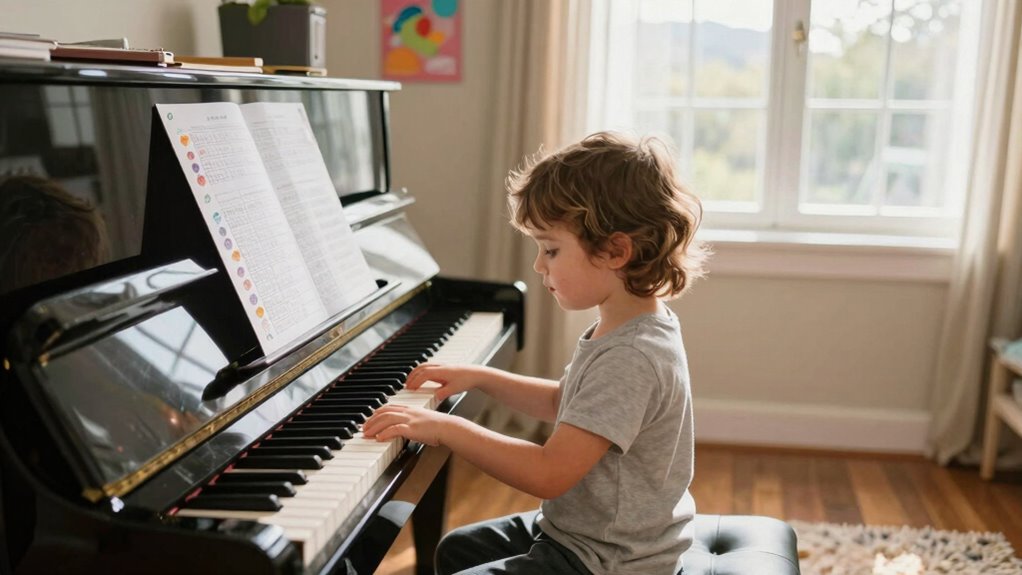

The key to keeping kids engaged with beginner piano is creating a consistent practice routine. Set specific times each day, even just 10-15 minutes, and use visual progress charts or rewards to make practice rewarding. Break difficult sections into smaller parts and celebrate small wins to boost confidence. By making practice regular and enjoyable, your child will build a healthy habit. Keep going, and you’ll discover more ways to turn practice into a lasting, fun routine.
Key Takeaways
- Establish a consistent daily practice schedule to build routine and discipline.
- Set small, achievable goals to boost confidence and sustain motivation.
- Use visual progress charts and celebrate milestones to reinforce positive habits.
- Incorporate favorite songs and break practice into enjoyable activities to keep interest high.
- Reward consistent practice to encourage long-term commitment and skill development.
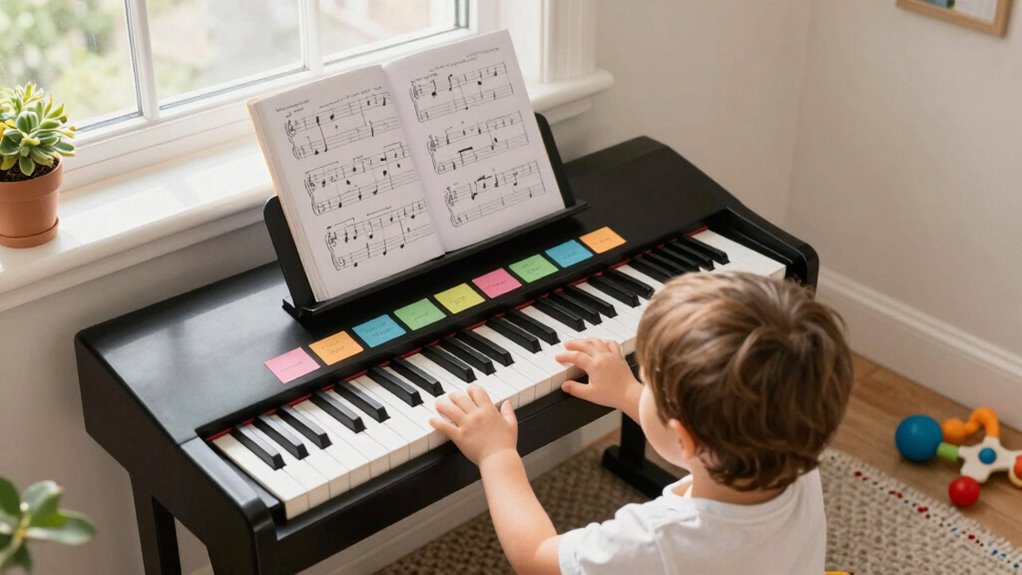
Starting your piano journey can be exciting yet overwhelming, but with consistent practice, you’ll see steady progress. One of the most effective ways to stay motivated is by using motivational techniques that keep your interest high and your spirits up. It’s easy to feel frustrated when progress feels slow, but setting small, achievable goals can boost your confidence and make practice sessions feel more rewarding. Celebrate each milestone, whether it’s mastering a tricky measure or playing a favorite song smoothly. These little victories reinforce your desire to keep going and help you build a positive relationship with practice.
Practice scheduling is another essential element that can make or break your progress. Instead of leaving practice sessions to chance, create a routine that fits into your daily life. Consistency is key; even 10-15 minutes daily can lead to noticeable improvements over time. When you plan specific times for practice, it becomes a natural part of your day, reducing the likelihood of skipping sessions. Use a calendar or a reminder app to help stick to your schedule, and try to keep your practice time at consistent intervals—morning, after school, or before bed—so it becomes a habit. This structure not only fosters discipline but also helps your brain adapt to regular musical activity, making learning feel less like a chore and more like a routine.
Incorporate motivational techniques into your practice schedule by rewarding yourself for sticking to your plan. For example, after completing a week of consistent practice, treat yourself to something special—maybe a new piece of music or a fun activity. Visual aids like progress charts can also motivate you, letting you see how much you’ve improved over time. Sharing your goals with friends or family can add an extra layer of accountability and encouragement, making your practice feel meaningful and supported. Additionally, understanding the importance of consistent practice in developing your skills can help you stay committed over the long term.

Practice Keyboard & Note Chart for Behind the Piano Keys
As an affiliate, we earn on qualifying purchases.
As an affiliate, we earn on qualifying purchases.
Frequently Asked Questions
How Long Should a Beginner Practice Each Day?
You should aim for about 20 to 30 minutes of practice each day. Creating an effective practice schedule helps you stay consistent and focused, ensuring steady progress. Break the time into manageable segments, like warm-ups, scales, and pieces. This routine keeps practice engaging and productive. Over time, as skills improve, you can gradually extend practice sessions, but starting with short, effective routines builds a solid foundation.
What Are the Best Rewards for Consistent Practice?
You’ll find that praise and encouragement work wonders, motivating your child to keep practicing. Reward charts add a fun element, providing visual progress and a sense of achievement. The best rewards aren’t just material; they’re moments of praise, a special jam session, or choosing the next song. When your child sees their growth recognized, they’ll stay inspired—and that’s the secret to making practice a rewarding habit.
How Do I Keep My Child Motivated Over Time?
You can keep your child motivated over time by providing consistent parental encouragement and emphasizing practice consistency. Celebrate their progress, no matter how small, and set achievable goals to build confidence. Make practice fun by incorporating songs they love and offering positive feedback. Keep a routine, so practicing becomes a natural part of their day, and remind them of their passion for playing. Your support makes all the difference.
What if My Child Loses Interest Quickly?
If your child’s interest wanes quickly, try switching up their engagement strategies. For example, when Emily lost interest after a few weeks, her teacher introduced fun games and simple duets. This approach reignited her passion and kept her engaged. You can do the same by incorporating variety, rewards, or short, focused practice sessions. This keeps their interest alive and helps develop a lasting love for playing piano.
Are There Specific Times of Day Best for Practice?
You should schedule practice sessions during times that fit seamlessly into your child’s daily routine, like after school or before dinner. Consistent practice timing helps build a habit, making it easier for your child to stay engaged. Find a time when they’re alert and focused, ensuring practice sessions are effective and enjoyable. This routine integration boosts their motivation and makes practicing a natural part of each day.

ScratchAway Practice Reward Charts for Kids (2-Pack) Scratch Off Reward Charts with Scratch Off Stickers – Fun Reward Charts to Motivate Your Kids (8.5"x11")
A GOOD REWARD FOR STUDENTS – Being a teacher, you would have to struggle to keep the students…
As an affiliate, we earn on qualifying purchases.
As an affiliate, we earn on qualifying purchases.
Conclusion
By establishing a consistent practice habit, you’ll notice your child’s progress accelerates and their confidence grows. Research shows that kids who practice regularly are 50% more likely to stick with piano long-term. So, make practice a daily routine, even if just for a few minutes. This simple habit not only keeps them engaged but also transforms playing into a joyful, lifelong journey. Keep at it, and you’ll see incredible results unfold!

My First Piano Lessons: Fun, Easy-to-Follow Instructions for Kids (My First Piano Books)
As an affiliate, we earn on qualifying purchases.
As an affiliate, we earn on qualifying purchases.

Lexington 61 Key Keyboard Piano, Complete Electronic Piano Keyboard Set for Beginners Adults, Portable Music Keyboard with Lighted Keys, Teaching Modes, Stand, Case, Microphone (Purple)
This is a 61-key electric keyboard designed specifically for beginners (Aged 15+). Kit comes with almost everything a…
As an affiliate, we earn on qualifying purchases.
As an affiliate, we earn on qualifying purchases.