
Choosing the cheapest portable AC without considering energy efficiency or noise levels can backfire, making your room less comfortable and your bills higher. Poor placement and lack of insulation increase noise and reduce cooling performance, while noisy units disrupt sleep and focus. Balancing cost with features like a good EER and quiet operation is key. Stay with us, and you’ll discover how to avoid these mistakes for a cooler, quieter, and more efficient space.
Key Takeaways
- Choosing a cheap model with poor energy efficiency can increase long-term energy costs and reduce cooling effectiveness.
- Ignoring noise levels can lead to disruptive operation, especially at night, making the room less comfortable.
- Improper placement and lack of insulation can cause uneven cooling and amplify noise disturbances.
- Focusing solely on price without considering efficiency and noise may result in a less comfortable environment.
- Not investing in quieter, energy-efficient units can diminish overall room comfort and increase operational issues.
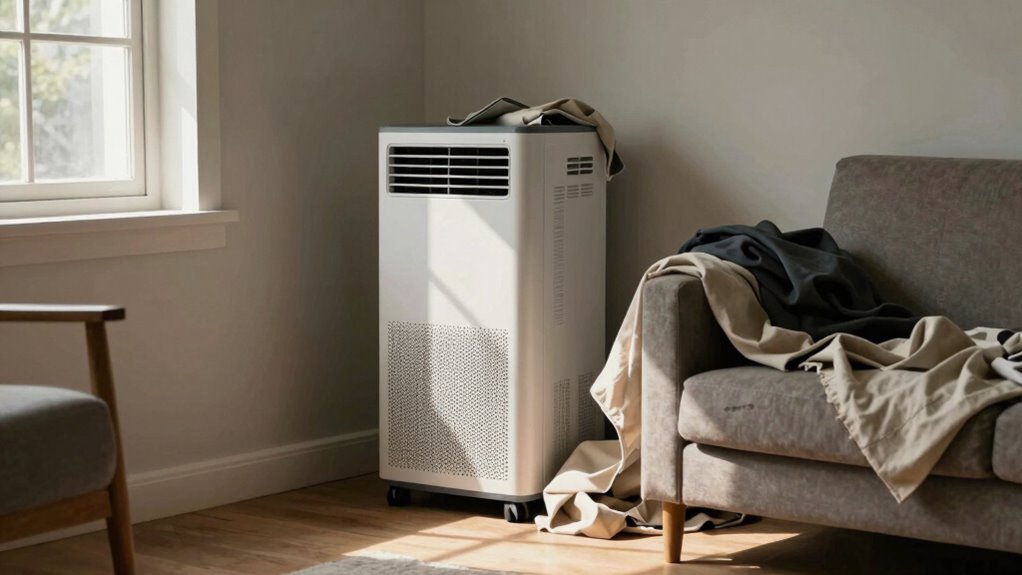
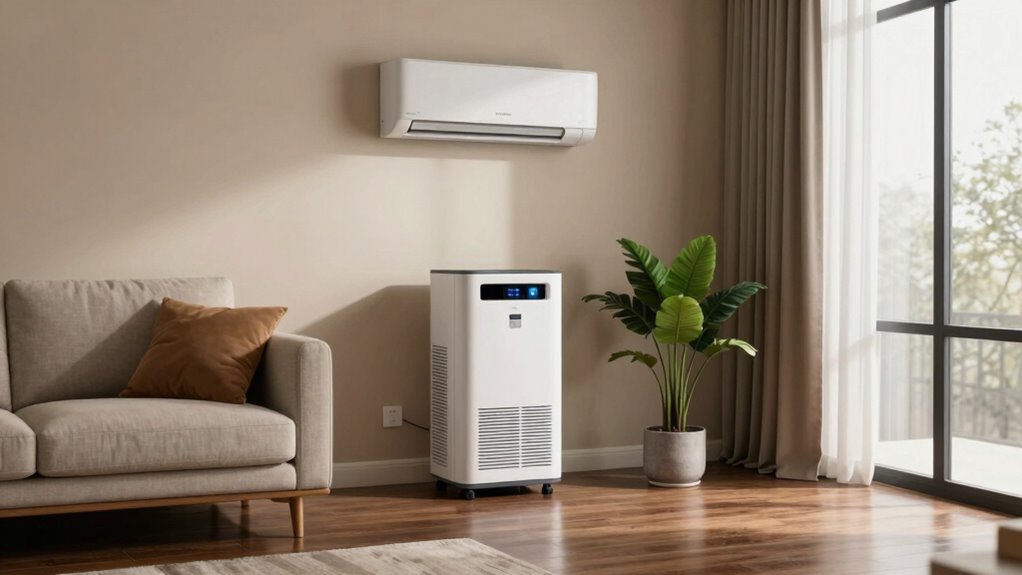
Buying a portable air conditioner can seem straightforward, but many people make common mistakes that end up costing them money and comfort. One of the biggest errors is overlooking the importance of energy efficiency. You might get tempted to choose the cheapest model available, but that often means higher electricity bills in the long run. Look for units with a good energy efficiency ratio (EER) or those labeled as ENERGY STAR certified. These models use less power to cool your space, which saves you money and reduces your environmental impact. Ignoring this aspect can make your room feel worse because an inefficient AC not only strains your budget but also struggles to maintain a consistent temperature. As a result, your space may feel uncomfortably warm or overly cold, defeating the purpose of having a portable AC in the first place. Additionally, choosing an energy-efficient unit can help reduce power consumption and extend the lifespan of your device.
Another common mistake is not considering noise levels. Some portable AC units generate a considerable amount of noise, which can disturb your sleep, work, or relaxation. When shopping, don’t just focus on cooling capacity; check the decibel (dB) ratings. Quieter models typically operate below 55 dB, giving you a more peaceful environment. If you buy a noisy unit, it can make your room feel worse by adding unwanted background noise, especially during the night when you’re trying to rest. The last thing you want is a loud compressor interrupting your sleep or conversation. Keep in mind that higher noise levels often correlate with cheaper, less well-designed units, so investing in a quieter model might cost a bit more upfront but will markedly improve your comfort. Additionally, paying attention to energy efficiency can help prevent unnecessary noise and power wastage, further enhancing your overall experience. Being mindful of noise levels and choosing a quieter unit is especially important if your space is limited or if you share it with others who need rest or concentration. Also, consider placement and insulation, as proper positioning can help minimize noise disturbances and improve cooling performance. Proper insulation can also reduce the workload on your AC, leading to quieter operation and better efficiency.
energy efficient portable air conditioner
As an affiliate, we earn on qualifying purchases.
As an affiliate, we earn on qualifying purchases.
Frequently Asked Questions
How Do I Determine the Right Size Portable AC for My Room?
To determine the right size portable AC for your room, focus on sizing accuracy by calculating the square footage of your space. Consider room insulation, as poorly insulated rooms need a more powerful unit. You should aim for an AC with a cooling capacity of about 20 BTUs per square foot. Avoid undersized units that struggle to cool, or oversized ones that cause humidity issues, ensuring ideal comfort.
Can Portable AC Units Improve Air Quality in Addition to Cooling?
Just like the myth of Pandora’s box, a portable AC can do more than cool—it can improve air quality if it features air filtration. These units can reduce VOCs and airborne pollutants, making your space healthier. Look for models with built-in filters designed for VOC reduction, and you’ll enjoy fresher, cleaner air alongside a cooler room. Proper maintenance guarantees these benefits last, transforming your portable AC into a dual-purpose appliance.
Are There Noise Level Considerations When Choosing a Portable AC?
When choosing a portable AC, consider sound levels to avoid noise concerns that could disturb your comfort. Look for units with low decibel ratings, especially if you plan to use the AC in bedrooms or workspaces. Noise levels vary, so reading reviews and checking specifications helps guarantee you pick a model that runs quietly. Ignoring sound considerations can lead to frustration, making your room feel less relaxing rather than more comfortable.
How Energy-Efficient Are Portable AC Units Compared to Window Units?
Sure, portable AC units are often the energy hogs of the cooling world, but they can be surprisingly energy-efficient compared to window units if you pick the right model. Their energy consumption varies, and some are designed with eco-friendly features that reduce environmental impact. So, if you’re aiming to lower your carbon footprint and save on electricity bills, look for energy-efficient portable units that balance power and sustainability.
What Maintenance Is Required to Keep a Portable AC Functioning Properly?
To keep your portable AC running smoothly, you need to perform regular filter replacements and drainage maintenance. Change the filter every 1-2 months to guarantee ideal air quality and efficiency. Also, check and clear the drainage system to prevent water buildup, which can cause malfunctions or odors. Regular maintenance like these helps your unit perform better, lasts longer, and keeps your room feeling cool and comfortable.
Conclusion
Avoiding common portable AC mistakes can make a huge difference in your comfort. Did you know that improper sizing accounts for nearly 30% of portable AC inefficiencies? By choosing the right unit and avoiding typical pitfalls, you’ll enjoy cooler, more comfortable rooms without wasting energy or money. Remember, investing a little extra time to research and select wisely means you’ll stay cooler and happier all season long. Don’t let simple errors turn your space into a sweatbox!