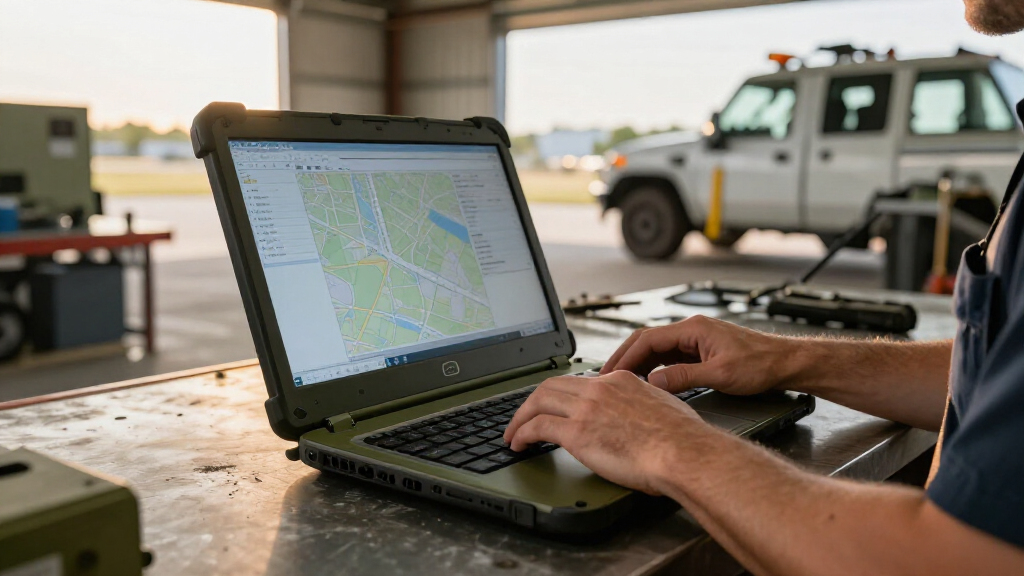
Military grade laptops are built for tougher working conditions than standard notebooks, but their protection, age, performance, and service options vary widely. I’d choose the Dell Pro Rugged 14 with Core Ultra 5 135U, 64GB RAM, and a 2TB SSD as the best overall fit for buyers who need modern components and generous storage. The Panasonic Toughbook FZ-55 Mk2 stands out for a field-focused design, while the MUNBYN IRX16 offers a larger 15.6-inch screen and current-generation memory. The main tradeoffs are ruggedness versus portability, newer performance versus the value of renewed older models, and screen size versus field convenience. Read on for my full breakdown of where each laptop fits and what to check before choosing.

Get the latest gadgets delivered free with Prime
- Fast, free delivery on millions of items
- Prime Video, Amazon Music and more included
- Member-only deals all year
Complete the kit



Key Takeaways
- The Dell Pro Rugged 14 configuration with 64GB RAM and 2TB SSD leads this lineup on listed memory and storage, while its 14-inch format remains easier to carry than the 15.6-inch options.
- The Panasonic Toughbook FZ-55 Mk2 is the more field-oriented alternative for buyers drawn to the Toughbook line, but it has half the listed RAM and storage of the leading Dell configuration.
- The MUNBYN IRX16 and ONERugged N15M are the standout large-screen choices; their 15.6-inch displays favor desk or vehicle work over compact carry.
- Several Dell Latitude 5430 listings share similar names and overlapping specifications. Buyers should compare processor, memory, storage, operating system, and renewed status rather than relying on the model name alone.
- Older Toughbook CF-31 and Dell Latitude 5414 models trade newer platform features for established rugged designs. Their older processors and smaller SSDs make them better suited to legacy or basic field tasks than demanding new workloads.
| Dell Latitude 5420 Rugged 14-Inch FHD Touchscreen Laptop, Intel Core i7, 32GB RAM, 256GB SSD, Windows 11 Pro (Renewed) |  | Best for Memory-Heavy Field Work | Processor: Intel Core i7-8650U, up to 4.2GHz | Memory: 32GB DDR4, 3200MHz | Storage: 256GB SSD | VIEW LATEST PRICE | See Our Full Breakdown |
| Panasonic Toughbook FZ-55 Mk2 14-inch Rugged Laptop, Intel Core i7, 16GB RAM, 512GB SSD (Renewed) |  | Best for Connected Field Teams | Processor: Intel Core i7-1185G7, 4 cores, 8 threads, up to 4.8GHz | Memory: 16GB DDR4-3200 | Storage: 512GB OPAL SSD | VIEW LATEST PRICE | See Our Full Breakdown |
| MUNBYN IRX16 Rugged 15.6-Inch Laptop, Windows 11 Pro, Intel Core i5-1235U, 16GB DDR5, 512GB SSD |  | Best for Outdoor Visibility and Expandable Storage | Processor: Intel Core i5-1235U | Memory: 16GB DDR5, up to 4800MHz | Storage: 512GB replaceable SSD, expandable up to 4TB | VIEW LATEST PRICE | See Our Full Breakdown |
| Dell Latitude Rugged 5430 14-inch Touchscreen Laptop, Core i5-1145G7, 16GB RAM, 512GB SSD, Windows 11 Pro (Renewed) |  | Best Familiar Business-Ready Pick | Processor: Intel Core i5-1145G7, 4 cores, up to 4.4GHz | Memory: 16GB DDR4, 3200MHz | Storage: 512GB PCIe NVMe M.2 SSD | VIEW LATEST PRICE | See Our Full Breakdown |
| ONERugged N15M 15.6-Inch Rugged Laptop, Intel Core Ultra 5 125H, 16GB RAM, 512GB SSD, Windows 11 Pro |  | Best for Long Shifts Without Shutdowns | Processor: Intel Core Ultra 5 125H, 14 cores, 18 threads, up to 4.5GHz | Memory: 16GB | Storage: 512GB SSD | VIEW LATEST PRICE | See Our Full Breakdown |
| Dell Pro Rugged 14-inch FHD Laptop, Intel Core Ultra 5 135U, 64GB RAM, 2TB SSD, Windows 11 Pro |  | Best for High-Capacity Field Work | Processor: Intel Core Ultra 5 135U, 12 cores, up to 4.4 GHz | Memory: 64GB DDR5, 5600 MHz | Storage: 2TB PCIe NVMe M.2 SSD | VIEW LATEST PRICE | See Our Full Breakdown |
| ASUS Vivobook Go 15.6-Inch Laptop, AMD Ryzen 5 7520U, 8GB RAM, 512GB SSD, Windows 11 Home |  | Best for Everyday Work on a Tight Ruggedness Requirement | Processor: AMD Ryzen 5 7520U | Memory: 8GB | Storage: 512GB SSD | VIEW LATEST PRICE | See Our Full Breakdown |
| Dell Latitude Rugged 5430 14-Inch Touchscreen Laptop, Core i7-1185G7, 32GB RAM, 1TB SSD, Windows 11 Pro (Renewed) | | Best for Bright-Outdoor Touch Work | Processor: Core i7-1185G7 in title; description lists Core i5 | Memory: 32GB DDR4 | Storage: 1TB M.2 SSD | VIEW LATEST PRICE | See Our Full Breakdown |
| Panasonic Toughbook CF-31 MK6 Rugged Laptop, Core i7-7600U, 32GB RAM, 512GB SSD, 13.1-inch Touchscreen, Windows 11 Pro |  | Best for Fully Rugged Field Deployment | Processor: Intel Core i7-7600U, 2.8 GHz, vPro | Memory: 32GB DDR4 SDRAM | Storage: 512GB SSD | VIEW LATEST PRICE | See Our Full Breakdown |
| Panasonic Toughbook FZ-55 MK1 14-Inch Rugged Laptop, Core i7, 16GB RAM, 512GB SSD (Renewed) |  | Best for a Bright Full HD Rugged Touchscreen | Processor: Intel Core i7-8665U vPro, up to 4.8 GHz | Memory: 16GB RAM | Storage: 512GB M.2 SSD | VIEW LATEST PRICE | See Our Full Breakdown |
| Dell Pro Rugged 14-Inch FHD Laptop, Intel Core Ultra 5 135U, 32GB DDR5, 1TB NVMe SSD | | Best Overall for Modern Field Work | Processor: Intel Core Ultra 5 135U, 12 cores, up to 4.4 GHz | Memory: 32GB DDR5, 5600 MHz | Storage: 1TB PCIe NVMe M.2 SSD | VIEW LATEST PRICE | See Our Full Breakdown |
| Dell Pro Rugged 14 Laptop, 14-inch Ultra 5 125U, 32GB, 512GB (Renewed) |  | Best Renewed Field-Work Pick | Processor: Intel Core Ultra 5 125U, 12 cores, up to 4.3 GHz | Memory: 32GB DDR5, 5600 MHz | Storage: 512GB PCIe NVMe M.2 SSD | VIEW LATEST PRICE | See Our Full Breakdown |
| Dell Latitude Rugged 5430 14-Inch Touchscreen Laptop, Core i7-1185G7, 32GB RAM, 1TB SSD, Windows 11 Pro | | Best for Touchscreen Field Input | Processor: Intel Core i7-1185G7, 11th Gen, 4 cores, up to 4.4 GHz | Memory: 32GB DDR4, 3200 MHz | Storage: 1TB PCIe NVMe M.2 SSD | VIEW LATEST PRICE | See Our Full Breakdown |
| Dell Latitude 5430 14-inch Rugged Notebook, Intel Core i5-1145G7, 16 GB RAM, 512 GB SSD |  | Best for Harsh, Gloved-Hand Work | Processor: Intel Core i5-1145G7, quad-core, 2.60 GHz | Memory: 16GB DDR4 | Storage: 512GB SSD | VIEW LATEST PRICE | See Our Full Breakdown |
| Dell Latitude 5414 Rugged Laptop, Intel Core i5-6300U, 16GB RAM, 256GB SSD, Windows 11 Pro (Renewed) |  | Best for Legacy Equipment | Processor: Intel Core i5-6300U, dual-core, 2.4 GHz base, up to 3.0 GHz | Memory: 16GB DDR4 | Storage: 256GB SSD | VIEW LATEST PRICE | See Our Full Breakdown |
| military grade laptop | Processor | Memory | Storage | Display |
|---|---|---|---|---|
| Dell Latitude 5420 Rugged 14-I | Intel Core i7-8650U, up to 4.2GHz | 32GB DDR4, 3200MHz | 256GB SSD | 14-inch Full HD touchscreen, 1920 × 1080, 60Hz |
| Panasonic Toughbook FZ-55 Mk2 | Intel Core i7-1185G7, 4 cores, 8 threads, up to 4.8GHz | 16GB DDR4-3200 | 512GB OPAL SSD | 14-inch Full HD capacitive touchscreen, 1920 × 1080, 1000 nits |
| MUNBYN IRX16 Rugged 15.6-Inch | Intel Core i5-1235U | 16GB DDR5, up to 4800MHz | 512GB replaceable SSD, expandable up to 4TB | 15.6-inch LCD, 1920 × 1080, 60Hz, up to 1000 nits |
| Dell Latitude Rugged 5430 14-i | Intel Core i5-1145G7, 4 cores, up to 4.4GHz | 16GB DDR4, 3200MHz | 512GB PCIe NVMe M.2 SSD | 14-inch touchscreen, 1920 × 1080 |
| ONERugged N15M 15.6-Inch Rugge | Intel Core Ultra 5 125H, 14 cores, 18 threads, up to 4.5GHz | 16GB | 512GB SSD | 15.6-inch Full HD LCD, 1920 × 1080, 1000 nits |
| Dell Pro Rugged 14-inch FHD La | Intel Core Ultra 5 135U, 12 cores, up to 4.4 GHz | 64GB DDR5, 5600 MHz | 2TB PCIe NVMe M.2 SSD | 14-inch FHD, 1920 x 1080, 400 nits, anti-glare, non-touch |
| ASUS Vivobook Go 15.6-Inch Lap | AMD Ryzen 5 7520U | 8GB | 512GB SSD | 15.6-inch LED, 1920 x 1080, 60Hz |
| Dell Latitude Rugged 5430 14-I | Core i7-1185G7 in title; description lists Core i5 | 32GB DDR4 | 1TB M.2 SSD | 14-inch FHD touchscreen, 1920 x 1080, up to 1100 nits |
| Panasonic Toughbook CF-31 MK6 | Intel Core i7-7600U, 2.8 GHz, vPro | 32GB DDR4 SDRAM | 512GB SSD | 13.1-inch XGA touchscreen, 1024 x 768, 1200 nits |
| Panasonic Toughbook FZ-55 MK1 | Intel Core i7-8665U vPro, up to 4.8 GHz | 16GB RAM | 512GB M.2 SSD | 14-inch Full HD touchscreen, 1920 x 1080, up to 1000 nits |
| Dell Pro Rugged 14-Inch FHD La | Intel Core Ultra 5 135U, 12 cores, up to 4.4 GHz | 32GB DDR5, 5600 MHz | 1TB PCIe NVMe M.2 SSD | 14-inch FHD, 1920 × 1080, 60Hz, anti-glare, 400 nits, non-touch |
| Dell Pro Rugged 14 Laptop | Intel Core Ultra 5 125U, 12 cores, up to 4.3 GHz | 32GB DDR5, 5600 MHz | 512GB PCIe NVMe M.2 SSD | 14-inch FHD, 1920 × 1080, 60Hz, anti-glare, 400 nits, non-touch |
| Dell Latitude Rugged 5430 14-I | Intel Core i7-1185G7, 11th Gen, 4 cores, up to 4.4 GHz | 32GB DDR4, 3200 MHz | 1TB PCIe NVMe M.2 SSD | 14-inch FHD, 1920 × 1080, capacitive touchscreen, 500 nits |
| Dell Latitude 5430 14-inch Rug | Intel Core i5-1145G7, quad-core, 2.60 GHz | 16GB DDR4 | 512GB SSD | 14-inch FHD, 1920 × 1080, anti-glare, gloved-touch support, up to 1100 nits |
| Dell Latitude 5414 Rugged Lapt | Intel Core i5-6300U, dual-core, 2.4 GHz base, up to 3.0 GHz | 16GB DDR4 | 256GB SSD | 14-inch |
More Details on Our Top Picks
Dell Latitude 5420 Rugged 14-Inch FHD Touchscreen Laptop, Intel Core i7, 32GB RAM, 256GB SSD, Windows 11 Pro (Renewed)
I’d choose this renewed Latitude 5420 for field workflows that keep many applications open or rely on its 32GB of RAM. Its dedicated Radeon RX 540 graphics also set it apart from the integrated-graphics Dell Latitude Rugged 5430 and Panasonic Toughbook FZ-55 Mk2 in this group, though it is not a newer processor platform. The 14-inch touchscreen and Windows 11 Pro make it a practical fit for service records, mapping, and business software on site.
The main compromise is storage: 256GB can fill quickly with offline maps, project files, or larger applications, while the FZ-55 Mk2 and Latitude 5430 each list 512GB. I’d also factor in its renewed condition and smaller display before choosing it for a long-term deployment. It makes the most sense when RAM and dedicated graphics matter more than storage headroom.
Pros:- 32GB RAM supports heavier multitasking than the 16GB configurations in the FZ-55 Mk2 and Latitude Rugged 5430
- Dedicated AMD Radeon RX 540 graphics distinguish it from the lineup’s integrated-graphics options
- 14-inch Full HD touchscreen supports direct input in field workflows
- Windows 11 Pro provides business-oriented operating system features
Cons:- 256GB SSD leaves less room for offline files and applications than competing 512GB configurations
- Renewed condition may not suit buyers seeking a new unit
- 14-inch screen offers less workspace than the 15.6-inch MUNBYN IRX16 and ONERugged N15M
Best for: Field technicians who run several business applications at once and want dedicated graphics in a rugged 14-inch laptop.
Not ideal for: Teams storing large project archives locally, or buyers who want a larger screen or a new-condition unit.
- Processor:Intel Core i7-8650U, up to 4.2GHz
- Memory:32GB DDR4, 3200MHz
- Storage:256GB SSD
- Display:14-inch Full HD touchscreen, 1920 × 1080, 60Hz
- Graphics:AMD Radeon RX 540 dedicated graphics
- Operating system:Windows 11 Pro
- Ports:4 USB ports
- Condition:Renewed
Our verdict“Choose this Latitude when 32GB RAM and dedicated graphics matter more than storage capacity or a larger display.”
Panasonic Toughbook FZ-55 Mk2 14-inch Rugged Laptop, Intel Core i7, 16GB RAM, 512GB SSD (Renewed)
For work that moves between a vehicle, a job site, and an office, I’d favor the Toughbook FZ-55 Mk2 for its combination of 4G LTE, Wi-Fi 6, and a 1000-nit touchscreen. Those connectivity and visibility features give it a clearer field-work advantage over the Dell Latitude 5420, which lists more RAM and dedicated graphics but a smaller 256GB SSD and no cellular connection in its supplied specs. The FZ-55 Mk2 also includes a stylus and a spill-resistant backlit keyboard, useful when direct input and changing light are part of the workday.
Its 16GB RAM is less generous than the Latitude 5420’s 32GB, and integrated Intel UHD Graphics make it a weaker fit for graphics-heavy tasks. At 4.9 pounds, it is no lightweight carry, either. I see its value in the combination of bright-screen usability and built-in wireless options, not raw graphics performance.
Pros:- 1000-nit touchscreen is specified for visibility in bright outdoor conditions
- Wi-Fi 6 and 4G LTE support connectivity across field locations
- 512GB OPAL SSD offers more listed capacity than the Latitude 5420’s 256GB drive
- Backlit spill-resistant keyboard and included stylus support field input
Cons:- 16GB RAM is half the capacity of the Dell Latitude 5420 configuration in this roundup
- Integrated Intel UHD Graphics are less suited to graphics-heavy work than the Latitude 5420’s dedicated GPU
- Listed weight of 4.9 pounds may be tiring for frequent carrying
Best for: Mobile field teams that need cellular connectivity, a bright touch display, and a stylus for on-site work.
Not ideal for: Users running memory-intensive or graphics-heavy workloads, or commuters prioritizing a lightweight laptop.
- Processor:Intel Core i7-1185G7, 4 cores, 8 threads, up to 4.8GHz
- Memory:16GB DDR4-3200
- Storage:512GB OPAL SSD
- Display:14-inch Full HD capacitive touchscreen, 1920 × 1080, 1000 nits
- Wireless:Wi-Fi 6, Bluetooth 5.1, 4G LTE
- Ports:Thunderbolt 4 USB-C, 2 × USB-A, HDMI 2.0, Gigabit Ethernet, combo audio jack, Micro SDXC slot
- Weight:4.9 lbs
- Condition:Renewed
Our verdict“Pick the FZ-55 Mk2 if cellular access and a bright touchscreen are more useful to your field work than extra memory or dedicated graphics.”
MUNBYN IRX16 Rugged 15.6-Inch Laptop, Windows 11 Pro, Intel Core i5-1235U, 16GB DDR5, 512GB SSD
The MUNBYN IRX16 is a strong match for buyers who need a large, bright screen and storage they can expand as field records grow. Its 15.6-inch, 1000-nit display gives more viewing area than the 14-inch Dell Latitude Rugged 5430 and Panasonic Toughbook FZ-55 Mk2, while IP65 protection and MIL-STD-810H certification speak directly to dusty, wet, and demanding work settings. The listed 512GB SSD is replaceable and expandable up to 4TB, giving it more upgrade headroom than the other 512GB configurations here.
That screen and rugged specification come with a bulkier footprint: the product data lists dimensions of 16.02 × 1.79 × 12.04 inches and does not state a weight. Its integrated Iris Xe graphics also make it less appropriate for graphics-heavy work than the dedicated-GPU Latitude 5420. I’d shortlist it for outdoor documentation and upgrade flexibility, not for compact carry or discrete graphics.
Pros:- 1000-nit 15.6-inch display offers more workspace than the 14-inch rugged options
- IP65 protection and MIL-STD-810H certification are specified for demanding environments
- Replaceable 512GB SSD is listed as expandable up to 4TB
- Includes a numeric keypad, fingerprint reader, and camera privacy switch
Cons:- Listed dimensions indicate a larger footprint than the 14-inch Dell and Panasonic alternatives
- Product data does not specify weight, making portability harder to judge
- Integrated graphics do not match the dedicated Radeon GPU in the Dell Latitude 5420
Best for: Outdoor inspectors and site supervisors who need a bright 15.6-inch display, stated ingress protection, and room to expand storage.
Not ideal for: Mobile workers who need a compact laptop with a confirmed carry weight, or users who need dedicated graphics.
- Processor:Intel Core i5-1235U
- Memory:16GB DDR5, up to 4800MHz
- Storage:512GB replaceable SSD, expandable up to 4TB
- Display:15.6-inch LCD, 1920 × 1080, 60Hz, up to 1000 nits
- Graphics:Integrated Intel Iris Xe Graphics
- Protection:IP65, MIL-STD-810H
- Wireless:Wi-Fi 6, Bluetooth 5.1, 4G
- Operating system:Windows 11 Pro
Our verdict“Choose the IRX16 for outdoor visibility and SSD upgrade flexibility if its larger, unspecified-weight chassis fits your field setup.”
Dell Latitude Rugged 5430 14-inch Touchscreen Laptop, Core i5-1145G7, 16GB RAM, 512GB SSD, Windows 11 Pro (Renewed)
I’d place this renewed Latitude Rugged 5430 as the straightforward business-focused choice: it pairs an 11th-generation Core i5 with 16GB of RAM, a 512GB NVMe SSD, and Windows 11 Pro in a 14-inch touchscreen format. Against the older Latitude 5420 in this lineup, it offers twice the listed SSD capacity and a newer processor generation, while giving up that model’s 32GB RAM and dedicated Radeon graphics. Its matte or anti-glare touchscreen may also suit users who work around reflections.
This is less specialized for outdoor use than the MUNBYN IRX16 or ONERugged N15M: the supplied data does not list a 1000-nit display, IP65 protection, or MIL-STD-810H certification. Integrated graphics also limit its appeal for demanding visual workloads. Because it is renewed, I’d treat condition as part of the purchase decision. It fits office-to-site work better than harsh, highly exposed deployments.
Pros:- 512GB NVMe SSD provides more listed storage than the Latitude 5420 configuration
- 11th-generation Core i5-1145G7 and 16GB RAM suit everyday business multitasking
- 14-inch Full HD touchscreen has a matte or anti-glare finish
- Includes Windows 11 Pro, Wi-Fi, Bluetooth 5.2, and an integrated webcam
Cons:- Integrated Intel graphics are less suited to demanding visual workloads than the Latitude 5420’s dedicated GPU
- The supplied specs do not list IP65 protection, MIL-STD-810H certification, or 1000-nit brightness
- Renewed condition may not suit buyers who require a new unit
Best for: Business users who want a 14-inch touchscreen, Windows 11 Pro, and a balanced 512GB configuration for office-to-site tasks.
Not ideal for: Workers regularly exposed to dust, water, or direct sunlight who need explicitly listed IP65 protection or a 1000-nit display.
- Processor:Intel Core i5-1145G7, 4 cores, up to 4.4GHz
- Memory:16GB DDR4, 3200MHz
- Storage:512GB PCIe NVMe M.2 SSD
- Display:14-inch touchscreen, 1920 × 1080
- Graphics:Integrated Intel graphics
- Operating system:Windows 11 Pro
- Connectivity:Wi-Fi, Bluetooth 5.2, USB, HDMI
- Condition:Renewed
Our verdict“Choose this Latitude for familiar Windows business work and a 512GB SSD, but favor the MUNBYN or ONERugged for explicitly specified outdoor protection and brightness.”
ONERugged N15M 15.6-Inch Rugged Laptop, Intel Core Ultra 5 125H, 16GB RAM, 512GB SSD, Windows 11 Pro
The ONERugged N15M earns its place for a specific field need: hot-swappable batteries let a worker replace the removable pack without shutting down, backed by a built-in battery. That feature gives it an advantage over the MUNBYN IRX16, which offers expandable SSD storage but no hot-swap battery in the supplied data. Its 1000-nit 15.6-inch screen, IP65 protection, and MIL-STD-810H certification also make it a purpose-built option for exposed worksites rather than an ordinary business laptop.
The tradeoff is carrying burden. At 7.8 pounds, it is substantially less appealing for workers who move on foot than the 4.9-pound FZ-55 Mk2. The display is Full HD rather than a higher resolution, and its integrated graphics are not a substitute for the dedicated Radeon GPU in the Latitude 5420. I’d choose it for continuity and field resilience, not portability or graphics work.
Pros:- Hot-swappable removable battery can be replaced without shutting down
- 1000-nit 15.6-inch Full HD display is specified for bright field conditions
- IP65 protection and MIL-STD-810H certification suit demanding environments
- TPM 2.0 and fingerprint reader provide listed security features
Cons:- 7.8-pound listed weight is considerably heavier than the Panasonic Toughbook FZ-55 Mk2
- Integrated Intel graphics are less suited to graphics-heavy tasks than the Latitude 5420’s dedicated GPU
- Full HD resolution offers less pixel detail than higher-resolution display options
Best for: Field crews working long shifts away from reliable outlets who need hot-swappable power and a bright, protected display.
Not ideal for: Workers who carry a laptop over long distances, or users who need dedicated graphics or more than Full HD resolution.
- Processor:Intel Core Ultra 5 125H, 14 cores, 18 threads, up to 4.5GHz
- Memory:16GB
- Storage:512GB SSD
- Display:15.6-inch Full HD LCD, 1920 × 1080, 1000 nits
- Protection:IP65, MIL-STD-810H; drop resistance up to 4 feet
- Batteries:Hot-swappable 4700mAh removable battery and 1300mAh built-in battery
- Wireless:Wi-Fi 6, Bluetooth 5.1
- Weight:7.8 lbs
- Operating system:Windows 11 Pro
Our verdict“Pick the N15M when uninterrupted field shifts and hot-swappable power matter more than a lighter carry or dedicated graphics.”
Dell Pro Rugged 14-inch FHD Laptop, Intel Core Ultra 5 135U, 64GB RAM, 2TB SSD, Windows 11 Pro
I’d put this Dell Pro Rugged first for buyers who need substantial memory and storage in a field-ready machine. Its 64GB of DDR5 RAM and 2TB SSD give it far more room for large datasets and demanding multitasking than the Panasonic Toughbook FZ-55 MK1’s 16GB and 512GB. The built-in handle, anti-glare 400-nit screen, and ports such as RS-232, Ethernet, and Thunderbolt 4 suit technicians moving between work sites and legacy equipment. It is not the lightest choice: at 4.5 pounds, it is heavier than the 4.35-pound Dell Latitude Rugged 5430, and its screen is non-touch. Integrated graphics also make it a poor fit for graphics-heavy workloads. I’d choose it for capacity and connectivity, not for a compact carry or touch-first workflow.
Pros:- 64GB DDR5 memory supports heavy multitasking and large working sets.
- 2TB NVMe SSD provides ample local space for project files and field data.
- Built-in handle and anti-glare 400-nit display suit mobile work.
- Broad connectivity includes RS-232, Ethernet, HDMI 2.1, and two Thunderbolt 4/USB-C ports.
Cons:- The 4.5-pound body is heavy for frequent travel.
- Non-touch display is less suited to glove-friendly or stylus-based workflows.
- Integrated graphics are not intended for demanding 3D or GPU-intensive work.
Best for: Field engineers and technicians who need ample local storage, high memory capacity, and serial connectivity for equipment work.
Not ideal for: Workers who need a touchscreen, a lighter daily carry, or dedicated graphics for GPU-heavy applications.
- Processor:Intel Core Ultra 5 135U, 12 cores, up to 4.4 GHz
- Memory:64GB DDR5, 5600 MHz
- Storage:2TB PCIe NVMe M.2 SSD
- Display:14-inch FHD, 1920 x 1080, 400 nits, anti-glare, non-touch
- Ports:USB 3.2, two Thunderbolt 4/USB-C, HDMI 2.1, RS-232, RJ45 Ethernet, microSD, smart-card reader
- Wireless:Wi-Fi 6E and Bluetooth 5.3
- Weight:4.5 lbs
- Operating system:Windows 11 Pro
Our verdict“Choose this Dell when memory, storage, and field connectivity matter more than a touchscreen or lighter chassis.”
ASUS Vivobook Go 15.6-Inch Laptop, AMD Ryzen 5 7520U, 8GB RAM, 512GB SSD, Windows 11 Home
The ASUS Vivobook Go is the outlier in this military-grade roundup: its listed specifications do not claim a MIL-STD rating, IP protection, or a rugged chassis. I’d include it only for buyers whose work is mostly indoors and who want a lighter, ordinary-use laptop rather than a field-protection tool. At 3.6 pounds, it is easier to carry than the Dell Pro Rugged 14 or Panasonic Toughbook CF-31, and its 15.6-inch Full HD screen provides more workspace than the Toughbook’s 13.1-inch, low-resolution panel. The tradeoff is clear: the ASUS has 8GB of memory, a listed 250-nit display, and no stated rugged credentials. Its privacy shutter and lay-flat hinge are practical everyday touches, but they do not replace environmental protection. I would skip it for exposed, dusty, wet, or impact-prone work.
Pros:- 3.6-pound weight is lighter than the rugged models in this group.
- 15.6-inch Full HD screen offers more workspace than the smaller Toughbook CF-31 display.
- 180-degree hinge supports flat sharing or flexible desk positioning.
- Privacy camera shutter provides a simple physical webcam cover.
Cons:- No MIL-STD or IP protection is listed, so it is a weak match for harsh field conditions.
- 8GB of memory limits heavy multitasking and demanding applications.
- The listed 250-nit display may be difficult to read in bright outdoor light.
Best for: Office-based or campus users who want a relatively light Full HD laptop and do not need certified rugged protection.
Not ideal for: Field crews, service technicians, and military or industrial users who need documented impact, dust, or water resistance.
- Processor:AMD Ryzen 5 7520U
- Memory:8GB
- Storage:512GB SSD
- Display:15.6-inch LED, 1920 x 1080, 60Hz
- Graphics:Integrated AMD Radeon Graphics
- Wireless:Wi-Fi and Bluetooth 5.1
- Battery:42 Wh lithium-ion
- Weight:3.6 lbs
- Operating system:Windows 11 Home
Our verdict“Pick the Vivobook Go only for light-duty indoor use; it is not a substitute for the certified rugged options here.”
Dell Latitude Rugged 5430 14-Inch Touchscreen Laptop, Core i7-1185G7, 32GB RAM, 1TB SSD, Windows 11 Pro (Renewed)
The Latitude Rugged 5430 stands out for its 1100-nit touchscreen, a major advantage when a standard anti-glare panel is hard to read outdoors. Compared with the Dell Pro Rugged 14, this renewed model trades the newer Core Ultra processor and larger 64GB/2TB configuration for touch input and stated MIL-STD-810H testing and IP53 protection. Its Ethernet, serial, Thunderbolt 4, and nano SIM options also make it adaptable to field systems and mobile connectivity. At 4.35 pounds, it remains a substantial carry, and the renewed condition means buyers should check the seller’s refurbishment and support terms. There is also a product-data discrepancy: the title lists a Core i7-1185G7, while the description says Core i5. I’d confirm the processor before purchase rather than assume the title is definitive.
Pros:- 1100-nit touchscreen is designed for visibility in bright outdoor conditions.
- MIL-STD-810H testing and IP53 rating provide stated ruggedness credentials.
- Ports include Thunderbolt 4, Ethernet, HDMI, serial, and nano SIM.
- 32GB RAM and a 1TB SSD offer useful capacity for field applications and files.
Cons:- Renewed condition may not suit buyers who want a new device.
- The title and description conflict on whether the processor is Core i7 or Core i5.
- At 4.35 pounds, it is still a heavy everyday carry.
Best for: Outdoor inspectors and field technicians who need a very bright touchscreen, IP53-rated protection, and legacy-friendly ports.
Not ideal for: Buyers who require an unambiguous processor specification, a new unit, or a lighter laptop for daily commuting.
- Processor:Core i7-1185G7 in title; description lists Core i5
- Memory:32GB DDR4
- Storage:1TB M.2 SSD
- Display:14-inch FHD touchscreen, 1920 x 1080, up to 1100 nits
- Durability:MIL-STD-810H tested, IP53 rated
- Ports:USB 3.2, Thunderbolt 4/USB-C, RJ-45 Ethernet, HDMI, serial, microSD, nano SIM, headset jack
- Wireless:Wi-Fi 6E and Bluetooth 5.2
- Weight:4.35 lbs
- Condition:Renewed
Our verdict“Choose this renewed Latitude when outdoor touchscreen visibility and stated rugged ratings outweigh processor ambiguity and the weight.”
Panasonic Toughbook CF-31 MK6 Rugged Laptop, Core i7-7600U, 32GB RAM, 512GB SSD, 13.1-inch Touchscreen, Windows 11 Pro
For exposure to harsher field conditions, the Toughbook CF-31 has the strongest stated protection in this group: IP65, MIL-STD-810G, and MIL-STD-461F. That makes it a different proposition from the IP53-rated Panasonic FZ-55 MK1, which is thinner and has a higher-resolution 14-inch display but does not list the CF-31’s IP65 rating. The CF-31 adds a 1200-nit touchscreen, hot-swappable battery, 4G LTE, and dGPS for work away from reliable power and Wi-Fi. Its compromises are substantial: the 1024 x 768 screen has much less detail than the FZ-55’s Full HD panel, and the thick 1.8-inch body is cumbersome to carry. It is also renewed and uses an older Core i7-7600U. I’d favor it for ruggedness and field features, not modern screen quality or portability.
Pros:- IP65 and MIL-STD-810G/MIL-STD-461F ratings suit demanding field environments.
- 1200-nit touchscreen is designed for sunlight readability.
- Hot-swappable battery can support longer shifts when spare batteries are available.
- Includes 4G LTE, dGPS, TPM 2.0, and a smart-card reader.
Cons:- 1024 x 768 resolution is far less detailed than the Panasonic FZ-55 MK1’s Full HD display.
- The 1.8-inch-thick chassis is bulky for routine travel.
- Renewed condition and the older Core i7-7600U may not suit buyers seeking a current platform.
Best for: Field teams working in demanding outdoor or industrial conditions who need stated IP65 protection, sunlight-readable touch input, and swappable power.
Not ideal for: Users who need a sharp Full HD screen, a slim travel laptop, or newer processor performance.
- Processor:Intel Core i7-7600U, 2.8 GHz, vPro
- Memory:32GB DDR4 SDRAM
- Storage:512GB SSD
- Display:13.1-inch XGA touchscreen, 1024 x 768, 1200 nits
- Durability:IP65, MIL-STD-810G, MIL-STD-461F
- Wireless and location:Wi-Fi, Bluetooth, 4G LTE, dGPS
- Battery:Lithium-ion, hot-swappable
- Security:TPM 2.0, smart-card reader, Kensington security slot
- Condition:Renewed
Our verdict“Choose the CF-31 for demanding field deployment and swappable power, but not if screen detail or portability is a priority.”
Panasonic Toughbook FZ-55 MK1 14-Inch Rugged Laptop, Core i7, 16GB RAM, 512GB SSD (Renewed)
The Toughbook FZ-55 MK1 is the more balanced screen choice for buyers who want rugged credentials without accepting the CF-31’s low-resolution panel. Its 14-inch Full HD touchscreen reaches up to 1000 nits, giving it a useful middle ground between outdoor visibility and readable detail. Compared with the Dell Latitude Rugged 5430, it offers a listed MIL-STD-810H certification and IP53 sealing, plus 4G LTE and Windows Hello infrared login. Its Core i7-8665U, 16GB RAM, and 512GB SSD are more modest than the 32GB/1TB Latitude configuration, so I’d treat it as a field-work system rather than a high-capacity workstation. The renewed condition is another tradeoff, and integrated UHD 620 graphics are not suited to demanding visual workloads. The supplied stylus and broad ports add practical field flexibility.
Pros:- 14-inch Full HD touchscreen with brightness up to 1000 nits balances visibility and detail.
- MIL-STD-810H certification and IP53 sealing provide stated rugged protection.
- 4G LTE, Windows Hello infrared camera, and webcam privacy cover support mobile work and secure sign-in.
- Includes a stylus and ports for Ethernet, HDMI, USB-C, and Nano SIM.
Cons:- 16GB RAM and 512GB SSD provide less capacity than the Latitude Rugged 5430’s listed 32GB and 1TB.
- Intel UHD Graphics 620 is a poor fit for graphics-intensive work.
- Renewed condition may not suit buyers who require a new device.
Best for: Mobile professionals who need a rugged, bright Full HD touchscreen with LTE and Windows Hello for field-based business work.
Not ideal for: Users who need high memory and storage capacity, modern graphics performance, or a new laptop rather than a renewed unit.
- Processor:Intel Core i7-8665U vPro, up to 4.8 GHz
- Memory:16GB RAM
- Storage:512GB M.2 SSD
- Display:14-inch Full HD touchscreen, 1920 x 1080, up to 1000 nits
- Durability:MIL-STD-810H certified, IP53 sealed
- Wireless:4G LTE, Wi-Fi 5, Bluetooth
- Ports:USB-A 3.1, USB-C 3.1, HDMI, Gigabit Ethernet, MicroSDXC, audio in/out, Nano SIM, docking connector
- Camera:1080p webcam with privacy cover and infrared camera with Windows Hello
- Condition:Renewed
Our verdict“Choose the FZ-55 MK1 for a bright, detailed rugged touchscreen and field connectivity, not for high-end graphics or maximum capacity.”
Dell Pro Rugged 14-Inch FHD Laptop, Intel Core Ultra 5 135U, 32GB DDR5, 1TB NVMe SSD
I’d put this Dell Pro Rugged 14 near the top for buyers who want a field-ready machine without giving up current-generation performance. Its Core Ultra 5 135U, 32GB of DDR5, and 1TB SSD give technicians room for diagnostics, reports, and several work apps at once. The RS-232, Ethernet, HDMI, and dual Thunderbolt 4 ports also bridge legacy equipment and newer docks better than the older Latitude 5414. A rigid handle and a 400-nit anti-glare screen suit work on the move, though this listing does not provide a specific IP rating or drop-test claim, so I wouldn’t treat its rugged framing as proof of full environmental protection. At 4.5 pounds, it is substantial, and the non-touch 1080p panel and 720p webcam are practical rather than polished. Compared with the renewed Latitude Rugged 5430, it offers newer memory and processor technology, but not a touchscreen.
Pros:- Core Ultra 5 processor, 32GB DDR5, and 1TB NVMe storage support demanding field applications
- RS-232, Ethernet, HDMI, and Thunderbolt 4 connect both legacy instruments and newer peripherals
- 400-nit anti-glare display is suited to bright work areas
- Rigid handle and Windows 11 Pro fit mobile business use
Cons:- Weighs 4.5 pounds before accessories
- Non-touch 1920 × 1080 display lacks the direct interaction offered by the Latitude Rugged 5430 touchscreen
- 720p webcam and no stated IP or drop rating limit its appeal for video calls and highly exposed environments
Best for: Field technicians who need modern multitasking performance, serial connectivity, and a built-in carry handle for moving between work sites
Not ideal for: Workers who need a touchscreen, a lighter daily carry, or a clearly specified IP and drop-protection rating
- Processor:Intel Core Ultra 5 135U, 12 cores, up to 4.4 GHz
- Memory:32GB DDR5, 5600 MHz
- Storage:1TB PCIe NVMe M.2 SSD
- Display:14-inch FHD, 1920 × 1080, 60Hz, anti-glare, 400 nits, non-touch
- Operating system:Windows 11 Pro
- Ports:2x Thunderbolt 4/USB-C, USB 3.2 Gen 1, HDMI 2.1, RS-232, RJ45 Ethernet, microSD, headset, smart-card reader
- Wireless:Intel Wi-Fi 6E AX211 and Bluetooth 5.3
- Weight:4.5 lbs
- Battery:3-cell, 53.5 Whr, ExpressCharge capable
Our verdict“I’d choose this for demanding field work that calls for current performance and broad wired connectivity, provided a touchscreen and a stated protection rating are not priorities.”
Dell Pro Rugged 14 Laptop, 14-inch Ultra 5 125U, 32GB, 512GB (Renewed)
This renewed Pro Rugged 14 makes the most sense for buyers who want a capable business laptop with field-friendly connections but can accept a refurbished listing. The Core Ultra 5 125U and 32GB of DDR5 memory are a strong fit for diagnostics, inspections, and office tasks, while its RS-232, Gigabit Ethernet, HDMI, and Thunderbolt 4 cover a useful mix of old and new equipment. Against the newer 135U Pro Rugged 14 in this roundup, the processor is a step down and storage drops to 512GB, but the core field-work setup is similar: a handle, backlit keyboard, 400-nit matte display, and Windows 11 Pro. The important compromise is condition: it is explicitly renewed, so buyers should weigh that against their preference for new hardware and review the seller’s terms. Its 720p webcam and non-touch screen are also modest for a current 14-inch work laptop.
Pros:- Core Ultra 5 125U and 32GB RAM suit multitasking and business applications
- RS-232, Ethernet, HDMI, and Thunderbolt 4 support a broad range of equipment
- 400-nit anti-glare FHD display and integrated handle suit mobile work
- Windows 11 Pro, smart-card reader, and TPM-related business features support organizational use
Cons:- Renewed condition may not suit buyers who want new hardware
- 512GB SSD provides less capacity than the 1TB Pro Rugged 14 option
- Non-touch display and 720p webcam are basic for field interaction and video calls
Best for: Technicians and business users seeking a renewed rugged-style laptop for diagnostics, serial-connected equipment, and mobile reporting
Not ideal for: Buyers who require a new unit, more than 512GB of storage, or a touchscreen for field input
- Processor:Intel Core Ultra 5 125U, 12 cores, up to 4.3 GHz
- Memory:32GB DDR5, 5600 MHz
- Storage:512GB PCIe NVMe M.2 SSD
- Display:14-inch FHD, 1920 × 1080, 60Hz, anti-glare, 400 nits, non-touch
- Operating system:Windows 11 Pro
- Ports:2x Thunderbolt 4/USB-C, 2x USB 3.2 Gen 1, HDMI 2.1, RS-232, RJ45 Ethernet, microSD, smart-card reader, Nano SIM slot
- Wireless:Intel Wi-Fi 6E AX211 and Bluetooth 5.3
- Camera:720p HD-RGB camera with dual-array microphones
- Condition:Renewed
Our verdict“I’d select this renewed model for field teams that value 32GB memory and legacy ports more than new-unit condition or 1TB storage.”
Dell Latitude Rugged 5430 14-Inch Touchscreen Laptop, Core i7-1185G7, 32GB RAM, 1TB SSD, Windows 11 Pro
The Latitude Rugged 5430 earns its place for workers who need to tap, mark up, or navigate directly on a bright screen. Its 14-inch FHD touchscreen rated at 500 nits gives it a hands-on advantage over the non-touch Dell Pro Rugged 14 models, particularly for inspections or use where a mouse is inconvenient. The 32GB RAM and 1TB SSD keep its configuration well equipped, but the Core i7-1185G7 is an older four-core processor; the newer Core Ultra chips in the Pro Rugged 14 listings are the better fit for buyers prioritizing current platform performance. This listing also says the computer may have been opened for a storage upgrade, so I’d check the warranty and seller details before choosing it. Integrated graphics suit ordinary business work, not graphics-heavy workloads, and the product data gives fewer durability specifics than some purpose-built rugged listings.
Pros:- 500-nit FHD touchscreen supports direct interaction in bright settings
- 32GB RAM and 1TB NVMe SSD provide substantial memory and storage
- Windows 11 Pro includes business-oriented security and management features
- 14-inch format balances a usable screen with mobile work
Cons:- Older 11th Gen four-core processor trails the Core Ultra 5 options in this roundup
- Integrated graphics are not intended for demanding graphics workloads
- Listing notes the unit may have been opened for a storage upgrade, so buyers should verify condition and warranty details
Best for: Field inspectors and service workers who want a bright touchscreen for forms, navigation, and direct on-screen input
Not ideal for: Buyers seeking a newer processor platform, discrete graphics, or clearly documented protection against dust, water, and drops
- Processor:Intel Core i7-1185G7, 11th Gen, 4 cores, up to 4.4 GHz
- Memory:32GB DDR4, 3200 MHz
- Storage:1TB PCIe NVMe M.2 SSD
- Display:14-inch FHD, 1920 × 1080, capacitive touchscreen, 500 nits
- Operating system:Windows 11 Pro
- Graphics:Integrated Intel graphics
- Wireless:Wi-Fi 6 or 6E and Bluetooth 5.2
- Model:Dell Latitude Rugged 5430
- Warranty:2-year Dell warranty; 2-year seller warranty on upgraded components
Our verdict“I’d choose this Latitude for touchscreen-led field tasks, but prefer a Pro Rugged 14 for a newer processor and more fully detailed connectivity.”
Dell Latitude 5430 14-inch Rugged Notebook, Intel Core i5-1145G7, 16 GB RAM, 512 GB SSD
I’d favor this semi-rugged Latitude 5430 when screen visibility and field-service practicality matter more than having the newest processor. Its stated IP53 rating, drop testing up to 3 feet, and temperature testing from -20°F to 145°F give buyers more concrete durability claims than the Pro Rugged 14 listings provide. The display is described as supporting gloved touch and up to 1100 nits, a useful combination for outdoor tasks where ordinary laptop screens can be hard to see. It also supports dual hot-swappable batteries, which can reduce downtime for crews working away from outlets. The tradeoff is an older quad-core Core i5-1145G7 with 16GB of RAM and 512GB of storage; the Core Ultra 5 Pro Rugged models offer more headroom. At 4.3 pounds, this remains a substantial carry, and its semi-rugged design is not the same as a fully sealed field computer.
Pros:- IP53 rating and stated drop and temperature testing provide concrete durability information
- Gloved-touch display with up to 1100-nit brightness is suited to bright outdoor work
- Dual hot-swappable battery support can help reduce work interruptions
- FHD anti-glare display and Windows 11 Pro fit business field use
Cons:- Core i5-1145G7 and 16GB RAM offer less performance headroom than the Core Ultra 5 Pro Rugged models
- At 4.3 pounds, it is still heavy for frequent everyday carrying
- Semi-rugged construction is not equivalent to a fully rugged or sealed laptop
Best for: Outdoor service crews who work with gloves, face dust or splashes, and need battery swaps during long shifts
Not ideal for: Buyers who prioritize modern processor performance, a lightweight carry, or full-rugged protection rather than a semi-rugged design
- Processor:Intel Core i5-1145G7, quad-core, 2.60 GHz
- Memory:16GB DDR4
- Storage:512GB SSD
- Display:14-inch FHD, 1920 × 1080, anti-glare, gloved-touch support, up to 1100 nits
- Durability:IP53 rated; drop-tested up to 3 feet; temperature-tested from -20°F to 145°F
- Operating system:Windows 11 Pro
- Connectivity:Wi-Fi 6, Bluetooth, Ethernet, HDMI, USB
- Weight:4.3 lbs
- Battery support:Supports dual hot-swappable batteries and Express Charge Boost
Our verdict“I’d pick this Latitude for gloved outdoor work and battery flexibility, while choosing a Pro Rugged 14 for newer processing hardware.”
Dell Latitude 5414 Rugged Laptop, Intel Core i5-6300U, 16GB RAM, 256GB SSD, Windows 11 Pro (Renewed)
The renewed Latitude 5414 is the specialist choice here: I’d consider it when older equipment depends on ports that newer rugged laptops may omit. Its VGA, RS-232, Ethernet, and multiple USB ports make direct connection to legacy displays and instruments easier than on the more current Pro Rugged 14, which emphasizes Thunderbolt 4 and HDMI. A reinforced chassis and spill-resistant keyboard suit rougher work than a standard office notebook, and 16GB of memory with an SSD can handle basic diagnostics and reporting. Its age is the main limitation: the dual-core Core i5-6300U, 256GB drive, 802.11n Wi-Fi, and Bluetooth 4.0 are well behind the newer Latitude and Pro Rugged options. The renewed condition and 90-day warranty also call for more caution than a new-unit purchase. I would not choose it for demanding modern software or fast wireless networking.
Pros:- RS-232, VGA, Ethernet, and multiple USB ports support older instruments and peripherals
- Reinforced chassis and spill-resistant keyboard suit demanding work areas
- 16GB RAM and an SSD support everyday diagnostics and reporting
- Includes Windows 11 Pro and a power adapter
Cons:- Older dual-core processor has limited headroom for current demanding software
- 256GB storage and 802.11n Wi-Fi are modest beside newer rugged options
- Renewed condition comes with a 90-day service/warranty period
Best for: Maintenance teams and industrial users who must connect to legacy serial or VGA equipment and need a reinforced, spill-resistant laptop
Not ideal for: Buyers running processor-intensive modern applications, needing fast wireless standards, or wanting a longer warranty period
- Processor:Intel Core i5-6300U, dual-core, 2.4 GHz base, up to 3.0 GHz
- Memory:16GB DDR4
- Storage:256GB SSD
- Display:14-inch
- Operating system:Windows 11 Pro 64-bit
- Durability:MIL-STD-810G testing, reinforced chassis, spill-resistant keyboard
- Ports:HDMI, VGA, 3x USB 3.0, 2x USB 2.0, RJ45 Ethernet, RS-232 serial
- Wireless:802.11n Wi-Fi and Bluetooth 4.0
- Condition and warranty:Renewed/refurbished; 90-day service/warranty
Our verdict“I’d buy this renewed Latitude only when legacy ports and a reinforced chassis matter more than current performance, wireless speed, and longer warranty coverage.”
How We Picked
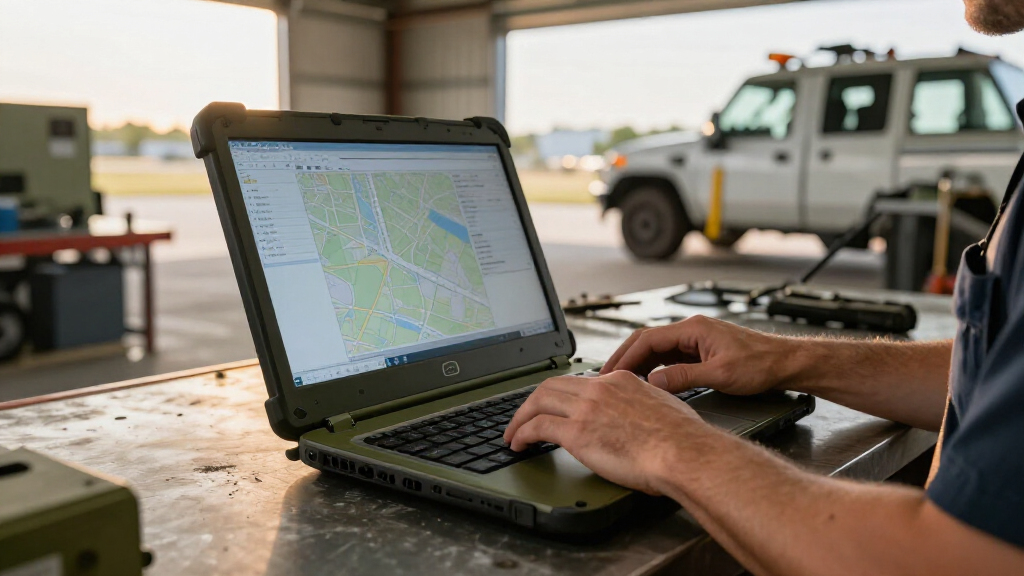
I ranked these laptops around what matters when a computer has to work beyond a typical office: a clearly rugged product line, useful performance for field applications, practical screen and storage choices, and the likely ownership tradeoffs of renewed or older hardware. I treated processor generation, memory, and SSD capacity as evidence of capability, not proof of drop, dust, water, or temperature protection. Product names that include “rugged” or “military grade” do not establish a specific certification, so buyers should verify the exact model’s protection ratings and configuration before purchase.
The Dell Pro Rugged 14 with 64GB RAM and 2TB storage ranks first for its particularly capable listed configuration and modern processor. The Toughbook FZ-55 Mk2 follows for buyers prioritizing a dedicated rugged platform, while the newer large-screen MUNBYN and ONERugged models offer different size and processor tradeoffs. Within the Dell Latitude 5430 listings, I distinguish configurations by CPU, memory, storage, and renewed status; older Toughbooks and Latitudes rank lower for buyers seeking current performance, though they may still suit legacy tasks. The ASUS Vivobook Go is included as a baseline comparison, not a rugged recommendation: its consumer-oriented positioning and Windows Home configuration make it a poor match for buyers who specifically need a rugged laptop.
| military grade laptop | Operating system |
|---|---|
| Dell Latitude 5420 Rugged 14-I | Windows 11 Pro |
| Panasonic Toughbook FZ-55 Mk2 | — |
| MUNBYN IRX16 Rugged 15.6-Inch | Windows 11 Pro |
| Dell Latitude Rugged 5430 14-i | Windows 11 Pro |
| ONERugged N15M 15.6-Inch Rugge | Windows 11 Pro |
| Dell Pro Rugged 14-inch FHD La | Windows 11 Pro |
| ASUS Vivobook Go 15.6-Inch Lap | Windows 11 Home |
| Dell Latitude Rugged 5430 14-I | — |
| Panasonic Toughbook CF-31 MK6 | — |
| Panasonic Toughbook FZ-55 MK1 | — |
| Dell Pro Rugged 14-Inch FHD La | Windows 11 Pro |
| Dell Pro Rugged 14 Laptop | Windows 11 Pro |
| Dell Latitude Rugged 5430 14-I | Windows 11 Pro |
| Dell Latitude 5430 14-inch Rug | Windows 11 Pro |
| Dell Latitude 5414 Rugged Lapt | Windows 11 Pro 64-bit |
Factors to Consider When Choosing Military Grade Laptops
“Military grade” is often used loosely in listings, so I would treat it as a starting point rather than a complete specification. The right choice depends on the conditions, applications, and support expectations the laptop must meet. These checks can prevent a high-spec notebook from being mistaken for a field-ready system.
Verify the protection claims for the exact configuration
Ask for the exact model number and documentation behind any claim of rugged or military-grade protection. A product label alone does not tell you which tests the laptop passed, whether every configuration shares the same protections, or whether a particular accessory affects them. Check the manufacturer’s stated drop, dust, water, vibration, and operating-temperature limits against your actual work conditions. Do not assume that a touchscreen, reinforced chassis, or sealed-looking ports prove a specific level of protection. If the seller cannot identify the applicable rating or test standard, treat the durability claim as unverified and compare alternatives with clearer documentation.
Match screen size to where the laptop will be used
A 15.6-inch display can make maps, forms, and split-screen applications easier to read, but the larger footprint may be awkward in a vehicle or when carried between work areas. A 14-inch model is often a more flexible compromise, though screen visibility still depends on brightness, glare handling, and viewing conditions that may not be clear from a listing. Check whether the display can be read in the lighting you encounter, and whether touch input works with gloves if that matters to your job. Buyers who work mainly at a bench may value screen area more than a smaller chassis. Field teams should also account for the size and weight of chargers, docks, and other accessories, not just the laptop.
Buy performance for your applications, not for a spec sheet
Memory and storage determine how comfortably a laptop handles multiple applications and local files, but they do not make an older processor equivalent to a newer platform. List the software you need, its operating-system requirements, and whether it depends on specialized ports, graphics, or offline access. For data-heavy workloads or several applications open at once, additional RAM and SSD capacity can reduce bottlenecks; simple forms and diagnostics may not benefit from a high-end configuration. Verify whether memory or storage can be upgraded later, since a lower starting configuration only makes sense if an affordable, compatible upgrade is available. Also check whether the listed Windows edition and software support fit your organization’s security and management setup.
Treat renewed hardware as a condition and support decision
A renewed rugged laptop can be a practical way to obtain a specialized chassis, but its condition and remaining support matter as much as its original design. Ask about battery health, included accessories, return terms, warranty coverage, and whether replacement parts are still obtainable. A worn battery can limit the value of a field laptop even if the processor and memory look suitable on paper. Older models may also run software that your team needs, yet have less headroom for newer applications and security requirements. Compare the complete ownership picture with a newer model rather than assuming that a familiar rugged name makes an older unit the safer choice.
Check ports, connectivity, and field workflow needs
Before choosing, write down the devices the laptop must connect to, such as scanners, diagnostic tools, external displays, network equipment, or legacy serial hardware. Port availability can matter more than a modest processor difference when a job depends on direct connections in the field. Confirm wireless standards, cellular options, docking compatibility, and whether the required connection is built in or needs an adapter. Adapters add items to carry and can create another failure point in rough conditions. If several people will use the same system, check whether the keyboard, touch controls, and dock support the workflow without repeated setup.
Compare serviceability and downtime costs
For a field laptop, repair time can matter more than a small difference in benchmark performance. Ask who services the unit, how batteries and other wear parts are replaced, and whether your team can obtain support where the laptop will be used. A modular design may help when components need replacement, but confirm that the relevant modules are available for the specific model and region. Businesses should compare warranty terms and support response options with the cost of keeping a spare device on hand. A system that meets every durability target but cannot be repaired promptly may be a poor fit for work that cannot pause.
Frequently Asked Questions
Does “military grade” mean a laptop is certified to a military standard?
Not by itself. The phrase may appear in product marketing without specifying a test standard, rating, or the conditions tested. Request the exact model number and manufacturer documentation, then confirm which tests apply to that configuration. Check whether the listed rating covers the risks you face, such as drops, dust, water, or temperature extremes. If a seller cannot provide that information, compare the laptop on documented protection rather than the phrase in its title.
Should I choose a renewed Toughbook or a newer rugged laptop?
I would choose based on the work the system must support and the cost of downtime, not on the Toughbook or renewed label alone. A renewed model may fit legacy software or a tight equipment budget, but battery condition, warranty, parts access, and operating-system support can vary. A newer rugged system is generally the safer direction for longer-term performance and current software demands, though it may have a different feature set or chassis design. Before buying renewed, confirm the return terms, battery status, included charger, and whether your required applications are compatible with the processor and operating system.
Is a 15.6-inch rugged laptop a better choice than a 14-inch model?
It depends on whether screen space or mobility has greater value in your workflow. A 15.6-inch display can help with maps, dense forms, and side-by-side windows, especially when the laptop is used at a workstation. A 14-inch model is usually easier to fit into vehicle spaces and carry between tasks, though actual portability also depends on the chassis and accessories. Do not choose by screen diagonal alone: check brightness, glare behavior, touch support, and the space available where the laptop will be used. If possible, compare the actual dimensions with your bag, mount, or work surface.
How much RAM and SSD storage do I need for field work?
Start with the software and files you use, rather than assuming that every field task needs a high-capacity configuration. Routine data entry and diagnostics may work well with less memory and storage than mapping, large datasets, or several applications running at once. Extra SSD capacity is useful when files must remain available offline, while more RAM helps when workloads keep many tools or documents open. Check whether the model allows upgrades and whether the manufacturer or organization supports them. A large specification is only useful if it addresses a real workload or reduces the need to replace the system soon.
Can I use a standard consumer laptop for field work instead of a rugged model?
A consumer laptop can suit occasional travel or controlled job sites, but it should not be assumed to provide the same protection or service options as a purpose-built rugged system. The ASUS Vivobook Go in this lineup is a useful reminder that a capable everyday computer is not automatically a field-ready one. Compare documented protection, battery replacement, ports, repair access, and the consequences of a device failure at your worksite. If the laptop will face frequent handling, dust, moisture, vibration, or harsh temperatures, choose a model with protection claims that match those conditions. For occasional use in safer environments, a standard laptop may be the simpler fit.
Conclusion
For most buyers seeking a capable rugged work machine, I recommend the Dell Pro Rugged 14 with Core Ultra 5 135U, 64GB RAM, and 2TB SSD as the best overall pick in this group. The best premium-style configuration is the same high-capacity Dell, particularly for demanding workloads that need memory and local storage; confirm its protection ratings and support terms before committing. For a field-focused alternative, the Panasonic Toughbook FZ-55 Mk2 is my pick for buyers who prioritize the Toughbook line over maximum listed memory. The MUNBYN IRX16 is the best value-oriented large-screen option on paper for buyers who want a newer processor and DDR5 memory, while the Dell Latitude Rugged 5430 with Core i5 is a more approachable choice for buyers who need a simpler 14-inch rugged configuration. For legacy work, consider the older Toughbook CF-31 or Latitude 5414 only after checking software compatibility, battery condition, and support; skip the ASUS Vivobook Go if rugged protection is a firm requirement.