
Electric road trips are now more exciting and practical thanks to expanding charging networks and advancements in EV tech. Modern cars like the Lucid Air and Tesla Model S offer impressive ranges, while fast chargers are plentiful across the UK, US, and China. This growth makes long-distance travel effortless and spontaneous. If you keep exploring, you’ll discover how these innovations are shaping the future of sustainable adventures on the road.
Key Takeaways
- Advances in EV range and fast-charging technology make long-distance road trips more feasible and convenient.
- Growing global charging infrastructure, especially rapid chargers, reduces range anxiety for travelers.
- Expanding networks in countries like the UK, US, and China support seamless EV travel across regions.
- Battery recycling and sustainability efforts ensure responsible growth of EVs for future road trips.
- Increasing EV adoption and infrastructure investments continue to drive the popularity of electric road trips worldwide.
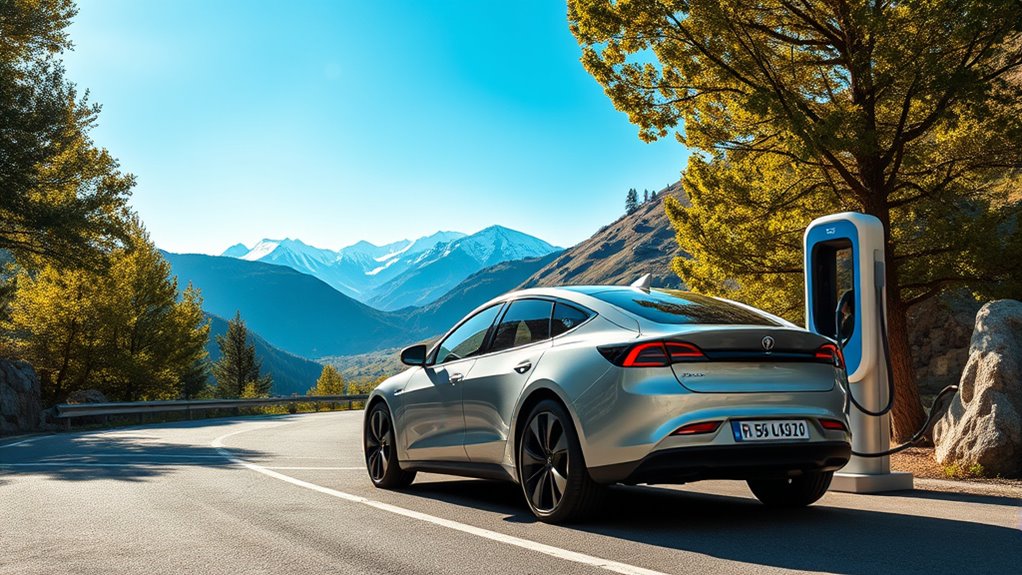
Electric Road Trips
Are electric road trips becoming the new standard for travelers? It’s a question many are asking as EV technology, infrastructure, and sustainability efforts advance rapidly. The good news is that today’s EVs boast impressive ranges and quick-charging capabilities, making long-distance travel more feasible than ever. Leading models like the Lucid Air offer EPA ranges around 512 miles, thanks to low drag coefficients and high efficiency, and are perfect for extended journeys. The Hyundai Ioniq 6, with its 800V architecture, charges incredibly fast—adding up to 200 miles in just 18 minutes—making quick stops practical and convenient. Premium EVs, including the latest Audi offerings, focus on comfort and extended range, while the Tesla Model S and Rivian R1S cater to adventure seekers with ranges over 400 miles.
Charging infrastructure continues to grow at a breakneck pace, transforming road trips from a logistical challenge into a manageable journey. In the UK, rapid and ultra-rapid chargers increased by 35% from 2024 to 2025, now totaling over 14,700 fast chargers. With over 74,600 public chargers across the country, drivers are rarely more than 25 miles from a quick-charging station on main roads. This expansion considerably reduces range anxiety and makes spontaneous trips easier. The US is also seeing remarkable growth, with EV registrations reaching 14 million in 2023—an increase of 35% from the previous year—highlighting the expanding demand for charging stations. China continues to lead globally, hosting two-thirds of all charging stations, which underscores the global momentum toward electric mobility. The availability of fast chargers worldwide continues to expand, making long-distance EV travel more practical and accessible. Additionally, ongoing developments in charging network expansion support seamless long-distance travel for EV owners.
Battery recycling plays an essential role in guaranteeing the sustainability of EVs, helping to lessen reliance on raw materials and reduce environmental impact. As demand for EVs rises, so does the need to responsibly manage used batteries. Advances in recycling technology promise a more sustainable future, enabling the reuse of valuable minerals and supporting long-term EV growth. This development is indispensable as manufacturers ramp up lithium-ion cell production to meet the forecasted doubled demand by the end of 2025.
Frequently Asked Questions
What Are the Best Electric Vehicles for Long-Distance Travel?
You should consider electric vehicles with advanced battery technology and access to charging infrastructure for long-distance travel. The Rivian R1S offers a top range of 410 miles, while the Lucid Air Grand Touring provides up to 512 miles. Tesla’s Model S Long Range benefits from widespread charging networks, making it a smart choice. Look for fast-charging capabilities and reliable infrastructure to guarantee smooth, extended journeys without range anxiety.
How Do I Find Charging Stations Along Remote Routes?
Finding charging stations along remote routes is like steering through uncharted waters—your best tools are the right apps and platforms. Use apps like HERE Technologies and ChargeHub to access extensive charging station networks and plan your stops carefully. Waze and Google Maps help identify stations ahead, while real-time data ensures you’re not caught off guard. Always check compatibility, keep payment info ready, and monitor weather conditions for smooth remote route planning.
What Is the Average Charging Time for Long Trips?
On long trips, you typically spend about 20-30 minutes charging at DC fast chargers, which are part of the charging infrastructure. The actual time depends on your vehicle’s battery capacity and how much charge you need. To keep trip times manageable, plan your stops accordingly, avoid charging beyond 80%, and use fast chargers strategically. This way, you minimize delays and make the most of your charging sessions.
Are There Any Government Incentives for Electric Road Trips?
You’ll be glad to know there are government rebates and tax incentives that can make your electric road trip more affordable. Federal incentives up to $7,500 and various state programs help offset charging station costs and vehicle expenses. These benefits encourage long-distance travel by reducing the financial burden, making it easier for you to explore scenic routes with confidence, knowing that government support is boosting your EV adventure every mile of the way.
How Do Weather Conditions Affect Electric Vehicle Range?
Weather conditions markedly impact your EV’s range by affecting battery efficiency and climate impact. Cold temperatures slow chemical reactions, reducing energy output and forcing you to use more power for cabin heating, which drains the battery. Snow, rain, and icy roads increase resistance, making your vehicle work harder. Hot weather can also decrease range due to air conditioning. Preconditioning and proper tire maintenance help mitigate these effects, extending your EV’s driving distance.
Conclusion
As you plan your next adventure, remember that electric road trips are more than just eco-friendly—they’re becoming increasingly popular. Did you know that electric vehicle sales surged by over 40% last year alone? With more charging stations popping up along scenic routes, your journey can be seamless and sustainable. Embrace the future of travel, explore breathtaking landscapes, and contribute to a cleaner planet—all while enjoying the thrill of the open road in an electric vehicle.