
TL;DR

Get the latest gadgets delivered free with Prime
- Fast, free delivery on millions of items
- Prime Video, Amazon Music and more included
- Member-only deals all year
ThinkPad has maintained a continuous design and brand identity since 1992, evolving from IBM’s iconic Bento Box to Lenovo’s advanced AI workstations. This history underscores its enduring relevance in enterprise computing.
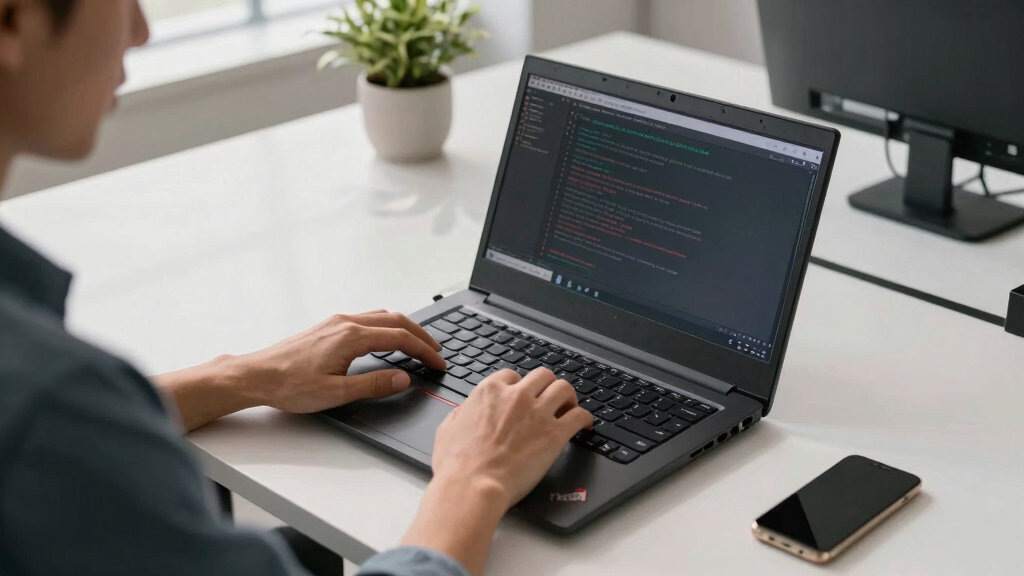
Lenovo’s latest ThinkPad models in 2026 continue to embody the iconic design and engineering principles established by IBM in 1992, demonstrating remarkable visual and functional continuity over more than three decades.
The ThinkPad brand was launched by IBM in October 1992 with models like the 700C, featuring a distinctive matte-black chassis, TrackPoint, and durable keyboard. After IBM sold its PC division to Lenovo in 2005, the brand persisted with minimal design disruption, maintaining its core aesthetic and engineering ethos. Over the years, ThinkPads expanded into various series, including the X-Series for mobility and the P-Series for workstations, adapting to technological advances such as SSDs, high-resolution displays, and enterprise security features. The recent models, like the P14s Gen 6 and the latest T14 Gen 7, incorporate AI workloads, NPU accelerators, and large language model (LLM) capabilities, reflecting a shift toward AI-centric business computing. Despite these innovations, the visual design remains recognizably consistent with the original 1992 models, emphasizing brand heritage and user familiarity.
Why It Matters
This continuity underscores ThinkPad’s unique position as a durable, trusted enterprise brand that has successfully adapted to technological shifts, including AI and high-performance computing. It highlights how legacy design and engineering principles can persist amid rapid innovation, maintaining brand loyalty and relevance for decades. For consumers and businesses, this history affirms ThinkPad’s reputation for reliability, security, and longevity in a competitive market.
As an affiliate, we earn on qualifying purchases.
Background
The ThinkPad originated as IBM’s flagship business laptop in 1992, pioneering features like the TrackPoint and active-matrix color displays. The IBM-to-Lenovo transition in 2005 did not significantly alter its design language, allowing the brand to retain its identity. Over the decades, ThinkPads evolved through various technological eras—from the T-series and X-series to modern AI-enabled models—while maintaining core design elements. The recent focus on AI workloads and NPU integration reflects broader industry trends toward intelligent, high-performance enterprise computing, positioning ThinkPad as a leader in this space.
“Our commitment is to preserve the core identity of ThinkPad while integrating cutting-edge AI capabilities to meet modern business needs.”
— Lenovo spokesperson
“ThinkPad’s visual and functional continuity since 1992 is rare among commercial laptops and contributes significantly to its brand loyalty.”
— Industry analyst
What Remains Unclear
It is not yet clear how much further Lenovo will evolve the ThinkPad design language in response to emerging AI and hardware innovations, or whether future models will introduce more radical design changes.
What’s Next
Next steps include the release of upcoming ThinkPad models with enhanced AI capabilities, further integration of NPU and LLM workloads, and potential design updates that balance heritage with innovation. Industry analysts will watch for how Lenovo continues to evolve the brand’s identity amid rapid technological change.
Key Questions
How has the ThinkPad design remained consistent over the years?
Despite technological advances, ThinkPads have retained their matte-black chassis, TrackPoint, and keyboard layout, which have become signature features recognized worldwide.
What are the key innovations in recent ThinkPad models?
Recent models incorporate AI accelerators, NPU integration, large language model workloads, and enhanced security features, reflecting a focus on AI-driven enterprise computing.
Will future ThinkPads look significantly different?
It is currently unclear; Lenovo aims to preserve core design elements while integrating new technologies, but future models may see some visual updates to accommodate new hardware or user needs.
Why is the design continuity of ThinkPad important?
It fosters brand recognition, customer loyalty, and a sense of reliability, especially crucial for enterprise users who depend on consistent performance and familiar interfaces.
Fall Picks
fall essentials
As an affiliate, we earn on qualifying purchases.