
TL;DR
Open a free Amazon Business account
Business pricing, bulk buying and tax-exempt orders.
As an affiliate, we earn on qualifying purchases.
Sony has announced the Xperia 1 VIII, its latest flagship smartphone, with significantly larger camera sensors and a new square rear camera arrangement. The device emphasizes photography enhancements and a fresh design, but will initially be available only in Europe.
Sony has announced the Xperia 1 VIII, its latest flagship smartphone, featuring the company’s largest camera sensors to date and a new, square rear camera layout, emphasizing its focus on advanced photography capabilities.
The Xperia 1 VIII is equipped with a new 1/1.56-inch image sensor in its telephoto camera, approximately four times larger than the previous model’s sensor, enabling better detail and low-light performance. The device also introduces a redesigned rear camera module arranged in a square formation, moving away from the traditional vertical layout.
In addition to hardware upgrades, Sony has integrated an AI Camera Assistant powered by Xperia Intelligence, which can recognize scenes, subjects, and weather conditions to suggest optimal camera settings. Users can apply these suggestions with a tap, streamlining the photography process. The phone supports RAW multi-frame processing, HDR, and noise reduction for superior low-light images.
The Xperia 1 VIII features a 6.5-inch OLED display, powered by Qualcomm’s Snapdragon 8 Elite Gen 5 Mobile Platform. It retains a 12-megapixel front camera and includes a 3.5mm headphone jack, a rare feature in modern smartphones. The device will be sold in four colors: Graphite Black, Iolite Silver, Garnet Red, and Native Gold, with pricing starting at 1,499 euros or £1,399 for the 12GB RAM/256GB storage version, and up to 1,999 euros or £1,849 for the 16GB RAM/1TB storage model.
Why It Matters
The launch of the Xperia 1 VIII underscores Sony’s continued emphasis on photography innovation within the smartphone market. The larger sensors and AI-driven features aim to challenge competitors by offering professional-level photo quality in a mobile device. The redesign also signals a shift in aesthetic approach, potentially influencing future flagship designs.
However, the device’s limited availability—initially only in Europe—raises questions about Sony’s global strategy and whether the device will reach markets like the US. The inclusion of a 3.5mm headphone jack also highlights Sony’s focus on audiophile consumers, setting it apart from many flagship rivals.
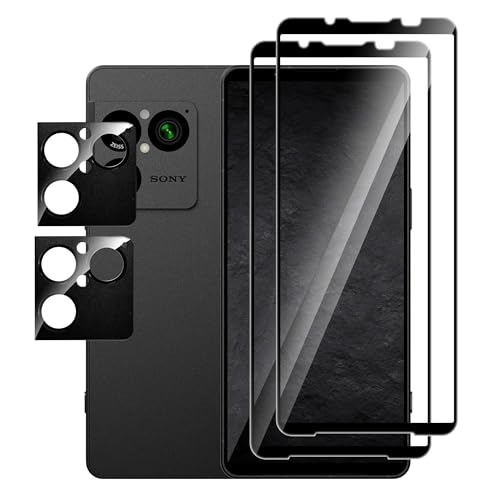
Suttkue for S-ony Xperia 1 VIII Screen Protector with Camera Lens Protector,9H Hardness Anti-Scratch Tempered Glass flim,Case Friendly,Anti-Fingerprint,Anti-Scratch (2+2 PACK)
- Compatible Model: Xperia 1 VIII
- High Transparency: 99% HD clarity and light transmittance
- Enhanced Visuals: Maintains brightness and color quality
As an affiliate, we earn on qualifying purchases.
As an affiliate, we earn on qualifying purchases.
Background
Previous Xperia models have steadily improved camera technology, but the Xperia 1 VIII marks a notable leap with its larger sensors and AI features. The move to a square rear camera module is a departure from the traditional vertical alignment seen in recent years. Sony has historically positioned its Xperia line as a premium device with strong multimedia capabilities, and this release continues that trend.
The device’s announcement comes amid intense competition in the high-end smartphone segment, where camera quality and design innovation are key differentiators. Sony’s focus on photography and audio features reflects its core strengths and target audience.
“The Xperia 1 VIII’s larger sensors and AI Camera Assistant are designed to deliver professional-quality photography in a compact form.”
— Sony spokesperson
“Sony’s move to larger sensors and a new camera layout could set a new standard for flagship smartphones focused on photography.”
— Tech analyst Jane Doe
What Remains Unclear
It remains unclear whether Sony plans to expand availability beyond Europe or if the device will be released in the US or other markets. Details about software updates, regional pricing differences, and long-term support are also still emerging.
What’s Next
Sony will begin pre-orders immediately, with the device expected to be available in stores in June 2024. Further announcements regarding global release plans and software updates are anticipated in the coming months.
Key Questions
What are the main camera improvements on the Xperia 1 VIII?
The main improvements include a new 1/1.56-inch sensor in the telephoto camera, approximately four times larger than the previous model, and an AI Camera Assistant that suggests optimal settings based on scene recognition.
Will the Xperia 1 VIII be available outside Europe?
Currently, Sony has announced only European availability, with no confirmed plans for the US or other regions.
Does the Xperia 1 VIII have any features that are uncommon in flagship smartphones?
Yes, it retains the 3.5mm headphone jack, which is increasingly rare in high-end devices.
What is the price of the Xperia 1 VIII?
The starting price is 1,499 euros or £1,399 for the 12GB RAM/256GB storage version, with higher configurations costing up to 1,999 euros or £1,849.
Evergreen bestsellers Picks
bestsellers
As an affiliate, we earn on qualifying purchases.