
📊 Full opportunity report: Operations Tool For Phone-free Venues on IdeaNavigator AI — validation score, market gap, and execution plan.

Get the latest gadgets delivered free with Prime
- Fast, free delivery on millions of items
- Prime Video, Amazon Music and more included
- Member-only deals all year
TL;DR
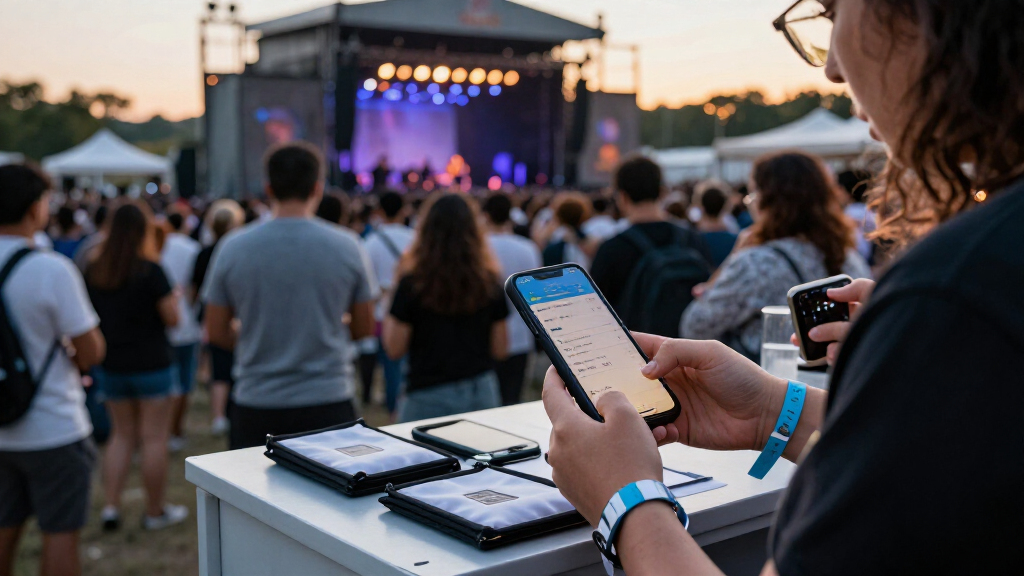
A proposal outlines a hardware-agnostic operations tool for venues and schools that use locked phone pouches. It would manage check-in, exceptions, pouch inventory and emergency unlocks; pilots at five venues and three schools are proposed, but no product launch or pilot results are reported.
IdeaNavigator AI has outlined a proposed operations tool for phone-free shows, comedy clubs, schools and courts that use locked phone pouches, focusing on the check-in and exception processes around those systems. The concept is at the proposal stage: it calls for pilots at five venues and three schools, but does not report that a product has been built, tested or adopted. These details come from IdeaNavigator AI’s proposal, which does not provide independent pilot findings.
According to IdeaNavigator AI’s proposal, the tool would work alongside existing pouch systems, rather than require a specific hardware provider. Its suggested minimum feature set includes check-in flows, a registry for medical and on-call exceptions, pouch inventory tracking, emergency-unlock stations that record reasons, and post-event operations reports.
The proposal identifies several day-to-day problems operators may face: misplaced pouches, ad hoc handling of exceptions, queues at emergency-unlock points and re-entry lines. It argues that delays and confusion can undermine the intended experience of a phone-free event. These are presented as the proposal’s problem statement, not as findings from a reported survey or completed trial.
For validation, IdeaNavigator AI recommends comparing the tool with each pilot site’s current improvised process. The proposal names exception-handling time and incident-log completeness as measures. It also suggests per-event or per-site subscriptions as possible business models; no pricing, customer commitments, development schedule or pilot outcomes are provided.
Reducing Friction at Phone-Free Events
Phone restrictions rely not just on locking devices away, but on handling the situations that arise after check-in. A medical need, an on-call responsibility or an urgent request to access a phone can require staff intervention. If those procedures are unclear or slow, they can create queues and add work for venue or school teams.
As described in IdeaNavigator AI’s proposal, a shared operations layer could, if developed and shown to work, give staff a consistent way to record exceptions, locate pouches and document unlocks without replacing the physical pouch system. The proposed measures also address practical questions for operators: whether requests are handled faster and whether incidents are recorded more reliably. At this stage, those are intended outcomes to test, not demonstrated benefits.
The idea is relevant to organizations considering phone-free policies because it focuses on the administration around enforcement. Its value would depend on whether staff find it straightforward to use, whether it fits different sites’ procedures and whether it reduces operational friction enough to justify a subscription. The proposal provides no results establishing that it does so.
locked phone pouch management system
As an affiliate, we earn on qualifying purchases.
As an affiliate, we earn on qualifying purchases.
A Tool Around Existing Pouch Systems
IdeaNavigator AI’s proposal describes phone-free operations across several settings: live shows, comedy clubs, schools and courts. It frames the timing around the spread of phone-free mandates in these environments, but provides no figures, dates or examples documenting how quickly those policies are expanding. That trend is therefore the proposal’s rationale rather than a quantified market finding.
The proposal’s central design choice is to make the software hardware-agnostic. The tool would support the work surrounding pouch use rather than manufacture or replace pouches. That could make it applicable to operators with different systems, although the proposal does not specify how integrations, inventory identification or emergency access would work across providers.
The suggested pilot spans both live-event venues and schools, a way to test the concept in settings with different operating routines. The proposal does not describe court pilots, despite listing courts among the intended users. Nor does it identify participating organizations or say whether any have agreed to take part.
Product and Pilot Details Pending
IdeaNavigator AI reports no launch, completed pilot or customer adoption. Its proposal does not name a developer, provide a product demonstration, or specify when testing might begin. It is also unclear whether the recommended five-venue and three-school pilot has been organized or is simply a validation target.
Other unanswered questions include how medical and on-call exceptions would be verified, who could authorize an emergency unlock, what information would be logged, and how access to those records would be controlled. The proposal does not discuss data retention, privacy safeguards, accessibility, staff training, technical reliability or integration with existing pouch hardware. It also supplies no cost estimates or evidence that the suggested subscription models would be accepted by buyers.
Testing the Proposed Workflow
IdeaNavigator AI recommends a pilot across five venues and three schools, measuring exception-handling time and the completeness of incident logs against current procedures. The proposal gives no timetable or recruitment process, and no results have been announced, so the test remains a recommendation rather than a scheduled milestone.
If pilots proceed, operators would need to define comparable baseline procedures and record how the system handles routine check-in, exceptions, inventory and urgent unlocks. Results could show whether the workflow reduces delays or improves documentation, and whether differences between schools and event venues require separate configurations. Until those details and outcomes are available, the concept remains an operational proposal rather than a proven tool.
Source: IdeaNavigator AI
Key Questions
What is the proposed phone-free venue tool?
IdeaNavigator AI describes it as a proposed operations tool for organizations using locked phone pouches. Suggested features include check-in, exception records, pouch inventory tracking, logged emergency unlocks and post-event reports.
Has the tool been built or launched?
IdeaNavigator AI’s proposal reports no launch or completed product test. The idea is at the proposal stage, and pilots are suggested rather than confirmed.
Who is the tool intended for?
The proposal names operators of phone-free shows, comedy clubs, schools and courts that use pouch systems.
How would the proposal be tested?
IdeaNavigator AI recommends pilots at five venues and three schools, comparing exception-handling time and incident-log completeness with each site’s current process. The proposal gives no pilot dates or participating sites.
Source: IdeaNavigator AI
Fall Picks
fall essentials
As an affiliate, we earn on qualifying purchases.