
📊 Full opportunity report: Best Thermal Paste and Pads for High-TDP GPUs on ThorstenMeyerAI.com — validation score, market gap, and execution plan.
TL;DR
For high-TDP GPUs operating continuously, phase-change materials like Honeywell PTM7950 offer superior long-term stability. Traditional pastes like Arctic MX-6 are easier to apply, while premium options such as Noctua NT-H2 provide reliability. Reusable graphene pads like Thermal Grizzly Kryosheet are also viable for sustained loads.
For high-TDP GPUs running continuously, phase-change materials like Honeywell PTM7950 are the top choice for long-term thermal stability, resisting pump-out and maintaining low temperatures over years, according to expert sources.
Traditional thermal pastes such as Arctic MX-6 and Noctua NT-H2 remain popular for their ease of application and reliable performance in high-load scenarios, lasting up to 10 years with proper application. However, for continuous operation, these pastes can gradually dry out or pump out due to thermal cycling, leading to increased temperatures over time.
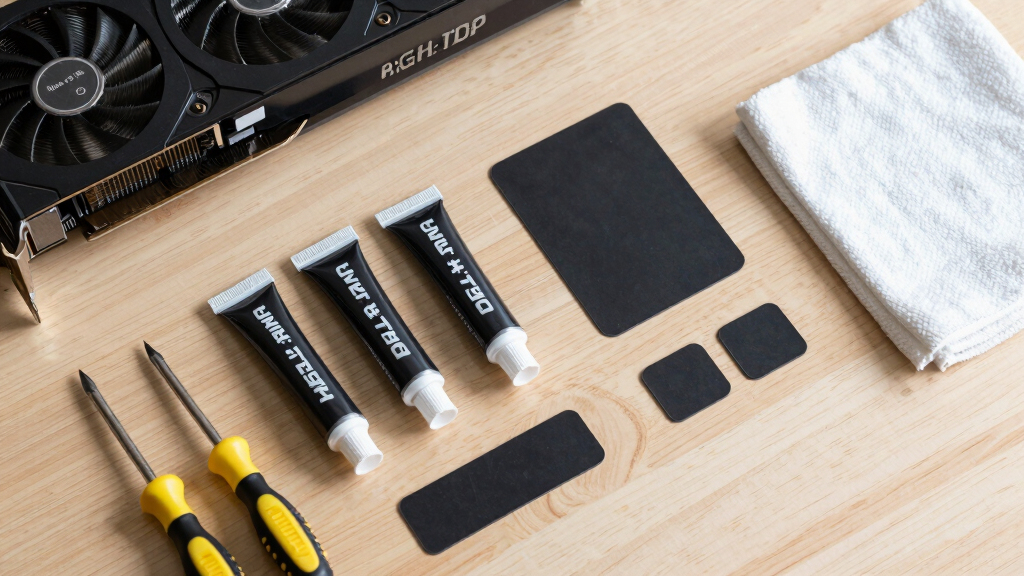
Honeywell PTM7950, a phase-change material, is designed specifically for sustained high temperatures. It remains solid at room temperature but softens once heated, creating an optimal contact layer that resists pump-out even after thousands of thermal cycles. It is sold as a sheet that must be cut and applied, which is more involved but offers superior long-term stability.
Reusability is a key advantage of graphene-based pads like Thermal Grizzly Kryosheet, which never dries out or pumps out, making them suitable for ongoing use. However, because they are electrically conductive, careful handling is necessary to avoid shorts, limiting their use to experienced users.
Best thermal paste
for a high-TDP GPU.
The standard “coldest on day one” advice is wrong for a 24/7 rig. Continuous heat slowly squeezes traditional paste out — a failure called pump-out — so the real question is what stays cold for years.
Why Long-Term Thermal Stability Matters for High-Power GPUs
Maintaining low temperatures in high-TDP GPUs operating continuously reduces thermal throttling, prolongs hardware lifespan, and ensures consistent performance. Using materials that resist pump-out minimizes the need for frequent reapplication, saving time and reducing risk of damage.
For AI inference servers and other 24/7 high-load systems, selecting the right thermal interface material can lead to more stable operation, lower noise levels, and reduced maintenance costs, making long-term stability a critical factor in hardware management.

Corsair XTM70 Extreme Performance Thermal Paste, 3g for Intel & AMD Processors up to 250W+ TDP - Low Viscosity, Easy Application, Three Included Cleaning Wipes and Applicator Kit for Desktop
- Thermal paste for high-end CPUs and GPUs: Effective heat transfer for Intel & AMD
- Low viscosity for easy application: Ensures even, clean spread with applicator kit
- Includes cleaning wipes and applicator: Simplifies removal and application process
As an affiliate, we earn on qualifying purchases.
As an affiliate, we earn on qualifying purchases.
Thermal Interface Material Choices in High-Power GPU Applications
Most consumer GPU thermal guides focus on gaming scenarios, emphasizing low initial temperatures. However, high-power inference GPUs operate under continuous load, where thermal cycling causes traditional pastes to dry or pump out over time. Recent tests and user reports highlight the importance of selecting materials designed for durability under sustained heat, such as phase-change sheets and graphene pads.
Historically, pastes like Thermal Grizzly Kryonaut have shown excellent initial performance but may not sustain low temperatures over years of continuous operation, leading to increased maintenance and potential hardware issues.
"For 24/7 high-load GPUs, the key is choosing materials that resist pump-out and maintain stable contact over years, not just low initial temperatures."
— Thorsten Meyer, AI hardware expert
Uncertainties About Long-Term Performance of Thermal Materials
While phase-change sheets like Honeywell PTM7950 are highly rated for durability, long-term real-world testing beyond a few years is limited. The performance of traditional pastes under prolonged high-TDP operation can vary based on application quality and operating environment. The electrical conductivity of graphene pads poses handling risks that may not be suitable for all users.
Future Testing and Adoption of Long-Lasting Thermal Materials
Ongoing user reports and extended testing will clarify how these materials perform over multiple years in real-world high-TDP GPU workloads. Manufacturers may develop new formulations or improve existing products, and more comprehensive long-term data will inform best practices for GPU cooling in continuous operation scenarios.
Key Questions
Is phase-change material difficult to apply?
Yes, it requires cutting and precise placement, but offers superior long-term stability for continuous workloads.
Can I reuse graphene pads like Kryosheet?
Yes, they are reusable and never dry out, but must be handled carefully due to electrical conductivity.
Are traditional pastes suitable for 24/7 GPU operation?
They can be used, but may require more frequent reapplication as they tend to dry or pump out over time under sustained heat.
Does applying better thermal interface material significantly reduce GPU temperatures?
Yes, especially in high-TDP, continuous operation scenarios, it can improve stability and longevity.
Is it worth upgrading to specialized materials if my GPU runs constantly?
For long-term stability and reduced maintenance, investing in durable materials like phase-change sheets is advisable.
Source: ThorstenMeyerAI.com