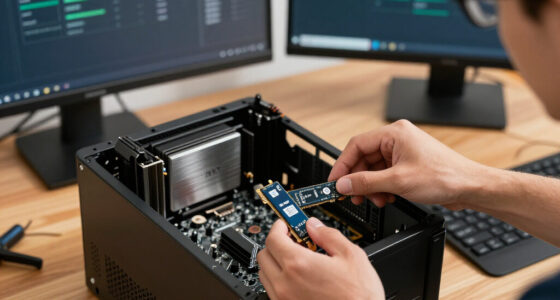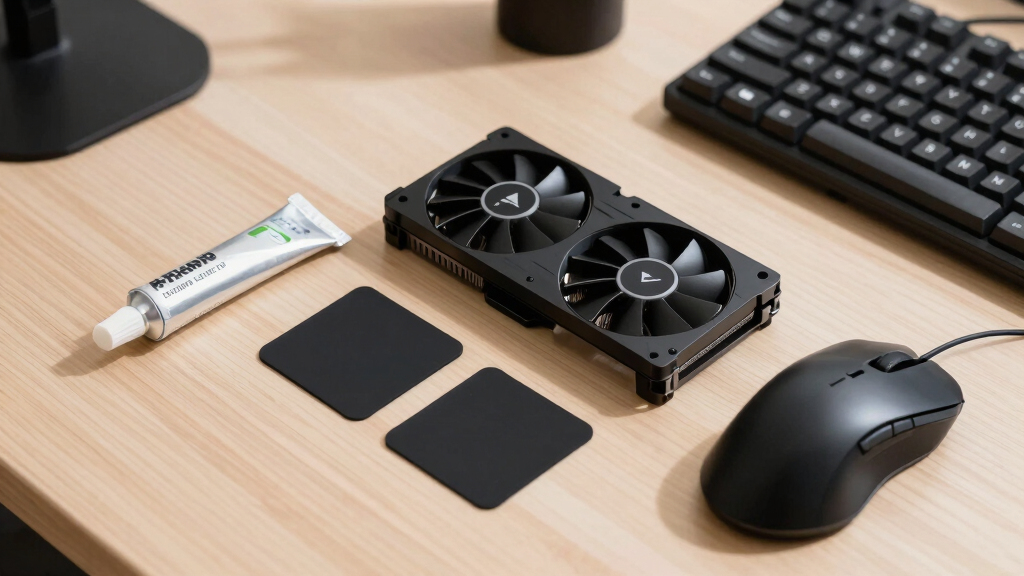

TL;DR

Get the latest gadgets delivered free with Prime
- Fast, free delivery on millions of items
- Prime Video, Amazon Music and more included
- Member-only deals all year
Thorsten Meyer AI’s 2026 guidance ranks Honeywell PTM7950 as the leading thermal interface choice for high-TDP GPUs under sustained AI workloads. The report says long-term resistance to pump-out matters more than day-one temperature results.
Thorsten Meyer AI has ranked Honeywell PTM7950 phase-change material as the best thermal interface choice for high-TDP GPUs running sustained AI workloads, saying long-term stability under heat is a better test than the lowest temperature on the first day of installation.
The guidance identifies PTM7950 as the preferred option for 24/7 GPUs because it resists pump-out, a failure mode in which repeated heat and mounting pressure push traditional paste away from the die and heatsink contact area. The article says that, over time, the resulting air gaps can raise GPU temperatures, increase fan noise and lead to throttling.
For users who want a conventional paste, the article names Arctic MX-6 as the easiest recommendation, citing its non-conductive formulation and long service-life claim. Noctua NT-H2 is listed as the premium paste option, while Thermal Grizzly Kryosheet is identified as a reusable graphene pad that does not dry out but requires care because it is electrically conductive.
The source also advises users who open a GPU to inspect or replace thermal pads on VRMs and memory, while matching the original pad thickness. It warns that repasting can void warranties and carries hardware risk. The article includes an affiliate disclosure and tells readers to verify live prices before buying.
Why It Matters
The report matters for owners of AI workstations because GPUs used for local inference or other sustained workloads face a different thermal pattern than gaming cards. A gaming card often moves between load and idle states, while an inference card may run hot for hours. That changes the buying question from peak day-one performance to whether the material remains stable over months or years.
Thermal interface material is also a relatively low-cost maintenance lever. The source says a fresh repaste on an older card with degraded paste can reduce GPU temperatures by as much as 10°C, though results vary by card, mounting pressure and application quality. Lower temperatures can reduce fan speed and noise, and may help avoid performance throttling under sustained load.
As an affiliate, we earn on qualifying purchases.
Background
The article frames the recommendations as part of a broader AI workstation heat and noise series, under a tuning section focused on small improvements that reduce thermal stress. It argues that many paste rankings are built around gaming-style benchmarks and day-one temperature results, which may not reflect long-term use in high-power AI systems.
The source cites 2026 thermal-paste testing, including Tom’s Hardware’s 90-paste roundup, and reports from the GPU repasting community. It does not present a single controlled test across every listed product, card type and workload. The comparison is based on the source’s interpretation of durability, known material behavior and reported GPU-use patterns.
“The standard ‘coldest on day one’ advice is wrong for a 24/7 rig.”
— Thorsten Meyer AI
“For a 24/7 rig, the question isn’t ‘what’s coldest on day one’ — it’s ‘what stays cold for years under continuous heat.'”
— Thorsten Meyer AI
“Best for a sustained 24/7 GPU: Honeywell PTM7950.”
— Thorsten Meyer AI
What Remains Unclear
Several points remain dependent on the specific GPU and installation. The source says performance varies by card, cooler mounting, application and workload. It also states that prices and availability change often. Warranty impact is another open issue for each reader, because GPU makers and sellers may treat teardown or repasting differently.
The article attributes long-term concerns about some traditional pastes to mixed user reports and community experience, rather than a single universal test covering every GPU model. Readers should treat the recommendations as buying guidance for sustained-use systems, not a guarantee of identical results on every card.
What’s Next
Readers planning GPU maintenance should first check warranty status, current temperatures and whether the card is already being opened for other work. The next practical step is to compare current pricing for PTM7950, Arctic MX-6, Noctua NT-H2, Thermal Grizzly Kryosheet and matching VRM or memory pads, then decide whether the expected temperature drop justifies the teardown risk.
Key Questions
What is the top recommendation for a 24/7 high-TDP GPU?
Thorsten Meyer AI names Honeywell PTM7950 as the top choice for sustained GPU workloads because it is a phase-change material that resists pump-out better than traditional paste, according to the source.
Why is pump-out a concern for AI workstation GPUs?
The source says sustained heat and pressure can push traditional paste away from the GPU die over time. That can create air gaps, raise temperatures, increase fan noise and reduce performance under load.
What is the easiest conventional paste pick?
The article names Arctic MX-6 as the easy paste choice, citing its non-conductive nature and long service-life claim. Noctua NT-H2 is listed as the premium conventional paste option.
Are graphene pads a good option?
Thermal Grizzly Kryosheet is listed as the reusable pad option because it does not dry out. The source warns that it is electrically conductive, so installation mistakes can carry higher risk.
Can repasting void a GPU warranty?
Yes, it can. The source warns that repasting may void warranty coverage and should be done only by users comfortable with GPU teardown and reassembly.
Source: Thorsten Meyer AI
Halloween Picks
halloween
As an affiliate, we earn on qualifying purchases.