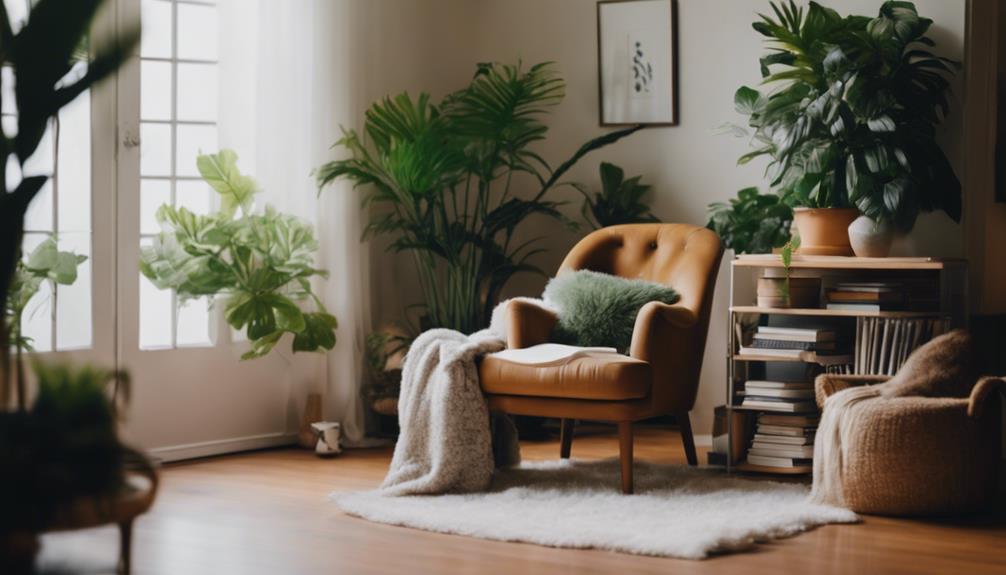
To create a sensorial home, focus on blending touch, smell, sound, and taste to boost your well-being. Use warm lighting and natural materials to foster comfort and connection, while incorporating calming scents and gentle background sounds to promote relaxation. Design inviting culinary spaces that encourage mindful eating and social interaction. By thoughtfully integrating these elements, you’ll craft an environment that nurtures your senses and supports emotional balance. Explore further to discover how each aspect can transform your space.
Key Takeaways
- Incorporate natural materials and tactile textures to enhance sensory connection and promote calmness.
- Use natural scents like lavender or fresh herbs to evoke relaxation and emotional well-being.
- Design acoustic elements with soft background sounds and minimize noise for a peaceful environment.
- Utilize lighting that adapts to mood, supporting circadian rhythms and sensory comfort.
- Create inviting, sensory-rich culinary spaces that foster mindful eating and social bonding.

Have you ever considered how your home’s design influences your senses and overall well-being? When you walk into a space that feels calming, inviting, and balanced, it’s often because the design thoughtfully engages your senses. Central to this experience is creating a sensory-sustainable environment that harmonizes lighting ambiance and indoor air quality. These elements are vital in shaping your mood, comfort, and health.
Lighting ambiance plays an essential role in how you perceive your home. Soft, warm lighting can foster relaxation and ease stress, while brighter, natural light energizes and sharpens focus. Proper lighting not only enhances visual comfort but also influences your circadian rhythms, impacting sleep and daytime alertness. Combining thoughtful lighting with clean indoor air quality ensures you breathe easier and feel more refreshed. Good air quality involves minimizing pollutants, using natural ventilation, and incorporating plants that improve indoor air while adding sensory variety through their textures and scents.
Thoughtful lighting and fresh air foster well-being and sensory harmony at home.
Your home’s tactile elements also profoundly influence your well-being. Natural materials like wood, stone, and textiles provide tactile warmth and comfort. When you touch these textures, they evoke feelings of connection to nature, which can be grounding and soothing. Diverse textures—smooth, rough, soft—stimulate tactile engagement without overwhelming your senses, especially important if you’re sensory-sensitive. Tactile surfaces create immersive environments that promote calmness and help manage sensory overload. When textures are chosen with care, they contribute to a sensory map that aligns with your needs, fostering a sense of safety and comfort. Indoor air quality also plays a crucial role in sensory health, as it influences how your home environment feels and functions.
Smell is another potent sense that can influence your mood and health. Incorporating natural scents such as lavender or fresh soil into your home environment can evoke calmness and positive emotional responses. These scents reduce stress and promote psychosocial wellbeing, especially when used in a subtle, non-overpowering manner. Managing scent sources carefully—avoiding overwhelming odors and emphasizing natural, restorative fragrances—enhances indoor air quality and supports emotional balance. Using nature-inspired smells can reinforce restorative qualities in your home, making it a true sanctuary for relaxation and mental clarity.
Sound, too, shapes your experience of space. Natural sounds, gentle background noise, or specific frequencies can promote mental clarity and relaxation. Proper acoustic design minimizes unwanted noise and introduces soothing sounds that foster a peaceful atmosphere. This not only benefits your mental health but also improves social interactions within your home, making conversations more enjoyable and less stressful. When sound is integrated thoughtfully into your design, it becomes a tool for enhancing overall well-being and creating a multisensory environment where you feel balanced and grounded.
Taste may seem less connected to architecture, but your culinary environment influences your overall sensory experience. Thoughtfully designed kitchens and dining spaces that emphasize comfort, visual appeal, and sensory-friendly features encourage mindful eating and social bonding. The flavors and aromas of your meals become part of your home’s sensory palette, enriching your daily life and reinforcing a sense of harmony and connection within your space.
Frequently Asked Questions
How Can I Balance Multiple Senses Without Overwhelming My Space?
To balance multiple senses without overwhelming your space, focus on color coordination and clutter control. Use calming, harmonious colors to create visual balance, and keep surfaces tidy to prevent sensory overload. Incorporate different textures thoughtfully, and adjust lighting and sound levels to suit each zone. By minimizing clutter and maintaining a cohesive color palette, you help your environment feel inviting and comfortable, supporting sensory harmony and reducing stress.
Are There Specific Safety Considerations When Enhancing Sensory Experiences?
Think of safety as the anchor that keeps your sensory haven steady. When enhancing experiences, you must consider hazardous materials and allergen management carefully. Store chemicals securely, avoid overwhelming scents, and monitor for potential triggers. Guarantee proper ventilation and use natural, unscented products when possible. By balancing sensory delights with these safety precautions, you create a space that’s both stimulating and secure, allowing your loved ones to explore safely and comfortably.
What Are Affordable Ways to Upgrade Sensory Elements in My Home?
You can upgrade your home’s sensory elements affordably by adding DIY decorations like fabric wall panels or sensory bins with household items for tactile stimulation. Incorporate scented plants like herbs or jasmine for natural aroma, and use inexpensive essential oils in diffusers to enhance smell. These simple, budget-friendly ideas create a calming and engaging environment, enriching touch and scent experiences without breaking the bank.
How Can I Personalize Sensory Features for Children or Elderly Family Members?
Personalizing sensory features is like tailoring a suit; it fits just right. You can incorporate personalized sensory activities that suit your loved ones’ preferences and needs, using adaptive sensory tools like weighted blankets or noise-canceling headphones. Observe their responses and adjust lighting, textures, and scents accordingly. Empower them with accessible controls for sensory modulation, creating a comfortable environment that promotes calm, engagement, and independence tailored specifically to children or the elderly.
Can Sensory Home Design Improve Mental Health and Well-Being?
Sensory home design can definitely improve your mental health and well-being by promoting sensory integration and emotional regulation. When you incorporate calming textures, soothing sounds, and natural scents, you create a balanced environment that reduces stress and anxiety. This holistic approach helps you process sensory input more effectively, fostering emotional stability and resilience. As a result, your home becomes a sanctuary that supports your mental health daily.
Conclusion
So, you’ve now mastered the art of turning your home into a sensory playground—because who needs boring, sight-only spaces, right? Just imagine your friends marveling at your “artfully” curated smells, sounds, and textures while secretly wondering if you’re living in a museum or a sensory overload. But hey, if you enjoy a dash of chaos with your calm, you’ve truly achieved sensory nirvana. Congrats—your home’s about to get a whole lot more interesting (and slightly overwhelming).