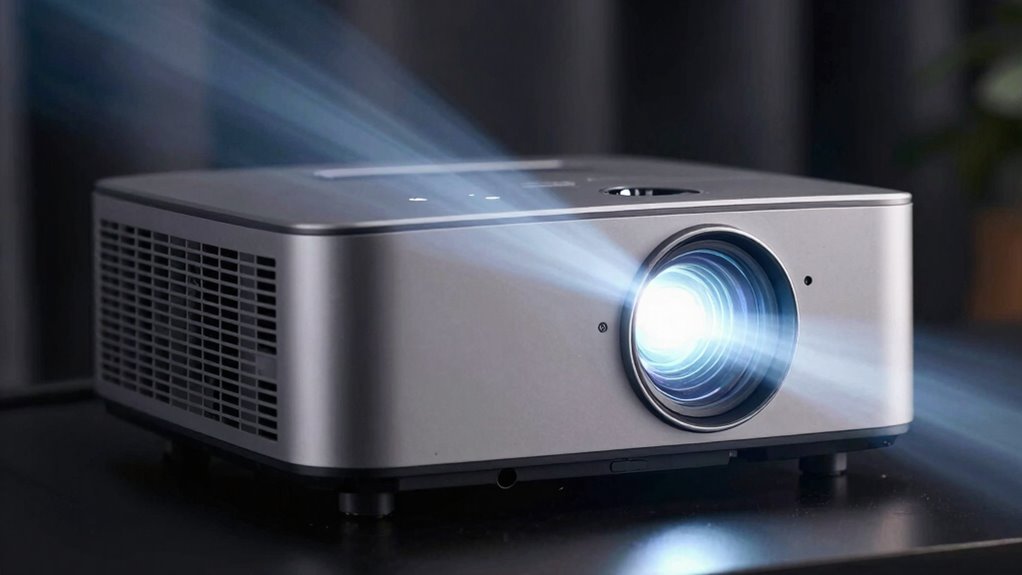
Brightness, measured in lumens, isn’t the only factor that determines a projector’s image quality. A brighter projector may seem better, but if the contrast ratio is low, images can look washed out or dull. High lumens work well in bright rooms, but they don’t guarantee sharpness or vibrant colors. To get the best picture, you need a good balance of brightness and contrast. Keep going to discover how to choose the right projector for your space.
Key Takeaways
- Lumens measure brightness but don’t reflect image quality or contrast, so high lumens alone don’t guarantee a better picture.
- Brightness specs can be misleading if contrast ratios are low, resulting in washed-out or dull images.
- Environmental lighting conditions influence how many lumens are needed; more lumens are required in well-lit rooms.
- Higher lumens may be unnecessary for dark rooms, where lower brightness levels can produce vibrant images.
- For optimal image quality, consider both lumens and contrast ratio rather than relying solely on brightness specifications.

When choosing a projector, understanding lumens is essential because it directly affects the brightness of the image. But brightness isn’t the only factor to consider. Projection resolution determines how clear and detailed your picture will be. Even with high lumens, a low resolution can make images look blurry or pixelated, especially if you’re projecting large images. Conversely, a high resolution like 1080p or 4K ensures crispness and fine detail, which is crucial for presentations or home theater setups. When combined with appropriate lumens, a high-resolution projector can deliver bright, sharp images that are easily visible even during daytime or in rooms with ambient light. Additionally, knowing the contrast ratio can help you select a projector that offers deeper blacks and more vibrant images, enhancing overall picture quality.
Contrast ratios are equally important because they define the difference between the darkest blacks and brightest whites a projector can produce. A high contrast ratio results in more vibrant images with richer details and depth. If a projector has a high lumen count but a low contrast ratio, the picture could look washed out, with less distinction between light and dark areas. This means that even if the projector seems bright enough, the overall image might lack punch and clarity. To truly gauge a projector’s quality, you need to weigh both brightness and contrast ratios.
Many consumers mistakenly believe that higher lumens automatically mean better images, but that’s not always true. For example, a projector with 3,000 lumens might seem sufficient, but if it has poor contrast ratios, the image could still appear flat and dull. Conversely, a projector with fewer lumens but excellent contrast ratios may produce more visually striking images in the right conditions. The key is finding a balance: enough lumens to handle your environment’s lighting and high enough contrast ratios to ensure vivid, detailed images.
Frequently Asked Questions
How Do Lumens Relate to Overall Picture Quality?
Lumens primarily measure brightness but don’t directly determine picture quality. When you focus on lumens, consider color accuracy and contrast ratio, which are vital for a vivid, sharp image. Higher lumens help in well-lit rooms, but without good contrast and color fidelity, the picture can look washed out or dull. So, look beyond brightness specs to make sure your projector delivers rich colors and deep contrasts for the best viewing experience.
Can a Higher Lumen Count Compensate for Poor Image Resolution?
Can a higher lumen count make up for poor image resolution? Not really. While more lumens boost brightness, they won’t improve color accuracy or sharpness. If you’re projecting on a large screen, a bright projector helps maintain visibility, but poor resolution leads to blurry, pixelated images. So, focus on both brightness and resolution, especially for larger screens, to enjoy clear, vibrant visuals that truly impress.
Are Brightness Specs Consistent Across Different Projector Brands?
Brightness specs aren’t always consistent across different projector brands because of brand variability and measurement inconsistencies. You might see similar lumen ratings, but the actual brightness can differ markedly. Always check independent reviews and compare models directly, rather than relying solely on specs. This way, you get a clearer idea of how bright the projector truly is, avoiding surprises caused by differing measurement standards.
How Does Ambient Light Affect the Perceived Brightness of a Projector?
Ever wondered how ambient light influences your viewing experience? It greatly affects perceived brightness, making images look dimmer or washed out. Too much ambient light can cause glare, reducing clarity, even with high lumens. To combat this, you should opt for projectors with better glare reduction features and consider controlling ambient lighting. By managing ambient light, you guarantee your projector’s brightness truly enhances your viewing, rather than detracting from it.
Is Lumen Measurement Standardized Across All Projector Models?
Lumen measurement isn’t fully standardized across all projector models due to varying projection standards and manufacturer practices. You’ll notice lumen variations because some brands use different testing environments or measurement techniques. This inconsistency can make it tricky to compare projectors accurately. To get the best idea of brightness, look beyond lumen specs and consider factors like contrast ratio, projection standards, and real-world testing results.
Conclusion
Remember, brightness specs like lumens are just one piece of the puzzle. Don’t let flashy numbers blind you—think of them as a tiny whisper compared to the full symphony of a projector’s true performance. When choosing your projector, consider all factors, not just brightness. Otherwise, you might end up with a device that’s as dim as a candle in a hurricane, leaving your movie nights lost in the shadows instead of shining brightly.