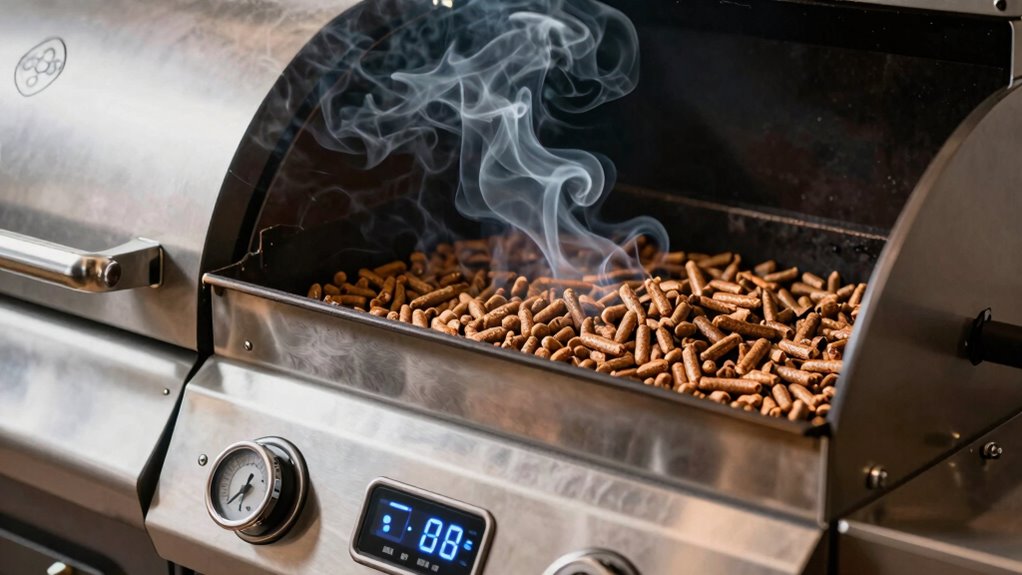

To master pellet grilling, start by choosing the right pellets—hickory for bold flavors or fruit woods like apple for a milder taste. Control smoke by adjusting airflow and pellet feed rate; more smoke adds depth, while less keeps flavors subtle. Use precise temperature settings to guarantee consistent results and experiment with different combinations. Getting comfortable with these basics helps you create flavorful, smoky dishes every time—continue to reveal even more grilling secrets.
Open a free Amazon Business account
Business pricing, bulk buying and tax-exempt orders.
As an affiliate, we earn on qualifying purchases.
Key Takeaways
- Pellet type (hickory, apple, cherry, mesquite) determines the base flavor profile of smoked foods.
- Adjusting airflow and pellet feed rate controls smoke intensity and flavor infusion.
- Combining specific pellet woods with smoke techniques enhances and customizes taste.
- Precise temperature regulation ensures consistent results and optimal flavor development.
- Experimenting with wood choices and smoke settings elevates outdoor cooking versatility.
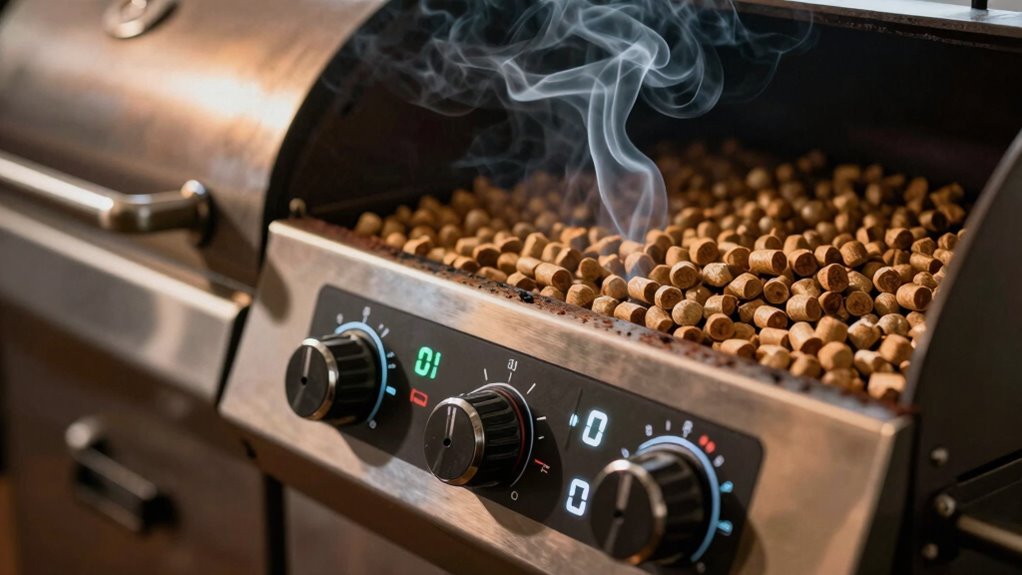
Have you ever wondered how pellet grills make outdoor cooking so effortless and flavorful? It all starts with the pellets you choose. Pellet types vary depending on the wood used, such as hickory, apple, cherry, or mesquite, each imparting its own unique flavor profile to your food. When selecting pellets, think about the taste you want to achieve. For instance, hickory provides a bold, smoky flavor ideal for pork or beef, while fruit woods like apple and cherry add a sweet, mild aroma perfect for chicken or fish. The variety of pellet types allows you to customize your grilling experience and experiment with different flavors to suit your preferences.
Pellet choices like hickory and fruit woods create distinct, flavorful outdoor grilling experiences.
As you operate your pellet grill, you’ll notice that mastering smoke techniques is essential for getting the most flavor out of your food. Smoke techniques involve controlling how much smoke is produced and how it interacts with the heat and moisture around your food. Pellet grills excel here because they generate smoke continuously as the pellets burn, but you can influence the intensity by adjusting the airflow and pellet feed rate. For a stronger smoky flavor, you might opt for longer smoke cycles or use a higher pellet feed rate, which produces more smoke. Conversely, for a subtler touch, reduce the smoke output by adjusting the airflow or limiting the duration of smoke exposure. Many pellet grills also have smoke settings that allow you to fine-tune this process easily, giving you control over the flavor infusion.
Pellet types and smoke techniques go hand-in-hand when it comes to crafting flavorful dishes. The choice of pellet influences the base flavor, while the smoke technique helps you refine and enhance that taste. For example, if you’re smoking brisket, using mesquite pellets will add a robust, earthy flavor, and applying a longer smoke time will deepen that smoky richness. If you’re grilling vegetables or delicate fish, you might choose fruit woods and shorter smoke cycles to prevent overpowering the natural flavors. The key is understanding the balance between pellet selection and smoke control, which allows you to elevate your outdoor cooking to professional levels.
Additionally, understanding the wood selection and its impact on flavor can help you better tailor your grilling sessions to achieve desired results. The combination of wood type, smoke techniques, and temperature control enables you to consistently produce delicious, smoky dishes with minimal effort. Your pellet grill becomes a versatile tool for experimenting with different flavors and textures, all while maintaining precise temperature regulation. This combination of wood choice, smoke management, and temperature regulation makes outdoor cooking not just easy but also incredibly rewarding, turning simple ingredients into flavorful masterpieces every time.
As an affiliate, we earn on qualifying purchases.
Frequently Asked Questions
How Long Do Pellet Grills Typically Last?
Pellet grills typically last around 5 to 10 years, depending on how well you maintain them. Regular grill maintenance, like cleaning the fire pot and checking parts, can extend your pellet lifespan. Keep an eye on the hopper and auger for any issues. Proper care guarantees your grill stays efficient and durable, providing smoky flavor and consistent temperature control for many years to come.
Are Pellet Grills Suitable for Baking or Roasting?
Think of your pellet grill as a versatile kitchen partner. Yes, it’s suitable for baking and roasting, offering consistent heat and smoky flavor. Its durability supports these tasks, but you should follow pellet storage tips to prevent moisture. Keep the grill clean and dry, and you’ll enjoy perfectly baked bread or roasted veggies. With proper care, your pellet grill becomes a reliable tool for all your culinary adventures.
What’s the Best Way to Store Unused Pellets?
To keep your pellets fresh, store them in an airtight container or sealed bag in a cool, dry place. Proper pellet storage prevents moisture and air exposure, which can compromise pellet quality. Avoid storing pellets outdoors or in humid areas, as this can cause swelling or mold. Maintaining ideal storage conditions ensures your pellets burn efficiently and produce consistent smoke flavor, giving you better results every time you grill.
Do Different Pellet Brands Affect Smoke Flavor Quality?
Think of pellet brands as musical notes—each one offers a unique flavor profile. Different pellet brands do influence smoke flavor quality, as some provide richer or milder tastes. Your choice impacts the overall flavor, so select pellets compatible with your grill and the flavor you desire. Brand compatibility ensures consistent results, and experimenting with various brands helps you find the perfect smoky note for your dishes.
Can I Use Wood Chips Instead of Pellets?
Yes, you can use wood chips instead of pellets, but keep in mind they’re a wood chip alternative and may not burn as efficiently or consistently. You’ll need a smoker box or foil packet to contain the chips. Wood chip alternatives can produce different pellet flavor variations, so expect some variation in smoke flavor. Adjust your grilling time accordingly to maintain steady smoke and temperature.
Conclusion
Now that you understand how pellets, smoke flavor, and temperature control work together, you’re ready to master your pellet grill. Did you know that pellet grills can reach temperatures up to 500°F, giving you versatility for everything from smoking to searing? With this knowledge, you can cook delicious, smoky dishes with confidence. So fire it up, experiment with your settings, and enjoy the flavorful results that make pellet grilling so popular. Happy grilling!
NFL season / tailgating Picks
team gear
As an affiliate, we earn on qualifying purchases.