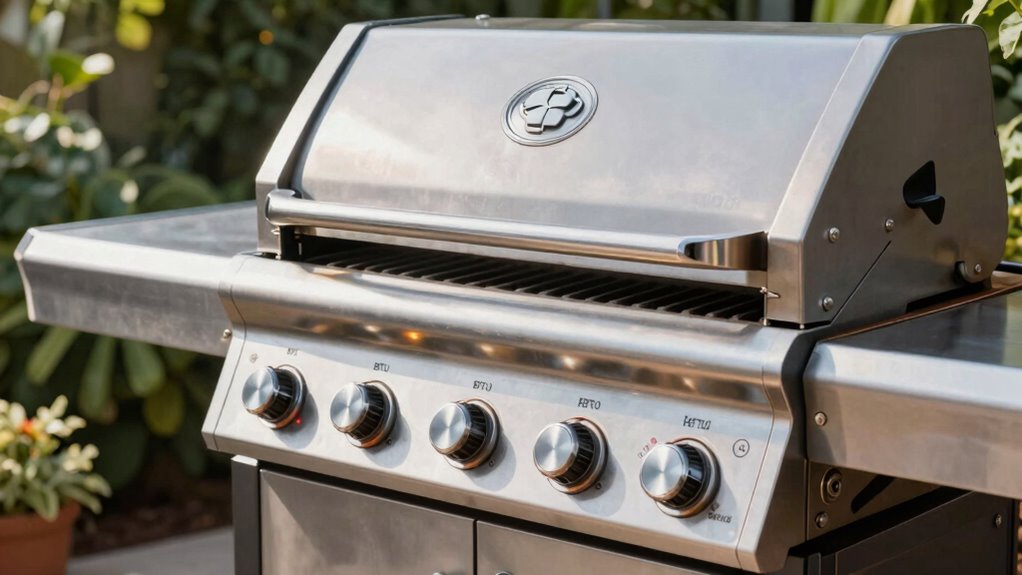

BTUs on a gas grill are often exaggerated as the main indicator of performance, but they don’t tell the whole story. Higher numbers don’t always mean better heat or more even cooking. Instead, focus on how well the grill transfers heat, its design, and fuel efficiency. A well-built, moderate BTU grill can outperform a larger one. Want to find out what truly makes a grill perform at its best? Keep exploring to learn more.

Get the latest gadgets delivered free with Prime
- Fast, free delivery on millions of items
- Prime Video, Amazon Music and more included
- Member-only deals all year
Key Takeaways
- BTUs indicate heat output but don’t directly correlate with grilling quality or speed.
- Infrared burners can deliver better results with lower BTUs due to focused heat.
- Fuel efficiency and heat transfer design are more important than high BTU ratings.
- Larger BTUs aren’t always necessary for typical home grilling needs.
- Focus on features like insulation and precise controls for optimal performance over raw BTU numbers.
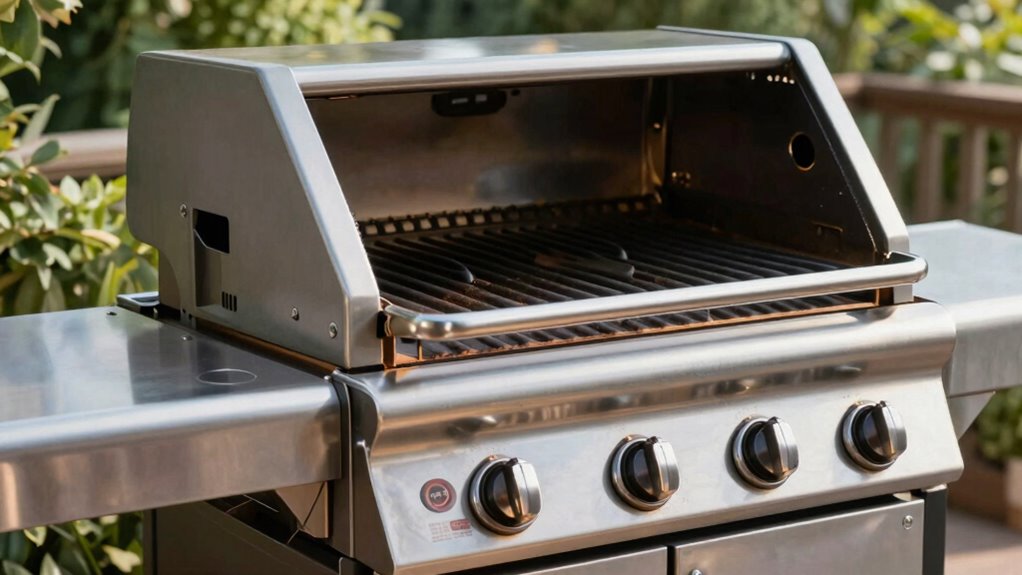
Are you wondering how to choose the right gas grill? When shopping for a grill, you might hear a lot about BTUs—British Thermal Units—and assume higher numbers mean better performance. But in reality, BTUs aren’t the only factor that determines how well your grill will cook. Instead, focus on features like infrared burners and fuel efficiency, which can have a bigger impact on your grilling experience.
Infrared burners are a game-changer because they produce intense, direct heat that cooks food quickly and evenly. Unlike traditional burners that heat the air around the food, infrared technology radiates heat directly onto the surface, locking in juices and creating a perfect sear. This means you don’t need enormous BTU ratings to get great results. Even a grill with moderate BTUs equipped with infrared burners can outperform larger models that rely solely on conventional heating. So, when choosing a grill, consider whether it has infrared burners, as they help maximize heat transfer and improve cooking performance.
Fuel efficiency is another essential factor often overlooked by consumers fixated on BTUs. A grill with high fuel consumption can become expensive to operate over time, especially if you barbecue frequently. Look for models that are designed to use fuel wisely—these often have better insulation, precise temperature controls, and efficient burners that make the most out of each propane or natural gas cylinder. You don’t need a high BTU rating to achieve excellent grilling results if the grill is fuel-efficient. It means you’ll spend less money on fuel and enjoy more consistent heat without constantly refilling your tank.
Additionally, a focus on fuel efficiency and infrared burners helps you understand that a high BTU number isn’t a guarantee of superior performance. Instead, it’s about how effectively your grill converts that heat into perfect cooking conditions. Many modern grills with moderate BTUs, combined with smart design features, deliver exceptional results without wasting fuel or requiring excessive heat output. Think about the size of your typical meals and your cooking style—larger BTUs might be unnecessary if your grill can reach and maintain the right temperature efficiently.
Understanding heat transfer efficiency can help you make smarter choices when selecting a grill, ensuring you get the best performance for your needs.
infrared gas grill with precise temperature control
As an affiliate, we earn on qualifying purchases.
As an affiliate, we earn on qualifying purchases.
Frequently Asked Questions
How Do BTUS Affect Cooking Speed on a Gas Grill?
BTUs do influence cooking speed on a gas grill, but they’re not the whole story. Higher BTUs can help you reach your desired cooking temperature faster, but heat retention is equally important for consistent results. A grill with good heat retention maintains steady heat, allowing you to cook evenly without needing maximum BTUs. Focus on your grill’s overall heat management rather than just the BTU number to improve your cooking experience.
Can a Grill With Fewer BTUS Still Cook Large Meals Effectively?
Think of a grill with fewer BTUs as a trusty steed—steadier than the speedster—capable of cooking large meals effectively. Your grill’s aesthetics and maintenance requirements often matter more, ensuring consistent heat and easy cleaning. With proper heat management and good quality grates, even lower-BTU grills can handle big gatherings. Don’t judge a grill solely by its numbers; focus on performance, upkeep, and how well it fits your cooking style.
Do Higher BTUS Mean Better Grill Durability?
Higher BTUs don’t necessarily mean better grill durability. Instead, focus on grill maintenance and material quality. A well-maintained grill with sturdy, high-quality materials can last longer and perform better, regardless of BTU rating. Cheaper materials may wear out faster, even with high BTUs. Regular cleaning, proper storage, and choosing a grill made from durable metals guarantee your grill stays in top shape over time.
How Does Weather Impact BTU Performance During Grilling?
Weather effects your grill like wind whipping a flame, flickering and weakening its heat. Outdoor conditions such as wind, rain, or cold can cause your grill’s BTU performance to fluctuate, making it harder to maintain consistent temperatures. Strong winds can blow out flames or reduce heat, while cold temperatures sap heat faster. To get the best results, shield your grill from harsh weather and anticipate the impact of outdoor conditions on your cooking.
Are BTUS More Important Than Grill Size for Performance?
BTUs are less important than grill size and design for performance. You might be tempted to focus on high BTU ratings, but this doesn’t guarantee better grilling. Instead, consider grill aesthetics and fuel efficiency, which impact how well your grill heats evenly and conserves fuel. A well-designed, appropriately sized grill with good airflow produces better results than just chasing higher BTUs, making your grilling experience more enjoyable and efficient.
Conclusion
So, next time you’re eyeing that big BTU number, remember it’s not the whole story. Sure, higher BTUs can mean more heat, but they don’t guarantee perfect steaks or happy guests. Sometimes, all that power just burns through fuel faster and leaves you with uneven cooking. Turns out, you don’t need a rocket engine—just a well-designed, properly maintained grill. Who knew that size isn’t everything? Happy grilling!
Halloween Picks
halloween
As an affiliate, we earn on qualifying purchases.