To verify if your cookware works with induction, use a magnet to test the bottom. If the magnet sticks firmly, your pots and pans are compatible because they contain magnetic metals like iron or certain stainless steel. If the magnet doesn’t stick, they won’t heat properly on an induction stove. Knowing this simple test can save you time and effort—keep going to learn more ways to ensure your cookware is induction-ready.
Key Takeaways
- Use a magnet to test your cookware; if it sticks firmly, it’s likely induction-compatible.
- Look for labels like “induction compatible” or “magnetic base” on the cookware.
- Materials such as cast iron and certain stainless steels are suitable for induction cooking.
- Non-magnetic materials like aluminum, copper, and glass generally won’t work unless modified.
- Ensure the cookware has a flat, smooth bottom for better contact and efficient heating on induction stoves.
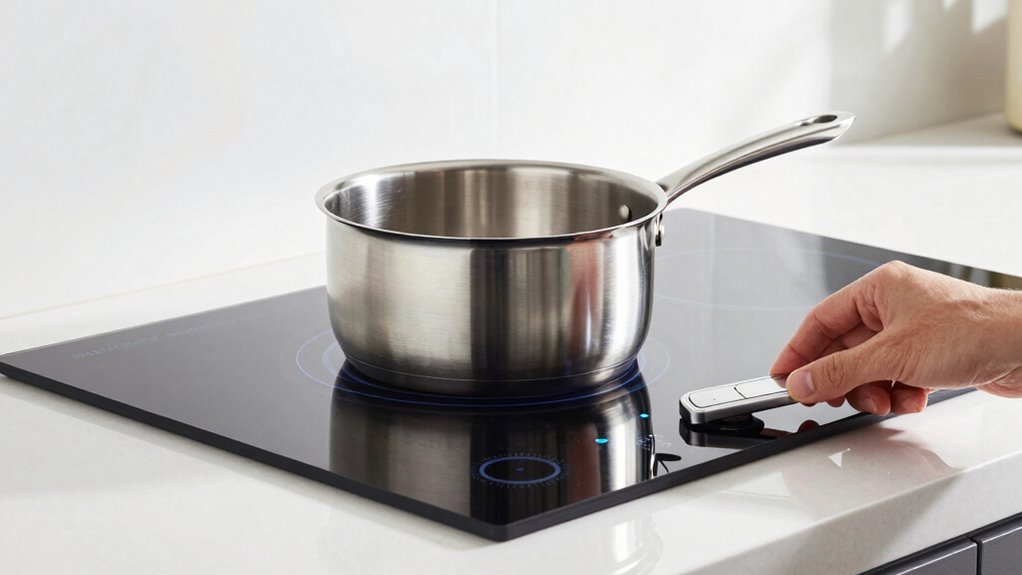
Have you ever wondered how induction cooking works so quickly and efficiently? It’s all about the way the stove interacts with your cookware. Unlike traditional methods, induction cooktops use magnetic fields to heat your pots and pans directly, which means you get faster cooking times and better energy efficiency. But to enjoy these benefits, your cookware must be compatible with induction technology. That’s where understanding magnetic compatibility becomes essential. Not every piece of cookware will work on an induction stove, so it’s important to check if your pots and pans have the right magnetic properties. You can do this easily by testing them with a simple magnet. If the magnet sticks firmly to the bottom of your cookware, it’s magnetically compatible and suitable for induction cooking. If it doesn’t, then the cookware won’t heat properly on an induction stove, no matter how great it looks or how high-quality it is.
The key to this compatibility lies in the cookware material. Induction-compatible cookware is usually made of ferrous metals—materials that contain iron or have magnetic properties. Common materials like cast iron and certain stainless steels work well because they have magnetic qualities that enable the induction process to generate heat. On the other hand, cookware made of aluminum, copper, glass, or non-magnetic stainless steel generally won’t work unless it has a special magnetic layer added to its base. This is why some stainless steel pots are compatible—because they’re designed with a magnetic core or layer. When shopping for induction-ready cookware, it’s smart to look for labels or descriptions that specify “induction compatible” or “magnetic base.” This helps guarantee you don’t waste money on cookware that won’t work with your stove.
Checking your current cookware’s magnetic compatibility is straightforward. Use a magnet and see if it sticks strongly to the bottom. If it does, you’re in good shape. If not, you might need to upgrade or purchase new cookware designed for induction cooking. Keep in mind that the quality of your cookware material impacts not just compatibility but also heat distribution and overall cooking performance. Heavier, thicker metals tend to heat more evenly, which improves your cooking results. So, while the magnet test is a quick and easy way to verify compatibility, investing in high-quality, induction-friendly cookware can make your cooking experience more efficient and enjoyable. By paying attention to magnetic compatibility and choosing the right cookware material, you’ll open the full potential of your induction stove and enjoy faster, safer, and more precise cooking. Additionally, top-quality materials can enhance heat retention and distribution, further improving cooking efficiency.

CAROTE 21Pcs Pots and Pans Set, Nonstick Cookware Sets, White Granite Induction Cookware Non Stick Cooking Set w/Frying Pans & Saucepans(PFOS, PFOA Free)
Reinforced die-cast aluminum construction ensures long-term durability and reliability while maintaining a lightweight design, bringing convenience to your…
As an affiliate, we earn on qualifying purchases.
As an affiliate, we earn on qualifying purchases.
Frequently Asked Questions
Can I Use Non-Magnetic Cookware on an Induction Stove?
You can’t use non-magnetic cookware on an induction stove unless it’s induction-compatible. To check, do a magnetic test with a magnet—if it sticks, your cookware is suitable. If it doesn’t, you need to switch to magnetic cookware for efficient induction cooking. Remember, induction compatibility is essential for proper heat transfer, so always verify with a magnet before cooking.
How Do I Clean Induction-Compatible Cookware Properly?
Think of cleaning your induction-compatible cookware like giving it a spa day; gentle care keeps it shining. To clean, use warm, soapy water and a soft sponge, avoiding abrasive cleaners that could scratch the surface. Regular maintenance routines, like wiping after each use, prevent buildup. For stubborn stains, a mixture of baking soda and water works wonders. Proper cleaning tips make certain your cookware stays efficient and lasts longer.
What Are Common Signs My Cookware Isn’t Working With Induction?
If your cookware isn’t compatible with induction, you’ll notice it doesn’t heat up on your induction stove. To confirm, try the magnetic test method — hold a magnet to the bottom; if it sticks firmly, your cookware is induction-compatible. If it doesn’t, it likely isn’t suitable. These magnetic test methods are quick and reliable, helping you identify whether your cookware works with induction or needs replacing.
Is There a Way to Test Cookware Without a Magnet?
Sure, you could try the magnet test, but if you’re feeling rebellious and want to skip magnets, there are alternative methods. You might look for a flat, smooth bottom that heats evenly or check for induction-specific symbols. Ultimately, though, a simple magnet test is quick, reliable, and doesn’t require a degree in cookware archaeology. So, unless you’re magnet-averse, stick to the tried-and-true method to save yourself some guesswork.
How Does Cookware Material Affect Induction Cooking Performance?
Your cookware’s material critically impacts induction cooking performance through compatibility and conductivity. If it’s made of ferromagnetic material like cast iron or some stainless steels, it’ll work efficiently because of good material conductivity. Non-compatible materials, such as aluminum or copper unless layered with magnetic metals, won’t heat properly on induction stoves. To guarantee ideal performance, always check your cookware’s compatibility and choose those with high material conductivity for quick, even heating.

Gotham Steel 10 Pcs Tri Ply Stainless Steel Cookware Set, Pots and Pans Set with Induction Bottom, Made Without PTFE PFOA PFOS, Metal Utensil Safe, Oven and Dishwasher Safe
Cook Healthier Every Day: Enjoy delicious, oil-free meals with our non toxic stainless steel surface that promotes healthy…
As an affiliate, we earn on qualifying purchases.
As an affiliate, we earn on qualifying purchases.
Conclusion
Now that you know how to test your cookware for induction compatibility, you’re ready to bring your kitchen to life. Imagine your pots and pans humming gently over the sleek, glowing surface, heat spreading evenly like a warm embrace. With the right tools, cooking becomes a dance—smooth, efficient, and satisfying. So, grab your cookware, perform the test, and let your induction stove turn your culinary dreams into reality, one perfectly cooked meal at a time.
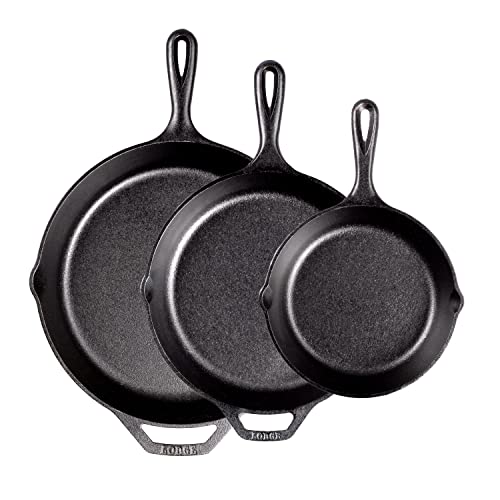
Lodge Seasoned Cast Iron Skillet Set – PFAS-Free, Non-Toxic Cookware – Use with an Oven, Stove, Grill, or Campfire – Naturally Non-Stick & Oven Safe – 8, 10.25 & 12 Inches
Quality Cast Iron Frying Pan: The Lodge Seasoned Cast Iron Skillet is loved for its great heat retention,…
As an affiliate, we earn on qualifying purchases.
As an affiliate, we earn on qualifying purchases.
CAROTE 21Pcs Pots and Pans Set, Nonstick Cookware Sets, White Granite Induction Cookware Non Stick Cooking Set w/Frying Pans & Saucepans(PFOS, PFOA Free)
Reinforced die-cast aluminum construction ensures long-term durability and reliability while maintaining a lightweight design, bringing convenience to your…
As an affiliate, we earn on qualifying purchases.
As an affiliate, we earn on qualifying purchases.