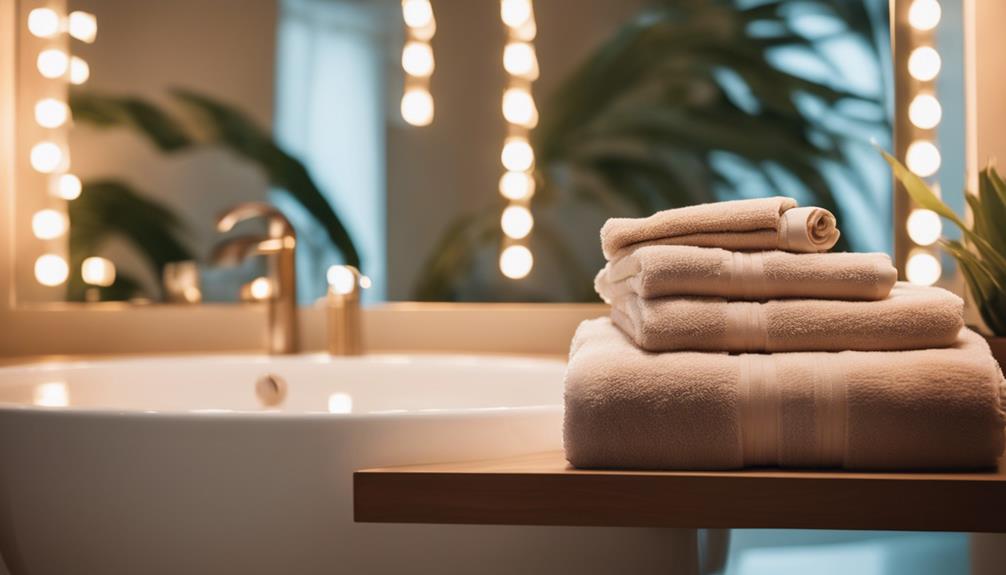
To plan your own wellness retreat at home, pick a specific day and treat it like a special appointment. Prepare a cozy, quiet space by decluttering and adding calming scents or soft textiles. Schedule relaxing activities such as meditation, gentle yoga, or DIY treatments using natural ingredients. Set clear boundaries, disconnect from technology, and create a nourishing menu. With thoughtful planning and organization, you can craft a rejuvenating experience—keep exploring to discover more tips for a perfect at-home retreat.

Get the latest gadgets delivered free — and shop member deals
- Fast, free delivery on millions of items
- Access to Prime Big Deal Days deals on October 6–7
- Prime Video, Amazon Music and more included
Key Takeaways
- Select a specific day for your retreat, marking it as a non-negotiable self-care event on your calendar.
- Prepare a calming environment with cozy elements, gentle scents, dim lighting, and free from digital distractions.
- Plan a balanced schedule of wellness activities like meditation, gentle yoga, and nourishing meals for relaxation and rejuvenation.
- Gather DIY natural treatments, journal prompts, and healthy snacks in advance to create an immersive, cost-effective experience.
- Set clear boundaries, limit communication, and fully commit to being present to maximize the retreat’s restorative benefits.
Creating your own wellness retreat at home offers a personalized escape from daily stress and a chance to recharge both mind and body. To make the most of it, start by choosing a specific day and marking it clearly on your calendar. Treat this day as a non-negotiable self-care appointment, so you stay accountable. If you want to include guest invitations, consider inviting close friends or family members who share your wellness goals. Keep in mind that hosting can enhance the experience, but it’s essential to plan ahead—discuss the date early and coordinate schedules to ensure everyone can fully participate. Use budget tips to keep it affordable: opt for DIY treatments, prepare healthy meals at home, and use natural ingredients like honey, coconut oil, and essential oils. This way, you avoid costly spa visits while still enjoying luxurious self-care.
Create a personalized at-home wellness retreat with thoughtful planning, natural treatments, and nourishing self-care for ultimate relaxation.
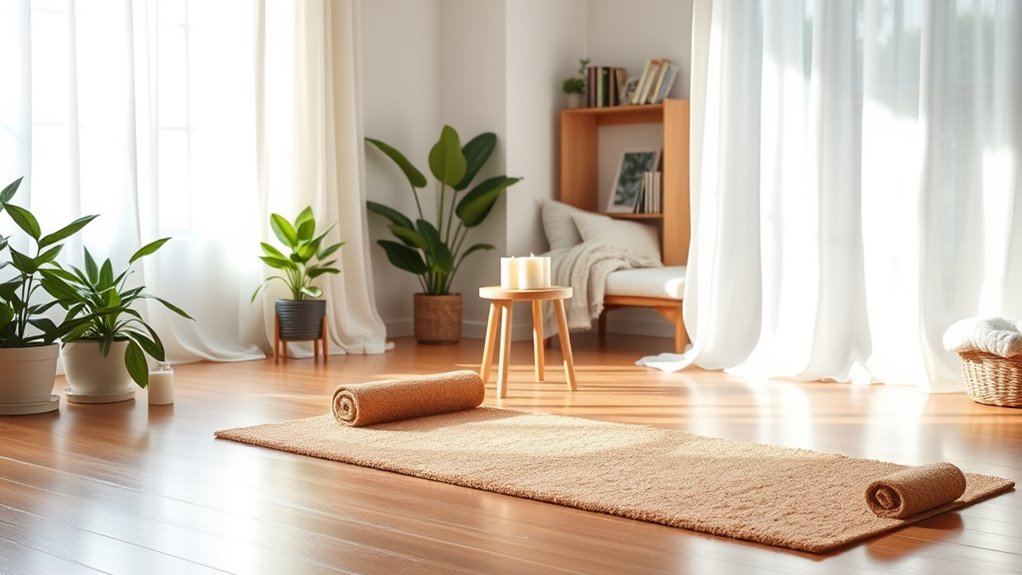
Next, environment preparation plays a crucial role in setting the tone. Choose a quiet, comfortable room in your home and clean it thoroughly ahead of time. Add cozy elements like pillows, blankets, and calming scents such as lavender or eucalyptus via diffusers. Dim the lights and play gentle music or white noise to foster a serene atmosphere. Make sure to remove distracting technologies—no phones, TV, or computers—to encourage a digital detox. Stock the space with retreat essentials and groceries the day before, so you’re not scrambling last-minute. If you’re hosting guests, prepare extra supplies and create a welcoming vibe that encourages relaxation for everyone. According to wellness research, a peaceful environment significantly enhances relaxation and mental clarity during retreats. Incorporating mindful organization into your planning can further elevate your experience and reduce stress.
Intentionality and scheduling activities help maximize your retreat. Set clear, positive intentions—whether focusing on self-love, relaxation, or reflection. Create a flexible but structured schedule balancing wellness activities with rest. Include meditation, deep breathing, gentle yoga, or stretching to calm your nervous system and improve energy flow. Allocate time for journaling to reflect, express gratitude, or set goals. This organized approach ensures you cover all bases without feeling rushed or overwhelmed.
Incorporate wellness practices and treatments you enjoy, like DIY facials, foot soaks, or hair masks, using natural ingredients. Prepare healthy, mindful meals that emphasize nourishment and slow eating, supporting detoxification and energy. Use these treatments as opportunities for mindfulness, and consider a digital detox to deepen relaxation. Before the retreat, increase physical activity gradually to prepare your body, and ensure adequate rest in the days leading up to it. Pack comfortable attire, journals, and hydration essentials to stay relaxed and focused.
Finally, create a mindful environment that enhances tranquility. Use sensory cues like soft textiles, low lighting, and calming scents. Incorporate plants or view natural scenery if possible, to deepen your connection to nature and promote peace. Establish clear boundaries for your retreat day—limit communication and commit to being present. With thoughtful planning, your home can transform into a sanctuary for renewal and wellness that leaves you feeling refreshed and balanced.
essential oil diffuser for relaxation
As an affiliate, we earn on qualifying purchases.
As an affiliate, we earn on qualifying purchases.
Frequently Asked Questions
How Do I Choose the Best Location Within My Home for My Retreat?
You should choose a quiet, private spot in your home, like a cozy corner or a spare room, where you can add indoor greenery for a calming vibe. Look for a space away from noise and high traffic, with good natural light or space for soft lighting. Make certain it’s functional for your activities, clutter-free, and personalized with soothing décor to create a peaceful retreat environment.
What Budget Should I Allocate for a Home Wellness Retreat?
You should allocate a flexible budget based on your desired level of comfort and activities, typically ranging from minimal costs for DIY treatments to more for upgraded amenities. Start with budget planning by identifying essential expenses and set aside funds for optional extras. Use expense tracking to stay within your limits. Prioritize cost-effective options like homemade spa treatments or nature walks, ensuring your retreat remains relaxing without overspending.
How Can I Include Family or Roommates Without Disturbance?
You can include family participation while respecting roommate boundaries by setting clear expectations beforehand. Communicate your retreat goals and create designated times for shared activities like nature walks or group meals. Use signals like “Do Not Disturb” signs or headphones to signal quiet times. By finding a happy medium, you’ll keep everyone’s needs in check, and everyone can enjoy the retreat without stepping on each other’s toes.
Are There Specific Apps or Tools to Help Plan My Retreat?
Yes, you can use wellness planning tools like YouLi or Retreat Guru to organize your retreat, including scheduling activities and managing participant info. Meditation apps such as Calm or Insight Timer enhance your experience by offering guided sessions. These tools streamline your planning, keep everyone on track, and create a peaceful environment, making it easier to enjoy your retreat at home without disturbances.
How Do I Maintain Motivation During a Multi-Day Retreat?
To keep your motivation blooming during a multi-day retreat, embrace gentle encouragement through mindfulness exercises that center your focus, and treat yourself to healthy snacks that nurture your energy. Celebrate small wins daily, reflect on your progress, and create a cozy environment that inspires calm. Connecting with supportive friends and experimenting with different activities can also keep your spirit lively, helping you stay committed and engaged throughout your wellness journey.
Conclusion
Creating your own wellness retreat at home is a rewarding way to recharge without the stress of travel. With just a little planning, you can enjoy the mental and physical benefits of relaxation, mindfulness, and self-care. Did you know that taking regular breaks can boost productivity by up to 50%? So, prioritize your well-being—your mind and body will thank you, and you’ll return to your daily routine feeling refreshed and revitalized.
Fall Picks
fall essentials
As an affiliate, we earn on qualifying purchases.