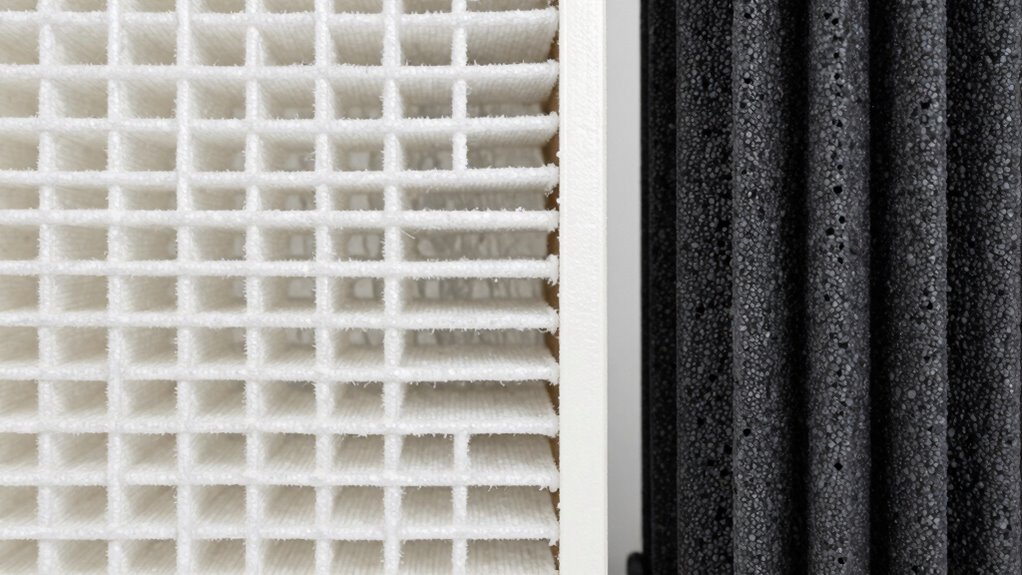

HEPA filters trap tiny particles like dust, pollen, and pet dander, removing 99.97% of particles as small as 0.3 microns, making your air cleaner and healthier. Carbon filters target gases, odors, and chemicals, effectively eliminating cooking smells, pet odors, and fumes. While HEPA filters focus on particles, carbon filters handle gases. Combining both gives you thorough cleaning. Want to discover how choosing the right filter can improve your indoor air? Keep exploring for more insights.

Get the latest gadgets delivered free with Prime
- Fast, free delivery on millions of items
- Prime Video, Amazon Music and more included
- Member-only deals all year
Key Takeaways
- HEPA filters trap tiny particles like dust, pollen, and smoke, while carbon filters adsorb gases and odors.
- HEPA filters remove 99.97% of particles as small as 0.3 microns; carbon filters target volatile organic compounds and smells.
- Combining both filters provides comprehensive cleaning of both particles and gases for better indoor air quality.
- HEPA filters require regular replacement to maintain particle filtration efficiency; carbon filters need replacement as they saturate with odors.
- Proper maintenance of filters ensures optimal air purifier performance and healthier indoor environments.

Are you unsure which air filter is right for your needs—HEPA or carbon? Deciding between these two types depends on what you want to remove from your indoor air and how much effort you’re willing to put into maintenance. HEPA filters excel at capturing tiny particles like dust, pollen, pet dander, and smoke. They boast high air purification efficiency, removing 99.97% of particles as small as 0.3 microns, making them ideal for allergy sufferers or anyone sensitive to airborne contaminants. Carbon filters, on the other hand, are specially designed to target gases, odors, and volatile organic compounds (VOCs). If your main concern is eliminating cooking smells, pet odors, or chemical fumes, a carbon filter is the better choice.
HEPA filters remove tiny particles like dust and pollen; carbon filters target odors and gases for cleaner indoor air.
Understanding the difference in air purification efficiency is vital to making an informed decision. HEPA filters are unmatched at trapping microscopic particles, markedly improving indoor air quality, especially in environments with high dust or allergen levels. Carbon filters, however, don’t trap particles but work by adsorbing gases and odors, making them a complementary option or a good standalone choice if odors are your primary concern. Some air purifiers combine both filters, providing thorough coverage that tackles particles and gases simultaneously. Additionally, knowing the filter replacement schedule helps ensure your device maintains optimal performance. Regular filter maintenance is essential because neglecting it can lead to decreased airflow and efficiency. Proper filter maintenance also ensures that your purifier continues to efficiently remove contaminants, maintaining healthy indoor air. Regular monitoring of filter performance indicators can help you determine the right time for replacements and prevent performance issues.
To maximize the effectiveness of your air purifier, understanding filter lifespan and replacement indicators can help prevent performance drops and ensure continued air quality. When it comes to filter maintenance tips, HEPA filters usually need replacing every 6 to 12 months, depending on usage and air quality. Regularly checking your filter and following the manufacturer’s guidelines guarantees maximum air purification efficiency. If you neglect filter maintenance, airflow can diminish, reducing effectiveness and possibly causing the device to work harder, which increases energy consumption. Carbon filters require similar attention; they tend to become saturated with odors and gases over time, and once they’re full, they lose their ability to absorb contaminants. Replacing these filters on schedule helps maintain their effectiveness and keeps your air fresh. Proper maintenance not only extends the lifespan of your filters but also ensures ongoing indoor air quality.
Products Worth Considering

DJI Osmo Mobile 8 Standard Combo Phone Gimbal Stabilizer

Apple iPad Air (4th Generation, 10.9-inch, Wi-Fi, 256GB) – Space Gray

Apple iPad Air 13-inch (M4), 128GB, Wi-Fi 7, Space Gray
As an affiliate, we earn on qualifying purchases.
Frequently Asked Questions
How Long Do HEPA and Carbon Filters Typically Last?
You should expect HEPA filters to last about 12 to 18 months, while carbon filters typically need replacement every 3 to 6 months. Regular filter maintenance is vital for maintaining peak air quality impact. When filters become clogged or dirty, their efficiency drops, so keep an eye on their condition. Replacing filters on time guarantees your air purifier continues to effectively remove pollutants and allergens.
Can HEPA and Carbon Filters Be Used Together?
Yes, you can use HEPA and carbon filters together. They complement each other well for thorough air filter maintenance, with HEPA capturing particles and carbon targeting odors and gases. Just make certain filter compatibility with your air purifier and check instructions to avoid airflow issues. Using both enhances air quality, especially in spaces needing detailed filtration. Regular maintenance is essential to keep both filters working effectively.
Are HEPA or Carbon Filters Better for Allergies?
For allergies, HEPA filters are better because they capture tiny particles like pollen, pet dander, and dust mites that trigger allergic reactions. Air purification with a HEPA filter improves your indoor air quality considerably. Just remember, regular filter maintenance is essential to keep your purifier effective. Carbon filters are great for odors, but if allergy relief is your goal, stick with HEPA for cleaner, healthier air.
Do Carbon Filters Remove Viruses From the Air?
Carbon filters don’t effectively remove viruses from the air because their primary function is to absorb odors and chemicals. When it comes to air filter effectiveness for virus filtration, HEPA filters are your best choice, as they capture particles as small as 0.3 microns, including many airborne viruses. So, if virus removal is your goal, opt for a HEPA filter rather than relying solely on a carbon filter.
How Often Should I Replace My Air Filters?
Think of your air filter as the frontline warrior for your indoor air quality. You should replace filters every 3 to 6 months, depending on usage and environment. Regular air filter maintenance keeps your home’s air fresh and healthy, preventing buildup of dust, allergens, and pollutants. Check your manufacturer’s guidelines and monitor for signs of dirt or reduced airflow—these are clues it’s time for a change to guarantee peak performance.
Conclusion
So, now that you know the difference, you’re practically an air filter expert—congratulations! Whether you choose HEPA’s superhero prowess or carbon’s secret odor smarts, just remember: your air quality is now in your hands. No more excuses for sneezing fits or musty smells—except, of course, if you want to keep your home’s charm intact. Either way, breathe easy, and don’t forget to thank your new air filtration savvy. You’re welcome!