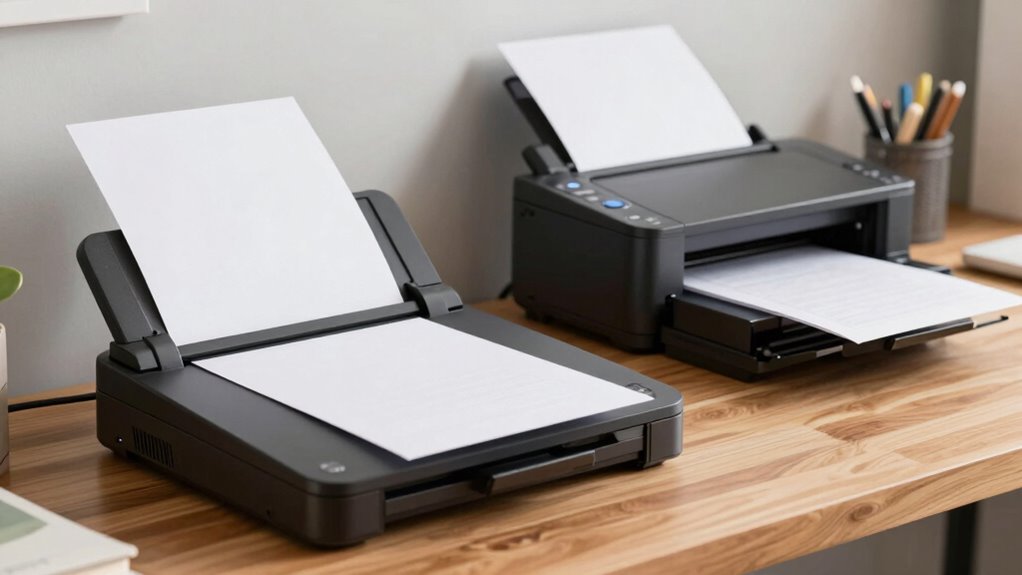
If you need fast, efficient scanning of large volumes of double-sided documents, a duplex scanner is the way to go, saving you time and boosting workflow. On the other hand, if you want high-quality, detailed copies of delicate or irregular items like photos or books, a flatbed scanner is ideal. Each type suits different needs, and understanding your specific tasks can help you choose the right tool—so keep going to learn more about these options.

Get the latest gadgets delivered free with Prime
- Fast, free delivery on millions of items
- Prime Video, Amazon Music and more included
- Member-only deals all year
Key Takeaways
- Duplex scanners are ideal for high-volume, double-sided document processing, saving time and increasing workflow efficiency.
- Flatbed scanners excel at capturing high-resolution, detailed images of delicate, thick, or irregular items like photos and artwork.
- Choose duplex scanners for bulk scanning and speed; opt for flatbeds when document detail and quality are priorities.
- Flatbed scanners are better for scanning bound materials, fragile documents, or items requiring high clarity.
- Consider workspace, volume, and specific document needs to determine whether duplex or flatbed scanning makes the most sense.
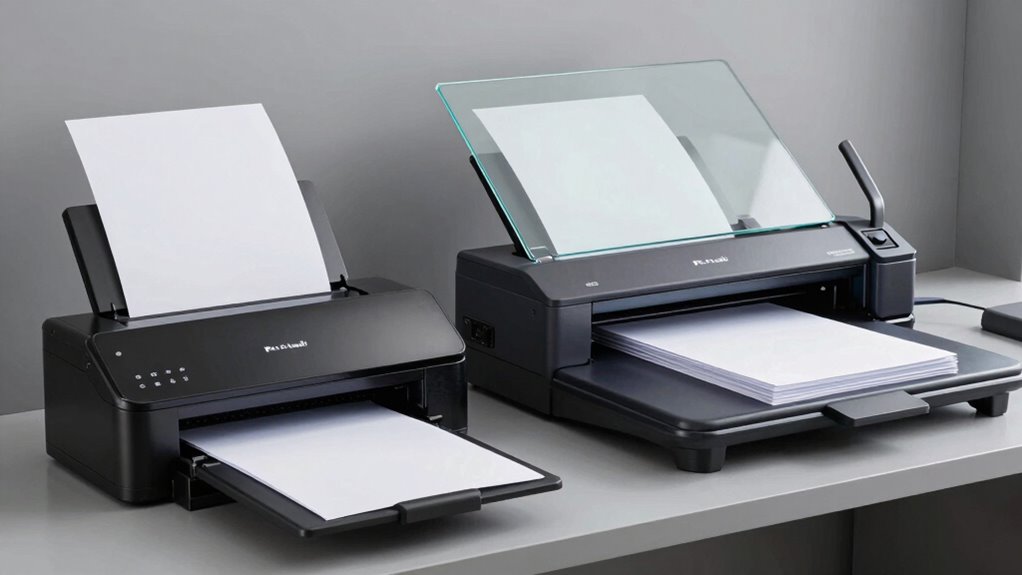
Are you looking for a quick and reliable way to digitize your documents? Whether you’re organizing your home office or managing a business, choosing the right scanner can make all the difference. Digital archiving has become essential for preserving important records, and with the rise of mobile scanning, managing documents on the go is easier than ever. The decision often comes down to whether a duplex or flatbed scanner fits your needs best, so understanding their strengths can help you make an informed choice.
Duplex scanners are designed to scan both sides of a document at once, saving you time and effort. If you regularly handle large volumes of double-sided papers, they’re a smart investment. These scanners excel in environments where speed and efficiency are priorities, such as offices or archives, because they can process multiple pages rapidly. When digitizing stacks of reports, contracts, or financial statements, duplex scanners streamline the workflow, making digital archiving faster and more manageable. Plus, many duplex models come with features that support mobile scanning, allowing you to scan directly to your device or cloud services, which is perfect for remote work or on-the-move tasks. This capability guarantees you can quickly capture documents no matter where you are, transforming your mobile device into a powerful scanning tool.
Flatbed scanners, on the other hand, are ideal when quality and detail are vital. They work by placing each document on a glass surface, making them perfect for scanning delicate, thick, or irregularly shaped items like photographs, artwork, or fragile papers. If your focus is on preserving high-resolution images or detailed documents, a flatbed scanner offers superior clarity. They’re also useful when you need to scan bound materials, such as books or magazines, without damaging the spine. While they might not match the speed of duplex models, flatbeds excel in situations where precision matters most. Additionally, modern flatbed scanners often include features for digital archiving, allowing you to easily create high-quality digital copies of invaluable documents. Some models also support mobile scanning, enabling you to capture images directly from your smartphone or tablet for quick uploading and storage.
As an affiliate, we earn on qualifying purchases.
Frequently Asked Questions
What Is the Average Lifespan of a Document Scanner?
You can expect a typical document scanner to last around 5 to 7 years, depending on scanner durability and usage. Lifespan factors like proper maintenance, frequency of use, and handling play a big role. If you take good care of your scanner, it’ll perform reliably longer. Regular cleaning and avoiding overloading the device help maximize its lifespan, ensuring you get the most value out of your investment.
How Do Scanner Speeds Vary Between Duplex and Flatbed Models?
You’ll notice scanner speeds differ between duplex and flatbed models, with duplex scanners typically offering faster speeds for double-sided pages thanks to automatic duplexing technology. Your choice also depends on scanning resolution and connectivity options—higher resolution scans may take longer, especially on flatbeds, while modern models with USB or Wi-Fi connections can speed up your workflow. Consider your volume and needs to select the best model for rapid, high-quality scanning.
Are There Specific Brands Known for Durable Duplex Scanners?
Imagine holding a sturdy, reliable tool that keeps up with your busiest days—that’s what brands like Fujitsu and Canon deliver with their durable duplex scanners. Known for their reputation, these brands excel in durability factors like robust build quality and consistent performance. When you choose a duplex scanner from them, you get peace of mind, knowing it’s designed to withstand heavy use and keep your workflow running smoothly.
Can Portable Scanners Handle Both Duplex and Flatbed Tasks?
Yes, portable scanners can handle both duplex and flatbed tasks, thanks to their versatile design. Their portability makes scanner portability easy, so you can scan multiple pages quickly and efficiently on the go. While some models excel at duplex scanning, others may be better suited for flatbed tasks. Choose a portable scanner with versatile features if you need the flexibility to handle different types of documents seamlessly.
What Maintenance Is Required to Keep Scanners in Optimal Condition?
To keep your scanner in top shape, you should perform regular cleaning cycles and calibration routines. Clean the glass and rollers with a soft, lint-free cloth to prevent dust buildup. Run calibration routines as recommended by the manufacturer to guarantee accurate scans. Avoid using harsh chemicals, and keep the device unplugged during maintenance. Regular upkeep prevents jams, streaks, and maintains ideal scan quality.
Conclusion
Choosing between a duplex and a flatbed scanner is like picking the right tool for a job in your workshop. Just as a hammer suits nails and a screwdriver fits screws, each scanner type has its perfect task. Knowing when to utilize each ensures your workflow stays smooth and efficient. By understanding their strengths, you’ll avoid unnecessary struggles, turning your scanning process into a well-orchestrated symphony where every instrument plays its part beautifully.
Halloween Picks
halloween
As an affiliate, we earn on qualifying purchases.