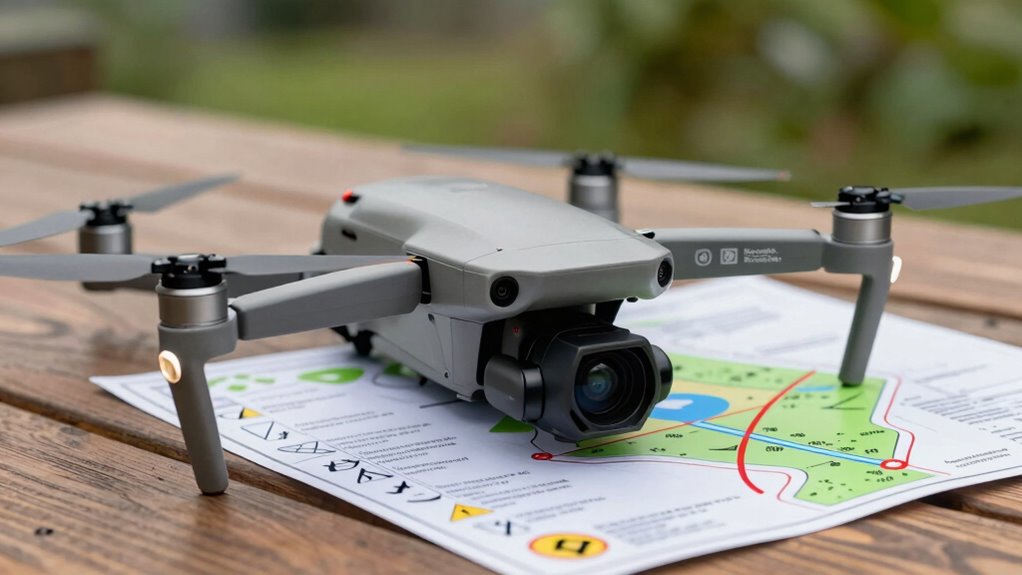

Before your first flight, make sure your drone is registered if required and understand local regulations, including no-fly zones and altitude limits. Perform safety checks, like inspecting for damage and maintaining visual contact. Check weather conditions to avoid crashes, and always respect privacy laws. Staying informed about rules helps keep your flying safe, legal, and enjoyable. Keep exploring these important guidelines to guarantee you’re fully prepared for your drone adventures.

Get the latest gadgets delivered free with Prime
- Fast, free delivery on millions of items
- Prime Video, Amazon Music and more included
- Member-only deals all year
Key Takeaways
- Register your drone if it exceeds the weight threshold to comply with local laws and avoid penalties.
- Conduct thorough pre-flight safety checks and maintain visual line of sight during flight.
- Stay informed about no-fly zones, altitude limits, and local regulations via official apps or websites.
- Check weather conditions to prevent flying in high winds, rain, or fog, which can cause crashes.
- Respect privacy laws and avoid flying over crowds or restricted areas for safety and legal compliance.

If you’re new to flying drones, understanding the rules before your first flight is essential to avoid fines and guarantee safety. One of the first things you should familiarize yourself with is drone registration. Depending on where you live, registering your drone might be mandatory, especially if it exceeds a certain weight threshold. Registering your drone ensures you’re compliant with local regulations and helps authorities identify your aircraft if needed. The process is usually straightforward and can often be completed online through the relevant authority’s website. Failing to register your drone can lead to hefty fines or even criminal charges, so don’t overlook this step.
Register your drone online to stay compliant and avoid fines or legal issues.
Alongside registration, learning the safety guidelines is crucial. These guidelines are designed to keep you, others, and your drone safe during flight. Always conduct a pre-flight check, inspecting the drone for any damage or loose parts. Maintain visual line of sight with your drone at all times, and avoid flying near airports, heliports, or restricted airspace, which are off-limits for recreational flying. Respect privacy laws by steering clear of capturing images or videos of private property without permission. Understanding these safety guidelines helps prevent accidents, damage, or legal trouble, making your flying experience more enjoyable and responsible. Additionally, becoming familiar with local drone regulations can help you stay informed about any updates or changes to rules that may affect your flights.
You should also pay attention to altitude limits set by your local authorities. Most regulations specify that you shouldn’t fly above 400 feet (120 meters) to avoid interfering with manned aircraft. Keep your drone within your line of sight and avoid flying over crowds or busy areas. These rules aren’t just bureaucratic hurdles—they protect everyone. Also, be aware of local restrictions, such as no-fly zones, which might include national parks, military bases, or certain city areas. Many apps and websites provide real-time updates on these zones, so use them before each flight. Additionally, understanding drone regulations helps you stay compliant and avoid potential penalties.
Another key safety aspect is understanding the importance of weather conditions. High winds, rain, or fog can impair your drone’s performance and increase the risk of crashes. Never fly in unsafe weather, and always check the forecast beforehand. Furthermore, practicing in different environments helps you gain confidence and better control over your drone, especially in unexpected situations. Additionally, familiarize yourself with your drone’s manual and controls, practicing in open, safe areas until you’re comfortable. Following these safety guidelines and ensuring proper drone registration aren’t just about compliance—they’re about being a responsible pilot. When you respect the rules, you’ll enjoy your flights more and avoid unnecessary legal or safety issues. In the end, preparing properly makes your first flight smooth, safe, and fun.
As an affiliate, we earn on qualifying purchases.
Frequently Asked Questions
Do I Need a License to Fly a Drone Commercially?
Yes, you need a license to fly a drone commercially. You must register your drone with the FAA and obtain a Remote Pilot Certificate. Additionally, consider getting flight insurance to protect against potential liabilities. These steps guarantee you’re compliant with regulations and prepared for any incidents. Remember, flying commercially without proper licensing can lead to hefty fines, so always stay informed and follow the rules before your first flight.
Are There Specific No-Fly Zones in My Area?
Yes, you should check for local no-fly zones and restricted airspace in your area before flying your drone. These zones often include airports, military bases, and certain government facilities. Use official apps or websites like the FAA’s B4UFLY to identify these restrictions. Ignoring them can lead to fines or legal trouble. Always plan your flight and stay within permitted areas to guarantee safe and compliant drone operation.
How Do Weather Conditions Affect Drone Flying Safety?
You might notice how wind turbulence and fog visibility unexpectedly impact your drone’s safety. Wind turbulence can cause erratic movements, making control difficult, while fog reduces visibility, increasing the risk of collision. Always check weather conditions before flying; avoid windy days and foggy mornings. By understanding these factors, you safeguard your drone and guarantee a safe, enjoyable flight experience. Weather awareness is key to responsible flying.
What Should I Do if I Lose My Drone?
If you lose your drone, stay calm and start a lost drone recovery process by retracing your steps and checking nearby areas. Use your drone’s last known GPS coordinates if available. Consider insurance options that cover loss or damage, and report the loss to relevant authorities or drone community forums for help. Staying proactive helps increase your chances of recovery and protects your investment.
Are There Age Restrictions for Drone Operation?
You need to be at least 13 years old to operate a drone legally, following age restrictions. If you’re under 13, you can’t register or fly a drone independently; instead, a parent or guardian must do so. For those 13 and older, drone registration is required for certain models and flights. Always check local regulations, stay within weight limits, and make sure your age aligns with drone rules for safe, responsible flying.
Conclusion
Before your first flight, understanding drone rules isn’t just about obeying the law—it’s about ensuring safety and responsible flying. Some believe that strict regulations stifle creativity, but evidence shows that clear guidelines actually promote innovation by providing a safe environment for new pilots. So, take the time to learn the rules; it’s a small effort for a big reward. Responsible flying not only protects others but also helps you enjoy your drone adventures to the fullest.
Halloween Picks
halloween
As an affiliate, we earn on qualifying purchases.