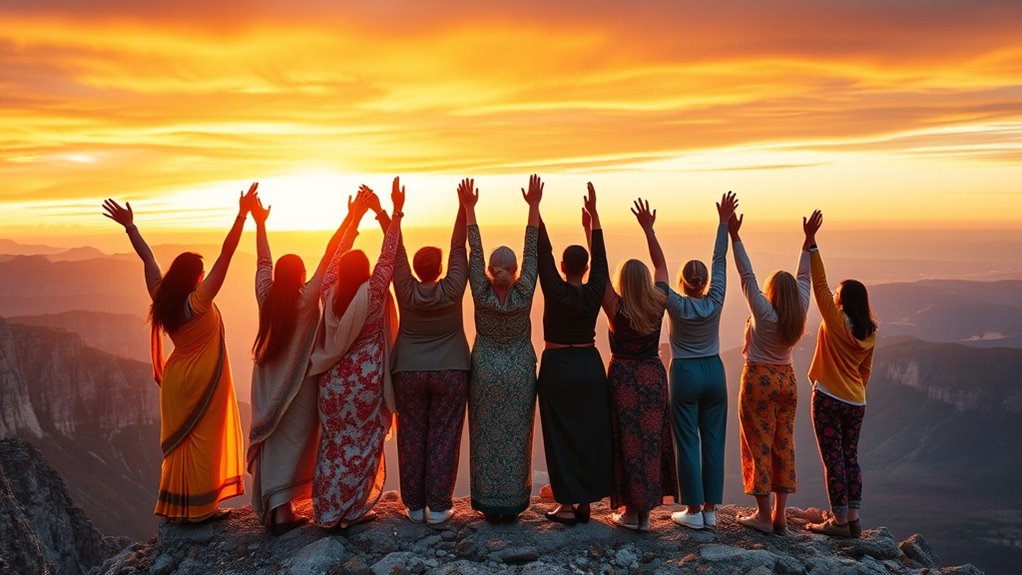

Women have shattered barriers worldwide, from securing the right to vote in Wyoming in 1869 to the ratification of the 19th Amendment in 1920, granting women nationwide voting rights. trailblazers like Jeanette Rankin and Florence Allen broke glass ceilings in politics and law. Movements for equality led to laws like Title IX and the creation of organizations supporting women’s rights. Exploring more reveals how these milestones continue to inspire progress today.

Get the latest gadgets delivered free with Prime
- Fast, free delivery on millions of items
- Prime Video, Amazon Music and more included
- Member-only deals all year
Key Takeaways
- Wyoming’s 1869 women’s suffrage law marked the first U.S. legal voting rights for women.
- The ratification of the 19th Amendment in 1920 granted women nationwide voting rights.
- Jeanette Rankin became the first woman elected to the U.S. Congress in 1916.
- The second wave of feminism in the 1960s and 70s pushed for workplace equality and reproductive rights.
- Globally, countries like Egypt and Zimbabwe have made significant strides in women’s political and social empowerment.
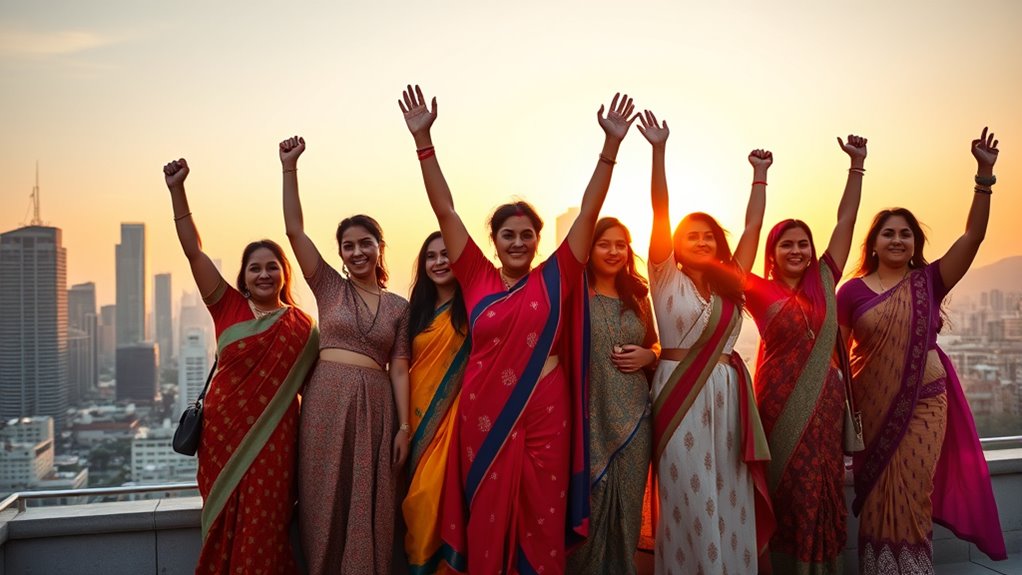
Women’s empowerment has come a long way, but how did we get here? It’s a story marked by relentless effort and groundbreaking milestones that have reshaped gender representation and expanded economic independence for women. In the late 19th and early 20th centuries, women fought tirelessly for voting rights, with Wyoming leading the way in 1869 by passing the first U.S. women’s suffrage law. This early victory set the stage for a broader movement, culminating in the ratification of the 19th Amendment in 1920, which guaranteed women across the country the right to vote. These political milestones profoundly improved gender representation, allowing women to participate more fully in shaping laws and policies that affect their lives. The election of women like Jeanette Rankin in 1916 and Florence Ellinwood Allen in 1922, who became the first woman in Congress and on a state supreme court, respectively, demonstrated that women could break into traditionally male-dominated arenas of power.
But women’s empowerment isn’t just about voting; it’s also about economic independence. The early 20th century saw women organizing for better labor conditions, with textile workers in New York City striking in 1857 for fair wages and hours. These protests laid the groundwork for future labor reforms. Moving forward, the legal landscape began shifting mid-century, offering women greater control over their economic lives. The 1965 establishment of the Equal Employment Opportunity Commission marked a noteworthy step, backing women’s access to all job sectors. Later, the passage of Title IX in 1972 prohibited sex discrimination in federally funded education, opening doors for women in academics and athletics. These policies boosted economic independence by ensuring women could pursue careers and education without discrimination.
Throughout the decades, women’s rights movements have continued to focus on closing gaps in power and opportunity. The second wave of feminism in the 1960s and 70s pushed for equal pay, workplace equality, reproductive rights, and legal reforms. The push for the Equal Rights Amendment, although not ratified, reflected the desire for constitutional guarantees of equality. Today, global milestones like Egypt’s 1956 voting rights for women and Zimbabwe’s 2016 ban on child marriage showcase ongoing struggles and victories worldwide. As more women participate in leadership, business, and politics, they continue to challenge traditional gender roles and expand economic independence. The journey of women’s empowerment, from suffrage to leadership and economic participation, proves that persistent effort can transform societies. Your role in this ongoing story is crucial—each step forward helps build a future where gender representation is equitable and women’s economic independence is a universal reality.
As an affiliate, we earn on qualifying purchases.
Frequently Asked Questions
How Have Women’s Empowerment Milestones Varied Across Cultures?
You’ll notice that women’s empowerment milestones vary across cultures due to cross-cultural differences and historical variations. In some societies, legal reforms like voting rights or banning child marriage mark progress, while others focus on increasing educational opportunities or political participation. Cultural norms and social practices often influence these milestones, creating diverse paths for women’s rights worldwide. Understanding these differences helps you appreciate how historical contexts shape women’s empowerment efforts globally.
What Challenges Remain Despite These Milestones?
Despite strides, gender stereotypes and limited access to education still stifle women’s success. You face persistent workplace bias, unequal networking, and unfair promotion processes. Underrepresentation in politics remains a barrier, with legal gaps and social norms holding you back. Economic disparities, wage gaps, and unpaid work hinder your financial freedom. Violence and safety concerns further inhibit empowerment. These challenges demand ongoing action to truly break barriers and achieve equality.
How Do These Milestones Impact Future Generations?
These milestones create a powerful generational influence, inspiring future women to pursue leadership, education, and economic opportunities. By breaking barriers today, you help build a legacy of equality and empowerment that shapes societal norms for generations to come. Your actions encourage young girls to dream bigger, fostering a cycle of progress, resilience, and inclusion that will continue to uplift communities and promote gender equality well into the future.
What Role Do Men Play in Women’s Empowerment?
They say, “A chain is only as strong as its weakest link,” and men play a crucial role in women’s empowerment by redefining gender roles. Your active allyship strategies challenge harmful norms, support gender equality, and open doors for women’s economic and political participation. By standing with women, you help dismantle barriers, foster inclusive environments, and create a future where gender equality is the norm, not the exception.
Are There Any Overlooked Milestones in Women’s History?
Yes, many milestones are overlooked, especially those challenging gender stereotypes and expanding educational access for women. You might not realize that women like Patsy Mink fought to end gender discrimination in education, or Ada Lovelace helped pioneer computing despite societal norms. Recognizing these moments highlights how women have continually pushed boundaries, breaking stereotypes and gaining access to education, shaping a more equitable future that often goes unacknowledged in mainstream history.
Conclusion
As you reflect on these milestones, remember they’re the stepping stones across a river of change, each one bringing you closer to equality. Your voice and actions are the current that keeps this river flowing forward. Keep breaking barriers and shattering ceilings, for every victory lights the path for others to follow. Together, you’re not just witnessing history—you’re making it, forging a future where women’s empowerment blooms like a vibrant garden in full bloom.
Halloween Picks
halloween
As an affiliate, we earn on qualifying purchases.