
📊 Full opportunity report: Basketball Highlights And Stats From Phone Footage on IdeaNavigator AI — validation score, market gap, and execution plan.

Get the latest gadgets delivered free with Prime
- Fast, free delivery on millions of items
- Prime Video, Amazon Music and more included
- Member-only deals all year
TL;DR
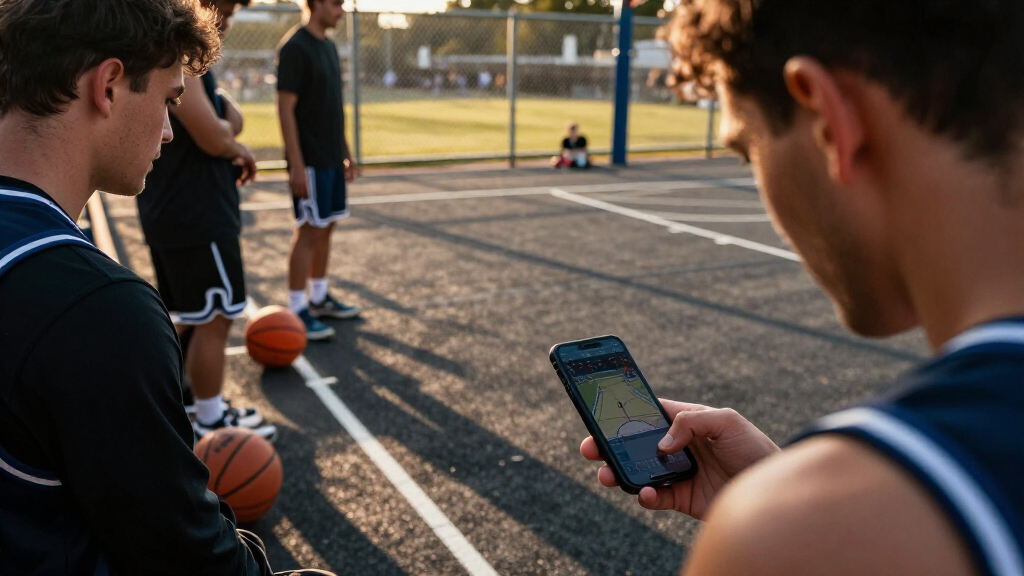
IdeaNavigator AI has proposed a narrow product concept: use phone footage to create youth and recreational basketball highlights, game stats and season profiles. The proposal describes a potential workflow and a test plan, not a launched service or verified AI capability.
IdeaNavigator AI has proposed an app that would turn parents’ and players’ phone recordings of youth and recreational basketball into player-specific highlight reels, game stat lines and shareable season profiles. The concept targets families without access to higher-cost team video services, but no working product, accuracy results or customer demand figures were provided.
The proposed app would let a user upload game footage and identify the player they want to follow. It would then attempt to detect that player and basketball events such as shots, rebounds and steals, assemble clips into a highlight reel with score overlays, and produce a per-game stat line. A season profile would collect material for sharing, potentially for development or recruiting purposes.
IdeaNavigator AI frames the problem as a gap between recording games and making useful material from them: families may have phone videos but lack the time to clip plays manually or compile statistics. Its proposed business model is a family subscription for a season, with an additional charge for exporting individual reels. The proposal does not state prices or detail how subscriptions and exports would be packaged.
The suggested validation step is to process 100 games recorded by parents, measure user satisfaction with highlight accuracy, and test whether families convert to season subscriptions at AAU tournaments. Those are planned tests, not completed trials; no results, participants or dates were reported.
A Lower-Cost Route to Game Clips
If the proposed workflow can reliably follow a selected player in ordinary phone footage, it could make game clips and basic performance records easier for families to assemble without a dedicated video crew. For players, organized clips and game-by-game statistics may be useful for reviewing performance or sharing a profile. The proposal does not establish that coaches or recruiters would accept or rely on the resulting material.
The concept also points to a practical constraint: automation must work well enough to save families time, not just detect occasional events. A mistaken player identification, missed play or inaccurate stat could undermine confidence in both the reel and the season record. The proposed 100-game test is relevant because it would assess footage from the intended users, though the described plan does not provide a scoring method or target accuracy threshold.
For buyers, cost is central to the pitch. IdeaNavigator AI positions the app as an option for parents and players who do not have a budget for a more established team program. Without pricing, evidence of recurring use or comparisons with available alternatives, however, the affordability claim remains a product rationale rather than a demonstrated market advantage.
As an affiliate, we earn on qualifying purchases.
From Phone Recording to Player Profile
The proposal sits within youth and amateur sports technology, where families and teams may record games on phones but face a separate task in turning long recordings into short, labeled clips. Manual editing takes time, while producing a season-long record requires repeated work across games. IdeaNavigator AI identifies that gap as the product’s target.
The concept also rests on the claim that on-device vision models can track players and detect events in ordinary phone footage, reducing the need for multi-camera systems. The proposal supplies no technical documentation, benchmark, demonstration or independent evaluation to substantiate that capability. It should therefore be understood as the premise for a product idea, not evidence that the proposed analysis already works at game-ready accuracy.
Accuracy and Demand Remain Untested
No product release, prototype demonstration or completed user trial was reported. It is unclear how the system would distinguish the selected player from teammates and opponents, especially when players overlap, move out of frame or appear in shaky, distant footage. The proposal also does not explain how it would verify whether detected shots, rebounds or steals were correctly assigned.
Other open questions include what footage quality and camera angles the app would support, whether score overlays would be entered by users or inferred, and how stat errors could be corrected. There are no disclosed accuracy measurements, customer interviews, conversion rates, subscription prices or tournament partnerships. The suggested 100-game evaluation could address some of these questions, but its results are not yet available.
Testing Would Set the Next Milestone
The next stated step is to evaluate the concept on 100 games recorded by parents, then gauge satisfaction with the generated highlights and test season-subscription interest at AAU tournaments. No schedule or commitment to conduct those tests was given. Until results are reported, the app’s technical performance and commercial prospects remain proposals rather than confirmed outcomes.
A useful update would describe how the games were selected, how player and event accuracy were measured, and how many families chose to pay at a disclosed price. Those details would help distinguish a workable editing aid from a product that can maintain dependable stats and profiles across a full season.
Source: IdeaNavigator AI
Key Questions
Has the basketball video app launched?
No launch was reported. The material describes a product concept and proposed tests, not an available service.
What would the app produce?
The proposed app would create player-focused highlight reels, game stat lines and shareable season profiles from uploaded phone footage.
Can it accurately detect basketball events?
That has not been established. The proposal names shots, rebounds and steals as events to detect, but provides no benchmark or accuracy results.
How would the idea be tested?
IdeaNavigator AI proposes processing 100 parent-recorded games, measuring satisfaction with highlight accuracy and testing subscription conversion at AAU tournaments. No results or timeline were provided.
How might families pay for it?
The suggested model is a season subscription for families plus pricing for exporting individual reels. Exact prices and terms are unknown.
Source: IdeaNavigator AI
Fall Picks
fall essentials
As an affiliate, we earn on qualifying purchases.