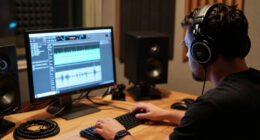
Finding the right digital mixer for a recording studio involves balancing features, ease of use, and budget. The PreSonus StudioLive AR16c stands out as the best overall choice thanks to its blend of professional features and user-friendly interface. For those focusing on portable solutions, the Zoom LiveTrak L-12 offers excellent multi-track recording capabilities, while the Mackie ProFX30v3 provides extensive channel options for larger setups. The core challenge is balancing advanced features with simplicity—more complex models often come with a steeper learning curve and higher price tags. Continue reading for a detailed breakdown of these options and what makes each one unique.

Get the latest gadgets delivered free with Prime
- Fast, free delivery on millions of items
- Prime Video, Amazon Music and more included
- Member-only deals all year
Complete the kit



Key Takeaways
- The best digital mixers for recording studios combine multi-channel input options with high-quality onboard effects.
- Ease of use and software integration significantly impact long-term satisfaction, especially for newcomers.
- Price varies widely; investing in a more capable model can future-proof your setup but may add unnecessary complexity for small studios.
- Build quality and durability matter more in mobile or touring setups than in fixed studio environments.
- Many top models include built-in USB interfaces, reducing the need for additional hardware.


| digital mixer for recording studio | Channels | Connectivity | Effects | EQ |
|---|---|---|---|---|
| Zoom LiveTrak L-12 Mixer/Recor | — | USB, SD card | 16 onboard | — |
| XTUGA 12 Channel Audio Mixer | 6/8/12/16 | Bluetooth, USB, XLR | — | — |
| PreSonus StudioLive AR16c Anal | 18 | USB, Bluetooth | — | — |
| MD-14 14-Channel Professional | 14 | Bluetooth, USB | — | 9-band |
| FULUODE Audio Mixer 8 Channel | 8 | Bluetooth, USB | Reverb | — |
| PreSonus StudioLive 16.0.2 USB | 16 (8 mono, 4 stereo) | — | — | 3-band semi-parametric per channel; 31-band graphic on main bus |
| Yamaha MG10XU 10-Input Stereo | 10 | USB | SPX digital effects | 3-band EQ |
| Yamnweo GF12 PRO 12-Channel Au | 12 | Bluetooth, USB | 99 DSP effects | — |
| FULUODE CT-120S 12-Channel Aud | 12 | Bluetooth, USB | Reverb | 3-band per channel |
| Mackie ProFX30v3 30-Channel Mi | 30 | — | 24 onboard | — |
| StudioLive Series III SE 16 Di | 40 | — | — | 7 State-Space modeled |
| K-MXERPRO 8-Channel Profession | — | USB, Aux, XLR, Bluetooth | Reverb, Delay | 3-band per channel |
| FULODE 12-Channel Bluetooth St | 12 | Bluetooth, USB | 99 DSP presets | 3-band per channel, 7-band master |
More Details on Our Top Picks
Zoom LiveTrak L-12 Mixer/Recorder for Musicians & Podcasters
The Zoom LiveTrak L-12 stands out for its combination of high-quality multi-track recording and versatile monitoring, making it the best choice for musicians and podcasters who need a portable, all-in-one solution. Unlike the PreSonus StudioLive AR16c, which focuses more on studio integration with software, the L-12 emphasizes mobility and live use, offering five dedicated monitor mixes and 14 tracks recorded directly to SD card. Its onboard effects and high-gain preamps deliver clean, professional sound, but the tradeoff is a somewhat limited onboard effects library compared to dedicated effects processors. This mixer is ideal for mobile performers or content creators who need simplicity combined with studio-quality results. It might be less suited for those who require extensive onboard effects or a more traditional analog workflow.
Pros:- Portable design with battery power option for on-the-go use
- 14-track simultaneous recording at 24-bit/96kHz for studio-quality audio
- Five separate monitor mixes for personalized performer monitoring
- Seamless USB connection to DAWs and live streaming
Cons:- Limited onboard effects compared to dedicated effects processors
- SD card storage can be less convenient than internal or external hard drives
Best for: Musicians and podcasters who need portable, multi-tracking capabilities with live monitoring features
Not ideal for: Studio engineers seeking a primarily software-integrated mixer with extensive effects and processing options
- Tracks:14
- Bit Depth / Sample Rate:24-bit/96kHz
- Monitor Mixes:5
- Effects:16 onboard
- Connectivity:USB, SD card
- Power:Battery or AC
Our verdict“This mixer makes the most sense for mobile musicians and podcasters prioritizing flexibility and portability over extensive onboard effects.”
XTUGA 12 Channel Audio Mixer, Professional Sound Board DJ Mixer(CT120)
The XTUGA CT120 excels in supporting multiple external sources via Bluetooth, USB, and traditional inputs, making it ideal for live DJ sets, mobile performances, or multi-device setups. Compared with the Fuluode 8-Channel Mixer, which is more simplified with fewer features, the CT120 offers broader connectivity options and a more professional build, including gold-plated XLRs and phantom power. Its slim profile and sealed knobs provide durability and ease of use, but its extensive controls may overwhelm beginners or those seeking a straightforward mixer. The built-in MP3 recorder and Bluetooth streaming make it perfect for quick setup in varied environments but might be excessive for users who only need basic mixing.
Pros:- Supports multiple input channels (6/8/12/16) for versatile setups
- Bluetooth streaming and MP3 playback for quick, wireless audio access
- Built-in MP3 recorder for direct digital capture
- Sturdy, compact design with dust-resistant sealed knobs
Cons:- Complex interface may challenge beginners
- Limited onboard effects or processing features
Best for: DJs, mobile performers, or event hosts needing wireless and multi-source integration
Not ideal for: Home studio users who prefer simple, plug-and-play setups with minimal controls
- Channels:6/8/12/16
- Connectivity:Bluetooth, USB, XLR
- Phantom Power:Yes
- Built-in Recorder:Yes
- Material:Sturdy, slim profile
Our verdict“This mixer is best suited for mobile DJs and event hosts who need robust wireless connectivity and multi-source support without extensive onboard effects.”
PreSonus StudioLive AR16c Analog Mixer with Studio One Pro Software
The PreSonus StudioLive AR16c offers a comprehensive blend of analog mixing and digital recording, making it highly suitable for semi-professional studio setups. Its 18 channels, combined with high-quality XMAX preamps, provide excellent clarity, and the integrated USB 2.0 interface facilitates direct multi-channel recording with Studio One Pro included. Compared to the MD-14, which emphasizes effects and stage use, the AR16c focuses on detailed recording capabilities and software integration, at the cost of a slightly larger footprint. The inclusion of Bluetooth 5.0 adds convenience, but users should be aware that this mixer is more oriented toward studio and semi-professional use rather than portable, live-only environments.
Pros:- High-quality XMAX preamps for clear, detailed sound
- Integrated USB 2.0 interface with included DAW software
- Multiple inputs including Bluetooth streaming for versatile sources
- Supports SD card recording options
Cons:- Larger footprint compared to portable mixers like the Fuluode CT-80S
- Requires some familiarity with digital workflows
Best for: Semi-professional musicians, home studio owners, and content creators who need integrated recording and software control
Not ideal for: Travelers or live performers seeking a lightweight, purely portable mixer without extensive computer integration
- Channels:18
- Sample Rate:96kHz
- Connectivity:USB, Bluetooth
- Recording:USB interface, SD card
- Preamp Type:XMAX
Our verdict“This mixer is ideal for users who want a hybrid solution combining analog control with professional digital recording and software integration.”
MD-14 14-Channel Professional Audio Mixer with 99 DSP Effects, Bluetooth, USB and 48V Phantom Power
The MD-14 distinguishes itself with an extensive array of 99 onboard DSP effects, making it a compelling choice for live sound engineers, DJs, and studio users who need a wide palette of reverb, delay, and modulation options. Compared with the Fuluode 8-Channel Mixer, the MD-14 offers more channels and a richer effects suite, but its complexity can be daunting for beginners. Its 9-band EQ and real-time LED display help in precise sound shaping, although the sheer number of effects may lead to a steep learning curve unless the user is experienced. This mixer is well-suited for users aiming for creative sound design and live performance, but it might be overkill for simple recording or basic studio tasks.
Pros:- 99 built-in DSP effects covering a broad range of reverb, delay, chorus, and pitch effects
- Large LED display for real-time control and monitoring
- Multiple input options including Bluetooth and USB
- 48V phantom power for condenser microphones
Cons:- Highly complex interface may overwhelm less experienced users
- Heavy feature set might require dedicated time to master
Best for: Experienced live sound engineers, DJs, or studio users seeking a versatile, effects-heavy mixing console
Not ideal for: Beginners or users who need a simple, straightforward mixer without extensive effects
- Channels:14
- DSP Effects:99
- EQ:9-band
- Connectivity:Bluetooth, USB
- Phantom Power:48V
- Display:LED
Our verdict“This mixer fits professionals or experienced enthusiasts needing extensive effects and flexible live or studio sound shaping, with the tradeoff of increased complexity.”
FULUODE Audio Mixer 8 Channel, CT-80S Professional Sound System Mixer Board DJ Mixing Console with Reverb MP3 Player Bluetooth 48V Phantom Power Supply USB Recording for Studio Karaoke Live Music
The FULUODE CT-80S offers a compact, feature-rich solution for smaller venues, home studios, or KTV setups. Its 8 channels include multiple input options with reverb effects and Bluetooth connectivity, making it suitable for casual performances and karaoke sessions. Compared to larger mixers like the PreSonus AR16c, the CT-80S is more portable and straightforward, but it sacrifices some channel count and advanced features. Its USB recording capability adds convenience for capturing performances directly to digital formats. However, its limited number of channels and effects suite may restrict more complex recording or live setups. This pick works best for users prioritizing simplicity, affordability, and versatility in small environments.
Pros:- Compact size with full-feature set including Bluetooth and USB recording
- Built-in reverb effects and MP3/USB input for easy playback
- 48V phantom power supports condenser microphones
- Simple, intuitive controls suitable for beginners
Cons:- Limited to 8 channels, not suitable for larger or more complex setups
- Fewer onboard effects compared to larger mixers like the MD-14
Best for: Home users, small bands, or KTV operators needing a compact, all-in-one mixer with reverb and Bluetooth streaming
Not ideal for: Large-scale live sound or studio environments requiring extensive channel count and professional processing
- Channels:8
- Effects:Reverb
- Connectivity:Bluetooth, USB
- Phantom Power:48V
- Display:LED
- Built-in MP3 Player:Yes
Our verdict“This mixer is best for small venues, home studios, or KTV setups where space and ease of use are priorities over extensive channel capacity.”
PreSonus StudioLive 16.0.2 USB 16-Channel Digital Mixer
This model stands out for its comprehensive signal processing capabilities across all channels, making it ideal for producers who want detailed control without sacrificing convenience. Compared with the Mackie ProFX30v3, it offers integrated scene recall and MIDI control, which can streamline complex sessions; however, the USB 2.0 interface limits sample rates to 48 kHz, potentially affecting high-resolution recording quality. Its built-in Fat Channel effects, EQ, and compression on every channel, combined with the included Studio One Artist DAW, create a compelling package for studio owners seeking an all-in-one solution. The small physical size, while compact, may restrict hands-on control during intricate mixes. Overall, this is suited for small to medium project studios demanding versatility and software integration but less so for those requiring ultra-high sample rate recording or extensive physical controls.
Pros:- Extensive built-in signal processing on every channel and bus
- Integrated 18-in/16-out USB audio interface for multi-channel recording
- Rich software bundle including DAW and remote control apps
- Scene and preset recall with MIDI control capabilities
Cons:- USB 2.0 interface caps sample rate at 48 kHz, limiting high-res recording
- Small physical size may hinder detailed hands-on adjustments during complex mixes
- Rack mounting requires additional hardware
Best for: Small to medium recording studios that prioritize integrated effects, software compatibility, and scene recall features.
Not ideal for: Large-scale studios or users needing 96 kHz or higher sample rate recording, as the USB interface is limited to 44.1/48 kHz.
- Channels:16 (8 mono, 4 stereo)
- Mic Preamps:12 Class A XMAX
- Aux Buses:4
- FX Buses:2 stereo
- EQ:3-band semi-parametric per channel; 31-band graphic on main bus
- USB Interface:18-in/16-out, 24-bit, 44.1/48 kHz
Our verdict“This mixer suits small to medium studios seeking a feature-rich, software-integrated digital mixer with ample processing power, but it isn’t ideal for high-resolution recording needs.”
Yamaha MG10XU 10-Input Stereo Mixer with SPX Digital Effects
This Yamaha model is ideal for users who need reliable, portable control over smaller recording sessions or live setups, thanks to its rugged build and high-quality preamps. Compared with the Mackie ProFX30v3, the MG10XU offers a more compact footprint and impact-resistant chassis, making it perfect for mobile use; however, it provides only 10 channels and limited tonal shaping with just 3-band EQ, which might not suffice for larger or more detailed mixes. The discrete Class A D-PRE preamps deliver warm, natural sound, and the built-in SPX effects add versatility for both studio and live applications. Its straightforward interface and sturdy design make it a solid choice for solo artists, podcasters, or small bands, yet it falls short for those needing extensive channel counts or advanced onboard effects. Overall, best for those who value portability and quality in a compact form factor but require more channels or advanced EQ options.
Pros:- Studio-grade Class A D-PRE preamps offer warm, natural sound
- Built-in SPX digital effects provide versatility
- Rugged, impact-resistant metal chassis for durability
- USB connectivity for easy recording and playback
Cons:- Limited to 10 channels, restricting larger setups
- 3-band EQ offers limited tonal control compared to semi-parametric models
- No scene recall or MIDI control features
Best for: Musicians, podcasters, or small bands needing a portable mixer with quality preamps and effects.
Not ideal for: Large recording setups or users requiring more than 10 channels, as expansion options are limited.
- Channels:10
- Preamps:Discrete Class A D-PRE
- Effects:SPX digital effects
- EQ:3-band EQ
- Connectivity:USB
- Dimensions:244 x 71 x 294 mm
Our verdict“This mixer makes the most sense for portable, small-scale recording or live performance setups where durability and sound quality are priorities, but it isn’t suited for larger or more complex projects.”
Yamnweo GF12 PRO 12-Channel Audio Mixer with LCD Color Screen, 7-Band Equalizer and 99 DSP Effects
This mixer is tailored for performers and studio users who need detailed channel control combined with a broad palette of effects, thanks to its 99 DSP effects and 7-band EQ. Compared to the FULUODE CT-120S, which emphasizes simplicity and Bluetooth streaming, the GF12 PRO offers more advanced effects and a large color LCD for easy monitoring, but its larger footprint may be less ideal for compact setups. Its independent gain, EQ, effects send, and volume for each channel provide flexible control, making it suitable for stage performances, karaoke, or studio mixing. The inclusion of Bluetooth and USB makes it versatile for wireless streaming and playback. However, its size and power requirements make it less portable for mobile setups. It’s best for users who need extensive effects and detailed control but can accommodate a larger mixer footprint.
Pros:- 99 DSP effects for versatile sound design
- 7-band independent EQ per channel
- Large LCD color display for easy control
- Bluetooth and USB connectivity for wireless streaming
Cons:- Larger size may be unsuitable for tight spaces
- Higher power consumption and complexity compared to simpler mixers
- More expensive than basic models with fewer features
Best for: Performers, karaoke hosts, or small studio engineers seeking a feature-rich mixer with effects and multi-source connectivity.
Not ideal for: Small or portable setups where space is limited, or users requiring simple, plug-and-play solutions without extensive effects.
- Channels:12
- Equalizer:7-band
- Effects:99 DSP effects
- Connectivity:Bluetooth, USB
- Display:Color LCD
- Dimensions:23.8 x 18.3 x 5.98 inches
Our verdict“Ideal for live performers or studio engineers who need extensive effects and precise channel control, but not for those prioritizing portability or simplicity.”
FULUODE CT-120S 12-Channel Audio Mixer Console with Bluetooth, MP3/USB, Reverb and 48V Phantom Power
This compact, feature-packed mixer is designed for versatile applications, from studio recording to karaoke and live performances. Its 12 channels with individual 3-band EQ, combined with Bluetooth 5.0, MP3/USB playback, and USB recording, provide flexible options for content creators and entertainers. The ultra-thin 1.57-inch chassis makes it highly portable, and the 48V phantom power supports condenser microphones. Compared to the Yamnweo GF12 PRO, the CT-120S emphasizes ease of use and mobility, though it may lack the extensive effects and detailed control. Its large LED display simplifies operation, but the limited 110V power compatibility outside North America and some translation issues may cause hindrances. Overall, this is suitable for small studios, karaoke hosts, or mobile performers needing a lightweight yet capable mixer.
Pros:- 12 channels with individual 3-band EQ
- Built-in Bluetooth 5.0 and MP3/USB playback
- USB recording capability for easy content capture
- Ultra-thin chassis for portability
Cons:- Limited to 12 channels, less suitable for larger setups
- Power supply only 110V, restricting international use without converters
- Translation and documentation issues may affect usability
Best for: Karaoke performers, small studio owners, or mobile musicians needing a lightweight mixer with integrated Bluetooth and recording features.
Not ideal for: Large-scale recording or live sound systems requiring more channels or advanced effects, due to its limited number of inputs and effects.
- Channels:12
- EQ:3-band per channel
- Effects:Reverb
- Connectivity:Bluetooth, USB
- Display:LED
- Power:110V
Our verdict“This mixer offers excellent portability and features for small-scale applications, but isn’t ideal for larger or more effects-intensive projects.”
Mackie ProFX30v3 30-Channel Mixer, USB Recording, GigFX Effects
This larger mixer is designed for full-band setups, offering 30 channels and a 2×4 USB interface for multitrack recording, making it suitable for live venues and larger studios. Its Onyx preamps deliver clean, high-headroom gain, and the 24 onboard effects with tap tempo provide creative options for live sound shaping. Compared with the Yamaha MG10XU, which emphasizes portability, the Mackie ProFX30v3 provides a much higher channel count and more extensive onboard effects, but at the cost of increased size and weight. Its straightforward analog controls avoid digital menu navigation, appealing to users who prefer tactile knobs. However, its bulk and higher price point make it less suitable for mobile or compact applications. This pick is best suited for users with larger setups needing multitrack recording and extensive mixing options.
Pros:- 30 channels with dedicated controls for full-band mixing
- High-quality Onyx preamps for transparent sound
- 24 effects with tap tempo for creative flexibility
- 2×4 USB I/O for multitrack recording
Cons:- Large and heavy, less portable for mobile use
- More complex interface may require a learning curve
- Higher cost compared to smaller, simpler mixers
Best for: Bands, live sound engineers, or larger studio environments requiring extensive channel control and multitrack recording.
Not ideal for: Solo artists or small studios with limited space, as its size and complexity outweigh the needs for simple setups.
- Channels:30
- Effects:24 onboard
- USB I/O:2×4
- Preamp:Onyx
- Size:Large
- Weight:Approximately 25 lbs
Our verdict“This mixer is ideal for larger bands or venues needing extensive control and multitrack recording, but it’s overkill for solo or small-scale projects.”
StudioLive Series III SE 16 Digital Console Mixer with Fender Studio Pro
This model stands out for its comprehensive feature set, combining 40 channels, extensive connectivity, and integrated recording options, making it suitable for both studio and live environments. Unlike the smaller, more straightforward mixers like the K-MXERPRO 8-Channel, the StudioLive Series III SE 16 offers advanced audio networking via AVB, professional-grade preamps, and software control, which justify its higher complexity and weight. The inclusion of vintage-style EQ and compressors across all channels provides a warm, musical tone that appeals to serious producers. However, its setup can be complex, and its weight could make transport cumbersome for mobile setups. This pick makes the most sense for mid- to large-sized studios or live sound engineers needing flexible, high-end control with recording capabilities.
Pros:- High channel count with 40 inputs suitable for complex setups
- Integrated SD recorder and extensive connectivity options including AVB networking
- Vintage-style EQ and compressors for warm, professional sound
- Remote control capabilities via Universal Control and internet access
Cons:- Complex configuration may overwhelm less experienced users
- Heavy and bulky, making transportation less convenient
Best for: Studio owners or live sound engineers needing a versatile, feature-rich digital mixer with integrated recording and advanced networking.
Not ideal for: Beginners or small project studios with limited space or technical expertise, due to its complex setup and advanced features.
- Channels:40
- Mix Buses:26
- Preamp Type:XMAX-R
- EQ:7 State-Space modeled
- Networking:Milan-certified AVB
- USB Interface:64×64 bidirectional
- Recording:Integrated SD recorder
Our verdict“A powerful choice for professionals needing a flexible, high-capacity digital mixer with built-in recording and networking features.”
K-MXERPRO 8-Channel Professional Audio Mixer Console Sound Board with 48V Phantom Power and USB Audio Interface
This 8-channel mixer offers a practical balance of features for small studios, live streaming, and portable applications. Compared with larger mixers like the StudioLive Series III SE, it sacrifices some channels and networking but gains portability and ease of use. Its combination of XLR and 1/4″ inputs on all channels, along with USB interface support, makes it flexible for recording directly to a computer or mixing live sources. The inclusion of Bluetooth adds convenience for streaming or playback. Nevertheless, its reliance on corded power limits mobility, and the USB functionality may require some technical familiarity to optimize. This model is best suited for solo artists, podcasters, or small bands who need a reliable, straightforward mixer without extensive complexity.
Pros:- Versatile connectivity with XLR, 1/4-inch inputs, and Bluetooth streaming
- Built-in USB interface for easy computer recording and playback
- Compact, ultra-thin, dust-resistant chassis with sealed controls for durability
- Per-channel 3-band EQ and onboard effects for flexible sound shaping
Cons:- Limited to 8 channels, which may be restrictive for larger setups
- No battery power option, reducing portability for mobile use
- USB recording may involve a learning curve for beginners
Best for: Content creators, podcasters, or small bands seeking a compact mixer with recording and streaming capabilities.
Not ideal for: Large bands or complex studio setups that require more channels, advanced networking, or extensive routing options.
- Number of Channels:8
- Connectivity:USB, Aux, XLR, Bluetooth
- Power Source:Corded Electric
- Phantom Power:48V
- Effects:Reverb, Delay
- EQ:3-band per channel
Our verdict“A practical, space-saving mixer ideal for small-scale recording, streaming, and live performance setups.”
FULODE 12-Channel Bluetooth Studio Audio Mixer with 99-Bit DSP Effects, USB MP3 Player, XLR Inputs and 48V Phantom Power
This 12-channel mixer offers a strong feature set for live sound, DJing, and karaoke, with an emphasis on effects and wireless connectivity. Its extensive DSP preset effects, including reverb and delay, make it versatile for live scenarios. Compared to the more studio-focused StudioLive Series III, the FULODE excels in simplicity and immediate usability for entertainment settings, but it may lack some of the professional recording features and networking options. The heavy weight of over 6 kg may limit mobility, and manual operation errors could lead to sound issues if not carefully managed. It’s ideal for gigging musicians or event hosts who need quick, reliable sound control with creative effects.
Pros:- Wide input compatibility including XLR, 1/4-inch, mic, line, and instruments
- Built-in Bluetooth for wireless music playback from smart devices
- 99 DSP preset effects for dynamic live sound enhancement
- Supports 48V phantom power for condenser microphones
Cons:- Heavy weight limits portability for mobile use
- Manual operation can cause errors affecting sound quality
- Limited control over advanced digital routing
Best for: DJ, karaoke hosts, or small live performers looking for an easy-to-use mixer with effects and wireless music streaming.
Not ideal for: Professional recording studios or users requiring detailed routing, advanced networking, or multi-track recording, as it focuses on live sound and effects.
- Channels:12
- Connectivity:Bluetooth, USB
- Power Source:Corded Electric
- Phantom Power:48V
- Effects:99 DSP presets
- EQ:3-band per channel, 7-band master
Our verdict“A solid choice for live performers and DJs seeking straightforward, effect-rich mixing with wireless streaming capabilities.”
How We Picked
The selection process focused on performance, usability, build quality, and value for recording studio environments. I evaluated each mixer’s number of channels, effects, onboard features, and software compatibility, ensuring they meet the practical needs of musicians, producers, and engineers. Ease of setup and user interface were key considerations, along with the versatility offered for different recording scenarios. Products were ranked based on how well they balance professional-grade features with affordability and user-friendliness, making sure every pick serves a distinct role within a studio setting.| digital mixer for recording studio | Connectivity |
|---|---|
| Zoom LiveTrak L-12 Mixer/Recor | USB, SD card |
| XTUGA 12 Channel Audio Mixer | Bluetooth, USB, XLR |
| PreSonus StudioLive AR16c Anal | USB, Bluetooth |
| MD-14 14-Channel Professional | Bluetooth, USB |
| FULUODE Audio Mixer 8 Channel | Bluetooth, USB |
| PreSonus StudioLive 16.0.2 USB | — |
| Yamaha MG10XU 10-Input Stereo | USB |
| Yamnweo GF12 PRO 12-Channel Au | Bluetooth, USB |
| FULUODE CT-120S 12-Channel Aud | Bluetooth, USB |
| Mackie ProFX30v3 30-Channel Mi | — |
| StudioLive Series III SE 16 Di | — |
| K-MXERPRO 8-Channel Profession | USB, Aux, XLR, Bluetooth |
| FULODE 12-Channel Bluetooth St | Bluetooth, USB |
Factors to Consider When Choosing Digital Mixer For Recording Studio
Choosing the right digital mixer for your recording studio involves understanding several key factors. It’s important to consider the number of channels, onboard effects, and compatibility with your existing setup. Think about how much control you need over individual tracks versus overall mixes, and whether you prefer a model with built-in recording or external interfaces. Budget is always a factor, but investing in a slightly more capable unit can offer better long-term value. Also, consider the learning curve; some models are more intuitive for beginners, while others cater to advanced users seeking extensive customization.Number of Channels and Inputs
The number of channels determines how many instruments or microphones you can connect simultaneously. Larger projects or bands typically require more channels, so consider models with at least 12 to 16 inputs for flexibility. Some mixers offer expandability through additional interfaces or digital connections, which can be useful if your setup plans to grow. Overestimating your needs might lead to unnecessary complexity and cost, while underestimating can limit your recording options. Striking a balance based on your current and future needs is key.
Built-in Effects and Processing
Onboard effects like reverb, EQ, and compression save time and hardware space, but their quality varies. Look for mixers with high-quality effects that suit your genre—studio-grade reverb or EQ presets can improve your sound without additional outboard gear. However, models with extensive effects often come with higher prices and sometimes less straightforward interfaces. Consider whether you need these effects for live performance, recording, or mixing, and whether they are easily adjustable or require external software for more precise control.
Connectivity and Compatibility
Most digital mixers now include USB or Thunderbolt interfaces, enabling direct multitrack recording to your computer. Confirm compatibility with your DAW and operating system before purchasing. Additional outputs, such as XLR or TRS, allow integration with studio monitors and outboard gear. Wireless options, Bluetooth, or auxiliary inputs can add convenience but may introduce latency or quality concerns. The right connectivity setup ensures your workflow remains seamless and flexible.
Ease of Use and Software Integration
User interface design can significantly affect your workflow. Touchscreen controls, clear labeling, and intuitive menus make a difference, especially when adjusting settings during recording sessions. Compatibility with control apps or remote software can streamline adjustments from across the room. For beginners, models with guided setup and preset configurations reduce the learning curve. Advanced users benefit from customizable routing and detailed parameter control embedded in the software or hardware interface.
Budget and Future-Proofing
While lower-cost models might suffice for basic needs, investing a bit more can unlock features that future-proof your setup. Consider the potential for expansion, higher quality preamps, and additional software features. Beware of models that cut corners on build quality or scalability, as they might become limiting over time. Aim for a balance where the mixer offers enough features without overwhelming you with complexity—this ensures longevity and satisfaction.
Frequently Asked Questions
Can I use a digital mixer for both recording and live sound?
Yes, many digital mixers are versatile enough for both recording and live sound, especially models with multiple inputs, onboard effects, and robust connectivity. However, some are optimized primarily for studio use, with features like detailed routing and software integration that benefit recording workflows. If you plan to use the same unit for both, look for a model with high build quality, reliable performance, and flexible output options. Be mindful that live sound setups often require more rugged hardware and quick access controls, which might differ from studio-focused designs.
Is a built-in audio interface necessary in a digital mixer?
A built-in audio interface simplifies setup by eliminating the need for external hardware, making it ideal for home studios and quick recording scenarios. It allows direct connection to your computer via USB or Thunderbolt, enabling multitrack recording and playback. However, external interfaces can sometimes offer higher quality or more inputs, especially in larger studios. Whether it’s necessary depends on your recording needs, budget, and whether you value simplicity or maximum flexibility for your setup.
How important are onboard effects in a recording digital mixer?
Onboard effects can streamline your workflow by providing immediate processing without external gear; however, their quality varies. For professional-sounding results, high-quality onboard effects are beneficial, but they should not replace dedicated plugins or outboard gear if you require detailed control. For beginners, onboard effects offer a quick way to enhance sound without complexity, but advanced users might prefer external processors or software for finer adjustments. The choice depends on your production style and budget.
Should I prioritize more channels or better audio quality?
This depends on your primary use case. If you handle large bands or multiple instruments simultaneously, more channels are essential to avoid limitations. Conversely, if recording a few vocals or instruments with high fidelity is your focus, prioritizing better preamps and converters might be more valuable. Many mixers strike a balance, offering decent channel counts with high-quality audio. Consider your current needs and future growth to decide which aspect to prioritize.
Are digital mixers suitable for beginners, or should I start with analog?
Digital mixers can be suitable for beginners due to their integrated features, ease of setup, and user-friendly interfaces. They often come with presets, automation, and software support that simplify complex tasks. However, they can also be overwhelming if packed with advanced features you don’t need initially. If you’re new, look for models with straightforward controls and minimal complexity. For those just starting out, an entry-level digital mixer can provide a gentle learning curve compared to traditional analog setups.
Conclusion
For those seeking the best overall digital mixer, the PreSonus StudioLive AR16c offers a balanced mix of professional features and ease of use. Budget-conscious buyers or beginners will find the Zoom LiveTrak L-12 and FULUODE CT-120S excellent starting points, with straightforward interfaces and solid recording capabilities. For larger or more complex setups, the Mackie ProFX30v3 or StudioLive Series III SE 16 deliver extensive channel options and advanced features. Ultimately, your choice should align with your current needs, future plans, and budget, ensuring a setup that grows with your studio ambitions.