The best USB hub overall in this roundup is the intpw Powered USB-C Hub 10Gbps, a versatile choice for adding several high-speed ports with external power. For a simpler desk setup, the TP-Link UH720 combines a powered hub with two charging ports, while the Anker 7-in-1 USB-C Hub with HDMI and 85W Power Delivery suits laptop users who want video and pass-through charging. The main tradeoffs are port count versus desk space, USB-A versus USB-C, and a straightforward data hub versus a dock with video and power delivery. More ports do not always mean faster performance, and a hub’s power input does not necessarily charge a laptop. Read on for a comparison of all 15 options and help matching their layouts to your devices.

Get the latest gadgets delivered free with Prime
- Fast, free delivery on millions of items
- Prime Video, Amazon Music and more included
- Member-only deals all year
Complete the kit



Key Takeaways
- Powered hubs make the most sense for a crowded desk: the intpw 9-port, TP-Link UH720, and switch-equipped Atolla and Wenter models are better suited to multiple connected peripherals than a small bus-powered splitter.
- USB-C hubs serve a different purpose from USB-A hubs: Anker, UGREEN, and intpw laptop hubs combine data ports with features such as HDMI, card readers, or Power Delivery, while most powered desktop models focus on connecting USB devices.
- High port count does not guarantee high throughput: the ACASIS 16-port hub advertises 10Gbps, but buyers should check how bandwidth is shared across active connections and match it to their actual devices.
- Individual switches are useful for control, not speed: Atolla and Wenter let users turn ports off independently, a practical distinction for devices that remain plugged in but do not need to stay active.
- The right choice depends on the host connection: a compact USB-A hub cannot add HDMI or laptop charging, while a USB-C hub only delivers those functions if the computer and hub support the relevant standards.
| Atolla 7-Port Powered USB 3.0 Hub with Smart Charging Port and Individual Switches |  | Best for Port-by-Port Control | Data ports: 7 USB 3.0 | Charging ports: 1 dedicated smart charging port, up to 2.4A | Data transfer rate: Up to 5 Gbps | VIEW LATEST PRICE | See Our Full Breakdown |
| intpw Powered USB-C Hub 10Gbps, 9-Port USB 3.2/3.0 Hub with 65W Power Adapter |  | Best for Fast Data and Device Charging | Total ports: 9 | Data transfer speeds: Up to 10 Gbps USB 3.2 and 5 Gbps USB 3.0 | Charging ports: 2 USB-C PD ports, up to 45W each; no data transfer | VIEW LATEST PRICE | See Our Full Breakdown |
| Anker 4-Port USB 3.0 Hub |  | Best Simple USB-A Expansion | Ports: 4 USB-A | Interface: USB 3.0 | Data transfer rate: Up to 5 Gbps | VIEW LATEST PRICE | See Our Full Breakdown |
| Anker 332 USB-C Hub (5-in-1) | 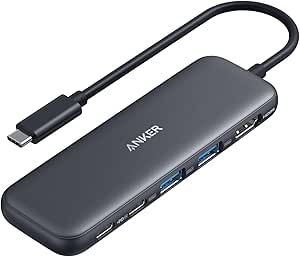 | Best for USB-C Laptop Desk Setups | Ports: 1 HDMI, 1 USB-C data, 2 USB-A, and 1 USB-C PD-IN | Video output: Up to 4K at 30Hz | Data transfer speed: Up to 5 Gbps | VIEW LATEST PRICE | See Our Full Breakdown |
| UGREEN 4-Port USB 3.0 Hub, 0.5 ft |  | Best Compact Travel Pick | Ports: 4 USB-A | Interface: USB 3.0 | Maximum data transfer rate: Up to 5 Gbps | VIEW LATEST PRICE | See Our Full Breakdown |
| ACASIS 16-Port Powered USB 3.2 Hub (8 USB-A + 8 USB-C), 10Gbps |  | Best for Maximum Port Capacity | Ports: 8 USB-A 3.2 and 8 USB-C 3.2 | Maximum data transfer rate: 10Gbps | Power adapter: 96W | VIEW LATEST PRICE | See Our Full Breakdown |
| Anker 7-in-1 USB-C Hub with 4K HDMI and 85W Power Delivery |  | Best for Card Readers and Everyday Laptop Use | Ports: 7-in-1: USB-C, 2 USB-A, HDMI, SD, TF, and USB-C PD | Maximum data transfer rate: 5Gbps | HDMI output: Up to 4K at 30Hz | VIEW LATEST PRICE | See Our Full Breakdown |
| Anker 7-in-1 USB-C Hub with 4K HDMI, USB-A, USB-C Data, and SD/TF Card Readers |  | Best Compact Hub for 4K at 60Hz | Ports: 7: HDMI, 2 USB-A, USB-C data, USB-C PD input, SD, and TF | USB data transfer rate: Up to 5Gbps | HDMI output: Up to 4K at 60Hz | VIEW LATEST PRICE | See Our Full Breakdown |
| Rosonway 7-Port Powered USB 3.2 Hub with 4 USB-C and 3 USB-A Ports |  | Best Powered 10Gbps Hub for a Mixed-Port Desk | Ports: 4 USB-C and 3 USB-A | Maximum data transfer rate: 10Gbps | Power adapter: 36W (12V/3A) | VIEW LATEST PRICE | See Our Full Breakdown |
| intpw 9-in-1 USB-C Hub with 4K HDMI and 100W Power Delivery |  | Best Angled Desktop Hub for Laptop Setups | Total ports: 9 | HDMI output: Up to 4K at 60Hz | Power Delivery: Up to 100W pass-through | VIEW LATEST PRICE | See Our Full Breakdown |
| UGREEN Revodok Pro USB-C Hub 6-in-1 |  | Best for Fast USB-C Data | Ports: 2 USB-C 3.2 Gen 2 data, 2 USB-A 3.2 Gen 2 data, HDMI, and USB-C PD | USB data rate: Up to 10 Gbps | HDMI output: Up to 4K at 60Hz | VIEW LATEST PRICE | See Our Full Breakdown |
| Acer 4-Port USB 3.0 Hub with USB-C Power Input and 2-Foot Cable |  | Best for Simple USB-A Expansion | Data ports: 4 USB-A 3.0 | Data rate: Up to 5 Gbps | Power input: USB-C, 5V; power input only | VIEW LATEST PRICE | See Our Full Breakdown |
| Anker 5-in-1 USB-C Hub with 4K HDMI and 90W Power Delivery |  | Best Compact HDMI and Charging Pick | Ports: HDMI, 1 USB-A 3.0, 2 USB-A 2.0, and USB-C PD input | HDMI output: Up to 4K at 30Hz | USB data rates: Up to 5 Gbps on USB-A 3.0; up to 480 Mbps on USB-A 2.0 | VIEW LATEST PRICE | See Our Full Breakdown |
| TP-Link UH720 9-Port Powered USB 3.0 Hub with 2 Charging Ports |  | Best for a Powered Desk Setup | Total ports: 9 USB ports | Data ports: 7 USB 3.0 Type-A | Charging ports: 2 dedicated 5V/2.4A ports | VIEW LATEST PRICE | See Our Full Breakdown |
| Wenter 11-Port Powered USB 3.0 Hub with Individual Switches |  | Best for Individually Controlled Peripherals | Total ports: 11 | Data ports: 10 USB 3.0 | Charging port: 1 dedicated smart-charging port, up to 2.4A | VIEW LATEST PRICE | See Our Full Breakdown |
| USB hub | Dimensions | Weight | Compatibility | Ports |
|---|---|---|---|---|
| Atolla 7-Port Powered USB 3.0 | 6.2 × 1.69 × 0.9 in | — | Windows, Mac OS X 10.x or later, and Linux | — |
| intpw Powered USB-C Hub 10Gbps | 2.5 × 1 × 7 in | 0.57 kg | Mac OS, Windows 11, Linux, and listed MacBook, iMac, XPS, and Surface Pro devices | — |
| Anker 4-Port USB 3.0 Hub | 4.23 × 1.23 × 0.39 in | 1.28 oz | — | 4 USB-A |
| Anker 332 USB-C Hub | 4.78 × 1.59 × 0.45 in | 1.44 oz | MacBook, Windows 10/11, ChromeOS, USB4, and Thunderbolt; host must support DP Alt Mode and Power Delivery | 1 HDMI, 1 USB-C data, 2 USB-A, and 1 USB-C PD-IN |
| UGREEN 4-Port USB 3.0 Hub | 3.1 × 0.8 × 0.3 in | 33 g | Windows, ChromeOS, Linux, macOS, Xbox Series, PS5, and USB-A devices | 4 USB-A |
| ACASIS 16-Port Powered USB 3.2 | 8.7 × 2.09 × 0.75 inches | 727 g | Windows, macOS, and Linux | 8 USB-A 3.2 and 8 USB-C 3.2 |
| Anker 7-in-1 USB-C Hub with 4K | 8.27 × 2.13 × 0.59 inches | 3.52 ounces | — | 7-in-1: USB-C, 2 USB-A, HDMI, SD, TF, and USB-C PD |
| Anker 7-in-1 USB-C Hub with 4K | 5.17 × 1.46 × 0.47 inches | 67 g | — | 7: HDMI, 2 USB-A, USB-C data, USB-C PD input, SD, and TF |
| Rosonway 7-Port Powered USB 3. | — | — | — | 4 USB-C and 3 USB-A |
| intpw 9-in-1 USB-C Hub with 4K | — | — | — | — |
| UGREEN Revodok Pro USB-C Hub 6 | — | 180 g | MacBook Air/Pro/Neo, iPad Pro, ThinkPad, ROG Ally, Windows 10/11, and ChromeOS | 2 USB-C 3.2 Gen 2 data, 2 USB-A 3.2 Gen 2 data, HDMI, and USB-C PD |
| Acer 4-Port USB 3.0 Hub with U | 4.13 × 1.18 × 0.35 in | 1.6 oz | — | — |
| Anker 5-in-1 USB-C Hub with 4K | 4.8 × 1.2 × 0.46 in | 0.06 kg | macOS 12+, Windows 10/11, and ChromeOS; host must support DP Alt Mode and Power Delivery | HDMI, 1 USB-A 3.0, 2 USB-A 2.0, and USB-C PD input |
| TP-Link UH720 9-Port Powered U | 7.8 × 5.8 × 2.8 in | 500 g | Windows, Mac OS X, Linux, and ChromeOS | — |
| Wenter 11-Port Powered USB 3.0 | — | — | Windows, macOS, and Linux; USB 3.0, 2.0, 1.1, and 1.0 peripherals | — |
More Details on Our Top Picks
Atolla 7-Port Powered USB 3.0 Hub with Smart Charging Port and Individual Switches
The Atolla CH-207U3 suits a desk setup with several USB-A peripherals that stay connected but aren’t always needed. Its seven data ports offer more room than the four-port Anker or UGREEN hubs, while individual switches let me turn devices off without repeatedly unplugging them. A separate charging port handles compatible devices at up to 2.4A, and the included 5V/4A adapter supplies external power for the hub.
That flexibility comes with a larger footprint and a power brick, so it is less convenient for travel than the UGREEN 4-Port USB 3.0 Hub. The plastic enclosure also feels less substantial than the aluminum intpw hub. I’d choose Atolla for a fixed workstation where port control and capacity matter more than compactness; buyers who need USB-C or a minimal cable setup should look elsewhere.
Pros:- Seven USB 3.0 data ports provide more peripheral capacity than the four-port Anker and UGREEN hubs.
- Individual switches control connected devices without unplugging them.
- Dedicated smart charging port supports charging up to 2.4A.
- Includes a 5V/4A power adapter and a 100 cm hub cable.
Cons:- Requires an external power adapter, adding cable and desk clutter.
- Plastic enclosure is less substantial than the aluminum intpw hub.
- USB-A-focused layout does not add USB-C connectivity.
Best for: Desktop users with several USB-A peripherals who want to switch individual devices off and keep a separate charging port available.
Not ideal for: Travelers and USB-C laptop owners who want a small, bus-powered hub without a separate adapter.
- Data ports:7 USB 3.0
- Charging ports:1 dedicated smart charging port, up to 2.4A
- Data transfer rate:Up to 5 Gbps
- Power adapter:5V/4A
- Hub cable length:100 cm
- Dimensions:6.2 × 1.69 × 0.9 in
- Enclosure material:Plastic
- Compatibility:Windows, Mac OS X 10.x or later, and Linux
Our verdict“Choose the Atolla for a powered, switchable USB-A workstation; pick the UGREEN instead if portability matters more than port count.”
intpw Powered USB-C Hub 10Gbps, 9-Port USB 3.2/3.0 Hub with 65W Power Adapter
The intpw 9-port hub is the data-and-charging specialist in this group. Its USB 3.2 ports support up to 10 Gbps, twice the stated maximum of the USB 3.0 Atolla, Anker, and UGREEN hubs, while USB-A and USB-C PD ports give a desk setup room for both peripherals and compatible devices to charge. The included 65W adapter powers the hub, and the angled aluminum body puts ports within easier reach than a flat, compact dongle.
The tradeoff is clear: its two 45W PD ports are charging only, the hub provides no video output, and the product is not recommended for charging computers or other high-power devices. Compared with the Anker 332, it adds more ports and faster data but gives up HDMI and pass-through laptop charging. I’d shortlist it for a stationary setup focused on peripherals and compatible device charging, not as a one-cable laptop dock.
Pros:- USB 3.2 data ports support speeds up to 10 Gbps.
- Two dedicated USB-C PD ports provide up to 45W charging each.
- Includes a 65W power adapter to supply the hub.
- Recycled-aluminum body and angled layout suit an accessible desk setup.
Cons:- No video output or display mirroring.
- USB-C PD ports do not transfer data, and the hub is not recommended for charging computers or high-power devices.
- At 0.57 kg, it is substantially less portable than the Anker 332 or UGREEN four-port hub.
Best for: Laptop and desktop users who need several USB connections, faster-than-5-Gbps data ports, and dedicated charging for compatible devices.
Not ideal for: People seeking HDMI display output, laptop charging through the hub, or a compact travel adapter.
- Total ports:9
- Data transfer speeds:Up to 10 Gbps USB 3.2 and 5 Gbps USB 3.0
- Charging ports:2 USB-C PD ports, up to 45W each; no data transfer
- Power adapter:65W (20V/3.25A)
- Material:Aluminum, 50%+ recycled
- Dimensions:2.5 × 1 × 7 in
- Weight:0.57 kg
- Compatibility:Mac OS, Windows 11, Linux, and listed MacBook, iMac, XPS, and Surface Pro devices
Our verdict“Pick the intpw for high-speed peripheral data and dedicated device-charging ports, but choose the Anker 332 if HDMI and laptop pass-through charging matter more.”
Anker 4-Port USB 3.0 Hub
The Anker 4-Port USB 3.0 Hub keeps the job narrow: it turns one USB-A connection into four for data peripherals such as a keyboard, mouse, or flash drive. Its 2-foot cable can place the hub more conveniently than the UGREEN’s 0.5-foot lead, while the compact, lightweight body is easy to move between a laptop and desktop. Both provide USB 3.0 speeds up to 5 Gbps, so the choice is less about throughput than cable reach and portability.
This is a data-only hub, not a charging solution: it has no dedicated charging ports and requires a host USB-A port. The powered Atolla is a better fit for a desk with numerous devices or individual switching, while the Anker keeps the setup simpler and lighter. I’d pick it for basic peripherals; skip it if you need USB-C, charging, or more than four added connections.
Pros:- Adds four USB-A ports through a single host connection.
- Supports data transfer speeds up to 5 Gbps.
- Two-foot cable offers more placement flexibility than the UGREEN’s 0.5-foot cable.
- Compact, lightweight design with a heat-resistant enclosure.
Cons:- Does not support charging connected devices.
- Requires a USB-A port on the host.
- Offers fewer ports and less control than the powered Atolla hub.
Best for: Laptop and desktop users with a USB-A port who need a lightweight hub for a few data peripherals.
Not ideal for: People who need to charge devices, connect USB-C accessories, or add more than four ports.
- Ports:4 USB-A
- Interface:USB 3.0
- Data transfer rate:Up to 5 Gbps
- Connector cable length:2 ft
- Enclosure material:Plastic
- Features:Heat resistant; data transfer only
- Dimensions:4.23 × 1.23 × 0.39 in
- Weight:1.28 oz
Our verdict“Choose this Anker for uncomplicated USB-A data expansion and extra cable reach; select the powered Atolla for more ports and charging.”
Anker 332 USB-C Hub (5-in-1)
Unlike the USB-A-only Anker and UGREEN hubs, the Anker 332 combines peripheral expansion with a display connection and laptop power pass-through. Its 4K HDMI output at 30Hz is useful for presentations and general desktop work, while up to 85W pass-through charging can keep a compatible laptop powered as the hub is connected. Two USB-A ports and a USB-C data port cover common accessories without the larger footprint of the powered intpw hub.
That compact design means fewer ports, and the 4K refresh rate is limited to 30Hz; the USB-C data port does not output video. The separate PD-IN port carries power only, so it does not add another data connection. This is a more suitable laptop companion than the Anker 4-Port if you need HDMI, but buyers who use Linux or need a faster 4K display should look elsewhere. Host support for DP Alt Mode and Power Delivery is required.
Pros:- Adds HDMI output up to 4K at 30Hz.
- Supports up to 85W pass-through charging for a compatible laptop.
- Includes two USB-A ports and a USB-C data port.
- Compact, lightweight design suits a laptop bag or desk.
Cons:- 4K HDMI output is limited to 30Hz.
- USB-C PD-IN is charging-only, and the USB-C data port does not carry video.
- Product compatibility information excludes Linux.
Best for: MacBook, Windows, and ChromeOS laptop owners who want HDMI, USB-A expansion, and pass-through charging from one USB-C hub.
Not ideal for: Linux users, people who need 4K at a higher refresh rate, or buyers whose USB-C host lacks DP Alt Mode or Power Delivery.
- Ports:1 HDMI, 1 USB-C data, 2 USB-A, and 1 USB-C PD-IN
- Video output:Up to 4K at 30Hz
- Data transfer speed:Up to 5 Gbps
- Pass-through charging:Up to 85W
- Dimensions:4.78 × 1.59 × 0.45 in
- Weight:1.44 oz
- Material:ABS
- Compatibility:MacBook, Windows 10/11, ChromeOS, USB4, and Thunderbolt; host must support DP Alt Mode and Power Delivery
Our verdict“Choose the Anker 332 when a USB-C laptop needs HDMI and pass-through power in a compact hub; it is a better fit than a basic USB-A expander for that job.”
UGREEN 4-Port USB 3.0 Hub, 0.5 ft
The UGREEN 4-Port USB 3.0 Hub is the most travel-oriented choice among the simple USB-A expanders here. It adds four ports, supports data speeds up to 5 Gbps, and weighs just 33 g; its short 0.5-foot cable keeps the hub close to a laptop rather than trailing across a desk. It is also listed for Windows, ChromeOS, Linux, macOS, and selected gaming consoles, giving it broader stated platform coverage than the Anker 4-Port.
The compact lead is an advantage in a bag but limits placement, especially when a laptop’s ports are crowded. Like the Anker 4-Port, it offers USB-A data connections only and does not add charging, while the Atolla supplies more ports and external power for a stationary setup. I’d choose UGREEN for lightweight, plug-and-play expansion on the move; skip it if you need USB-C ports or more cable reach.
Pros:- Four USB-A ports add room for common data peripherals.
- Supports transfer speeds up to 5 Gbps.
- 33 g weight and 0.5-foot cable make it easy to pack and keep close to a laptop.
- Listed compatibility includes Windows, ChromeOS, Linux, macOS, Xbox Series, and PS5.
Cons:- USB-A ports only; it does not add USB-C connectivity.
- Short cable limits placement compared with the Anker 4-Port’s 2-foot cable.
- No dedicated charging ports or external power adapter.
Best for: Traveling laptop users and console owners who need four extra USB-A data ports in a lightweight, short-cable hub.
Not ideal for: Desk users who need a longer cable, device charging, USB-C connections, or more than four added ports.
- Ports:4 USB-A
- Interface:USB 3.0
- Maximum data transfer rate:Up to 5 Gbps
- Cable length:0.5 ft
- Dimensions:3.1 × 0.8 × 0.3 in
- Weight:33 g
- Enclosure material:Plastic
- Compatibility:Windows, ChromeOS, Linux, macOS, Xbox Series, PS5, and USB-A devices
Our verdict“Pick the UGREEN for a compact, lightweight USB-A travel hub; choose the Anker 4-Port if you need more cable reach or the Atolla for powered desk use.”
ACASIS 16-Port Powered USB 3.2 Hub (8 USB-A + 8 USB-C), 10Gbps
The ACASIS 16-port hub is the pick for a desk crowded with peripherals: its eight USB-A and eight USB-C ports offer more connections than the seven-port Rosonway, with 10Gbps data speeds across a mix of connector types. Individual switches make it easier to disconnect devices selectively, while the 96W adapter supplies power to a busy setup. That capacity comes with a clear tradeoff: this is a substantial desktop hub, not a travel companion, and its ports do not provide video output. Unlike the Anker 7-in-1 HDMI hubs, it cannot connect a display, and the supplied power rating should not be confused with laptop USB-C Power Delivery. I’d choose it for data-heavy peripherals, not for a compact laptop workstation that needs display expansion.
Pros:- Sixteen total ports split evenly between USB-A and USB-C.
- Up to 10Gbps data transfer supports large-file workflows.
- Individual switches allow devices to be disconnected without unplugging cables.
- Powered by a 96W adapter and housed in aluminum alloy.
Cons:- No video output for connecting a monitor.
- Its 727 g weight and broad port count suit a fixed desk better than travel.
- The listed adapter wattage does not make the hub a laptop USB-C PD dock.
Best for: Desktop users connecting many USB-A and USB-C storage devices or peripherals who want individual port controls.
Not ideal for: Laptop users who need HDMI display output, USB-C Power Delivery for their computer, or a lightweight hub for travel.
- Ports:8 USB-A 3.2 and 8 USB-C 3.2
- Maximum data transfer rate:10Gbps
- Power adapter:96W
- Port controls:Individual on/off switches
- Protection:Surge protection
- Material:Aluminum alloy
- Dimensions:8.7 × 2.09 × 0.75 inches
- Weight:727 g
- Compatibility:Windows, macOS, and Linux
Our verdict“Choose the ACASIS if your priority is connecting a large mix of USB devices at a desk, and skip it if you need display output or portability.”
Anker 7-in-1 USB-C Hub with 4K HDMI and 85W Power Delivery
This Anker hub makes sense for a laptop user who regularly moves photos or files from memory cards and wants a display connection in the same compact adapter. Its SD and TF card readers are a useful distinction from hubs that offer only USB ports, while HDMI and up to 85W pass-through charging cover common desk needs. Compared with Anker’s newer A83D2 7-in-1 hub, this model’s main compromise is 4K HDMI at 30Hz rather than 60Hz; that is less suited to smoother desktop motion. Data ports also top out at 5Gbps, so the 10Gbps Rosonway is a better fit for fast external storage. I’d shortlist this for general laptop expansion, but not for high-refresh display use or a large collection of peripherals.
Pros:- Combines HDMI, SD and TF readers, USB-A, and USB-C connections.
- Supports up to 85W laptop pass-through charging.
- Lightweight ABS enclosure suits a portable setup.
- Works with compatible USB-C laptops, tablets, and smartphones.
Cons:- HDMI is limited to 4K at 30Hz, below the 60Hz output of the newer Anker A83D2.
- USB data transfer is limited to 5Gbps.
- A USB-C charger is not included.
Best for: Laptop, tablet, and phone owners who need HDMI, SD and TF card access, and pass-through charging in one portable hub.
Not ideal for: Users who want 4K at 60Hz, 10Gbps data connections, or a charger included with the hub.
- Ports:7-in-1: USB-C, 2 USB-A, HDMI, SD, TF, and USB-C PD
- Maximum data transfer rate:5Gbps
- HDMI output:Up to 4K at 30Hz
- Maximum pass-through charging:85W
- Material:ABS
- Dimensions:8.27 × 2.13 × 0.59 inches
- Weight:3.52 ounces
- Warranty:18 months
Our verdict“Pick this Anker for a portable mix of card reading, HDMI, and laptop charging, but choose a 60Hz model if smooth 4K display output matters.”
Anker 7-in-1 USB-C Hub with 4K HDMI, USB-A, USB-C Data, and SD/TF Card Readers
The Anker A83D2 is a strong match for a compact laptop setup that needs a sharper display refresh rate than the older Anker 7-in-1. Its HDMI output supports 4K at 60Hz, while the hub also brings USB-A, USB-C data, SD and TF readers, plus up to 85W of laptop charging. The metal enclosure and 67 g weight make it easier to carry than the powered ACASIS or Rosonway hubs, though those models provide far more ports and faster 10Gbps data connections. Here, USB data tops out at 5Gbps, and HDMI is the only video output; the USB-C data port cannot connect a display. A charger is not included, so I’d choose this for a lean travel kit rather than a fully equipped desktop workstation.
Pros:- HDMI supports 4K output at 60Hz.
- Includes SD and TF readers alongside USB-A and USB-C data.
- Compact 67 g metal design is suited to travel.
- Passes through up to 85W of laptop charging.
Cons:- USB data ports are limited to 5Gbps rather than the 10Gbps offered by the powered Rosonway and ACASIS hubs.
- Video output is available through HDMI only.
- The charger needed for pass-through power is not included.
Best for: USB-C laptop users who want a compact travel hub for 4K 60Hz HDMI, memory cards, and everyday peripherals.
Not ideal for: People connecting several high-speed drives, needing more than two USB-A ports, or expecting video through the USB-C data port.
- Ports:7: HDMI, 2 USB-A, USB-C data, USB-C PD input, SD, and TF
- USB data transfer rate:Up to 5Gbps
- HDMI output:Up to 4K at 60Hz
- USB-C PD input:Up to 100W
- Laptop charging output:Up to 85W
- Enclosure:Metal
- Dimensions:5.17 × 1.46 × 0.47 inches
- Weight:67 g
- Warranty:18 months
Our verdict“Choose the A83D2 when a light carry-on hub with 4K 60Hz HDMI matters more than port count or maximum data speed.”
Rosonway 7-Port Powered USB 3.2 Hub with 4 USB-C and 3 USB-A Ports
The Rosonway serves a narrower purpose than the ACASIS: it offers seven 10Gbps ports in a four-USB-C, three-USB-A mix, which is enough for a moderate desk setup without the bulk of a 16-port hub. Its 36W adapter, aluminum enclosure, detachable host cable, and individual switches suit peripherals that stay connected but need occasional isolation. The port controls and powered design echo the ACASIS, but Rosonway is the more compact choice when seven connections will do. Neither model handles video output, and Rosonway’s USB-C ports do not support PD charging; their 1.5A charging is for basic device power, not laptop charging. I’d select it for fast data connections, not as a display dock or a laptop power solution.
Pros:- All seven ports support data transfer up to 10Gbps.
- Four USB-C and three USB-A ports provide a useful mixed connector layout.
- Individual switches and blue indicators make port status easy to manage.
- Includes a 36W adapter, detachable 3.3-foot host cable, and surge protection.
Cons:- USB-C charging is limited to standard 1.5A; PD charging is not supported.
- No video output is available.
- Seven ports offer less expansion than the 16-port ACASIS.
Best for: Desktop users with a moderate mix of USB-C and USB-A drives or peripherals who want powered 10Gbps data ports and per-port switches.
Not ideal for: Laptop users seeking HDMI, USB-C PD laptop charging, or a hub that replaces a display dock.
- Ports:4 USB-C and 3 USB-A
- Maximum data transfer rate:10Gbps
- Power adapter:36W (12V/3A)
- USB-C charging:Standard 1.5A; no PD charging
- Host cable:Detachable 3.3-foot USB-C cable
- Port controls:Individual switches with blue LED indicators
- Material:Aluminum
- Protection:Over-voltage and over-current surge protection
- Warranty:18 months
Our verdict“Choose the Rosonway for a powered seven-port desk hub with fast data and individual controls, but not for laptop charging or monitor output.”
intpw 9-in-1 USB-C Hub with 4K HDMI and 100W Power Delivery
The intpw is designed to sit visibly on a desk rather than hang from a laptop: its 28-degree angled body, rubber mats, and 19.7-inch cable help keep connected devices within reach. It combines 4K at 60Hz HDMI, up to 100W pass-through charging, USB data ports, and SD/TF readers in a nine-port layout. That makes it more suited to a stationary laptop workspace than the portable Anker A83D2, though its USB data tops out at 5Gbps, well below the 10Gbps Rosonway and ACASIS. The PD port handles power only, not data or video, and HDMI requires a compatible USB-C device. Since no power adapter is included, buyers need a compatible charger to use pass-through charging.
Pros:- Provides HDMI output up to 4K at 60Hz.
- Supports up to 100W pass-through charging.
- Angled aluminum body and rubber mats are suited to a stable desktop position.
- Includes USB data ports and SD/TF card readers in a nine-port layout.
Cons:- USB data transfer is limited to 5Gbps, slower than the 10Gbps powered hubs in this group.
- The PD port does not carry data or video.
- Power adapter is not included, and HDMI requires USB-C DisplayPort Alt Mode or Thunderbolt support.
Best for: Laptop users building a stable desk setup who want an angled hub with 4K 60Hz HDMI, card readers, and pass-through charging.
Not ideal for: Travelers seeking the smallest hub, users who need 10Gbps data, or anyone without a compatible USB-C charger and display output support.
- Total ports:9
- HDMI output:Up to 4K at 60Hz
- Power Delivery:Up to 100W pass-through
- USB 3.0 data transfer rate:Up to 5Gbps
- USB 2.0 ports:2
- SD/TF reader speed:Up to 104MB/s
- Cable length:About 19.7 inches
- Design:28-degree angle with rubber mats
- Material and weight:Aluminum; 0.25 kg
Our verdict“Pick the intpw for a fixed laptop desk where its angled design and 4K 60Hz output help, but choose a faster hub for data-heavy storage work.”
UGREEN Revodok Pro USB-C Hub 6-in-1
The UGREEN Revodok Pro is the strongest fit here for laptop owners who need fast peripheral connections as well as a monitor output. Its four USB data ports all support up to 10 Gbps, twice the stated rate of the TP-Link UH720 and Acer hub, which can shorten transfers from compatible external drives. HDMI supports 4K at 60Hz, giving it a smoother display option than the Anker 5-in-1’s 4K at 30Hz. It also passes through up to 85W of laptop power from a 100W input, though the hub does not deliver the full input wattage to the computer. The aluminum body adds a sturdier feel, but full compatibility depends on the host device and operating system; I would check those requirements before choosing it.
Pros:- Four USB data ports support transfer speeds up to 10 Gbps.
- HDMI output supports 4K at 60Hz.
- Passes through up to 85W of power from a 100W input.
- Aluminum-alloy enclosure is more substantial than the plastic Acer and Anker hubs.
Cons:- The laptop receives up to 85W, not the full 100W input.
- Full compatibility depends on the host operating system and device.
- Provides fewer total connections than powered desktop hubs such as the TP-Link UH720.
Best for: USB-C laptop owners who regularly move large files, connect several USB accessories, and want a 4K 60Hz display output.
Not ideal for: Buyers with USB-A-only computers, or anyone who needs guaranteed full 100W charging delivered to the laptop.
- Ports:2 USB-C 3.2 Gen 2 data, 2 USB-A 3.2 Gen 2 data, HDMI, and USB-C PD
- USB data rate:Up to 10 Gbps
- HDMI output:Up to 4K at 60Hz
- Power delivery:100W input; up to 85W pass-through
- Material:Aluminum alloy
- Weight:180 g
- Model:AMUH12H
- Compatibility:MacBook Air/Pro/Neo, iPad Pro, ThinkPad, ROG Ally, Windows 10/11, and ChromeOS
Our verdict“Choose the Revodok Pro if fast USB-C data and smooth 4K output matter more than maximum port count or full 100W pass-through.”
Acer 4-Port USB 3.0 Hub with USB-C Power Input and 2-Foot Cable
The Acer hub keeps the job straightforward: it adds four USB-A data ports without display outputs, charging claims, or a desktop-sized power supply. Its 2-foot cable offers more placement flexibility than the short-cable UGREEN 4-Port USB 3.0 Hub, while the compact, lightweight body suits a laptop bag or crowded desk. Data runs at up to 5 Gbps, enough for everyday peripherals and compatible storage, but below the 10 Gbps ports on the UGREEN Revodok Pro. The USB-C socket is strictly a 5V power input; it cannot connect USB-C data devices or charge a laptop. That added power can help stabilize hard-drive transfers, but the adapter and cable are not included, so buyers who need that support must supply their own.
Pros:- Adds four USB-A 3.0 data ports with speeds up to 5 Gbps.
- Two-foot cable makes positioning easier than a short-cable hub.
- Compact 1.6-ounce design is easy to carry.
- Plug-and-play operation includes an indicator light.
Cons:- USB-C port supplies power only; it does not transfer data or charge devices.
- Power adapter and cable for the USB-C input are not included.
- Offers slower data connections and fewer capabilities than the UGREEN Revodok Pro.
Best for: Laptop and console owners who need several USB-A ports for everyday peripherals and prefer a lightweight hub with a longer cable.
Not ideal for: Buyers who need USB-C data, laptop charging, video output, or a powered hub ready to use with external drives without supplying a separate power source.
- Data ports:4 USB-A 3.0
- Data rate:Up to 5 Gbps
- Power input:USB-C, 5V; power input only
- Cable length:2 ft
- Dimensions:4.13 × 1.18 × 0.35 in
- Weight:1.6 oz
- Enclosure:ABS plastic
- Operating systems:ChromeOS, Linux, and Windows 11
Our verdict“Pick the Acer for portable, no-fuss USB-A expansion, but skip it if you need video, USB-C data, or laptop power delivery.”
Anker 5-in-1 USB-C Hub with 4K HDMI and 90W Power Delivery
This Anker is a compact choice for someone who wants a monitor connection and laptop power pass-through without carrying a larger multiport hub. It pairs 4K HDMI with up to 90W of pass-through charging, while its USB mix—one USB-A 3.0 and two USB-A 2.0 ports—covers a fast peripheral plus lower-bandwidth accessories. That tradeoff is clear beside the UGREEN Revodok Pro: the UGREEN offers 10 Gbps on all four USB data ports and 4K at 60Hz, while this model tops out at 5 Gbps on its one USB 3.0 port and 4K at 30Hz. The Anker’s small, light body is easier to pack, but it has no USB-C data port, and its HDMI and charging features require a compatible host and a separate wall charger.
Pros:- Compact 60 g design is suited to travel.
- Supports up to 90W pass-through charging with a compatible power source.
- Adds HDMI output for an external display.
- Includes an 18-month warranty.
Cons:- HDMI output is limited to 4K at 30Hz.
- Only one USB-A port supports 5 Gbps; the two USB 2.0 ports are limited to 480 Mbps.
- USB-C input is dedicated to power, and the wall charger is not included.
Best for: Traveling Mac, Windows, or ChromeOS laptop users who want a compact HDMI adapter, basic USB-A expansion, and pass-through charging.
Not ideal for: Linux users, high-refresh 4K display users, or anyone who needs multiple high-speed data ports or USB-C peripheral data.
- Ports:HDMI, 1 USB-A 3.0, 2 USB-A 2.0, and USB-C PD input
- HDMI output:Up to 4K at 30Hz
- USB data rates:Up to 5 Gbps on USB-A 3.0; up to 480 Mbps on USB-A 2.0
- Power delivery:Up to 90W pass-through; 100W total input
- Dimensions:4.8 × 1.2 × 0.46 in
- Weight:0.06 kg
- Material:Plastic
- Compatibility:macOS 12+, Windows 10/11, and ChromeOS; host must support DP Alt Mode and Power Delivery
- Warranty:18 months
Our verdict“Choose this Anker for a small travel hub with HDMI and laptop pass-through charging, not for fast multi-device data or 4K at 60Hz.”
TP-Link UH720 9-Port Powered USB 3.0 Hub with 2 Charging Ports
For a desk crowded with wired accessories, the TP-Link UH720 trades portability for a useful combination of seven data ports and two separate charging ports. Its included 12V/4A adapter supplies the hub independently, so it is a better fit than the bus-powered Acer when several devices are attached. The split between data and charging is important: the two 5V/2.4A charging ports cannot transfer files, while the seven data ports are not intended for charging. Compared with the Wenter 11-Port, the TP-Link has fewer data connections and no individual switch for each one, but it does provide a dedicated on/off control for the hub and broad OS support. The tradeoff is a larger, mains-powered plastic unit, plus the possibility of interference with some nearby 2.4 GHz wireless adapters.
Pros:- Seven USB 3.0 data ports support speeds up to 5 Gbps.
- Two dedicated 5V/2.4A ports provide charging for compatible devices.
- Includes a 12V/4A power adapter and a hub on/off button.
- Supports Windows, Mac OS X, Linux, and ChromeOS.
Cons:- Charging ports do not transfer data, and data ports are not intended for charging.
- Requires the included power adapter, limiting portability.
- Some 2.4 GHz wireless adapters may be unreliable near USB 3.0 devices.
Best for: Desktop users connecting several USB-A peripherals who want a powered hub, separate charging sockets, and broad operating-system compatibility.
Not ideal for: Travelers, USB-C laptop owners seeking a compact adapter, or users who need every port to handle both charging and data.
- Total ports:9 USB ports
- Data ports:7 USB 3.0 Type-A
- Charging ports:2 dedicated 5V/2.4A ports
- Maximum data rate:Up to 5 Gbps
- Upstream interface:USB 3.0 Micro-B
- Power adapter:12V/4A
- Dimensions:7.8 × 5.8 × 2.8 in
- Weight:500 g
- Compatibility:Windows, Mac OS X, Linux, and ChromeOS
Our verdict“Choose the UH720 for a powered desktop setup with separate charging ports; choose the Wenter if individual port switches and more data ports matter more.”
Wenter 11-Port Powered USB 3.0 Hub with Individual Switches
The Wenter is the pick for a desk where many USB-A devices stay connected but do not need to stay on all the time. It offers 10 USB 3.0 data ports, one dedicated charging port, and an individual switch and status light for each port. That per-port control is the main distinction from the TP-Link UH720, which has fewer data ports and a single hub-level power switch. Each data connection supports up to 5 Gbps, so this is about managing a large group of accessories rather than matching the UGREEN Revodok Pro’s faster 10 Gbps transfers. The included 12V/3A adapter and cables suit a fixed desk, though they make this less appealing for travel. Its plastic enclosure is less substantial than the UGREEN’s aluminum body, and the listed power-cable length varies between 120 and 150 cm.
Pros:- Provides 10 USB 3.0 data ports and one dedicated charging port.
- Individual switches and LED indicators give control over each port.
- Includes a 12V/3A power adapter and connection cables.
- Supports Windows, macOS, Linux, and older USB device generations.
Cons:- The stated power-cable length is inconsistent, listed as both 120 cm and 150 cm.
- Plastic enclosure is less substantial than the aluminum UGREEN Revodok Pro.
- USB data tops out at 5 Gbps, below the Revodok Pro’s 10 Gbps ports.
Best for: Desktop users with many USB-A peripherals who want to switch individual devices off without unplugging them.
Not ideal for: Travelers, users needing USB-C ports or 10 Gbps data, and buyers who want a clearly specified power-cable length.
- Total ports:11
- Data ports:10 USB 3.0
- Charging port:1 dedicated smart-charging port, up to 2.4A
- Data rate:Up to 5 Gbps
- Power adapter:12V/3A
- USB cable:100 cm (3.3 ft)
- Power cable:Listed as 120 cm or 150 cm
- Port controls:Individual on/off switches with LED indicators
- Compatibility:Windows, macOS, and Linux; USB 3.0, 2.0, 1.1, and 1.0 peripherals
Our verdict“Pick the Wenter if you need many powered USB-A connections with individual controls, but choose a USB-C hub for faster data or a more portable setup.”
How We Picked
I compared these 15 hubs by the jobs their designs are meant to do: expand a laptop’s USB-C connections, add USB-A ports to a computer, or provide a powered desk hub for many devices. The ranking weighs port mix and connection speed alongside power arrangements, video output, charging support, cable length, and useful controls. A hub with HDMI or card readers can be a stronger laptop accessory, but that does not make it a better choice for someone connecting several desktop peripherals.
I gave more weight to useful, clearly differentiated capabilities than to port count alone. Powered models rank well for stationary setups with multiple devices; compact hubs rank well when portability and simplicity matter; and multiport USB-C adapters earn their place when they combine data expansion with video or pass-through charging. I also account for limitations buyers can overlook, including shared bandwidth, host-port compatibility, and the difference between a charging port and laptop Power Delivery. Since no one layout suits every buyer, the order reflects versatility for common needs, not a claim that one hub is best for every setup.
Factors to Consider When Choosing Best USB Hubs
Before choosing a hub, I would start with the computer and the devices that need to connect at the same time. A short list of must-have connections is more useful than picking the model with the biggest advertised port count. These factors help avoid paying for functions the host cannot use or buying a hub that runs out of power under load.
Match the Hub to Your Computer’s Port
Check whether your computer has USB-A, USB-C, or both, then confirm what the port supports. A USB-C-shaped connector does not automatically support video output or high-speed data, and a hub cannot add those capabilities if the computer lacks them. For HDMI, look for support for video over USB-C, often described through DisplayPort Alt Mode, and verify the display resolution and refresh rate you need. For laptop charging, check that the computer’s USB-C port accepts Power Delivery and that the hub’s pass-through capacity fits the laptop’s requirements. If you only need more USB-A connections, a USB-A hub can be simpler and avoid paying for docking features you will not use.
Choose Port Types for the Devices You Own
Count the plugs on your current devices rather than guessing what you might connect later. Keyboards, mice, printers, and many external drives still use USB-A, while newer phones, drives, and accessories may use USB-C. A hub with a mixture can reduce the need for adapters, but it can also leave you with fewer ports of the type you use most. Card readers and HDMI outputs are useful only if they replace connections you would otherwise need elsewhere. Leave some room for future devices, but do not treat an unusually high port count as value if most of those sockets will sit unused.
Know When External Power Is Worth It
A bus-powered hub draws energy from the computer, making it convenient for low-power accessories and travel. Several hard drives, high-draw devices, or accessories that need steady power can strain that arrangement, so a hub with its own power adapter is often a better fit for a permanent desk. External power does not mean every port can deliver the same charging output, and some hubs reserve specific ports for charging. Check the adapter and port specifications before connecting devices with demanding power needs. If your setup is mostly a keyboard, mouse, and occasional flash drive, a powered model may add cable clutter without solving a real problem.
Separate Data Speed From Charging and Video
USB data rate, laptop charging, and display output are different functions, even when a hub offers them through one connector. A hub advertised with fast USB data may share its bandwidth across connected devices, so transferring files from several drives at once can be slower than the headline rate suggests. Power Delivery describes charging support, not data speed, and the wattage reaching the laptop can be lower than the charger’s rating after the hub uses some power itself. HDMI performance also depends on the host computer, the hub, and the display connection. Decide which function matters most, then confirm that each part of the chain supports it.
Fit Cable Length, Controls, and Placement to Your Setup
A compact hub attached directly to a laptop is easy to carry, but its position may block nearby ports or leave cables awkwardly placed. A longer lead can make a hub easier to reach on a desk, while a powered unit often works best with a dedicated spot and access to an outlet. Individual switches help when you want to disconnect devices without unplugging them, though they add controls that may not matter for a simple setup. Think about whether the hub will sit beside a monitor, travel in a bag, or stay under a desk. These practical details can matter more day to day than one extra port.
Spend More Only for Capabilities You Will Use
Paying for HDMI, card readers, higher data rates, or multiple USB-C ports makes sense when those features replace separate adapters or remove a bottleneck in your work. A premium multiport hub can simplify a laptop bag, but it is not automatically a better desktop hub for many always-connected accessories. For basic peripherals, a straightforward four-port model may be easier to place and manage. For a large setup, a powered model can be more useful than a compact hub with extra functions that remain unused. Compare the complete connection layout against your devices, not just the number of features on the box.
Frequently Asked Questions
Can I use a USB-C hub with a laptop that has only USB-A ports?
Usually not directly: a USB-C hub needs a matching USB-C host connection, and a simple adapter may not preserve features such as HDMI or Power Delivery. Even when an adapter makes the connector fit, the laptop’s USB-A port cannot provide USB-C video output or charge the laptop through the hub. If your goal is only to add USB-A ports, choose a USB-A hub designed for the computer instead. For a particular USB-C hub, check its host-port requirements and the laptop’s port capabilities before buying.
Will a powered USB hub charge my laptop?
Not necessarily. A hub’s included power adapter may supply power to the hub and connected accessories without sending Power Delivery to the computer. Laptop charging generally requires a hub with an explicitly stated USB-C Power Delivery input and pass-through output, plus a compatible charger and host port. The wattage available to the laptop may be lower than the charger’s rating because the hub and its connected devices use some power. Check both the hub’s output specification and your laptop’s charging requirements.
Is a 10Gbps hub always faster than a USB 3.0 hub?
Its supported connection rate may be higher, but that does not mean every connected device will transfer data at that speed. The host port, cable, storage device, and hub all need to support the faster standard, and simultaneous activity can divide available bandwidth. A keyboard or mouse will not benefit in a meaningful way from a faster hub, while large file transfers may. Choose based on the slowest important part of your setup rather than the hub’s headline speed alone.
Should I choose a hub with HDMI or buy a separate video adapter?
An HDMI-equipped USB-C hub can reduce the number of accessories you carry if your computer supports video output over USB-C and the hub supports the display mode you need. A separate adapter may be a better fit when you want to keep USB expansion simple or need a display feature the hub does not offer. Confirm the monitor’s resolution and refresh rate, since an HDMI label alone does not specify performance. Also check whether using the display connection affects other hub functions, particularly data bandwidth or laptop charging.
When do individual port switches make a difference?
Switches are handy when devices stay connected but do not need constant power or access, such as a rarely used drive or accessory. They let you turn off a port without reaching for its cable, which can make a crowded desk easier to manage. They do not increase transfer speed or replace a hub’s power adapter. If you connect a few low-power devices that remain in use, a simpler hub may be easier and less cluttered.
Conclusion
For a flexible powered desk setup, I would choose the intpw Powered USB-C Hub 10Gbps, 9-Port as the best overall pick in this lineup; its mix of ports and external power suits a broader range of connected devices than a basic splitter. The Anker 4-Port USB 3.0 Hub is the best value-style choice for buyers who only need straightforward USB-A expansion, while the ACASIS 16-Port Powered USB 3.2 Hub is the premium option for setups that genuinely need many USB-A and USB-C connections. For beginners, the UGREEN 4-Port USB 3.0 Hub keeps the job simple; laptop users who need display output and pass-through charging should look at the Anker 7-in-1 USB-C Hub with 4K HDMI and 85W Power Delivery. Choose the powered Atolla or Wenter if independent port switches matter, or the TP-Link UH720 if you want a powered USB-A hub with dedicated charging ports. The best match is the one whose host connection, power, and port layout fit your devices—not the one with the longest feature list.