

Among the best Acer laptops in this roundup, my best overall pick is the Acer Aspire 14 AI Copilot+ PC with Core Ultra 7, which pairs a portable 14-inch format with 16GB of memory and a 1TB SSD. The Acer Aspire Go 15 with Ryzen 7 is a more budget-conscious choice for everyday multitasking, while the Acer Nitro V 15 is the clear fit for gaming thanks to its RTX 4050 graphics. The main tradeoffs are portability versus screen size, everyday efficiency versus gaming power, and storage or memory capacity versus entry-level hardware. I’ve compared all 15 options by their likely uses and practical compromises; continue reading for the full breakdown.

Get the latest gadgets delivered free with Prime
- Fast, free delivery on millions of items
- Prime Video, Amazon Music and more included
- Member-only deals all year
Complete the kit



Key Takeaways
- The Aspire 14 AI with Core Ultra 7 is the most balanced pick: Its 14-inch WUXGA screen, 16GB RAM, and 1TB SSD offer a portable everyday setup without dropping to entry-level storage.
- Ryzen 7 Aspire Go 15 configurations fill different roles: The 32GB RAM and 1TB version favors heavier multitasking, while the 16GB RAM and 512GB version offers a more measured everyday configuration.
- Dedicated graphics change the choice: The Nitro V 15 is the only listed model with an RTX 4050, making it better suited to gaming than the integrated-graphics Aspire and Swift options.
- Screen size and panel type vary as much as performance: The Swift Go 16 adds an OLED touchscreen, while the Aspire 16 AI offers a 120Hz display and the Aspire Go 16 provides a larger WUXGA touch workspace.
- Some entry-level configurations trade flexibility for low-demand use: Models with 8GB RAM or 128GB storage may fit basic tasks, but can feel restrictive as apps, files, and browser tabs accumulate.
| Acer Aspire 14 AI Copilot+ PC, 14-inch WUXGA, Intel Core Ultra 7 256V, 16GB RAM, 1TB SSD |  | Best for Portable AI Productivity | Processor: Intel Core Ultra 7 256V | NPU performance: Up to 47 TOPS | Graphics: Intel Arc 140V | VIEW LATEST PRICE | See Our Full Breakdown |
| Acer Aspire Go 15.6″ Business Laptop, AMD Ryzen 7 7730U, 32GB RAM, 1TB SSD, FHD IPS, Wi-Fi 6, Windows 11 |  | Best for Wired Office Work | Processor: AMD Ryzen 7 7730U, 8 cores and 16 threads | Graphics: Integrated AMD Radeon Graphics | Memory: 32GB DDR4 SDRAM | VIEW LATEST PRICE | See Our Full Breakdown |
| Acer Aspire Go 15.6-Inch Touchscreen Laptop, Intel Core i7-13620H, 32GB RAM, 1TB SSD |  | Best for Touchscreen Multitasking | Processor: Intel Core i7-13620H, up to 4.9 GHz | Graphics: Integrated Intel UHD Graphics | Memory: 32GB RAM | VIEW LATEST PRICE | See Our Full Breakdown |
| Acer Aspire Go 15 Laptop (AG15-21PT-R641) with AMD Ryzen 5 7520U, 16GB RAM, 512GB SSD, FHD Touchscreen |  | Best for Long-Battery Touchscreen Use | Processor: AMD Ryzen 5 7520U | Graphics: AMD Radeon 610M | Memory: 16GB LPDDR5 | VIEW LATEST PRICE | See Our Full Breakdown |
| Acer Aspire Go 15 Laptop, 15.6-inch FHD IPS, Intel Core 3 N355, 8GB DDR5, 128GB UFS, Windows 11 Home in S Mode |  | Best for Basic Everyday Computing | Processor: Intel Core 3 N355 | Graphics: Integrated Intel Graphics | Memory: 8GB DDR5, supports up to 16GB | VIEW LATEST PRICE | See Our Full Breakdown |
| Acer Aspire Go 16 Laptop, 16-inch WUXGA Touch Display, Intel Core 7 150U, 16GB DDR5, 512GB SSD | 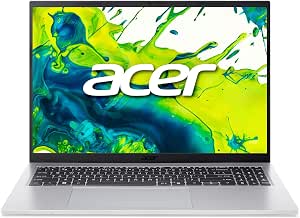 | Best for a Large Touchscreen on a Mainstream Laptop | Processor: Intel Core 7 150U | Display: 16-inch WUXGA IPS touchscreen, 1920 × 1200, 300 nits | Memory: 16GB DDR5; maximum 32GB | VIEW LATEST PRICE | See Our Full Breakdown |
| Acer Aspire 14 AI Laptop, 14-inch WUXGA Touchscreen, Intel Core Ultra 9 288V, 32GB RAM, 1TB SSD, Windows 11 Pro |  | Best for a Portable, High-Spec Work Laptop | Processor: Intel Core Ultra 9 288V, 8 cores, up to 5.1GHz | Graphics: Integrated Intel Arc 140V | Memory: 32GB RAM | VIEW LATEST PRICE | See Our Full Breakdown |
| Acer Aspire Lite 15 Laptop, 15.6-inch FHD IPS Display, Intel Core N150, 16GB RAM, 256GB SSD, Windows 11 |  | Best for Everyday Study and Office Tasks | Processor: Intel Core N150, 4 cores and 4 threads, up to 3.7GHz | Display: 15.6-inch anti-glare IPS LCD, 1920 × 1080 | Memory: 16GB RAM | VIEW LATEST PRICE | See Our Full Breakdown |
| Acer Aspire 14 AI Copilot+ PC, 14-inch WUXGA Touchscreen, Intel Core Ultra 5 226V, 16GB RAM, 1TB SSD |  | Best for AI Features and Flexible Everyday Use | Processor: Intel Core Ultra 5 226V, Series 2 | NPU: Up to 40 TOPS | Graphics: Integrated Intel Arc 130V | VIEW LATEST PRICE | See Our Full Breakdown |
| Acer Aspire 3 15.6-Inch Full HD Laptop, Ryzen 3 7320U, 8GB LPDDR5, 128GB SSD |  | Best for a Simple, Lightweight Starter Laptop | Processor: AMD Ryzen 3 7320U quad-core | Graphics: Integrated AMD Radeon Graphics | Memory: 8GB LPDDR5 onboard | VIEW LATEST PRICE | See Our Full Breakdown |
| Acer Aspire 3 15.6-Inch Laptop, Intel Core i7-1165G7, 12GB RAM, 512GB SSD, Full HD Display |  | Best for Office Basics | Processor: Intel Core i7-1165G7, 4 cores, 8 threads, up to 4.7 GHz | Memory: 12GB DDR4 | Storage: 512GB PCIe NVMe SSD | VIEW LATEST PRICE | See Our Full Breakdown |
| Acer Nitro V 15 Gaming Laptop, Intel Core i7-13620H, NVIDIA GeForce RTX 4050, 15.6-inch FHD 165Hz IPS Display, 16GB DDR5, 1TB PCIe Gen 4 SSD |  | Best for Gaming | Processor: Intel Core i7-13620H | Graphics: NVIDIA GeForce RTX 4050 Laptop GPU with 6GB GDDR6 | Display: 15.6-inch Full HD IPS LCD, 1920 × 1080, 165Hz | VIEW LATEST PRICE | See Our Full Breakdown |
| Acer Aspire Go 15 Laptop, 15.6-inch FHD IPS, Ryzen 7 7730U, 16GB RAM, 512GB SSD |  | Best Value for Everyday Multitasking | Model: AG15-42P-R9FW | Processor: AMD Ryzen 7 7730U octa-core | Memory: 16GB DDR4, maximum 32GB | VIEW LATEST PRICE | See Our Full Breakdown |
| Acer Swift Go 16 Copilot+ Laptop with 16-Inch WUXGA OLED Touchscreen, 32GB RAM, 2TB SSD |  | Best Premium Portable | Processor: Intel Core Ultra 7 355 | Memory: 32GB DDR5 | Storage: 2TB SSD | VIEW LATEST PRICE | See Our Full Breakdown |
| Acer Aspire 16 AI Copilot+ PC, 16-inch WUXGA 120Hz, Intel Core Ultra 5 226V, 16GB RAM, 512GB SSD |  | Best for Modern Work and Connectivity | Processor: Intel Core Ultra 5 226V, up to 4.5 GHz, 8 cores | NPU: Up to 40 TOPS | Graphics: Intel Arc 130V | VIEW LATEST PRICE | See Our Full Breakdown |
| acer laptop | Processor | Graphics | Memory | Storage |
|---|---|---|---|---|
| Acer Aspire 14 AI Copilot+ PC | Intel Core Ultra 7 256V | Intel Arc 140V | 16GB LPDDR5X | 1TB SSD |
| Acer Aspire Go 15.6" Business | AMD Ryzen 7 7730U, 8 cores and 16 threads | Integrated AMD Radeon Graphics | 32GB DDR4 SDRAM | 1TB SSD |
| Acer Aspire Go 15.6-Inch Touch | Intel Core i7-13620H, up to 4.9 GHz | Integrated Intel UHD Graphics | 32GB RAM | 1TB SSD |
| Acer Aspire Go 15 Laptop | AMD Ryzen 5 7520U | AMD Radeon 610M | 16GB LPDDR5 | 512GB NVMe SSD |
| Acer Aspire Go 15 Laptop | Intel Core 3 N355 | Integrated Intel Graphics | 8GB DDR5, supports up to 16GB | 128GB UFS |
| Acer Aspire Go 16 Laptop | Intel Core 7 150U | Integrated Intel Graphics | 16GB DDR5; maximum 32GB | 512GB PCIe Gen 4 SSD |
| Acer Aspire 14 AI Laptop | Intel Core Ultra 9 288V, 8 cores, up to 5.1GHz | Integrated Intel Arc 140V | 32GB RAM | 1TB SSD |
| Acer Aspire Lite 15 Laptop | Intel Core N150, 4 cores and 4 threads, up to 3.7GHz | Integrated Intel UHD Graphics | 16GB RAM | 256GB NVMe SSD |
| Acer Aspire 14 AI Copilot+ PC | Intel Core Ultra 5 226V, Series 2 | Integrated Intel Arc 130V | 16GB LPDDR5X | 1TB Gen 4 SSD |
| Acer Aspire 3 15.6-Inch Full H | AMD Ryzen 3 7320U quad-core | Integrated AMD Radeon Graphics | 8GB LPDDR5 onboard | 128GB NVMe SSD |
| Acer Aspire 3 15.6-Inch Laptop | Intel Core i7-1165G7, 4 cores, 8 threads, up to 4.7 GHz | Integrated Intel Iris Xe Graphics | 12GB DDR4 | 512GB PCIe NVMe SSD |
| Acer Nitro V 15 Gaming Laptop | Intel Core i7-13620H | NVIDIA GeForce RTX 4050 Laptop GPU with 6GB GDDR6 | 16GB DDR5, expandable to 32GB | 1TB PCIe Gen 4 SSD |
| Acer Aspire Go 15 Laptop | AMD Ryzen 7 7730U octa-core | Integrated AMD Radeon | 16GB DDR4, maximum 32GB | 512GB PCIe Gen 4 SSD |
| Acer Swift Go 16 Copilot+ Lapt | Intel Core Ultra 7 355 | Intel Graphics with 2 Xe Cores | 32GB DDR5 | 2TB SSD |
| Acer Aspire 16 AI Copilot+ PC | Intel Core Ultra 5 226V, up to 4.5 GHz, 8 cores | Intel Arc 130V | 16GB LPDDR5X onboard | 512GB PCIe Gen 4 SSD |
More Details on Our Top Picks
Acer Aspire 14 AI Copilot+ PC, 14-inch WUXGA, Intel Core Ultra 7 256V, 16GB RAM, 1TB SSD
The Acer Aspire 14 AI Copilot+ PC is the strongest fit here for buyers who want modern on-device AI features in a compact everyday laptop. Its Core Ultra 7 256V combines with an NPU rated up to 47 TOPS, while the 1TB SSD leaves more room for files than the 128GB Aspire Go 15. At 3.1 pounds, its aluminum chassis is also easier to carry than the larger Aspire Go models, and the 180-degree hinge is useful for sharing a screen across a desk. The tradeoff is a 14-inch, 300-nit display that offers less workspace and limited brightness compared with a 15.6-inch option. Its 46Wh battery is another reason not to assume it will outlast larger alternatives. Choose it for portability and AI-capable productivity, not demanding graphics work.
Pros:- Lightweight 3.1-pound aluminum chassis is easier to carry than the 15.6-inch Aspire Go options.
- Core Ultra 7 processor and NPU support AI-assisted productivity features.
- 1TB SSD provides ample room compared with the 128GB Aspire Go 15.
- 180-degree hinge and backlit keyboard add flexibility for shared work and dim settings.
Cons:- The listed 300-nit display brightness may feel limited in bright rooms.
- The 14-inch screen provides less workspace than the Aspire Go 15 models.
- Integrated graphics are not suited to demanding gaming or 3D workloads.
Best for: Mobile professionals and students who want a light 14-inch laptop, substantial storage, and built-in AI acceleration for everyday productivity.
Not ideal for: Buyers who need a large display, brighter-screen use in strong ambient light, long unplugged sessions, or dedicated graphics for gaming and 3D work.
- Processor:Intel Core Ultra 7 256V
- NPU performance:Up to 47 TOPS
- Graphics:Intel Arc 140V
- Memory:16GB LPDDR5X
- Storage:1TB SSD
- Display:14-inch WUXGA LCD, 1920 x 1200
- Battery:46Wh lithium-ion
- Weight:3.1 lbs
- Wireless:Wi-Fi 6E and Bluetooth 5.3
Our verdict“Choose this Aspire 14 if portability and AI-ready everyday performance matter more than a larger screen or dedicated graphics.”
Acer Aspire Go 15.6″ Business Laptop, AMD Ryzen 7 7730U, 32GB RAM, 1TB SSD, FHD IPS, Wi-Fi 6, Windows 11
Among these five, this Acer Aspire Go 15 business laptop is the clearest choice for desk-based multitasking and office connectivity. Its 32GB of RAM and eight-core Ryzen 7 7730U are better suited to keeping many work apps open than the 16GB Aspire Go 15 with Ryzen 5 7520U. A built-in RJ-45 Ethernet port is a practical advantage for users who need a stable wired connection, while the 1TB SSD matches the storage offered by the more compact Aspire 14 AI. The compromises are its 3.92-pound weight and listed battery life of up to eight hours, which make it less appealing for frequent travel. Integrated Radeon graphics also rule it out for graphics-heavy creative work and serious gaming. I’d pick it for a home office or workplace, not as the most portable Acer in this group.
Pros:- 32GB RAM and an eight-core Ryzen 7 processor support heavier multitasking than the Ryzen 5 Aspire Go 15.
- 1TB SSD offers generous space for work files and applications.
- Built-in RJ-45 Ethernet supports stable wired networking without an adapter.
- 15.6-inch anti-glare IPS display gives office work more room than the 14-inch Aspire 14 AI.
Cons:- At 3.92 pounds, it is heavier than the Aspire 14 AI and less convenient for frequent commuting.
- Battery life is listed at up to eight hours and may be limited under heavy workloads.
- Integrated Radeon graphics are not intended for demanding games or intensive 3D rendering.
- The 720p webcam has lower resolution than a 1080p camera.
Best for: Remote workers and office users who run several applications at once and need built-in Ethernet for a dependable wired connection.
Not ideal for: Frequent travelers, all-day unplugged users, and buyers who need strong gaming or 3D graphics performance.
- Processor:AMD Ryzen 7 7730U, 8 cores and 16 threads
- Graphics:Integrated AMD Radeon Graphics
- Memory:32GB DDR4 SDRAM
- Storage:1TB SSD
- Display:15.6-inch FHD IPS, 1920 x 1080, anti-glare
- Connectivity:Wi-Fi 6, Bluetooth 5.2, RJ-45 Ethernet
- Ports:3x USB-A, 1x USB-C, HDMI, headphone/mic combo, Kensington lock
- Battery life:Up to 8 hours
- Weight:3.92 lbs
Our verdict“Pick this Aspire Go 15 for multitasking and wired office networking, but choose a lighter model if you carry your laptop often.”
Acer Aspire Go 15.6-Inch Touchscreen Laptop, Intel Core i7-13620H, 32GB RAM, 1TB SSD
This Aspire Go 15 stands out for buyers who want a touchscreen and strong multitasking headroom without moving to a premium Acer line. The Intel Core i7-13620H, 32GB RAM, and 1TB SSD give it a more substantial productivity setup than the Aspire Go 15 with Ryzen 5 7520U and 16GB RAM. Its 15.6-inch Full HD IPS screen adds touch input, while dual USB-C ports and HDMI 2.1 make connecting accessories or an external display straightforward. That hardware is not a shortcut to gaming performance: the integrated Intel UHD graphics remain a limit for 3D workloads. The display also runs at 60Hz, and the provided dimensions suggest a sizable footprint. Compared with the Ryzen 7 business model, this one trades built-in Ethernet for touchscreen interaction and dual USB-C connectivity.
Pros:- 32GB RAM and a Core i7-13620H support demanding multitasking better than the 16GB Ryzen 5 Aspire Go.
- 15.6-inch Full HD IPS touchscreen offers touch input on a roomy display.
- Dual USB-C ports with Power Delivery and HDMI 2.1 simplify accessory and display connections.
- 1TB SSD provides substantial storage for applications and files.
Cons:- Integrated Intel UHD graphics limit gaming and graphics-intensive creative work.
- The 60Hz display lacks the smoother motion of higher-refresh screens.
- The listed dimensions indicate a large footprint for a laptop intended for frequent travel.
Best for: Students and productivity-focused users who want a large touchscreen, ample memory, and dual USB-C ports for peripherals or displays.
Not ideal for: Gamers, 3D creators, and buyers who prioritize a high-refresh display or built-in Ethernet networking.
- Processor:Intel Core i7-13620H, up to 4.9 GHz
- Graphics:Integrated Intel UHD Graphics
- Memory:32GB RAM
- Storage:1TB SSD
- Display:15.6-inch Full HD IPS touchscreen, 1920 x 1080
- Refresh rate:60Hz
- Connectivity:Wi-Fi 6, dual USB-C with Power Delivery, HDMI 2.1
- Battery:60Wh lithium-ion
- Model:AG15-71PT-7378
Our verdict“Choose this Aspire Go 15 if a touchscreen and 32GB of memory matter more than dedicated graphics or a high-refresh screen.”
Acer Aspire Go 15 Laptop (AG15-21PT-R641) with AMD Ryzen 5 7520U, 16GB RAM, 512GB SSD, FHD Touchscreen
The Ryzen 5 Aspire Go 15 is the practical middle ground for buyers who want a large touchscreen without the higher-memory, Core i7 setup of the other touchscreen Aspire Go. Its 16GB LPDDR5 memory and 512GB NVMe SSD are suited to everyday browsing, documents, and streaming, while the Full HD IPS panel makes direct interaction easier than on the non-touch Aspire Go with Intel Core 3 N355. The product information lists battery life of up to 12–15 hours, giving it a stronger stated unplugged-use case than the Ryzen 7 business model’s up-to-eight-hour figure. That advantage comes with caveats: the listed 3.18kg weight is substantial, and the integrated Radeon 610M is not built for demanding graphics work. Its memory is also typically soldered, so future upgrades may be limited.
Pros:- 15.6-inch Full HD IPS touchscreen adds direct interaction compared with the non-touch Intel Core 3 Aspire Go.
- 16GB LPDDR5 memory supports everyday multitasking.
- 512GB NVMe SSD offers more storage than the 128GB Intel Core 3 Aspire Go.
- Listed battery life of up to 12–15 hours suits users who prefer fewer charging stops.
Cons:- Listed weight of 3.18kg is heavy for frequent commuting.
- Integrated Radeon 610M graphics are not suited to high-end gaming or heavy 3D work.
- LPDDR5 memory is typically soldered, limiting upgrade options.
Best for: Students and home users who want a touchscreen for everyday tasks and value the listed long battery life over high-end processing or graphics.
Not ideal for: People who carry a laptop all day, expect to upgrade memory later, or need gaming and 3D performance.
- Processor:AMD Ryzen 5 7520U
- Graphics:AMD Radeon 610M
- Memory:16GB LPDDR5
- Storage:512GB NVMe SSD
- Display:15.6-inch FHD IPS touchscreen, 1920 x 1080
- Battery life:Up to 12–15 hours
- Weight:3.18kg
- Connectivity:Wi-Fi 6, Bluetooth, USB-C, HDMI 2.1, USB 3.2
- Operating system:Windows 11 Home
Our verdict“Choose this Aspire Go for a roomy touchscreen and long stated battery life, provided its weight and limited graphics fit your routine.”
Acer Aspire Go 15 Laptop, 15.6-inch FHD IPS, Intel Core 3 N355, 8GB DDR5, 128GB UFS, Windows 11 Home in S Mode
This is the most pared-back pick in the group, aimed at straightforward browsing, schoolwork, and streaming rather than heavy multitasking. The 15.6-inch Full HD IPS display gives it a larger workspace than the 14-inch Aspire 14 AI, and Wi-Fi 6 plus two USB-C ports make the everyday connection set useful for a basic laptop. Its 720p camera includes Acer noise-reduction features, and the recycled-plastic back cover is a small materials benefit. The main compromise is hard to miss: 128GB of UFS storage leaves far less room than the 512GB or 1TB Aspire Go alternatives, and 8GB of RAM is modest for keeping many apps open. Windows 11 Home in S Mode may also restrict app installation choices until settings are changed. I’d reserve this model for light, browser-centered use.
Pros:- 15.6-inch Full HD IPS screen provides a spacious viewing area for everyday tasks.
- Wi-Fi 6 and two USB-C ports offer useful modern connectivity.
- 720p camera includes Acer Temporal Noise Reduction for video calls.
- Back cover uses 30% recycled plastic, with recyclable packaging.
Cons:- 128GB UFS storage is much tighter than the 512GB and 1TB options elsewhere in this lineup.
- 8GB RAM is limited for heavy multitasking, even though the product data lists support up to 16GB.
- Non-touch screen and Windows 11 Home in S Mode may not suit users who want touch input or unrestricted app installation.
Best for: Students or households needing a basic laptop for web browsing, online classes, documents, and streaming with a large non-touch screen.
Not ideal for: Users who store large media libraries, run demanding software, need a touchscreen, or regularly multitask across many applications.
- Processor:Intel Core 3 N355
- Graphics:Integrated Intel Graphics
- Memory:8GB DDR5, supports up to 16GB
- Storage:128GB UFS
- Display:15.6-inch FHD IPS LCD, 1920 x 1080, non-touch
- Operating system:Windows 11 Home in S Mode
- Wireless:Wi-Fi 6 and Bluetooth 5.1 or above
- Camera:720p HD with Acer Temporal Noise Reduction
- Weight:3.8 lbs
Our verdict“Choose this Aspire Go 15 for basic browser-based computing, but step up to a larger-storage model for heavier work or a growing file collection.”
Acer Aspire Go 16 Laptop, 16-inch WUXGA Touch Display, Intel Core 7 150U, 16GB DDR5, 512GB SSD
The Acer Aspire Go 16 is the pick here for buyers who want a roomy touchscreen without stepping up to a premium, performance-focused configuration. Its 16-inch 16:10 display gives documents and browser windows more vertical space than the Aspire Lite 15’s 15.6-inch FHD screen, while the touchscreen makes casual navigation and markups more direct. The Core 7 150U, 16GB of DDR5 memory, and 512GB SSD suit everyday productivity, and its 1080p webcam is a practical advantage for frequent video calls. Two USB-C ports add charging and DisplayPort flexibility. The tradeoff is a modest 300-nit screen and integrated graphics sharing system memory; the Aspire 14 AI has stronger graphics hardware and more memory, but a smaller display. Choose this Go 16 for screen space, not demanding creative work or gaming.
Pros:- 16-inch WUXGA IPS touchscreen offers a larger, taller workspace than the Aspire Lite 15.
- Core 7 150U and 16GB DDR5 are suited to everyday multitasking.
- Two USB-C ports support charging and DisplayPort, alongside HDMI 2.1.
- 1080p webcam includes low-light noise reduction.
Cons:- 300-nit maximum brightness can make the screen harder to see in bright settings.
- Integrated graphics share system memory and are not suited to demanding graphics workloads.
- 512GB storage offers less room than the 1TB drives in the Aspire 14 AI models.
Best for: Remote workers and students who want a large touchscreen for documents, video calls, and everyday multitasking.
Not ideal for: People who work outdoors in bright light or need dedicated graphics for demanding games and creative applications.
- Processor:Intel Core 7 150U
- Display:16-inch WUXGA IPS touchscreen, 1920 × 1200, 300 nits
- Memory:16GB DDR5; maximum 32GB
- Storage:512GB PCIe Gen 4 SSD
- Graphics:Integrated Intel Graphics
- Ports:2 USB-C, 2 USB-A, HDMI 2.1, headphone jack, Kensington lock slot, DC-in
- Wireless:Wi-Fi 6; Bluetooth 5.1 or above
- Weight:3.7 pounds
Our verdict“Choose the Aspire Go 16 if a spacious touchscreen and strong video-call basics matter more than high graphics performance.”
Acer Aspire 14 AI Laptop, 14-inch WUXGA Touchscreen, Intel Core Ultra 9 288V, 32GB RAM, 1TB SSD, Windows 11 Pro
Among these five, the Acer Aspire 14 AI pairs the most capable listed processor with 32GB of memory, a 1TB SSD, and Windows 11 Pro. That combination suits professionals who keep many applications open or need a compact machine for business tasks. Its matte 14-inch touchscreen covers 100% sRGB, a useful advantage for clearer color work than the Aspire Go 16’s 300-nit display specification alone suggests, while the 3.09-pound chassis is easier to carry than either 15- or 16-inch Aspire. USB-C 4.0, HDMI 2.1, and built-in Ethernet also make connecting to work setups straightforward. The compromise is the smaller 1920 × 1200 workspace, and its integrated Arc graphics still fall short of the dedicated GPU in the Nitro V 15. It’s a strong mobile work pick, not a gaming replacement.
Pros:- 32GB RAM and a Core Ultra 9 288V suit demanding everyday multitasking.
- Matte touchscreen offers 100% sRGB coverage.
- USB-C 4.0, HDMI 2.1, and RJ45 Ethernet support flexible desk connections.
- 3.09-pound design is more portable than the larger Aspire Go 16.
Cons:- Integrated graphics are not a substitute for the Nitro V 15’s dedicated GPU.
- 14-inch screen provides less working area than the 16-inch Aspire Go 16.
- The listed 1920 × 1200 resolution may feel limiting to buyers seeking a higher-resolution display.
Best for: Mobile professionals who want Windows 11 Pro, substantial memory, a color-capable touchscreen, and built-in Ethernet.
Not ideal for: Gamers and graphics professionals who need dedicated graphics, or buyers who prefer a larger screen for desk-based work.
- Processor:Intel Core Ultra 9 288V, 8 cores, up to 5.1GHz
- Graphics:Integrated Intel Arc 140V
- Memory:32GB RAM
- Storage:1TB SSD
- Display:14-inch WUXGA IPS touchscreen, 1920 × 1200, 100% sRGB
- Operating system:Windows 11 Pro
- Ports:2 USB-A 3.2, 2 USB-C 4.0, HDMI 2.1, RJ45 Ethernet
- Battery:65Wh
- Weight:3.09 pounds
Our verdict“Pick this Aspire 14 AI for a portable business laptop with generous memory and useful wired connectivity, but not for demanding gaming.”
Acer Aspire Lite 15 Laptop, 15.6-inch FHD IPS Display, Intel Core N150, 16GB RAM, 256GB SSD, Windows 11
The Acer Aspire Lite 15 is a straightforward fit for students and home users who need a conventional screen and keyboard for everyday tasks. Its 15.6-inch anti-glare IPS display and numeric keypad make it practical for schoolwork, spreadsheets, and browsing, while 16GB of RAM gives it more multitasking headroom than the Aspire 3’s 8GB. The tradeoff is the Intel Core N150 and 256GB SSD: this configuration is aimed at light workloads, and the drive can fill quickly with downloaded media or larger projects. Compared with the Aspire Go 16, it gives up a touchscreen and a larger WUXGA workspace, but retains a full-size display and adds a numeric keypad. Choose it for uncomplicated daily use; buyers handling heavier software should look toward the Aspire 14 AI.
Pros:- Anti-glare 15.6-inch IPS screen suits everyday reading and work.
- 16GB RAM supports more multitasking than the Aspire 3’s 8GB configuration.
- Full-size keyboard includes a numeric keypad.
- Wi-Fi 6, USB-C, dual USB-A, and HDMI provide useful everyday connections.
Cons:- 256GB SSD can run short on space for large files and applications.
- Intel N150 and integrated graphics are suited to light everyday workloads rather than demanding tasks.
- No touchscreen, unlike the Aspire Go 16 and Aspire 14 AI options.
Best for: Students and home users who need a full-size, anti-glare laptop for documents, browsing, video, and spreadsheet entry.
Not ideal for: People running demanding applications, storing large media libraries, or wanting a touchscreen and more expansive WUXGA display.
- Processor:Intel Core N150, 4 cores and 4 threads, up to 3.7GHz
- Display:15.6-inch anti-glare IPS LCD, 1920 × 1080
- Memory:16GB RAM
- Storage:256GB NVMe SSD
- Graphics:Integrated Intel UHD Graphics
- Operating system:Windows 11
- Wireless:Wi-Fi 6; Bluetooth 5.2
- Ports:USB-C, 2 USB-A, HDMI 2.1
- Weight:3.9 pounds
Our verdict“Choose the Aspire Lite 15 for basic school or home computing with a numeric keypad, but look elsewhere for demanding software or ample storage.”
Acer Aspire 14 AI Copilot+ PC, 14-inch WUXGA Touchscreen, Intel Core Ultra 5 226V, 16GB RAM, 1TB SSD
The Acer Aspire 14 AI Copilot+ PC stands apart with an NPU rated up to 40 TOPS, an aluminum chassis, and a 180-degree hinge that lets the screen lie flat. Those details suit buyers who want a modern, compact Windows 11 Home laptop with AI-assisted features and a more adaptable physical design. It weighs 3 pounds and includes a 1TB SSD, giving it a portability and storage advantage over the Aspire Go 16. The 14-inch touchscreen is smaller, though, and its 16GB of shared-memory graphics setup is less suited to heavy visual work than the Aspire 14 AI’s Arc 140V and 32GB RAM configuration. Acer’s up-to-22-hour battery figure is based on specified video-playback conditions, so I would not treat it as a guarantee for mixed workloads. This is the more flexible, lighter pick, not the stronger workhorse.
Pros:- NPU rated up to 40 TOPS supports AI-assisted productivity features.
- Aluminum chassis, touchscreen, and 180-degree lie-flat hinge offer a versatile design.
- 3-pound weight and 1TB SSD make it easy to carry with room for files.
- 1080p FHD IR webcam includes AI camera and microphone controls.
Cons:- Integrated Arc 130V graphics share system memory and are not suited to demanding graphics work.
- 14-inch screen is smaller than the Aspire Go 16’s 16-inch display.
- The up-to-22-hour battery claim comes from specified video playback conditions, not all-day mixed use.
Best for: Traveling students and professionals who want a light touchscreen laptop, AI-capable hardware, and a hinge that can lie flat.
Not ideal for: Buyers who need a large screen, dedicated graphics, or predictable long battery life during demanding mixed workloads.
- Processor:Intel Core Ultra 5 226V, Series 2
- NPU:Up to 40 TOPS
- Graphics:Integrated Intel Arc 130V
- Memory:16GB LPDDR5X
- Storage:1TB Gen 4 SSD
- Display:14-inch WUXGA IPS touchscreen, 1920 × 1200, 60Hz
- Operating system:Windows 11 Home
- Battery:65Wh; claimed up to 22 hours under specified video playback conditions
- Weight:3 pounds
Our verdict“Choose this Aspire 14 AI for a lightweight, flexible touchscreen PC with an AI-focused NPU, but not for large-screen work or graphics-heavy tasks.”
Acer Aspire 3 15.6-Inch Full HD Laptop, Ryzen 3 7320U, 8GB LPDDR5, 128GB SSD
The Acer Aspire 3 is the simplest option in this group: a 15.6-inch matte FHD screen, a Ryzen 3 7320U, and a slim 3.9-pound body for basic browsing, documents, and online meetings. Its noise-reducing camera and microphone features are useful for video calls, while the matte display helps limit reflections. But the 8GB of onboard memory and 128GB SSD are the tightest limits among these five. The Aspire Lite 15 has 16GB RAM and twice the storage, making it a more accommodating choice for multitasking and downloaded files; the Aspire Go 16 adds a touchscreen and a stronger listed processor. This Aspire 3 makes sense for a narrow set of light-use needs, but its fixed memory and small drive leave little room to grow.
Pros:- 15.6-inch matte Full HD IPS display suits everyday reading and office tasks.
- Ryzen 3 7320U provides a practical platform for basic computing.
- Camera and microphone include noise-reduction features for online meetings.
- Backlit keyboard helps when working in dimmer rooms.
Cons:- 128GB SSD leaves limited space for applications and local files.
- 8GB of onboard memory cannot be upgraded according to the supplied specifications.
- Less capable for multitasking than the Aspire Lite 15, which has 16GB RAM and a 256GB SSD.
Best for: First-time laptop buyers who mainly browse, write documents, and attend online meetings, with limited local file storage.
Not ideal for: Multitaskers, people who keep large media or application libraries, and buyers who want expandable memory or a touchscreen.
- Processor:AMD Ryzen 3 7320U quad-core
- Graphics:Integrated AMD Radeon Graphics
- Memory:8GB LPDDR5 onboard
- Storage:128GB NVMe SSD
- Display:15.6-inch matte Full HD IPS LCD, 1920 × 1080, 60Hz
- Operating system:Windows 11 Home in S mode
- Wireless:Wi-Fi 6; Bluetooth 5
- Camera and audio:HD camera with temporal noise reduction; AI noise-reduction microphone
- Weight:3.9 pounds
Our verdict“Pick the Aspire 3 for basic tasks and video calls, but choose the Aspire Lite 15 if you need more memory and storage.”
Acer Aspire 3 15.6-Inch Laptop, Intel Core i7-1165G7, 12GB RAM, 512GB SSD, Full HD Display
The Acer Aspire 3 suits home and office routines where a full-size keyboard, familiar connections, and straightforward Windows performance matter more than gaming power. Its numeric keypad is useful for spreadsheets, while the anti-glare Full HD screen makes long stretches of reading more comfortable than a reflective display. Wi-Fi 6, Gigabit Ethernet, and a 512GB NVMe SSD round out a practical setup for work documents, browsing, and streaming.
Compared with the Acer Aspire Go 15, this model has an older four-core processor and less memory, so it is a less appealing choice for heavier multitasking. Its strengths are the wired Ethernet port and numeric keypad, not graphics performance. Integrated Iris Xe graphics are suited to everyday visuals rather than demanding games, and the 720p webcam is a weak fit for frequent video calls.
Pros:- 15.6-inch Full HD anti-glare display
- Full-size keyboard includes a numeric keypad
- Wi-Fi 6 and Gigabit Ethernet support
- 512GB NVMe SSD
Cons:- Four-core, 11th-generation processor is older than the chips in several alternatives
- Integrated graphics are not intended for demanding gaming or creative workloads
- 720p webcam is basic for video meetings
Best for: Home-office users and students who want a numeric keypad, wired Ethernet, and storage for everyday files
Not ideal for: Gamers, video editors, or people who rely on a sharp webcam for regular calls
- Processor:Intel Core i7-1165G7, 4 cores, 8 threads, up to 4.7 GHz
- Memory:12GB DDR4
- Storage:512GB PCIe NVMe SSD
- Graphics:Integrated Intel Iris Xe Graphics
- Display:15.6-inch Full HD LED, 1920 × 1080, 60 Hz, anti-glare
- Wireless:Wi-Fi 6 and Bluetooth 5.2
- Ports:2 × USB 3.2 Gen 1 Type-A, 1 × USB 2.0 Type-A, HDMI, RJ-45 Gigabit Ethernet, headphone/microphone combo, DC-in
- Weight:3.75 lbs
Our verdict“Choose the Aspire 3 for spreadsheet-friendly everyday computing and wired networking, but skip it for graphics-heavy work or frequent video calls.”
Acer Nitro V 15 Gaming Laptop, Intel Core i7-13620H, NVIDIA GeForce RTX 4050, 15.6-inch FHD 165Hz IPS Display, 16GB DDR5, 1TB PCIe Gen 4 SSD
The Acer Nitro V 15 is the clear choice here for buyers who need dedicated graphics, not just a laptop that handles everyday tasks. Its RTX 4050 GPU and 165Hz Full HD IPS display are built for smoother gameplay, while the Core i7-13620H, 16GB of DDR5 memory, and 1TB SSD provide room for demanding applications and a sizable game library. Thunderbolt 4, HDMI, and Ethernet add useful options for desks and external displays.
That gaming focus separates it from the Acer Aspire 16 AI, which is lighter and aimed more at portable work than graphics-intensive play. The tradeoff is a heavier 4.7-pound chassis and a 15.6-inch screen rather than a larger workspace. Memory can reach 32GB, but that ceiling may limit future expansion for users with unusually demanding workloads. It also lacks an optical drive.
Pros:- NVIDIA GeForce RTX 4050 graphics with 6GB GDDR6
- 165Hz Full HD IPS display suited to fast-moving games
- 1TB PCIe Gen 4 SSD
- Thunderbolt 4, Ethernet, and Wi-Fi 6 connectivity
Cons:- At 4.7 pounds, it is heavier than the Aspire productivity models
- Memory expansion is capped at 32GB
- No optical drive
Best for: PC gamers who want dedicated RTX graphics, a high-refresh-rate display, and ample built-in game storage
Not ideal for: Frequent travelers prioritizing a light laptop or buyers who need memory capacity beyond 32GB
- Processor:Intel Core i7-13620H
- Graphics:NVIDIA GeForce RTX 4050 Laptop GPU with 6GB GDDR6
- Display:15.6-inch Full HD IPS LCD, 1920 × 1080, 165Hz
- Memory:16GB DDR5, expandable to 32GB
- Storage:1TB PCIe Gen 4 SSD
- Ports:4 USB ports, Thunderbolt 4, HDMI, Ethernet
- Wireless:Wi-Fi 6 and Bluetooth
- Weight:4.7 pounds
Our verdict“Pick the Nitro V 15 when gaming performance and a 165Hz screen matter more than a lighter carry or a larger memory ceiling.”
Acer Aspire Go 15 Laptop, 15.6-inch FHD IPS, Ryzen 7 7730U, 16GB RAM, 512GB SSD
The Acer Aspire Go 15 makes a strong everyday-work case with an eight-core Ryzen 7 processor, 16GB of memory, and a 512GB SSD. That combination gives students and home users room to keep several browser tabs and office apps open without stepping up to a gaming-focused machine. The 15.6-inch Full HD IPS panel offers broad viewing angles, and Wi-Fi 6, USB-C, and HDMI 2.1 make it easy to connect to common peripherals and displays.
Against the Acer Aspire 3, it offers more memory, a newer AMD platform, and an IPS panel, but it gives up the listed Gigabit Ethernet port and numeric keypad. Integrated Radeon graphics also make it a poor substitute for the Nitro V 15 in games that need a dedicated GPU. Its 300-nit brightness is suitable for many indoor settings, though bright rooms can make the display harder to see.
Pros:- Ryzen 7 eight-core processor paired with 16GB of memory
- 15.6-inch Full HD IPS display
- USB-C, Wi-Fi 6, and HDMI 2.1 connectivity
- AcerSense tools for managing battery, storage, and apps
Cons:- Integrated Radeon graphics are not suited to demanding games
- Listed maximum brightness of 300 nits may be limiting in bright environments
- No optical drive
Best for: Students and home users who multitask across browser tabs, documents, and video calls on a large IPS screen
Not ideal for: Gamers needing dedicated graphics or users working outdoors and in very bright spaces
- Model:AG15-42P-R9FW
- Processor:AMD Ryzen 7 7730U octa-core
- Memory:16GB DDR4, maximum 32GB
- Storage:512GB PCIe Gen 4 SSD
- Graphics:Integrated AMD Radeon
- Display:15.6-inch Full HD IPS LCD, 1920 × 1080, up to 300 nits
- Wireless:Wi-Fi 6
- Weight:3.9 pounds
Our verdict“The Aspire Go 15 fits everyday multitaskers who want capable core hardware and an IPS display without stepping up to a dedicated gaming laptop.”
Acer Swift Go 16 Copilot+ Laptop with 16-Inch WUXGA OLED Touchscreen, 32GB RAM, 2TB SSD
The Acer Swift Go 16 is the premium productivity pick for buyers who want a large, touch-enabled OLED screen without carrying a bulky gaming system. Its 16-inch WUXGA OLED panel offers rich contrast, while 32GB of memory and a 2TB SSD give demanding multitaskers generous capacity for projects and local files. At 3 pounds, it is lighter than the Nitro V 15, and the 5MP IR webcam, Wi-Fi 7, and backlit keyboard make it better equipped for mobile work and video meetings.
The tradeoff is that Intel Graphics with two Xe cores are integrated, so this is not the right alternative to the Nitro for graphics-heavy gaming. Its 1920 × 1200 resolution also prioritizes a broad work area over a sharper high-resolution panel. The listed battery figure is up to 23 hours of video playback, but real runtime will depend on workload and settings.
Pros:- 16-inch WUXGA OLED touchscreen
- 32GB memory and a 2TB SSD
- Three-pound design with MIL-STD 810H certification
- 5MP IR HDR webcam with privacy shutter
Cons:- Integrated Intel Graphics are a poor fit for demanding gaming and graphics workloads
- 1920 × 1200 resolution is less detailed than higher-resolution premium displays
Best for: Mobile professionals and creators who want a lightweight 16-inch OLED touchscreen, substantial memory, and large local storage
Not ideal for: Gamers and 3D creators who need dedicated graphics, or buyers seeking a higher-resolution screen
- Processor:Intel Core Ultra 7 355
- Memory:32GB DDR5
- Storage:2TB SSD
- Display:16-inch WUXGA OLED touchscreen, 1920 × 1200
- Graphics:Intel Graphics with 2 Xe Cores
- Webcam:5MP IR HDR with privacy shutter
- Battery:71Wh; up to 23 hours of video playback
- Weight:3 lb
Our verdict“Choose the Swift Go 16 for a light, large-screen work laptop with OLED, generous storage, and memory, not for dedicated-GPU performance.”
Acer Aspire 16 AI Copilot+ PC, 16-inch WUXGA 120Hz, Intel Core Ultra 5 226V, 16GB RAM, 512GB SSD
The Acer Aspire 16 AI balances a roomy screen with a slim aluminum build and a useful spread of current connections. Its 16-inch WUXGA panel runs at 120Hz with 100% sRGB coverage, a combination that supports fluid scrolling and more consistent color for everyday creative work. The 1080p IR webcam is a step up from the 720p camera on the Acer Aspire 3, while Wi-Fi 7, two Thunderbolt 4 ports, HDMI 2.1, and a microSD reader make this model especially flexible at a desk or when moving between accessories.
Its Intel Arc 130V graphics and NPU support AI features, but this remains a productivity laptop rather than a replacement for the dedicated RTX 4050 in the Nitro V 15. The 16GB of onboard memory is not described as upgradeable, which may constrain buyers who plan to expand later. Battery figures also vary by test method, so heavy workloads may fall well short of the listed playback maximum.
Pros:- 16-inch 120Hz WUXGA display with 100% sRGB coverage
- Aluminum chassis with a 180-degree hinge
- Two Thunderbolt 4 ports, HDMI 2.1, Wi-Fi 7, and microSD reader
- 1080p FHD IR webcam
Cons:- 16GB LPDDR5X memory is onboard and not described as upgradeable
- Integrated Intel Arc graphics do not match the Nitro V 15 for demanding gaming
- Battery-life estimates vary considerably by test method and use
Best for: Hybrid workers and students who want a color-capable 120Hz screen, a quality webcam, and modern ports in an aluminum laptop
Not ideal for: Buyers who expect to upgrade memory later or need dedicated graphics for demanding games and 3D work
- Processor:Intel Core Ultra 5 226V, up to 4.5 GHz, 8 cores
- NPU:Up to 40 TOPS
- Graphics:Intel Arc 130V
- Display:16-inch WUXGA, 120Hz, 100% sRGB
- Memory:16GB LPDDR5X onboard
- Storage:512GB PCIe Gen 4 SSD
- Ports:2 Thunderbolt 4 USB-C, 2 USB 3.2 Gen 1, HDMI 2.1, headphone jack
- Wireless:Wi-Fi 7 and Bluetooth 5.4 with LE audio
- Webcam:1080p FHD IR
Our verdict“Pick the Aspire 16 AI for modern connectivity, a color-capable high-refresh display, and hybrid-work features, but not for upgradeable memory or serious gaming.”

How We Picked
I compared these Acer laptops by the needs their specifications support: everyday responsiveness, multitasking headroom, storage capacity, screen size and format, portability, and graphics capability. I gave more weight to combinations that suit a broad range of real tasks, such as 16GB or more of RAM and roomy solid-state storage, while distinguishing specialist strengths like OLED viewing or dedicated gaming graphics. Since the supplied specifications do not establish battery life, measured performance, keyboard quality, or build durability, I avoid treating those details as proven advantages.
The ranking logic favors versatility first, then clear value in capability, followed by strong options for specific buyers. That puts the Aspire 14 AI Core Ultra 7 near the top for its balanced portable configuration, while the Ryzen 7 Aspire Go models rank well for larger-screen multitasking. The Nitro V ranks as a specialist rather than a universal winner, and lower-memory or low-storage models sit lower because their configurations leave less room for demanding workloads and future needs. Premium screen and memory options earn their place when they offer a meaningful benefit, not simply a higher specification.
Factors to Consider When Choosing Best Acer Laptops
Choosing among Acer laptops is easier when I start with the work the machine must handle, then check whether its memory, storage, screen, and graphics match that workload. These broader checks can prevent paying for capacity you will not use or buying a configuration that becomes cramped too soon.
Match the Processor to Your Actual Workload
Processor names alone do not tell the full story: the listed laptops span Intel Core 3 and Core 7 chips, Core Ultra options, and AMD Ryzen 3, 5, and 7 processors. For browsing, documents, and video calls, a modern entry or midrange configuration may be sufficient, while frequent multitasking or heavier work benefits from a stronger processor paired with enough memory. Do not assume that any Core i7 label guarantees the same performance across generations; the Aspire 3’s older Core i7-1165G7 is a different proposition from newer Core Ultra or Core 7 configurations. Also check whether the workload relies on graphics acceleration, since the Nitro’s RTX 4050 matters more for many games than a CPU label alone. My practical rule is to identify the most demanding app you use regularly, then prioritize that requirement rather than buying around a processor badge.
Choose Memory and Storage for How Long You Keep a Laptop
Memory affects how comfortably a laptop handles several apps and browser tabs at once, while storage determines how much room remains for programs and local files. The lineup ranges from 8GB RAM and 128GB storage to 32GB RAM and multi-terabyte storage, so these are not small differences in everyday flexibility. A basic configuration can work for light tasks, but a small drive may fill quickly after operating-system files, applications, and personal data take their share. Before choosing, estimate whether you keep photos, downloaded media, or work files locally, and check the exact configuration rather than relying on a family name such as Aspire Go. If you expect to keep the computer for years or routinely multitask, extra memory and storage can be more useful than a modest processor upgrade.
Decide Whether a Bigger Screen Is Worth the Carry
A 14-inch laptop is generally easier to fit into a daily commute, while 15.6- and 16-inch screens offer more space for side-by-side documents and spreadsheets. The larger format can reduce how often you need an external display, but it also means a bigger device to carry and use in tight spaces. Screen resolution is only part of the decision: the Swift Go 16’s OLED touchscreen, for example, is a different viewing proposition from a standard FHD IPS panel. Touch can help with direct interaction, but it is not automatically useful for every workflow and should not outweigh keyboard, mouse, or portability needs. Choose around your most common setting: a desk-bound user may benefit from screen area, while a frequent traveler may value the smaller footprint more.
Treat Gaming Graphics as a Separate Buying Decision
Most models in this list are designed around integrated graphics, which suits general computing but is not equivalent to a laptop with a dedicated GPU. The Nitro V 15 stands apart with an RTX 4050 and a 165Hz FHD display, a combination aimed at gaming and graphics-heavy tasks. That added capability makes the Nitro a poor default choice for someone who only needs a light school or office laptop, since gaming-focused hardware can be unnecessary for those jobs. Conversely, choosing an Aspire for demanding games just because it has a capable-sounding processor can lead to the wrong compromise. Think about the games and creative applications you actually run, and prioritize a dedicated GPU only when those tasks justify it.
Read Configuration Details, Not Just Product Names
Acer’s Aspire Go, Aspire 3, and Aspire 14 AI labels cover a wide range of hardware in this selection, so the model family alone is not a reliable guide. The Aspire Go examples include different processors, memory amounts, storage capacities, screen sizes, and touch options. Some configurations also specify Windows 11 Home in S Mode, which can limit app installation choices compared with a standard Windows setup. Check the full listing for RAM, drive capacity, screen type, operating-system version, and whether the display is touch-enabled before deciding. This simple comparison is especially useful when two laptops have similar names but are intended for very different workloads.
Spend More Only When the Upgrade Solves a Real Need
A higher-spec laptop earns its place when it addresses a specific bottleneck: more RAM for demanding multitasking, a larger SSD for local files, OLED for screen-focused work, or a dedicated GPU for gaming. Those upgrades add little value if your routine is limited to web browsing, email, and documents. For a long replacement cycle, extra memory and storage can be sensible because they leave more room as needs change, while paying for gaming graphics makes less sense without graphics-heavy use. Buyers should also weigh a larger screen against how often they carry the computer, since the benefit of extra workspace can disappear if the laptop is inconvenient to take along. I would prioritize the feature that changes your daily experience rather than selecting the most expensive-looking specification list.
Frequently Asked Questions
Which Acer laptop is the best all-around choice in this selection?
I’d start with the Aspire 14 AI Copilot+ PC with the Core Ultra 7, 16GB RAM, and 1TB SSD for a balanced mix of portability and everyday capacity. Its 14-inch screen is easier to carry than the 15.6- and 16-inch options, while its storage is more generous than several entry-level configurations. If you need more memory for heavier multitasking, the Aspire Go 15 with Ryzen 7 and 32GB RAM is a stronger fit, though it has a larger footprint. Buyers who mainly play games should skip both as a first choice and look at the Nitro V’s dedicated graphics.
Is 8GB of RAM and 128GB of storage enough for a school laptop?
That combination can cover basic browsing, documents, and online classes, but it leaves less room for multitasking and stored files than the 16GB or 32GB options in this roundup. A large number of browser tabs, video calls, and other apps open together may make the limits more noticeable. The 128GB drive can also become tight after applications and personal files build up. If the laptop is for a student who mainly uses cloud-based tools, it may be workable; for heavier multitasking or several years of use, I’d favor a configuration with more memory and storage.
Should I choose the Ryzen 7 Aspire Go with 32GB RAM or the one with 16GB?
Both listed Ryzen 7 Aspire Go 15 configurations pair a 15.6-inch FHD IPS screen with the same named processor, but the 32GB model also has a 1TB SSD, compared with 16GB RAM and a 512GB SSD on the other. The higher-capacity version makes more sense for large workloads, many simultaneous apps, or a substantial local file library. The 16GB configuration is a more restrained choice for typical office, school, and household use. I’d decide based on multitasking and storage habits rather than assuming every buyer needs the larger configuration.
Do I need the Acer Nitro V 15 if I want to play games?
The Nitro V 15 is the strongest gaming-oriented option here because it is the only listed model with an NVIDIA RTX 4050, alongside a 165Hz FHD screen. That gives it a clearer gaming role than the Aspire and Swift models, whose listed configurations do not include a dedicated GPU. It is not automatically the right laptop for every game or graphics workload, since requirements vary and the provided specifications do not establish real-world frame rates. If gaming is occasional and limited to less demanding titles, an Aspire may be enough; for more graphics-intensive play, the Nitro is the more appropriate starting point.
Is the Swift Go 16 OLED worth choosing over the Aspire 16 AI?
The Swift Go 16 is the more screen- and capacity-focused option, with a 16-inch WUXGA OLED touchscreen, 32GB RAM, and a 2TB SSD. The Aspire 16 AI instead lists a 16-inch WUXGA 120Hz display, 16GB RAM, and a 512GB SSD, making it a different balance of screen features and storage capacity. I’d favor the Swift when OLED, touch, memory, and local storage directly support your work or media use. The Aspire 16 AI may be a better match if its 120Hz screen is more appealing and the larger memory and drive capacities are not priorities; compare the exact configuration rather than relying on the Copilot+ label alone.
Conclusion
For the best overall balance, I recommend the Aspire 14 AI Copilot+ PC with Core Ultra 7, 16GB RAM, and 1TB SSD. The best value for everyday multitasking is the Aspire Go 15 with Ryzen 7, 16GB RAM, and 512GB SSD, while buyers who need more simultaneous-app and storage headroom should choose its 32GB RAM, 1TB configuration. For a premium screen-and-capacity setup, the Swift Go 16 OLED stands out with 32GB RAM and 2TB storage. For beginners and basic school or home use, an entry-level Aspire Go or Aspire 3 can fit light tasks, but I’d avoid the smallest memory and storage configuration if the laptop must last through growing needs. For gaming, the Nitro V 15 is the clear pick because it is the only model here with an RTX 4050; choose the larger Aspire 16 AI or Aspire Go 16 instead if you want workspace rather than dedicated gaming graphics.