Among these Wi-Fi 7 mesh routers, I name the TP-Link Deco BE25 3-Pack my best overall choice for its practical mix of mesh coverage and approachable dual-band design. The TP-Link Deco BE67 3-Pack is a stronger fit when tri-band capacity matters, while the NETGEAR Orbi 970 3-Pack is the premium option for buyers who want a higher-end system. The main tradeoff is whether to favor a simpler, lower-complexity setup or spend more for extra bands, capacity, or a larger system. Pack size, wired ports, and the devices already in your home can matter as much as the Wi-Fi 7 label. Read on for the full comparison and guidance on which system fits your space and usage.

Get the latest gadgets delivered free with Prime
- Fast, free delivery on millions of items
- Prime Video, Amazon Music and more included
- Member-only deals all year
Complete the kit



Key Takeaways
- Dual-band Deco and eero kits suit many everyday homes, but their simpler radio design offers less room for mesh backhaul traffic than tri-band alternatives.
- Tri-band systems are not interchangeable: Deco BE63, BE67, BE10000, eero Pro 7, and the Orbi models vary in pack size, positioning, and capacity, so match the model to your layout and client load.
- Pack size changes the value equation. A 2-pack may suit a compact or open home, while a 3-pack can place nodes more flexibly across multiple floors or separated rooms.
- The Orbi 970 is the premium outlier in this lineup; buyers with ordinary broadband and modest device counts may not benefit enough from its higher-end positioning.
- eero 7 appears in one-, two-, and three-pack forms. Choose the package for the area you need to cover rather than assuming the router-only 1-pack will serve a whole home.
| TP-Link Deco BE25 Wi-Fi 7 Dual-Band Mesh System, 3-Pack |  | Best Overall | Wi-Fi standard: Wi-Fi 7 (802.11be) | Frequency bands: Dual-band | Maximum data rate: Up to 5 Gbps | VIEW LATEST PRICE | See Our Full Breakdown |
| Amazon eero 7 Dual-Band Mesh Wi-Fi 7 Router, 3-Pack |  | Best for Smart-Home Setups | Wi-Fi standard: Wi-Fi 7 (IEEE 802.11be) | Frequency bands: Dual-band, 2.4 GHz and 5 GHz | Wireless speed: Up to 1.8 Gbps | VIEW LATEST PRICE | See Our Full Breakdown |
| TP-Link Deco 7 Pro BE10000 Tri-Band Wi-Fi 7 Mesh System, 3-Pack |  | Best for High-Capacity Homes | Wi-Fi standard: Wi-Fi 7 (802.11be) | Frequency bands: Tri-band: 6 GHz, 5 GHz, and 2.4 GHz | Maximum combined speed: Up to 10 Gbps | VIEW LATEST PRICE | See Our Full Breakdown |
| Deco 7 BE25 Dual-Band BE5000 WiFi 7 Mesh Wi-Fi System 5 Gbps, 240 MHz |  | Best Compact Two-Node Choice | Wi-Fi standard: Wi-Fi 7 | Frequency bands: Dual-band | Maximum data rate: Up to 5 Gbps | VIEW LATEST PRICE | See Our Full Breakdown |
| NETGEAR Orbi 370 Series WiFi 7 Mesh System, 2-Pack, Covers up to 4,000 sq. ft. |  | Best for Smaller Homes | Wi-Fi generation: Wi-Fi 7 | Frequency band: Dual-band | Maximum data transfer rate: Up to 5 Gbps | VIEW LATEST PRICE | See Our Full Breakdown |
| NETGEAR Orbi 970 Series WiFi 7 Mesh System, 3-Pack | 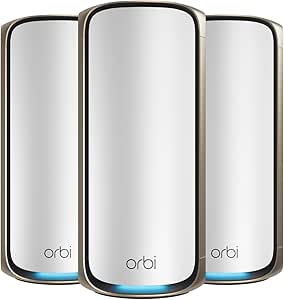 | Best for Maximum Coverage and Wired Multi-Gig | System: Wi-Fi 7 mesh; 1 router and 2 satellites | Bands: Quad-band with enhanced dedicated backhaul | Maximum wireless speed: Up to 27 Gbps | VIEW LATEST PRICE | See Our Full Breakdown |
| TP-Link Deco 7 Pro BE67 Wi-Fi 7 Tri-Band Mesh System, 3-Pack |  | Best Tri-Band All-Rounder | Model: Deco 7 Pro BE67 | System: Tri-band Wi-Fi 7 mesh; 3 units | Combined Wi-Fi speed: Up to 14 Gbps | VIEW LATEST PRICE | See Our Full Breakdown |
| NETGEAR Orbi 770 Series WiFi 7 Mesh System, 3-Pack |  | Best for Large Homes on a 2.5 Gbps Connection | System: Wi-Fi 7 mesh; 1 router and 2 satellites | Bands: Tri-band, including 6 GHz | Maximum data transfer rate: Up to 11 Gbps | VIEW LATEST PRICE | See Our Full Breakdown |
| TP-Link Deco 7 Pro BE63 Tri-Band Wi-Fi 7 Mesh System, 2-Pack |  | Best for Multi-Gig Ports in a Two-Node Kit | Model: Deco 7 Pro BE63 | System: Tri-band Wi-Fi 7 mesh; 2-pack | Maximum combined speed: Up to 10 Gbps | VIEW LATEST PRICE | See Our Full Breakdown |
| Amazon eero 7 dual-band mesh Wi-Fi 7 router, 2-pack |  | Best for Simple Wi-Fi 7 in a Smaller Home | System: Dual-band Wi-Fi 7 mesh; 2-pack | Wireless speed: Up to 1.8 Gbps | Coverage: Up to 4,000 sq. ft. | VIEW LATEST PRICE | See Our Full Breakdown |
| TP-Link Deco 7 BE23 Dual-Band BE3600 WiFi 7 Mesh Wi-Fi System (3-Pack) |  | Best for Large Homes on a Wired Backhaul | Wi-Fi standard: Wi-Fi 7 (BE3600), dual-band | Maximum combined speed: 3.6 Gbps | Three-pack coverage: Up to 6,500 sq. ft. | VIEW LATEST PRICE | See Our Full Breakdown |
| Amazon eero 7 Dual-Band Wi-Fi 7 Mesh Router, 1-Pack |  | Best Single-Node Starter | Wi-Fi standard: Wi-Fi 7, dual-band 2.4 GHz and 5 GHz | Maximum wireless speed: Up to 1.8 Gbps | Coverage: Up to 2,000 sq. ft. | VIEW LATEST PRICE | See Our Full Breakdown |
| NETGEAR Orbi 370 Series WiFi 7 Mesh System, 3-Pack |  | Best for Higher Listed Wireless Speed | Wi-Fi generation: Wi-Fi 7, dual-band | Maximum data transfer rate: Up to 5 Gbps | Included units: One router and two satellites | VIEW LATEST PRICE | See Our Full Breakdown |
| Amazon eero Pro 7 Tri-Band Mesh Wi-Fi 7 Router, 3-Pack |  | Best Premium Tri-Band System | Wi-Fi standard: Wi-Fi 7, tri-band 2.4 GHz, 5 GHz, and 6 GHz | Maximum wireless speed: Up to 3.9 Gbps | Internet plan support: Up to 5 Gbps | VIEW LATEST PRICE | See Our Full Breakdown |
| Wi-Fi 7 mesh router | Device capacity | Coverage | Wi-Fi standard |
|---|---|---|---|
| TP-Link Deco BE25 Wi-Fi 7 Dual | Over 150 devices | Up to 6,600 sq. ft. | Wi-Fi 7 (802.11be) |
| Amazon eero 7 Dual-Band Mesh W | 120+ devices | Up to 6,000 sq. ft. | Wi-Fi 7 (IEEE 802.11be) |
| TP-Link Deco 7 Pro BE10000 Tri | Over 200 devices | Up to 7,600 sq. ft. | Wi-Fi 7 (802.11be) |
| Deco 7 BE25 Dual-Band BE5000 W | Over 150 devices | Up to 4,600 sq. ft. | Wi-Fi 7 |
| NETGEAR Orbi 370 Series WiFi 7 | — | Up to 4,000 sq. ft. | — |
| NETGEAR Orbi 970 Series WiFi 7 | Up to 200 devices | — | — |
| TP-Link Deco 7 Pro BE67 Wi-Fi | Up to 200 devices | — | — |
| NETGEAR Orbi 770 Series WiFi 7 | Up to 100 devices | Up to 8,000 sq. ft. | — |
| TP-Link Deco 7 Pro BE63 Tri-Ba | Over 200 devices | Up to 5,800 sq. ft. | — |
| Amazon eero 7 dual-band mesh W | More than 120 devices | Up to 4,000 sq. ft. | — |
| TP-Link Deco 7 BE23 Dual-Band | Up to 150 devices | — | Wi-Fi 7 (BE3600), dual-band |
| Amazon eero 7 Dual-Band Wi-Fi | 120+ devices | Up to 2,000 sq. ft. | Wi-Fi 7, dual-band 2.4 GHz and 5 GHz |
| NETGEAR Orbi 370 Series WiFi 7 | — | Up to 6,000 sq. ft. | — |
| Amazon eero Pro 7 Tri-Band Mes | 600+ devices | — | Wi-Fi 7, tri-band 2.4 GHz, 5 GHz, and 6 GHz |
More Details on Our Top Picks
TP-Link Deco BE25 Wi-Fi 7 Dual-Band Mesh System, 3-Pack
The Deco BE25 3-pack is my strongest all-around pick for larger homes that want Wi-Fi 7 mesh coverage without moving to a tri-band system. Its stated coverage reaches 6,600 sq. ft., and support for more than 150 devices suits busy households with phones, TVs, and smart-home gear. Two 2.5 Gbps WAN/LAN ports on every unit give wired devices and backhaul more flexibility than a basic mesh setup. Compared with the Deco 7 Pro BE10000, this model gives up the 6 GHz band and its higher combined speed, but it offers a simpler dual-band design. The tradeoff is that wireless backhaul shares the available bands with client traffic, and internet service requires a separate modem. It also forms a mesh only with other Deco products.
Pros:- Stated coverage of up to 6,600 sq. ft. from three units
- Supports more than 150 connected devices
- Two 2.5 Gbps WAN/LAN ports on each unit
- Supports wired and wireless backhaul with AI-driven roaming
Cons:- Dual-band design lacks the dedicated 6 GHz band offered by the Deco 7 Pro BE10000
- A separate modem is required for internet service
- Mesh expansion is limited to compatible TP-Link Deco products
Best for: Households with a large floor plan, many connected devices, and a preference for a three-unit Wi-Fi 7 system with flexible wired connections.
Not ideal for: Buyers seeking tri-band 6 GHz capacity or a mesh system that can mix with other brands; this is dual-band and Deco-only for mesh expansion.
- Wi-Fi standard:Wi-Fi 7 (802.11be)
- Frequency bands:Dual-band
- Maximum data rate:Up to 5 Gbps
- Coverage:Up to 6,600 sq. ft.
- Device capacity:Over 150 devices
- Pack size:3 units
- Ethernet ports:Two 2.5 Gbps WAN/LAN ports per unit
- Backhaul:Wired and wireless
- Modem requirement:Separate modem required
Our verdict“Choose the Deco BE25 3-pack for broad Wi-Fi 7 coverage and useful multi-gig ports, unless you need tri-band capacity.”
Amazon eero 7 Dual-Band Mesh Wi-Fi 7 Router, 3-Pack
The eero 7 three-pack is the clearest fit here for buyers who want mesh Wi-Fi and smart-home connectivity in one system. Thread, Zigbee, Bluetooth Low Energy, and Matter support can reduce the need for separate hubs, while two 2.5 GbE ports per router leave room for wired connections. Its stated 6,000 sq. ft. coverage and support for more than 120 devices suit many larger, connected homes. Compared with the TP-Link Deco BE25 3-pack, eero offers broader built-in smart-home protocol support, but its listed wireless speed is lower and its coverage figure is slightly smaller. Setup also depends on a supported iOS or Android device and an internet connection. Buyers who want advanced security features should account for the optional eero Plus subscription.
Pros:- Thread, Zigbee, Bluetooth Low Energy, and Matter support are built in
- Three routers provide stated coverage of up to 6,000 sq. ft.
- Two auto-sensing 2.5 GbE ports on each router
- Compatible with previous eero generations
Cons:- Listed wireless speed is up to 1.8 Gbps, below the Deco BE25’s advertised 5 Gbps maximum
- Initial setup requires a supported iOS or Android device and an internet connection
- Advanced security and other eero Plus features require an optional subscription
Best for: Smart-home households that want Matter, Thread, and Zigbee support built into a three-node Wi-Fi 7 mesh system.
Not ideal for: Buyers prioritizing the highest listed wireless speed or people who want to set up and manage a router without a supported smartphone and internet connection.
- Wi-Fi standard:Wi-Fi 7 (IEEE 802.11be)
- Frequency bands:Dual-band, 2.4 GHz and 5 GHz
- Wireless speed:Up to 1.8 Gbps
- Supported internet plan speed:Up to 2.5 Gbps
- Coverage:Up to 6,000 sq. ft.
- Device capacity:120+ devices
- Pack size:3 routers
- Ethernet:Two auto-sensing 2.5 Gigabit Ethernet ports per router
- Smart-home connectivity:Thread, Zigbee, Bluetooth Low Energy 5.0, Matter, and Alexa
Our verdict“Pick the eero 7 three-pack if integrated smart-home protocols matter more to you than maximum listed Wi-Fi speed.”
TP-Link Deco 7 Pro BE10000 Tri-Band Wi-Fi 7 Mesh System, 3-Pack
For households with heavy simultaneous traffic, the Deco 7 Pro BE10000 stands apart from the dual-band picks by adding a 6 GHz band. That extra band can give compatible devices another route for demanding wireless work, while the system claims up to 10 Gbps combined speed and coverage up to 7,600 sq. ft. Its support for more than 200 devices, four 2.5 Gbps ports per unit, and USB 3.0 make it the most connection-rich option in this group. The Deco BE25 is a more straightforward choice for homes that do not need tri-band capacity; this model’s extra band and ports may go unused in a modest household. A separate modem is required, and real coverage and speed depend on placement, walls, and other conditions.
Pros:- Tri-band Wi-Fi 7 includes 6 GHz, 5 GHz, and 2.4 GHz
- Stated coverage reaches up to 7,600 sq. ft. and capacity exceeds 200 devices
- Four 2.5 Gbps WAN/LAN ports and one USB 3.0 port
- Supports VPN client and server features, QoS, and access point mode
Cons:- A separate modem is required
- The added tri-band capacity may be unnecessary for smaller or lightly connected homes
- Coverage and wireless performance vary with distance, obstacles, and placement
Best for: Large households with many active devices, compatible 6 GHz clients, and a need for multiple multi-gig wired connections.
Not ideal for: Smaller homes or buyers whose devices and internet plan do not make use of tri-band Wi-Fi, 2.5 Gbps ports, or the system’s higher capacity.
- Wi-Fi standard:Wi-Fi 7 (802.11be)
- Frequency bands:Tri-band: 6 GHz, 5 GHz, and 2.4 GHz
- Maximum combined speed:Up to 10 Gbps
- Coverage:Up to 7,600 sq. ft.
- Device capacity:Over 200 devices
- Pack size:3 units
- Ethernet ports:Four 2.5 Gbps WAN/LAN ports
- USB port:One USB 3.0 port
- Modem requirement:Separate modem required
Our verdict“Choose the Deco 7 Pro BE10000 for a large, device-heavy home that can make practical use of tri-band Wi-Fi and its extensive wired connectivity.”
Deco 7 BE25 Dual-Band BE5000 WiFi 7 Mesh Wi-Fi System 5 Gbps, 240 MHz
This Deco BE25 2-pack suits buyers who want Wi-Fi 7 mesh coverage but do not need the three nodes supplied with the other Deco BE25 listing. The two units are specified for up to 4,600 sq. ft. and more than 150 connected devices, with two 2.5 Gbps WAN/LAN ports per unit. Wi-Fi 7 features including Multi-Link Operation and 240 MHz channels add modern capabilities, while AI roaming helps devices move between nodes on a single network. Compared with the Deco BE25 3-pack, this set has fewer units and a smaller stated coverage area; it may suit a simpler layout, but offers less placement flexibility across a sprawling home. It remains dual-band, and a separate modem is required. The listed coverage is a manufacturer claim, not a guarantee for every floor plan.
Pros:- Two-node mesh offers stated coverage up to 4,600 sq. ft.
- Two 2.5 Gbps WAN/LAN ports on each unit
- Supports Wi-Fi 7 Multi-Link Operation and 240 MHz channels
- Includes AI-driven roaming and wired or wireless backhaul support
Cons:- Two units provide less coverage and placement flexibility than the Deco BE25 3-pack
- Dual-band design does not include a 6 GHz band
- A separate modem is required for internet service
Best for: Households seeking a two-node Deco mesh for a moderate-sized home, especially when multi-gig Ethernet and Wi-Fi 7 features are priorities.
Not ideal for: Owners of sprawling or heavily divided homes who need the extra node and larger stated coverage of the Deco BE25 3-pack.
- Wi-Fi standard:Wi-Fi 7
- Frequency bands:Dual-band
- Maximum data rate:Up to 5 Gbps
- Coverage:Up to 4,600 sq. ft.
- Device capacity:Over 150 devices
- Pack size:2 units
- Ethernet ports:Two 2.5 Gbps WAN/LAN ports per unit
- Wi-Fi 7 features:Multi-Link Operation and 240 MHz channels
- Modem requirement:Separate modem required
Our verdict“Choose this two-pack for a moderate-sized home that wants Deco Wi-Fi 7 and multi-gig ports without the extra node of the three-pack.”
NETGEAR Orbi 370 Series WiFi 7 Mesh System, 2-Pack, Covers up to 4,000 sq. ft.
The NETGEAR Orbi 370 two-pack is the most restrained fit in this group: a router and satellite with stated coverage up to 4,000 sq. ft. and support for up to 70 devices. That makes it a better match for a smaller household than the three-unit Deco BE25, which claims broader coverage and supports more than twice as many devices. The Orbi’s advertised speed reaches 5 Gbps, and compatibility with Wi-Fi 6 and Wi-Fi 5 devices helps households upgrade without replacing older clients. Its app provides setup and management, and additional satellites can expand the system. The tradeoff is lower device capacity and less listed coverage than the larger mesh kits here. NETGEAR Armor requires a separate subscription after its trial, and this model is specified for US use only.
Pros:- Router-and-satellite kit provides stated coverage up to 4,000 sq. ft.
- Advertised data rate reaches 5 Gbps
- Supports Wi-Fi 6 and Wi-Fi 5 client devices
- Can be expanded with additional Orbi satellites
Cons:- Supports up to 70 devices, fewer than the Deco BE25 and eero 7 three-packs
- NETGEAR Armor requires a separate subscription after the 30-day trial
- Specified for use in the US only
Best for: US households with a modest floor plan and up to 70 connected devices that want a two-piece Wi-Fi 7 mesh with older-device compatibility.
Not ideal for: Large homes or device-heavy households that need the broader stated coverage and higher capacity of the Deco BE25 or Deco 7 Pro BE10000.
- Wi-Fi generation:Wi-Fi 7
- Frequency band:Dual-band
- Maximum data transfer rate:Up to 5 Gbps
- Coverage:Up to 4,000 sq. ft.
- Maximum connected devices:Up to 70
- Included components:Router and satellite
- Ethernet bandwidth:2,500 Mbps
- Security protocols:WPA2-PSK and WPA3
- Region compatibility:US only
Our verdict“Choose the Orbi 370 two-pack for a smaller US home that needs a simple Wi-Fi 7 router-and-satellite setup rather than a high-capacity three-node system.”
NETGEAR Orbi 970 Series WiFi 7 Mesh System, 3-Pack
The Orbi 970 is the coverage-first choice here: its router and two satellites are rated for up to 10,000 sq. ft., more than the Orbi 770 or TP-Link Deco 7 Pro BE67. Its quad-band design with dedicated backhaul gives mesh traffic its own capacity, which can help keep connections responsive when many devices are active across a large home. The 10 Gig internet and LAN ports, plus 2.5 Gig LAN ports, also suit a fast fiber connection or a household building around wired multi-gig links.
That headroom comes with tradeoffs. The BE67 is a less expansive tri-band alternative with broad device support, while this Orbi’s Armor protection requires a subscription after its 30-day trial. Coverage depends on placement and home construction, and this version is for US use only. I’d choose it for a large, demanding setup, not a smaller home that cannot use its range or ports.
Pros:- Three-unit system rated for coverage up to 10,000 sq. ft.
- Quad-band Wi-Fi 7 with enhanced dedicated backhaul.
- 10 Gig internet and LAN ports plus 2.5 Gig LAN ports.
- Supports up to 200 devices and older Wi-Fi generations.
Cons:- NETGEAR Armor requires a separate subscription after the 30-day trial.
- Real coverage varies with construction, layout, and satellite placement.
- Designed for use in the United States only.
Best for: Owners of large US homes with multi-gig internet, several busy Wi-Fi clients, and a need for wired 10 Gig connections.
Not ideal for: People in smaller homes, buyers outside the US, or anyone who does not need high-end wired capacity and wants to avoid a separate security subscription.
- System:Wi-Fi 7 mesh; 1 router and 2 satellites
- Bands:Quad-band with enhanced dedicated backhaul
- Maximum wireless speed:Up to 27 Gbps
- Maximum coverage:Up to 10,000 sq. ft.
- Device capacity:Up to 200 devices
- Ports:10 Gig internet, 10 Gig and 2.5 Gig LAN
- Internet compatibility:Cable and fiber plans up to 10 Gbps
- Security:Advanced Router Protection, automatic firmware updates, 30-day Armor trial
- Region:For use in the US only
Our verdict“Choose the Orbi 970 for expansive coverage and multi-gig wired networking; skip it if your home does not need that capacity.”
TP-Link Deco 7 Pro BE67 Wi-Fi 7 Tri-Band Mesh System, 3-Pack
The Deco 7 Pro BE67 balances broad coverage with a practical mix of wired options. Its three units are rated for up to 8,100 sq. ft. and 200 devices, while tri-band Wi-Fi 7 offers more wireless capacity than the dual-band Amazon eero 7. Each unit has a 10 Gbps and 2.5 Gbps WAN/LAN port, a 1 Gbps port, and USB 3.0, giving a wired-heavy household more flexibility than a system with only a couple of Ethernet jacks. App setup, AI-driven roaming, and VPN support add useful control without requiring a complex network build.
It sits below the Orbi 970 for maximum coverage and quad-band backhaul, but its rated footprint is still substantial. The BE63 2-pack may suit a smaller home better, though it has fewer units. A modem is not included, and some HomeShield features require premium service. I’d pick this Deco for a large household seeking a capable tri-band system, not for buyers who need every security feature at no added cost.
Pros:- Three-unit system rated for coverage up to 8,100 sq. ft.
- Tri-band Wi-Fi 7 supports up to 200 devices.
- Each unit has 10 Gbps, 2.5 Gbps, and 1 Gbps WAN/LAN ports plus USB 3.0.
- Includes AI-driven roaming and VPN support.
Cons:- A modem must be supplied separately.
- Some HomeShield features require a premium service.
Best for: Households that want three-unit tri-band Wi-Fi 7 coverage, multiple multi-gig wired connections, and app-based roaming and VPN features.
Not ideal for: Buyers who need the largest possible rated coverage or want all HomeShield security features without a premium service.
- Model:Deco 7 Pro BE67
- System:Tri-band Wi-Fi 7 mesh; 3 units
- Combined Wi-Fi speed:Up to 14 Gbps
- Maximum coverage:Up to 8,100 sq. ft.
- Device capacity:Up to 200 devices
- 6 GHz band speed:Up to 8,647 Mbps
- Ports per unit:10 Gbps WAN/LAN, 2.5 Gbps WAN/LAN, 1 Gbps WAN/LAN, USB 3.0
- Dimensions:4.23 × 4.23 × 6.93 inches
- Features:AI-driven roaming, VPN support, HomeShield
Our verdict“Pick the BE67 if you want three-unit tri-band coverage and versatile multi-gig ports without moving up to the Orbi 970’s quad-band system.”
NETGEAR Orbi 770 Series WiFi 7 Mesh System, 3-Pack
The Orbi 770 makes sense for a large home that needs three mesh points but does not need the Orbi 970’s higher-end 10 Gig connections. It is a tri-band Wi-Fi 7 system rated for up to 8,000 sq. ft. and 100 devices, with 2.5 Gbps LAN connectivity and support for cable or fiber plans up to 2.5 Gbps. That makes it a more restrained fit for many fast home connections than the 970, while offering a larger rated footprint than the two-unit Deco 7 Pro BE63.
The trade is reduced headroom: the Orbi 970 supports up to 200 devices and adds quad-band backhaul and faster wired ports. The Deco 7 Pro BE67 also lists a higher device capacity and more varied ports per unit. The 770 remains compatible with Wi-Fi 6 and 5 devices, but its Armor trial becomes a separate subscription, and actual coverage depends on placement and the home. This is a US-use model.
Pros:- Router and two satellites are rated for coverage up to 8,000 sq. ft.
- Tri-band Wi-Fi 7 includes the 6 GHz band.
- Supports cable and fiber plans up to 2.5 Gbps.
- Compatible with Wi-Fi 6 and Wi-Fi 5 devices.
Cons:- Supports up to 100 devices, below the Orbi 970 and Deco BE67 capacities.
- NETGEAR Armor requires a separate subscription after its 30-day trial.
- Coverage varies with home layout, materials, and satellite placement.
Best for: US households with a large floor plan, up to 2.5 Gbps cable or fiber service, and a preference for three mesh units.
Not ideal for: Homes with internet faster than 2.5 Gbps, more than 100 connected devices, or a need for 10 Gig wired networking.
- System:Wi-Fi 7 mesh; 1 router and 2 satellites
- Bands:Tri-band, including 6 GHz
- Maximum data transfer rate:Up to 11 Gbps
- Coverage:Up to 8,000 sq. ft.
- Device capacity:Up to 100 devices
- LAN port bandwidth:2,500 Mbps
- Ports:7
- Security:WPA3, Advanced Router Protection, automatic firmware updates
- Internet compatibility:Cable and fiber plans up to 2.5 Gbps; US use
Our verdict“Choose the Orbi 770 for three-node coverage on a connection up to 2.5 Gbps, but step up to the Orbi 970 if you need more device and wired-port headroom.”
TP-Link Deco 7 Pro BE63 Tri-Band Wi-Fi 7 Mesh System, 2-Pack
The Deco 7 Pro BE63 is the compact two-node pick for buyers who want tri-band Wi-Fi 7 and plenty of wired connectivity without installing three units. Its up to 5,800 sq. ft. rating and capacity for over 200 devices give it a wider stated reach and higher device ceiling than the two-pack eero 7, while its four 2.5G WAN/LAN ports and USB 3.0 provide useful options for wired equipment. Wired or wireless backhaul lets the nodes connect in the way that best fits the home.
Compared with the three-unit Deco BE67, this kit has fewer mesh points and a lower stated maximum speed, so it is a better fit for a medium-to-large layout than a sprawling one. AI roaming, VPN support, and HomeShield add network controls, though a separate modem is required. The system’s advertised coverage is not a guarantee through walls or across every floor, and mesh backhaul requires at least two Deco units.
Pros:- Two-unit tri-band Wi-Fi 7 system rated for up to 5,800 sq. ft.
- Supports over 200 devices.
- Four 2.5G WAN/LAN ports and one USB 3.0 port.
- Supports wired and wireless backhaul, AI roaming, and VPN features.
Cons:- A separate modem is required.
- Two nodes may not suit a large or multi-floor home as well as the three-unit BE67.
- Actual performance varies with distance, obstacles, and placement.
Best for: Households seeking a two-node tri-band system with several 2.5G wired connections and enough stated capacity for many devices.
Not ideal for: Owners of very large or complex homes who need three mesh points, or buyers without a separate modem for internet service.
- Model:Deco 7 Pro BE63
- System:Tri-band Wi-Fi 7 mesh; 2-pack
- Maximum combined speed:Up to 10 Gbps
- Coverage:Up to 5,800 sq. ft.
- Device capacity:Over 200 devices
- Band speeds:6 GHz up to 5,188 Mbps; 5 GHz up to 4,324 Mbps; 2.4 GHz up to 574 Mbps
- Ports:Four 2.5G WAN/LAN ports and one USB 3.0 port
- Backhaul:Wired and wireless
- Additional features:AI roaming, HomeShield, VPN client and server support; separate modem required
Our verdict“Choose the BE63 two-pack for multi-gig wired flexibility across a medium-to-large home; select the BE67 if you need an extra mesh point.”
Amazon eero 7 dual-band mesh Wi-Fi 7 router, 2-pack
The two-pack eero 7 is the straightforward choice for buyers who value easy app setup and a modest footprint over tri-band capacity. Its dual-band Wi-Fi 7 supports wireless speeds up to 1.8 Gbps and internet plans up to 2.5 Gbps, while two units are rated for up to 4,000 sq. ft. and more than 120 devices. Each router has two auto-sensing 2.5 GbE ports, and built-in Thread, Zigbee, and Matter controller support can make it a useful fit for an Alexa-oriented smart home.
It is less suited to sustained high-demand mesh traffic than the tri-band Deco 7 Pro BE63, and its stated coverage is lower than the Orbi 770’s. The eero’s TrueMesh, TrueRoam, and TrueChannel software aims to manage connections automatically, but advanced security, parental controls, and other eero Plus services require a subscription after the trial. Buyers also need a supported mobile device and internet service to set it up.
Pros:- Two units are rated for coverage up to 4,000 sq. ft. and more than 120 devices.
- Two auto-sensing 2.5 GbE ports per router.
- Supports Wi-Fi 7 Multi-Link Operation and older eero generations.
- Built-in Thread, Zigbee, and Matter controller support.
Cons:- Dual-band design has less band capacity than the tri-band Deco 7 Pro BE63.
- Wireless speeds are listed up to 1.8 Gbps, limiting its fit for higher-performance plans.
- Advanced eero Plus security and control features require a subscription after the trial.
Best for: People setting up Wi-Fi 7 in a smaller or mid-sized home who want app-led management, smart-home controls, and 2.5 GbE ports.
Not ideal for: Large homes, users needing tri-band backhaul, or anyone seeking advanced security and parental controls without a subscription.
- System:Dual-band Wi-Fi 7 mesh; 2-pack
- Wireless speed:Up to 1.8 Gbps
- Coverage:Up to 4,000 sq. ft.
- Device capacity:More than 120 devices
- Internet plan support:Up to 2.5 Gbps
- Ethernet:Two auto-sensing 2.5 GbE ports per router
- Smart-home support:Thread, Zigbee, Matter controller, Alexa
- Warranty:Three-year limited warranty
Our verdict“Pick the eero 7 two-pack for approachable Wi-Fi 7 and smart-home integration in a smaller home, not for maximum mesh throughput or reach.”
TP-Link Deco 7 BE23 Dual-Band BE3600 WiFi 7 Mesh Wi-Fi System (3-Pack)
I’d choose the Deco 7 BE23 three-pack for a large home where wired connections can help each node carry traffic. Its stated coverage reaches 6,500 square feet, and two 2.5 Gbps ports on every unit give it a practical advantage when wiring nodes or connecting multi-gig equipment. Compared with the NETGEAR Orbi 370 three-pack, it claims more coverage and supports more devices, while Orbi lists a higher maximum wireless speed. Both systems are dual-band, so neither has a dedicated 6 GHz band to set aside for mesh traffic. The Deco adds MLO and a private IoT network, but its 3.6 Gbps combined speed is more modest than the Orbi’s stated 5 Gbps. I’d also budget for a separate modem and check which HomeShield features require a subscription.
Pros:- Three nodes are rated to cover up to 6,500 sq. ft.
- Two 2.5 Gbps WAN/LAN ports per unit support wired backhaul and multi-gig connections.
- MLO and AI-driven roaming are designed to keep connections responsive as devices move around.
- HomeShield, WPA3, and a private IoT network add network-management and device-isolation options.
Cons:- Dual-band design lacks a dedicated 6 GHz band for mesh traffic.
- The stated 3.6 Gbps combined speed is below the Orbi 370 three-pack’s 5 Gbps figure.
- A separate modem is needed for most internet services, and some HomeShield features may require a subscription.
Best for: Households with a large floor plan, multi-gig wired devices, and Ethernet available for backhaul between mesh nodes.
Not ideal for: Homes with crowded Wi-Fi airspace that need a dedicated 6 GHz band, or buyers who want a modem built into the system.
- Wi-Fi standard:Wi-Fi 7 (BE3600), dual-band
- Maximum combined speed:3.6 Gbps
- Three-pack coverage:Up to 6,500 sq. ft.
- Device capacity:Up to 150 devices
- Ethernet ports:Two 2.5 Gbps WAN/LAN ports per unit
- Memory:512 MB RAM, 128 MB flash
- Security:TP-Link HomeShield, WPA3, private IoT network
- Dimensions:5.9 × 5.9 × 2.44 in. per unit
Our verdict“Choose the Deco BE23 when broad three-node coverage and 2.5 Gbps wired links matter more than tri-band capacity or the highest listed wireless speed.”
Amazon eero 7 Dual-Band Wi-Fi 7 Mesh Router, 1-Pack
The eero 7 one-pack is the straightforward choice for a smaller home or as a starting point for an existing eero network. It covers up to 2,000 square feet, has two auto-sensing 2.5 GbE ports, and can join previous eero generations, so owners can expand without replacing compatible nodes. Its Thread, Zigbee, Matter, and Alexa support also makes it more useful as a smart-home hub than the Deco 7 BE23, which is positioned around broader three-node coverage and wired mesh connections. The tradeoff is scale: this is one dual-band router, not a whole-home kit, and its listed wireless speed is 1.8 Gbps. Setup depends on the eero app and an internet-connected iOS or Android device, so it’s a poor fit for buyers who want local, app-free management.
Pros:- Compact single-router option with coverage rated up to 2,000 sq. ft.
- Two auto-sensing 2.5 GbE ports support fast wired devices and internet connections.
- Works with previous eero generations for gradual network expansion.
- Thread, Zigbee, Matter, and Alexa support can consolidate smart-home connectivity.
Cons:- One node and dual-band Wi-Fi are less suited to large homes than the Deco BE23 three-pack.
- Listed wireless speed is up to 1.8 Gbps, below the multi-node options in this roundup.
- Setup requires the eero app on a supported iOS or Android device and an internet connection.
Best for: Apartment dwellers, smaller-home owners, or current eero users who want one Wi-Fi 7 node with smart-home hub features.
Not ideal for: People outfitting a large or multi-story home in one purchase, or buyers who prefer router setup and management without a phone app.
- Wi-Fi standard:Wi-Fi 7, dual-band 2.4 GHz and 5 GHz
- Maximum wireless speed:Up to 1.8 Gbps
- Coverage:Up to 2,000 sq. ft.
- Maximum supported internet plan:Up to 2.5 Gbps
- Device capacity:120+ devices
- Ethernet:Two auto-sensing 2.5 GbE ports
- Smart-home compatibility:Thread, Zigbee, Matter, Alexa
- Warranty:3-year limited warranty
Our verdict“Pick the eero 7 one-pack for a smaller space or an expandable eero setup, but choose a multi-node kit for broad coverage from day one.”
NETGEAR Orbi 370 Series WiFi 7 Mesh System, 3-Pack
The Orbi 370 three-pack stands out for its stated 5 Gbps maximum data rate and a router-plus-two-satellites setup rated for 6,000 square feet. Compared with the TP-Link Deco 7 BE23, it lists a higher maximum speed, while the Deco claims greater coverage, capacity for more devices, and two 2.5 Gbps ports on each unit. Orbi’s enhanced backhaul is intended to support traffic between its router and satellites, but the system remains dual-band; the speed figure alone does not promise better results in every home. It supports older Wi-Fi 5 and Wi-Fi 6 clients and can expand with an Orbi 370 satellite. I’d factor in the 70-device limit, US-only designation, and Armor subscription after its 30-day trial before choosing it.
Pros:- Router and two satellites are rated to cover up to 6,000 sq. ft.
- Stated maximum data rate of 5 Gbps exceeds the Deco BE23’s 3.6 Gbps figure.
- Enhanced Backhaul and satellite expansion support a scalable mesh layout.
- Works with Wi-Fi 5 and Wi-Fi 6 devices and offers app-based management.
Cons:- Dual-band design does not provide a dedicated 6 GHz band.
- Supports up to 70 devices, fewer than the Deco BE23’s stated capacity of 150.
- NETGEAR Armor requires a separate subscription after the 30-day trial, and the product is designated for US use only.
Best for: US households that want a three-unit Wi-Fi 7 mesh kit, value a higher stated speed ceiling, and may expand later with a compatible satellite.
Not ideal for: Homes with more than 70 connected devices, buyers outside the US, or anyone who wants included ongoing Armor security without a subscription.
- Wi-Fi generation:Wi-Fi 7, dual-band
- Maximum data transfer rate:Up to 5 Gbps
- Included units:One router and two satellites
- Coverage:Up to 6,000 sq. ft.
- Maximum connected devices:Up to 70
- Backhaul:Enhanced Backhaul
- Ports:10 total; LAN port bandwidth up to 2.5 Gbps
- Internet compatibility:Cable or fiber plans up to 2.5 Gbps
- Region:Made for use in the US only
Our verdict“Choose the Orbi 370 three-pack for its higher stated speed ceiling and expandable satellite system, provided its device limit and US-only designation fit your needs.”
Amazon eero Pro 7 Tri-Band Mesh Wi-Fi 7 Router, 3-Pack
For buyers who want tri-band Wi-Fi 7 across a large home, the eero Pro 7 three-pack is the most capable eero option here. Its 2.4, 5, and 6 GHz bands, up-to-5-Gbps internet-plan support, and two 5 GbE ports per router make it a stronger match for multi-gig service and wired equipment than the dual-band eero 7 one-pack. The three units are rated to cover 6,000 square feet and support more than 600 devices, far beyond the Orbi 370’s 70-device limit. That capacity and 6 GHz band come with a larger, more elaborate setup than a single eero node, and eero Plus security features require a subscription. App-based setup also remains a requirement, so this isn’t the pick for shoppers seeking phone-free configuration.
Pros:- Tri-band Wi-Fi 7 adds a 6 GHz band absent from the dual-band eero 7 and Orbi 370.
- Three routers are rated for up to 6,000 sq. ft. and more than 600 devices.
- Two auto-sensing 5 GbE ports on each unit support high-speed wired connections.
- Thread, Zigbee, Matter, and Alexa features add smart-home hub functions.
Cons:- The three-node system may be more than smaller homes need.
- eero Plus security features and related services require an optional subscription.
- Setup requires a supported iOS or Android device and an internet connection.
Best for: Large, device-dense homes with multi-gig internet, several wired connections, and eero-compatible smart-home devices.
Not ideal for: Small homes that won’t use a three-node system, buyers who want to avoid app-based setup, or anyone expecting eero Plus security without a subscription.
- Wi-Fi standard:Wi-Fi 7, tri-band 2.4 GHz, 5 GHz, and 6 GHz
- Maximum wireless speed:Up to 3.9 Gbps
- Internet plan support:Up to 5 Gbps
- Three-pack coverage:Up to 6,000 sq. ft.
- Device capacity:600+ devices
- Ethernet:Two auto-sensing 5 GbE ports per router
- Smart-home features:Thread, Zigbee controller, Matter controller, Alexa compatibility
- Mesh software:TrueMesh, TrueRoam, TrueChannel
- Warranty:3-year limited warranty
Our verdict“Choose the eero Pro 7 three-pack when tri-band coverage, multi-gig wired ports, and high device capacity justify a full three-node system.”
How We Picked
I compared these 14 Wi-Fi 7 mesh systems by how well their design matches common home-network needs: coverage planning, band configuration, pack size, wired connectivity where specified, setup expectations, and room to support multiple active devices. I treated advertised coverage and speed claims as planning clues, not guarantees; walls, floor plans, interference, client hardware, and internet service all affect real results. I also separated single-router packages from multi-node kits so buyers can judge what they are actually getting.
The ranking favors useful balance over headline specifications. Systems with a sensible mix of coverage, flexibility, and manageable setup rank ahead of products that make the most sense for a narrower premium use case. Tri-band models earn attention where additional radio capacity can help mesh traffic, while dual-band systems remain compelling for buyers who want a simpler network and do not need premium capacity. Closely related models are distinguished by pack size and stated positioning; where the supplied product details do not specify a feature, I do not assume it.
| Wi-Fi 7 mesh router | Wi-Fi standard |
|---|---|
| TP-Link Deco BE25 Wi-Fi 7 Dual | Wi-Fi 7 (802.11be) |
| Amazon eero 7 Dual-Band Mesh W | Wi-Fi 7 (IEEE 802.11be) |
| TP-Link Deco 7 Pro BE10000 Tri | Wi-Fi 7 (802.11be) |
| Deco 7 BE25 Dual-Band BE5000 W | Wi-Fi 7 |
| NETGEAR Orbi 370 Series WiFi 7 | — |
| NETGEAR Orbi 970 Series WiFi 7 | — |
| TP-Link Deco 7 Pro BE67 Wi-Fi | — |
| NETGEAR Orbi 770 Series WiFi 7 | — |
| TP-Link Deco 7 Pro BE63 Tri-Ba | — |
| Amazon eero 7 dual-band mesh W | — |
| TP-Link Deco 7 BE23 Dual-Band | Wi-Fi 7 (BE3600), dual-band |
| Amazon eero 7 Dual-Band Wi-Fi | Wi-Fi 7, dual-band 2.4 GHz and 5 GHz |
| NETGEAR Orbi 370 Series WiFi 7 | — |
| Amazon eero Pro 7 Tri-Band Mes | Wi-Fi 7, tri-band 2.4 GHz, 5 GHz, and 6 GHz |
Factors to Consider When Choosing Wi-Fi 7 Mesh Routers
Before choosing a kit, I would start with the shape of the home and how traffic moves through it, then check the equipment and service the network must support. These choices can prevent overspending on capacity you cannot use—or buying too few nodes for the rooms that need reliable coverage.
Match the Number of Nodes to Your Floor Plan
Node count is a coverage-planning decision, not a measure of performance by itself. A 2-pack can be a sensible starting point in a compact, open layout, while a 3-pack offers more placement options for long homes, multiple floors, or rooms separated by dense walls. Adding nodes can also create problems if they are placed too close together or where the signal from the main router is already weak. Start by mapping where you need dependable service, including work areas and devices that cannot move. Treat manufacturer coverage figures as estimates rather than promises for your exact building. If you are uncertain, a kit that can be expanded within its system family may offer more flexibility than buying the largest pack immediately.
Decide Whether Dual-Band Is Enough
Dual-band systems can work well for households with ordinary streaming, browsing, and video calls, especially when nodes have a strong connection to the main unit. In a mesh network, however, wireless traffic between nodes shares radio resources with traffic from client devices. Tri-band designs add another band, which may give the system more capacity for moving data around the mesh, though the benefit depends on placement and local congestion. Do not assume the extra band automatically produces faster service on every device. A wired connection between nodes can change the equation by reducing reliance on wireless backhaul. Pay for tri-band when your layout, device load, or wireless node links make that added capacity useful.
Check Your Internet Plan and Wired Equipment
A Wi-Fi 7 mesh system cannot make an internet plan faster than the connection entering the home. Compare the router’s stated WAN and LAN capabilities with your modem, broadband plan, and any wired devices you intend to connect. A fast multi-gig plan may call for ports that can accept and distribute that bandwidth, while a more modest plan may leave premium wired capacity unused. Also count the ports you need for a desktop, console, network storage, or switch; a mesh system can require an added switch if its built-in ports are limited. Look at the entire path from modem to client rather than buying on a single maximum speed figure. This is one of the clearest ways to avoid paying for capacity that another part of the network cannot deliver.
Think About the Devices You Own Today
Wi-Fi 7 features provide the most benefit when the client device also supports them, and many homes still rely on older phones, laptops, televisions, and smart-home gear. Those devices can connect to a newer mesh network, but they will not gain every capability associated with Wi-Fi 7. If most of your equipment is older, prioritize reliable placement, sufficient nodes, and a suitable broadband connection before paying for a top-tier system. A router purchase can still make sense as an upgrade for future devices, but the payoff may arrive gradually. Check compatibility for any unusual or older device before replacing a working network. The useful question is not only how new the router is, but whether your current devices and use patterns can take advantage of it.
Weigh App Controls, Subscriptions, and Support
Mesh systems often rely on a companion app for installation, network settings, and troubleshooting, so the software experience can shape daily ownership as much as radio specifications. Before buying, check which features are included without a recurring plan, including parental controls, security tools, and detailed network history. Consider whether you prefer guided setup or more direct control over settings and devices. A streamlined app can be welcoming for a first mesh network but may feel limiting to someone who wants extensive configuration. Also check how the maker handles firmware updates and support for its system family. These policies affect upkeep over time, even when the hardware itself remains capable.
Choose Premium Capacity Only When It Solves a Real Need
Higher-end kits make the most sense when many devices are active at once, wireless nodes need to carry substantial traffic, or the home has a fast internet connection and compatible clients. In a smaller household with a few everyday devices, a premium system may sit well below its capacity for much of its life. More capable hardware can also bring a larger purchase commitment and may require careful placement to deliver its intended benefit. Before stepping up, identify the actual bottleneck: weak coverage, crowded wireless links, limited wired ports, or an internet plan that has outgrown the existing router. If the problem is a single dead zone, repositioning a node or choosing a correctly sized pack may solve it more directly. Match the added capability to a specific need rather than treating the highest tier as the default choice.
Frequently Asked Questions
Should I buy a 2-pack or a 3-pack for my home?
I would base the choice on the places that need reliable service and the obstacles between them, not on home size alone. A compact open-plan home may work well with two nodes, while multiple floors or separated rooms can call for a third placement point. A 3-pack does not help much if the added node has to sit where its connection to the main unit is already poor. Check whether the system can be expanded later and whether any additional node must match the same product family. If you are between pack sizes, plan node locations before choosing rather than relying only on a coverage estimate.
Is a tri-band Wi-Fi 7 mesh system worth choosing over a dual-band model?
It can be worthwhile when several people use the network at once or wireless links between mesh nodes carry heavy traffic. The additional band gives the system more radio resources to manage that workload, but it does not guarantee faster service for every device or room. A dual-band kit can be a better fit for moderate use, a smaller layout, or a home where nodes can connect by Ethernet. Also check whether your client devices and broadband plan can make use of the system’s added capacity. Choose tri-band to address a real traffic or backhaul need, not just because it sounds like a higher tier.
Will Wi-Fi 7 mesh improve speeds on my current phones and laptops?
Your existing devices can generally connect to a newer mesh network, but devices without Wi-Fi 7 support will not use Wi-Fi 7-specific capabilities. They may still benefit from improved coverage or a newer network’s ability to handle multiple devices, depending on the old router and your home layout. Internet speed also remains limited by your broadband plan and the quality of the connection to each device. If your current devices are older, a well-placed and appropriately sized system may matter more than buying the highest-capacity kit. Check the wireless specifications of the devices you use most before paying extra for features they cannot use.
Can I add one of these mesh systems to my current router?
Most homes are better served by using the mesh system as the main router or by setting the existing router to a compatible bridge or access-point mode. Running two routers with separate network functions can create double NAT and make some gaming, remote access, or device discovery tasks harder to manage. The exact setup options vary by brand and by the router supplied by your internet provider. Before buying, check whether your existing modem-router can be bridged and whether the mesh app supports the operating mode you need. If your provider requires its gateway for phone or television service, confirm the supported configuration with the provider first.
Do I need Wi-Fi 7 devices or multi-gig internet to benefit from these systems?
No: a mesh network can still provide coverage and connect older wireless devices, even if they cannot use Wi-Fi 7 features. Multi-gig internet is also not required, but a very fast mesh system may have unused capacity on a slower broadband plan. The strongest reasons to choose Wi-Fi 7 now can include replacing an aging network, planning for newer devices, or supporting a busy household with a suitable layout. Compare the router’s wired ports with your service and equipment so the rest of the network does not become a bottleneck. If none of those needs apply, a less expensive or simpler system may be a better match.
Conclusion
For most shoppers, I would start with the TP-Link Deco BE25 3-Pack as the best overall: it offers a straightforward dual-band path to whole-home mesh without making premium capacity the default. The best value direction is a dual-band kit sized to your floor plan, with the Deco BE23 or eero 7 2-pack worth comparing when their pack size and stated capabilities fit your needs. For a best premium choice, the Orbi 970 is the high-end pick; the Deco BE67 is a more targeted tri-band alternative. Beginners who want a simple, familiar setup should compare the eero 7 packages and select one, two, or three units based on coverage needs. For households needing greater mesh capacity, consider the tri-band Deco BE63, BE67, BE10000, eero Pro 7, or Orbi options, then choose by layout, wired requirements, and budget. The right system is the one whose node count and capacity match your home—not simply the model with the biggest specification claim.