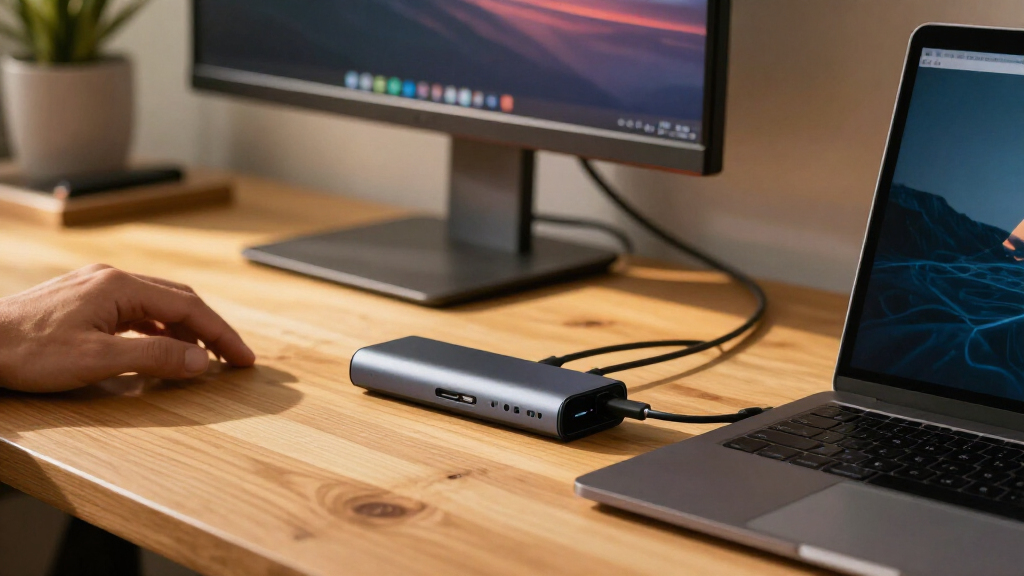

USB-C docking stations can add displays, charging, and desktop ports through one connection, but the right choice depends on your laptop’s capabilities and how many peripherals you need. I’d make the Anker Prime 14-in-1 my best overall pick for its broad feature set, while the Dell WD25 stands out for a work-focused setup and the Anker Nano 8-in-1 for a smaller, more portable one. The main tradeoffs are port variety versus size, the number of screens versus compatibility, and charging capacity versus the power your laptop requires. A dock’s advertised display support does not guarantee the same results on every computer, especially across operating systems. Read on for the full breakdown, buying advice, and picks for different desk setups.

Get the latest gadgets delivered free with Prime
- Fast, free delivery on millions of items
- Prime Video, Amazon Music and more included
- Member-only deals all year
Complete the kit



Key Takeaways
The Anker Prime 14-in-1 earns the overall lead by combining a wide range of connections with dual-monitor support, making it a more flexible desk hub than compact options.
The lineup splits between portable hubs, such as the Anker Nano 8-in-1 and PowerExpand 8-in-1, and fuller docking stations designed to stay connected to a desk.
More display ports do not guarantee more usable screens; laptop graphics, USB-C features, and operating-system support can limit the actual setup.
The Dell WD25 is a practical fit for business laptops and a straightforward desk connection, while multi-brand docks offer broader port mixes but call for closer compatibility checks.
Models with VGA, DisplayPort, and HDMI, including the HoDo and LIONWEI, address older or mixed-monitor setups that newer, simpler docks may not handle as neatly.
| Anker Nano 8-in-1 USB-C Hub with Dual HDMI |  | Best Compact Pick | Ports: 8 | Video: 2 HDMI ports; up to dual 4K at 60Hz on compatible Windows devices | Laptop pass-through charging: Up to 85W | VIEW LATEST PRICE | See Our Full Breakdown |
| Dell Pro Laptop Docking Station WD25, USB-C, 100W, DisplayPort, HDMI |  | Best for Business Desks | Total ports: 10 | USB ports: 6 | Laptop power delivery: Up to 100W | VIEW LATEST PRICE | See Our Full Breakdown |
| Anker Prime 14-in-1 Laptop Docking Station with Dual Monitor Support |  | Best for Multi-Device Charging | Ports: 14-in-1 | Total power output: 160W | USB-C charging: Up to 100W per port across 3 ports | VIEW LATEST PRICE | See Our Full Breakdown |
| UGREEN 7-in-1 USB-C Docking Station with Dual HDMI |  | Best for Fast USB Data | Ports: 7: 2 HDMI, 2 USB-A, 2 USB-C data, and 1 USB-C PD | Video: Dual 4K at 60Hz on compatible DP 1.4 laptops | USB data transfer: Up to 10 Gbps | VIEW LATEST PRICE | See Our Full Breakdown |
| MOKiN 14-in-1 USB-C Laptop Docking Station |  | Best for Broad Video Connectivity | Ports: 14 | Video outputs: 2 HDMI and 2 DisplayPort | USB ports: 2 USB-C 3.0, 1 USB-A 3.0, and 2 USB-A 2.0 | VIEW LATEST PRICE | See Our Full Breakdown |
| UGREEN USB C Docking Station Dual Monitor, 10-in-1 Laptop Dock with 2 HDMI |  | Best for High-Refresh Dual 4K Displays | Total ports: 10 | HDMI: 2; dual 4K at 60Hz or single 8K at 30Hz | USB data: USB-C up to 5Gbps, 1 USB-A 3.0, and 2 USB-A 2.0 | VIEW LATEST PRICE | See Our Full Breakdown |
| UANTIN 10-in-1 USB-C Docking Station with Dual HDMI |  | Best for Everyday Windows Setups | Total ports: 10 | HDMI: 2 ports, up to 4K at 30Hz | USB-C data: 2 ports, up to 5Gbps; data only | VIEW LATEST PRICE | See Our Full Breakdown |
| Anker Nano 13-in-1 Laptop Docking Station with Detachable 6-in-1 USB-C Hub |  | Best for Desk-to-Travel Flexibility | Total ports: 13 | Display outputs: 2 HDMI and 1 DisplayPort | Display modes: Single 4K at 60Hz, dual 2K at 60Hz, or triple 1080p at 60Hz | VIEW LATEST PRICE | See Our Full Breakdown |
| Anker Laptop Docking Station, 13-in-1 USB C Docking Station, Triple Display |  | Best for a Permanent Windows Workstation | Total ports: 13 | Video outputs: 2 HDMI and 1 DisplayPort | Display support: Up to three 1080p at 60Hz; single 4K at 60Hz | VIEW LATEST PRICE | See Our Full Breakdown |
| Anker PowerExpand 8-in-1 USB-C Hub with Dual HDMI |  | Best Compact Dual-Display Hub | Total connections: 8 | HDMI: 2 ports; one display up to 4K at 60Hz or two up to 4K at 30Hz | USB-A: 2 data ports | VIEW LATEST PRICE | See Our Full Breakdown |
| LIONWEI 13-in-1 USB-C Docking Station with Dual HDMI and DisplayPort |  | Best for Windows Multi-Monitor Setups | Total ports: 13 | Video outputs: 2 HDMI and 1 DisplayPort | Maximum display resolution: 4K at 60 Hz | VIEW LATEST PRICE | See Our Full Breakdown |
| Acer 13-in-1 USB-C Docking Station with Triple Display Support |  | Best for Card Readers and a Powered Desk Setup | Port selection: 2 HDMI, 1 DisplayPort 1.4, 4 USB-C including host connection, 3 USB-A, Gigabit Ethernet, 3.5 mm AUX, SD and TF readers | Included power adapter: 110 W | Laptop charging: Up to 100 W USB-C PD | VIEW LATEST PRICE | See Our Full Breakdown |
| HoDo USB-C Docking Station with Dual 4K HDMI, DisplayPort, VGA, and 100W PD Charging |  | Best Compact Pick for Older Displays | Total ports: 8 | Video outputs: 2 HDMI, 1 DisplayPort, and 1 VGA | Video resolution: HDMI and DisplayPort up to 4K; VGA up to 1080p; VGA use limits all displays to 1080p | VIEW LATEST PRICE | See Our Full Breakdown |
| USB-C docking station | Compatibility | Total ports |
|---|---|---|
| Anker Nano 8-in-1 USB-C Hub wi | Windows 10/11, ChromeOS, and macOS; Linux not supported | — |
| Dell Pro Laptop Docking Statio | Windows 10/11, Ubuntu 24.04, Red Hat Enterprise Linux 9.6+, and ChromeOS 137 | 10 |
| Anker Prime 14-in-1 Laptop Doc | Windows 10/11, ChromeOS, and macOS; USB-C, USB4, and Thunderbolt | — |
| UGREEN 7-in-1 USB-C Docking St | Full-function USB-C or Thunderbolt 3/4 laptops | — |
| MOKiN 14-in-1 USB-C Laptop Doc | — | — |
| UGREEN USB C Docking Station D | — | 10 |
| UANTIN 10-in-1 USB-C Docking S | USB-C and Thunderbolt 3, 4, and 5 laptops | 10 |
| Anker Nano 13-in-1 Laptop Dock | USB-C and Thunderbolt 3, 4, and 5; Windows 10 or later and macOS | 13 |
| Anker Laptop Docking Station | — | 13 |
| Anker PowerExpand 8-in-1 USB-C | USB-C, USB4, and Thunderbolt; Windows 10/11 and ChromeOS | — |
| LIONWEI 13-in-1 USB-C Docking | Windows and macOS; multi-display support varies by operating system | 13 |
| Acer 13-in-1 USB-C Docking Sta | — | — |
| HoDo USB-C Docking Station wit | — | 8 |
More Details on Our Top Picks
Anker Nano 8-in-1 USB-C Hub with Dual HDMI
The Anker Nano 8-in-1 is the portable choice here: at 3.84 ounces, it adds dual HDMI, card readers, and fast USB data without the bulk of the Anker Prime 14-in-1. On compatible Windows laptops, its two HDMI outputs can drive dual 4K displays at 60Hz, while up to 85W pass-through charging helps keep a laptop powered through the hub. SD and TF slots are useful for photographers who want to offload cards without another adapter. The tradeoff is display behavior: macOS mirrors the external screens rather than extending them, and Linux is unsupported. The power adapter and cable needed for full charging are also not included, so I’d choose it for portability, not as a complete desk setup.
Pros:- Lightweight 3.84-ounce design is easy to carry between workspaces.
- Supports dual 4K at 60Hz on compatible Windows devices.
- USB data ports reach speeds up to 10 Gbps.
- Includes SD and TF card slots alongside up to 85W laptop pass-through.
Cons:- macOS mirrors the same content across external displays.
- Linux is not supported.
- Charger and cable for full pass-through charging are not included.
Best for: Windows laptop users who travel with a compact hub and need dual 4K displays, card readers, and laptop pass-through charging.
Not ideal for: Linux users or Mac owners who need separate content on two external monitors; the hub does not support Linux, and macOS mirrors its external displays.
- Ports:8
- Video:2 HDMI ports; up to dual 4K at 60Hz on compatible Windows devices
- Laptop pass-through charging:Up to 85W
- USB-C PD input:Up to 100W
- USB data transfer:Up to 10 Gbps
- Card readers:SD and TF 3.0, up to 104 MB/s
- Compatibility:Windows 10/11, ChromeOS, and macOS; Linux not supported
- Dimensions and weight:7.87 × 4.13 × 0.79 in; 3.84 oz
Our verdict“Choose the Anker Nano if you want a lightweight Windows-focused hub with dual 4K output and card readers, and can live with its OS and charging limitations.”
Dell Pro Laptop Docking Station WD25, USB-C, 100W, DisplayPort, HDMI
The Dell Pro WD25 suits a permanent workstation better than the compact Anker Nano: it pairs up to 100W laptop charging with Ethernet, DisplayPort, HDMI, and a broad mix of USB connections. Dell lists support for up to four high-resolution displays, making this the more workstation-oriented pick for users who need several screens and wired networking. Its compatibility list also includes Windows, ChromeOS, Ubuntu, and Red Hat Enterprise Linux, a useful distinction from the Windows-focused dual-display strengths of the UGREEN 7-in-1. The WD25 is heavier at 1.2 pounds, and its large port selection may be more than a casual user needs. Dell’s listed 130W wattage also differs from the stated 100W laptop power delivery, so I’d check the exact power requirement of the laptop before buying.
Pros:- Provides up to 100W power delivery for a connected laptop.
- Supports up to four high-resolution external displays.
- Includes DisplayPort, HDMI, Ethernet, and six USB ports.
- Lists compatibility with Windows, Ubuntu, Red Hat Enterprise Linux, and ChromeOS.
Cons:- The listed 130W wattage and stated 100W laptop power delivery may be confusing.
- At 1.2 pounds, it is less suited to regular travel than compact hubs such as the Anker Nano.
- Its many ports may be unnecessary for users with simple connection needs.
Best for: Office and enterprise laptop users who want a desk-based dock with Ethernet, up to 100W laptop charging, and support for multiple displays.
Not ideal for: Travelers seeking a lightweight hub or casual users who only need a few connections; the 1.2-pound dock and extensive port selection are better suited to a fixed desk.
- Total ports:10
- USB ports:6
- Laptop power delivery:Up to 100W
- Video connections:DisplayPort and HDMI; supports up to four high-resolution displays
- Wattage listed:130W
- Compatibility:Windows 10/11, Ubuntu 24.04, Red Hat Enterprise Linux 9.6+, and ChromeOS 137
- Dimensions:8.07 × 3.54 × 1.39 in
- Weight and warranty:1.2 lb; 3-year limited hardware warranty with Advanced Exchange
Our verdict“Pick the Dell WD25 for a fixed business workstation that needs Ethernet, broad OS support, and several display connections, rather than a portable setup.”
Anker Prime 14-in-1 Laptop Docking Station with Dual Monitor Support
The Anker Prime 14-in-1 stands out for powering several devices from one desk dock: its 160W total output can charge up to four devices, with up to 100W available from each of three USB-C charging ports. That makes it a stronger fit for a laptop-and-accessories setup than the Anker Nano 8-in-1, which prioritizes compactness and card reading over charging capacity. The Prime also offers 14 connections and data speeds up to 10 Gbps, but its dual HDMI display support is more limited than the broad multi-display arrangement of the Dell WD25. Resolution depends on the laptop’s DisplayPort version, and macOS mirrors external screens. At 1.28 kg, it is a substantial desk accessory, and Linux support and 5120×1440 monitor support are absent.
Pros:- 160W total output supports charging up to four devices simultaneously.
- Three USB-C charging ports provide up to 100W per port.
- Offers 14 connections and data transfer up to 10 Gbps.
- Works with Windows, ChromeOS, and macOS laptops using USB-C, USB4, or Thunderbolt.
Cons:- macOS external displays show mirrored content rather than separate desktops.
- Does not support 5120×1440 resolution monitors.
- Linux is not supported, and the 1.28 kg build is cumbersome for travel.
Best for: Desk users who charge a laptop and several accessories at once and want a broad USB-C port selection with dual HDMI outputs.
Not ideal for: Linux users, owners of 5120×1440 monitors, or Mac users who need independent extended displays; this dock also weighs more than a travel hub.
- Ports:14-in-1
- Total power output:160W
- USB-C charging:Up to 100W per port across 3 ports
- USB-A charging:Up to 12W on 1 port
- Data transfer:Up to 10 Gbps
- Display outputs:Dual HDMI; up to 2K at 60Hz with DP 1.4 or 1080p at 60Hz with DP 1.2
- Compatibility:Windows 10/11, ChromeOS, and macOS; USB-C, USB4, and Thunderbolt
- Weight and material:1.28 kg; plastic
Our verdict“Choose the Anker Prime for a busy desk that needs high combined charging capacity, but skip it if you need Linux support or independent Mac displays.”
UGREEN 7-in-1 USB-C Docking Station with Dual HDMI
The UGREEN 7-in-1 keeps its purpose focused: dual HDMI, four USB data ports rated up to 10 Gbps, and USB-C power delivery in a compact 91-gram aluminum body. Compared with the MOKiN 14-in-1, it gives up Ethernet, card readers, and extra video outputs, but its faster listed USB data rate and lighter form make it a cleaner choice for a laptop user who mainly needs monitors and peripherals. Compatible systems can run dual 4K displays at 60Hz, though the host laptop must support DP 1.4. Mac users get mirrored images on both external screens, not separate desktops. The USB data ports also do not carry charging, video, or audio, and the power adapter and cable are absent, so this is a hub for focused expansion rather than a fully equipped workstation.
Pros:- Supports dual 4K at 60Hz on compatible DP 1.4 systems.
- Four USB-A and USB-C data ports support speeds up to 10 Gbps.
- Lightweight 91-gram aluminum construction.
- USB-C power delivery supports up to 100W.
Cons:- macOS mirrors the same content on both external monitors.
- Charging adapter and cable are not included.
- USB data ports do not support charging, video, or audio transfer.
Best for: Laptop users with a DP 1.4-capable USB-C or Thunderbolt 3/4 connection who need dual 4K monitors and fast USB data in a light dock.
Not ideal for: Mac users who need separate extended displays, or buyers who want Ethernet, card readers, or video and audio through the USB data ports.
- Ports:7: 2 HDMI, 2 USB-A, 2 USB-C data, and 1 USB-C PD
- Video:Dual 4K at 60Hz on compatible DP 1.4 laptops
- USB data transfer:Up to 10 Gbps
- Power delivery:Up to 100W
- Compatibility:Full-function USB-C or Thunderbolt 3/4 laptops
- Weight:91 g
- Color:Black or grey
- Warranty:2 years
Our verdict“Pick the UGREEN for a light, focused dual-monitor setup with fast USB data, and choose a larger dock if Ethernet or card readers matter.”
MOKiN 14-in-1 USB-C Laptop Docking Station
The MOKiN 14-in-1 is the lineup’s connection-heavy option for buyers who need HDMI and DisplayPort together, plus Ethernet and card readers. Its four video outputs give it a different appeal from the dual-HDMI UGREEN 7-in-1, while gigabit Ethernet and SD/microSD slots reduce the need for separate adapters. A screen-lock button is another practical touch for quickly blanking connected displays. The tradeoff is that its USB data rate tops out at 5 Gbps, below the UGREEN’s 10 Gbps, and the 100W power adapter is not included. Laptop compatibility depends on a Thunderbolt 3/4 or full-function USB-C port. On macOS, external screens mirror the same image, so despite the number of video connectors, it is not the pick for Mac users seeking multiple independent desktops.
Pros:- Combines two HDMI and two DisplayPort video outputs.
- Includes 1000 Mbps Ethernet and SD and microSD card readers.
- Supports up to 100W USB-C Power Delivery passthrough.
- Screen-lock button can turn off connected screens.
Cons:- macOS external displays are limited to mirrored output.
- USB data transfer is limited to 5 Gbps.
- A 100W power adapter is not included, and the laptop needs a compatible full-function USB-C or Thunderbolt port.
Best for: Windows laptop owners who need several HDMI and DisplayPort connections, wired gigabit networking, and SD or microSD card access from one dock.
Not ideal for: Mac users who need extended desktops across external monitors, or buyers who expect fast 10 Gbps USB data and an included 100W power adapter.
- Ports:14
- Video outputs:2 HDMI and 2 DisplayPort
- USB ports:2 USB-C 3.0, 1 USB-A 3.0, and 2 USB-A 2.0
- Card readers:SD and microSD
- Ethernet:1000 Mbps RJ45
- USB data transfer:Up to 5 Gbps
- Power delivery:Up to 100W; charger not included
- Compatibility and display mode:Thunderbolt 3/4 or full-function USB-C; Windows 10 or later and macOS; macOS mirrors external displays
Our verdict“Choose the MOKiN if your Windows desk needs a mix of display connectors, Ethernet, and card readers, but not if fast USB data or independent Mac displays are priorities.”
UGREEN USB C Docking Station Dual Monitor, 10-in-1 Laptop Dock with 2 HDMI
I’d put this UGREEN ahead of the UANTIN 10-in-1 for buyers who want sharper, smoother dual-monitor output: it supports two displays at up to 4K at 60Hz, while the UANTIN tops out at 4K at 30Hz. It also adds Gigabit Ethernet, card readers, and a 5Gbps USB-C data port, making it a capable one-cable desk connection for compatible Windows laptops. The 100W PD input can deliver up to 85W to the laptop, with the remainder reserved for dock operation. Its main compromise is platform behavior: macOS mirrors the external displays rather than extending them. Also, the USB-C PD port is for charging only, and the data ports don’t provide charging or video. Compared with Anker’s 13-in-1 dock, this is a more compact display-focused option with fewer workstation connections.
Pros:- Supports dual HDMI displays up to 4K at 60Hz
- Combines Gigabit Ethernet with SD and microSD readers
- Delivers up to 85W laptop charging from a 100W PD input
- Compact 100 g body with USB-C and USB-A data ports
Cons:- macOS mirrors the external displays instead of extending them
- USB-C PD port supports charging only; data ports do not charge devices
- USB data transfer is limited to 5Gbps
Best for: Windows laptop owners who want two 4K monitors at 60Hz, wired networking, and card-reader access from a compact dock.
Not ideal for: Mac users who need separate images on two external displays, or buyers who want USB ports that charge devices.
- Total ports:10
- HDMI:2; dual 4K at 60Hz or single 8K at 30Hz
- USB data:USB-C up to 5Gbps, 1 USB-A 3.0, and 2 USB-A 2.0
- Power delivery:100W input; up to 85W to laptop
- Networking:Gigabit Ethernet
- Card readers:SD and microSD
- Dimensions:4.49 × 1.75 × 0.63 in
- Weight:100 g
Our verdict“Choose this UGREEN if dual 4K at 60Hz matters more than extra workstation ports or independent dual displays on macOS.”
UANTIN 10-in-1 USB-C Docking Station with Dual HDMI
The UANTIN is a straightforward way to add dual HDMI, charging, card readers, and everyday USB ports without a separate driver setup. Windows users can extend across two external screens, though the 4K ceiling is 30Hz on each HDMI connection; that makes it less suited to fast-moving content than the UGREEN dual-monitor dock, which supports 4K at 60Hz. For office work, browsing, and reference screens, 30Hz may be an acceptable trade for a compact hub with a braided cable and aluminum body. Its USB-C data ports transfer files but cannot charge accessories or carry video, so they don’t replace every laptop connection. Like several docks in this roundup, including the Anker PowerExpand 8-in-1, it mirrors external displays on macOS rather than extending them.
Pros:- Windows supports extended output across two HDMI displays
- Adds SD and microSD card slots alongside USB-A and USB-C data
- Pass-through charging supplies up to 85W to the laptop
- Aluminum body, braided cable, and driver-free setup
Cons:- Dual HDMI output is limited to 4K at 30Hz
- macOS mirrors the two external displays
- USB-C data ports do not provide charging or video output
Best for: Windows laptop users who need two external screens for office tasks, plus card slots and pass-through charging in a plug-and-play dock.
Not ideal for: Mac users needing independent external desktops or anyone who wants dual 4K displays at 60Hz.
- Total ports:10
- HDMI:2 ports, up to 4K at 30Hz
- USB-C data:2 ports, up to 5Gbps; data only
- USB-A:1 USB 3.0 port up to 5Gbps and 2 USB 2.0 ports
- Power delivery:Up to 100W input; up to 85W to laptop
- Card slots:SD and microSD
- Cable length:30 cm (0.98 ft)
- Compatibility:USB-C and Thunderbolt 3, 4, and 5 laptops
Our verdict“Pick the UANTIN for a tidy Windows office setup where broad connectivity matters more than high-refresh dual 4K output.”
Anker Nano 13-in-1 Laptop Docking Station with Detachable 6-in-1 USB-C Hub
The defining advantage here is the detachable 6-in-1 hub: keep the 13-port dock at a desk, then take the smaller hub along when a full setup would be cumbersome. That flexibility sets it apart from the Anker 13-in-1 triple-display dock, which is designed as a fixed desktop station rather than a travel-and-desk combination. The Nano supports up to three external displays, with modes ranging from single 4K at 60Hz to triple 1080p at 60Hz, and it offers up to 100W laptop charging plus 10Gbps data. The tradeoff is that higher display counts mean lower resolution, and macOS mirrors external screens. The dock also requires a connected laptop to activate its ports, so it isn’t a standalone charging or peripheral hub when the computer is away.
Pros:- Detachable 6-in-1 hub supports a more portable setup
- Supports up to three external displays with several resolution modes
- Provides up to 100W laptop charging and 10Gbps data
- Includes a 140W power adapter and USB-C cable
Cons:- macOS external displays are mirrored
- Triple-display mode is limited to 1080p at 60Hz
- Dock ports require a connected laptop to activate
Best for: Hybrid workers who want a full desk dock at home or work and a detachable hub for occasional travel.
Not ideal for: Mac users who need extended external desktops, or buyers seeking a dock that powers its ports without a connected laptop.
- Total ports:13
- Display outputs:2 HDMI and 1 DisplayPort
- Display modes:Single 4K at 60Hz, dual 2K at 60Hz, or triple 1080p at 60Hz
- Maximum charging power:100W
- Maximum data rate:10Gbps
- Connectivity:USB-C, USB-A, Gigabit Ethernet, 3.5mm audio, SD and TF
- Compatibility:USB-C and Thunderbolt 3, 4, and 5; Windows 10 or later and macOS
- Included power adapter:140W
Our verdict“Choose the Anker Nano if you want one USB-C setup that can serve both a multi-display desk and a lighter travel kit.”
Anker Laptop Docking Station, 13-in-1 USB C Docking Station, Triple Display
This Anker is the more workstation-oriented choice here: its 13-port layout includes DisplayPort, two HDMI outputs, multiple USB-C and USB-A connections, Ethernet, audio, and card readers. Windows users can run up to three external monitors at 1080p at 60Hz, which favors a broad desktop workspace over the higher-resolution dual-monitor setup offered by the UGREEN USB C Docking Station. A 135W adapter is included, and the dock can send up to 85W to the laptop while a separate USB-C PD port supplies up to 18W to a phone. That makes it a useful fixed desk hub, but less appealing if you mainly need a small travel connection. Triple-display expansion is limited to Windows and ChromeOS; macOS mirrors external displays, and its single-display 4K mode is the better fit for high-resolution work.
Pros:- Three external displays supported at up to 1080p at 60Hz on Windows
- Includes HDMI, DisplayPort, USB-C, USB-A, Ethernet, audio, and card readers
- Supplies up to 85W to a laptop and up to 18W to a phone
- Includes a 135W power adapter
Cons:- macOS mirrors the external displays rather than extending them
- Triple-display mode is limited to 1080p at 60Hz
- Larger and heavier than compact hubs such as the Anker PowerExpand 8-in-1
Best for: Windows or ChromeOS users building a permanent desk setup with several monitors, wired networking, and charging for a laptop and phone.
Not ideal for: Mac users who require extended external displays, or buyers who prioritize a compact travel hub and high-resolution triple-monitor output.
- Total ports:13
- Video outputs:2 HDMI and 1 DisplayPort
- Display support:Up to three 1080p at 60Hz; single 4K at 60Hz
- Laptop charging:Up to 85W
- Additional USB-C power:Up to 18W
- USB data:USB-C up to 10Gbps and USB-A up to 5Gbps
- Networking and card readers:Gigabit Ethernet, SD, and microSD
- Included power adapter:135W
- Dimensions and weight:4.9 × 3.5 × 1.6 in; 13.1 oz
Our verdict“Choose this Anker for a Windows or ChromeOS desk that needs many connections and three 1080p screens from one dock.”
Anker PowerExpand 8-in-1 USB-C Hub with Dual HDMI
The PowerExpand is the simplest fit for buyers who want display connections without moving up to a full 13-port workstation dock. It packs dual HDMI, Ethernet, two USB-A data ports, and SD and microSD readers into an 8-in-1 hub, with pass-through charging up to 85W. One external screen can run at 4K at 60Hz; using both HDMI outputs lowers the limit to 4K at 30Hz. That is less flexible for high-refresh dual-monitor work than the UGREEN USB C Docking Station, but the PowerExpand is a compact alternative when an 8-port connection set is enough. It also mirrors external displays on macOS and does not support Linux. Unlike the Anker Nano, it has no detachable travel hub or DisplayPort, and buyers must supply the compatible charger and USB-C cable.
Pros:- Combines dual HDMI, Ethernet, USB-A, and two card readers
- Supports one display at up to 4K at 60Hz
- Provides up to 85W pass-through charging
- Lightweight 3.2-ounce design
Cons:- Dual-display mode is limited to 4K at 30Hz
- Charger and USB-C cable are not included
- Not compatible with Linux, and macOS mirrors external displays
Best for: Windows or ChromeOS laptop users who want a compact hub for one 4K display or two lower-refresh HDMI screens, plus Ethernet and card readers.
Not ideal for: Linux users, Mac users needing extended dual displays, or buyers who need a power adapter and USB-C cable included.
- Total connections:8
- HDMI:2 ports; one display up to 4K at 60Hz or two up to 4K at 30Hz
- USB-A:2 data ports
- Power delivery:Up to 85W pass-through; requires a 100W PD charger and USB-C cable
- Ethernet:1Gbps
- Card readers:SD and microSD
- Compatibility:USB-C, USB4, and Thunderbolt; Windows 10/11 and ChromeOS
- Dimensions and weight:4.65 × 2.01 × 0.69 in; 3.2 oz
Our verdict“Pick the PowerExpand if you want a lightweight, no-frills hub for HDMI, Ethernet, and card access rather than a larger desktop dock.”
LIONWEI 13-in-1 USB-C Docking Station with Dual HDMI and DisplayPort
I’d shortlist the LIONWEI 13-in-1 for a Windows workstation that needs several display connections and a broad selection of everyday ports. Its two HDMI outputs and DisplayPort can support up to three displays on compatible Windows laptops, while Gigabit Ethernet and an audio/mic jack reduce the need for separate adapters. Compared with the HoDo USB-C Docking Station, LIONWEI offers faster data transfer—up to 10 Gbps rather than USB 2.0 speeds—and more USB ports. The tradeoff is its macOS limit of one extended display, so it is a poor fit for Mac users seeking a multi-monitor desktop. It also reserves 13 W of its 100 W power input for the dock, leaving up to 87 W for the laptop. Check your laptop’s video-output support before relying on three screens.
Pros:- Three video outputs support up to three displays on compatible Windows laptops.
- Up to 10 Gbps data transfer is faster than the HoDo model’s USB 2.0 connections.
- Gigabit Ethernet and a 3.5 mm audio/mic jack cover useful desk connections.
- Provides up to 87 W of laptop charging from a 100 W power-delivery input.
Cons:- macOS supports only one extended monitor.
- The dock uses 13 W of the 100 W power-delivery capacity, limiting laptop charging to 87 W.
Best for: Windows laptop owners building a multi-monitor desk who also need fast USB data, wired networking, and a headset jack.
Not ideal for: Mac users who want multiple independent extended displays, or laptop owners who need the full 100 W available for charging.
- Total ports:13
- Video outputs:2 HDMI and 1 DisplayPort
- Maximum display resolution:4K at 60 Hz
- USB ports:8 total
- Data transfer rate:Up to 10 Gbps
- Laptop charging:Up to 87 W from 100 W power delivery
- Networking and audio:Gigabit Ethernet; 3.5 mm audio/mic jack
- Weight:140 g
- Compatibility:Windows and macOS; multi-display support varies by operating system
Our verdict“Choose LIONWEI for a Windows desk with multiple monitors and varied peripherals, but skip it if you need multi-display extension on macOS.”
Acer 13-in-1 USB-C Docking Station with Triple Display Support
The Acer 13-in-1 suits a Windows desk where card access and a ready-to-use power supply matter alongside extra screens. It includes SD and TF card readers—connections missing from the LIONWEI dock’s listed ports—and comes with a 110 W adapter that can deliver up to 100 W to a laptop. Its HDMI and DisplayPort outputs support up to three independent displays on compatible Windows systems, but triple 4K at 30 Hz depends on a host that supports DSC. That host requirement makes the display setup less plug-and-play than the simpler expectations some buyers may have. Mac users should also take note: multiple connected screens mirror rather than extend the desktop. The rear USB-C port is data-only, so it cannot serve as another video output or charge devices. I’d pick Acer over LIONWEI when card readers and included power are priorities, not when macOS screen extension is the goal.
Pros:- SD and TF card readers add convenient media-transfer connections.
- Included 110 W adapter supports up to 100 W laptop charging.
- Can drive three independent displays on compatible Windows laptops.
- Aluminum body and integrated security slot suit a permanent desk setup.
Cons:- Multiple external displays mirror on macOS rather than extending the desktop.
- Triple 4K output at 30 Hz requires a compatible DSC-enabled host.
- Rear USB-C port is data-only and cannot output video or charge devices.
Best for: Windows laptop users who regularly transfer files from SD or TF cards and want an included power adapter for a multi-display desk.
Not ideal for: Mac users who need independent desktops across several external monitors, or buyers expecting triple 4K without checking host DSC support.
- Port selection:2 HDMI, 1 DisplayPort 1.4, 4 USB-C including host connection, 3 USB-A, Gigabit Ethernet, 3.5 mm AUX, SD and TF readers
- Included power adapter:110 W
- Laptop charging:Up to 100 W USB-C PD
- Windows display support:Up to three independent displays on compatible laptops
- Triple 4K condition:At 30 Hz; requires a DSC-enabled host
- macOS display mode:Mirroring across multiple displays
- Body:Aluminum with integrated security slot
- Included cable:USB4 Type-C cable
Our verdict“Choose Acer for a Windows workstation that needs card readers, included power, and several displays, provided your laptop supports the desired video mode.”
HoDo USB-C Docking Station with Dual 4K HDMI, DisplayPort, VGA, and 100W PD Charging
The HoDo USB-C Docking Station is the lineup’s compact choice for buyers who need VGA alongside HDMI and DisplayPort. That legacy output can help connect an older projector or monitor without a separate converter, while its light 130 g design is easy to carry between desks. Compared with the LIONWEI, however, HoDo has just three USB ports, and they are USB 2.0 with transfer speeds up to 480 Mbps. That is suitable for basic peripherals such as a keyboard or mouse, but a poor match for frequent large-file transfers. Its display claims also need a close read: connecting VGA limits all displays to 1080p, and the dock requires a full-featured USB-C port with DisplayPort Alt Mode. The 100 W input provides up to 87 W to the laptop, but the power adapter is not included.
Pros:- VGA joins two HDMI ports and DisplayPort for compatibility with older and newer screens.
- Compact 130 g body is suited to carrying between work locations.
- 100 W power-delivery input provides up to 87 W of laptop charging.
- Compatible with Windows, Mac OS, and Chrome OS devices that support DisplayPort Alt Mode.
Cons:- Three USB 2.0 ports are limited to 480 Mbps, making them slow for storage transfers.
- Using VGA limits all connected displays to 1080p.
- Power adapter is not included.
Best for: Traveling presenters and office workers who need VGA for older projectors, plus HDMI or DisplayPort for newer screens.
Not ideal for: Users who move large files through dock-connected USB devices, need high-resolution output while using VGA, or expect an included power adapter.
- Total ports:8
- Video outputs:2 HDMI, 1 DisplayPort, and 1 VGA
- Video resolution:HDMI and DisplayPort up to 4K; VGA up to 1080p; VGA use limits all displays to 1080p
- USB ports:3 USB 2.0
- Data transfer rate:Up to 480 Mbps
- Power delivery:100 W input; up to 87 W output
- Weight:130 g
- Compatibility requirement:USB-C port must support DisplayPort Alternate Mode
- Compatible systems:Windows, Mac OS, and Chrome OS
Our verdict“Pick HoDo if portability and VGA compatibility matter more than fast USB transfers, high-resolution VGA use, or an included charger.”

How We Picked
I compared these 13 USB-C docking stations by the problems they solve at a desk: how they connect displays, whether they provide useful peripheral ports, how they handle laptop charging, and whether their layout suits a fixed or mobile setup. I gave more weight to clear, useful versatility than to a large port count alone. A compact hub can be the better choice for travel, while a desk-based dock earns its place through broader connectivity and fewer daily cable swaps.
The ranking reflects the balance between capability and practical fit, with display compatibility and charging needs treated as limits buyers should verify rather than assume. I also considered whether a product has a distinct role: the Dell is aimed at a business-oriented setup, the detachable Anker Nano offers a modular approach, and legacy-video options suit older monitors. Since the same dock can behave differently across laptops and operating systems, I favor recommendations with a clear use case and call out where buyers should check their computer’s specifications before choosing.
Factors to Consider When Choosing USB-C Docking Stations
Before choosing among these docks, I’d start with the laptop and monitors you already own, not the number printed in a product name. A dock is only useful when its connections match the computer’s capabilities and your routine. These factors can help narrow the field without paying for ports or display support you cannot use.
Check What Your Laptop’s USB-C Port Can Do
USB-C describes the connector shape, not a guaranteed set of features. Some laptop ports support video output and charging, while others handle data only or offer limited display capability. Check the laptop manual or manufacturer specifications for DisplayPort Alt Mode, Thunderbolt, or USB4 support before buying a dock. This step matters most when you plan to connect an external monitor or charge through the same cable. A dock cannot add video output that the laptop’s port does not provide. When several people will share the dock, confirm compatibility for every computer rather than relying on one machine’s results.
Match Display Support to Your Actual Monitor Setup
Count the screens you plan to use and note their resolution and refresh rate, then compare those needs with both the dock and laptop specifications. A dock with multiple HDMI ports may still depend on the computer’s graphics hardware and operating system to drive more than one external display. Some systems also mirror screens where a buyer expects separate desktops. Check whether a dock uses DisplayLink if its multi-screen function depends on that technology, since it may require software and may not suit every workflow. Avoid choosing by “triple display” wording alone; confirm the exact configuration supported by your laptop. For a single monitor, a simpler hub may save space and avoid unused connections.
Choose Charging Capacity for the Laptop, Not the Dock Label
Compare the dock’s stated power delivery with the wattage your laptop needs under normal work conditions. A lower-power dock may charge a lightweight notebook adequately but may charge a demanding laptop slowly or struggle to keep its battery level during heavy use. Also check whether the power adapter is included, since some docks rely on a separate charger or the laptop’s own USB-C adapter. Keep the laptop’s original charger in mind if the dock’s output does not meet its requirements. Power delivery to accessories and power delivery to the host computer are not interchangeable claims. Paying for higher output makes sense only when your laptop can accept it and your workload calls for it.
Prioritize the Ports You Will Use Every Day
List your regular connections—such as Ethernet, external storage, a keyboard, a webcam, and displays—before comparing port counts. The number of ports can hide a poor fit if the dock lacks the connection you need or places it awkwardly for your desk. Older monitors may call for VGA or a specific DisplayPort connection, while newer setups may rely mostly on HDMI and USB. Consider whether you need fast data transfer, a wired network, or a card reader, rather than assuming every USB port serves the same purpose. Leave some room for future devices, but do not pay for an assortment of adapters built into a dock if your setup is already settled. A few well-placed, relevant ports are often easier to live with than a crowded list.
Decide Whether the Dock Lives on a Desk or Travels
A compact hub is easier to pack and can suit a laptop carried between home, office, and meetings. A larger dock may be a better permanent base when you leave monitors, Ethernet, and accessories connected in one place. Think about cable reach, the location of your laptop’s USB-C port, and whether the dock will sit within easy reach. A detachable hub can offer a useful middle ground if you want a desk connection and a smaller piece for travel. More connections often mean a larger unit and more cables, so portability and a full desktop setup can pull in opposite directions. Choose for your normal routine, not an occasional scenario that may never happen.
Check Compatibility Details Before Buying for a Shared Setup
For a personal laptop, compatibility usually means verifying the port, operating system, displays, and charging needs. In a household or workplace, the harder question is whether one dock can serve several laptop brands without changing cables or display settings. Read the dock’s supported operating systems and any requirements for display software, then compare them with each machine. A business-branded option may be convenient within its intended laptop ecosystem, while a broad third-party port selection can suit a mixed-device desk. If you rely on sleep, wake, or security features, check those details with the computer maker’s documentation. A short compatibility check can prevent a dock that connects physically but does not deliver the setup you expected.
Frequently Asked Questions
Will a USB-C docking station run two monitors from any laptop?
No. The laptop’s USB-C port, graphics hardware, and operating system all affect the number of external displays it can drive. Check the computer maker’s specifications for supported display outputs and resolutions, then compare them with the dock’s requirements. Some multi-monitor docks rely on DisplayLink software, which can have different setup needs from a dock using native video output. Also check whether the screens can operate as separate desktops rather than mirrored images. Confirm the exact laptop-and-monitor combination before relying on a dock for a work setup.
Can I charge my laptop through any USB-C dock?
No. The dock must support power delivery to the host, and its output should meet your laptop’s charging needs. A dock with a lower output may still provide some charging, but it can be slow or insufficient during demanding work. Check whether the dock includes its own power supply or expects you to provide one. Also verify that your laptop accepts charging through the USB-C port you plan to use. If charging is a primary reason for buying a dock, confirm the power requirements in the laptop’s documentation first.
Should I choose a dock with more ports than I need now?
A small amount of spare capacity can be useful if you expect to add a monitor, storage drive, or wired network connection. But a larger port count does not automatically mean better value or a simpler desk. Ports may differ in speed, function, and placement, so check the details rather than counting them. For a travel setup, extra connections can add bulk without helping your routine. For a shared desk, a few spare ports may reduce the need for adapters later. I’d choose based on likely additions, not every possible device you might own.
Is a USB-C hub enough, or do I need a full docking station?
A hub can be a sensible choice if you need a few connections and want something light to carry with a laptop. A fuller docking station makes more sense when a computer stays at a desk and regularly connects to monitors, network equipment, storage, and charging. The distinction is not always clear from product names, so compare the actual ports, power setup, and physical size. Think about how many cables you want to reconnect each day and whether the dock will remain plugged in. If you only need occasional HDMI and USB access, a compact hub may avoid paying for features that will sit unused.
What should I check before using one dock with a work laptop and a personal laptop?
Check that both laptops support the dock’s video connection method and can accept its host charging output. Compare the operating systems and any display software requirements, especially if you want multiple external monitors. Confirm that the dock’s cable and connectors fit both machines without adapters that could limit video or power. Some docks may be more convenient within a particular laptop ecosystem, while others offer a port mix suited to different brands. Test the intended monitor arrangement with each computer if possible before making the dock a permanent shared setup. This avoids assuming that a working connection on one laptop proves compatibility with the other.
Conclusion
For most desk setups, I’d start with the Anker Prime 14-in-1 as the best overall choice because its broad connection mix and dual-monitor support make it the most adaptable pick in this lineup. The Anker Nano 8-in-1 is my best-value-style choice for buyers who want a more portable hub and do not need a full desk dock, while the Dell WD25 is the best fit for a work-focused setup that matches its supported laptop and display needs. Beginners who want a straightforward collection of familiar connections may prefer a compact option such as the UGREEN 7-in-1, after checking its display and charging compatibility. For premium versatility, consider the Anker Prime; for older monitors or a mix of video connections, look at the HoDo or LIONWEI. If portability matters most, pick a smaller Anker hub; if several monitors and legacy connections matter more, choose a fuller dock and verify your laptop can drive the layout.