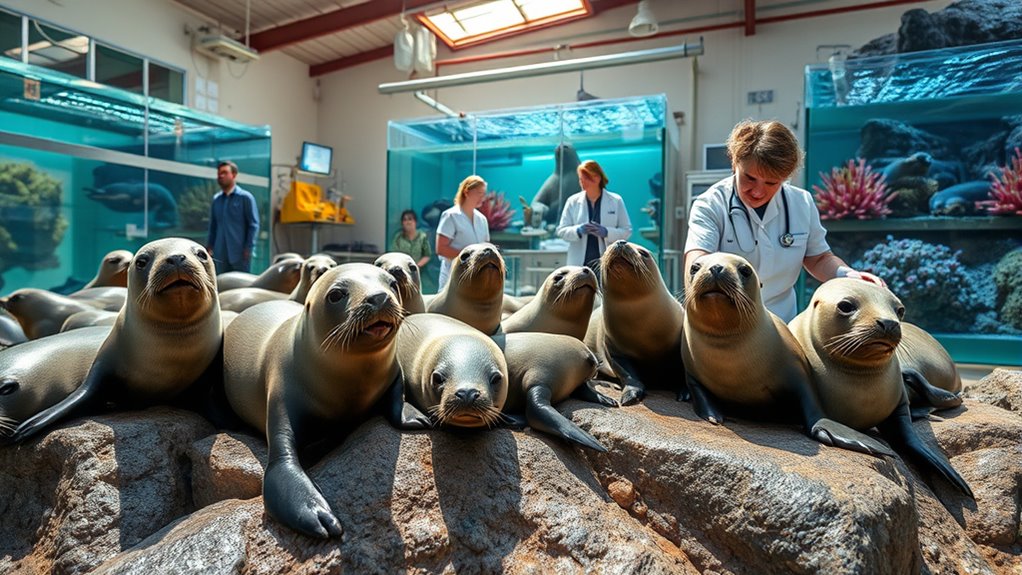

Touring seal rescue centers allows you to see firsthand how they support marine life by rescuing injured or orphaned seals and giving them medical care and rehabilitation. These centers serve as safe havens, helping seals recover and learn essential survival skills before releasing them back into the wild. They also raise awareness about threats like pollution and fishing gear entanglement. If you keep exploring, you’ll discover more about how these centers make a real difference for marine ecosystems.
Key Takeaways
- Seal rescue centers provide immediate care for injured or orphaned seals, helping them recover and return to the wild.
- They conduct medical treatments, surgeries, and rehabilitation to restore seal health and skills essential for survival.
- Centers serve as educational hubs, raising awareness about marine pollution, entanglement, and conservation efforts.
- Data from rescue cases inform broader marine health research, identifying threats like disease outbreaks or environmental hazards.
- They act as sanctuaries for permanently disabled seals, ensuring their well-being while supporting marine ecosystem stability.
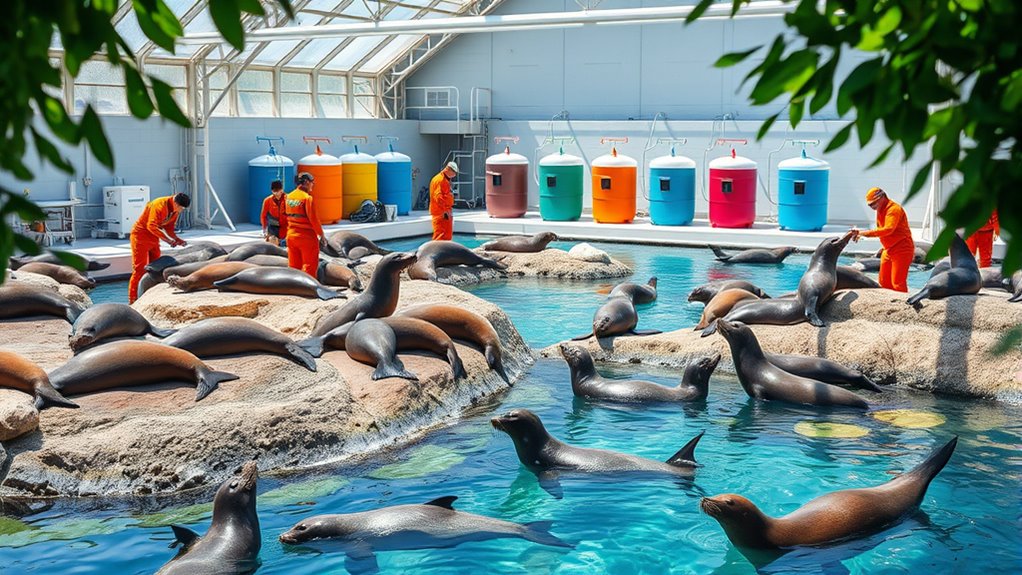
If you’re interested in marine wildlife conservation, touring seal rescue centers offers a firsthand look at how these facilities rescue, treat, and rehabilitate injured or orphaned seals. These centers are essential hubs for maintaining seal health and managing rescue logistics. You’ll see how teams respond swiftly to emergencies, often operating around the clock to save vulnerable marine mammals. Rescue logistics involve coordinated efforts, including mobilizing boats, setting up quarantine pools, and transporting seals safely to specialized treatment areas. The process begins with medical evaluations right upon intake, where staff assess injuries or illnesses to determine the best course of action. Seal health is prioritized through treatments like surgeries, medication, and physical therapy, all carried out in dedicated facilities such as medical tanks or quarantine pools. For seal pups, care is especially intensive—they often rely on hand feeding until they can catch fish on their own, essential for rebuilding their strength and survival skills.
Touring seal rescue centers reveals their swift emergency responses and vital care for injured marine mammals.
As you explore these centers, you’ll understand that each case is unique, requiring tailored protocols based on the species, severity of injuries, and rehabilitation progress. Staff, including veterinarians and animal care experts specializing in marine wildlife, work tirelessly to guarantee each seal receives the best possible care. Some seals, due to permanent disabilities, can’t return to the wild, so centers provide permanent sanctuary, giving them a safe, caring environment for the rest of their lives. Others, once healthy, are released back into their natural habitat, contributing to the stability and genetic diversity of local populations.
Many prominent rescue facilities, such as the Cornish Seal Sanctuary in the UK or the Marine Mammal Center in California, demonstrate the scale and scope of these efforts. These centers not only treat hundreds of seals annually but also serve as educational platforms, raising awareness about threats like pollution, fishing gear entanglement, and climate change. Through tours and outreach programs, you’ll learn how research based on rescue cases informs conservation strategies, emphasizing the importance of protecting marine ecosystems. Volunteer programs and animal adoptions further support these initiatives, helping fund ongoing rescue operations and public engagement. These centers also collaborate with international organizations to improve rescue techniques and share vital data on marine mammal health.
Rescue centers play an indispensable role in reducing marine mammal mortality, especially from human-related threats. Healthy seals aid in maintaining ecological balance, while data gathered during rehabilitation helps identify emerging health threats. Oil spill response and clean-up efforts are critical in minimizing long-term ecological damage. Despite challenges like limited funding, seasonal fluctuations, and the inability to rehabilitate all seals, these centers remain essential for safeguarding marine life. Visiting them not only provides insight into rescue logistics and seal health but also inspires commitment to protecting our oceans and their inhabitants. Additionally, understanding the impact of pollution helps emphasize the importance of preventative conservation measures.
seal rescue center medical kit
As an affiliate, we earn on qualifying purchases.
As an affiliate, we earn on qualifying purchases.
Frequently Asked Questions
How Do Rescue Centers Fund Their Operations?
Rescue centers fund their operations through a mix of donation campaigns and government grants. You can support them by participating in fundraising events or making direct donations, which provide essential ongoing support. Additionally, they apply for government grants from agencies like NOAA, which help cover costs for rescue, rehabilitation, and research. This combination of community generosity and public funding keeps the centers running and able to care for marine life.
What Are the Main Threats to Seals in the Wild?
You face many threats in the wild, including marine pollution, hunting threats, and habitat loss. Marine pollution, like oil spills and microplastics, harms seals physically and chemically. Hunting threats still exist from illegal killings and traditional practices. These dangers disrupt their health, breeding, and survival. Protecting seals requires addressing these threats directly, reducing pollution, enforcing laws against hunting, and conserving their natural habitats for future generations.
Can Visitors Volunteer at Rescue Centers?
Yes, you can volunteer at rescue centers through various volunteer opportunities and visitor programs. These programs often include roles like animal care, educational outreach, and facility maintenance. You’ll typically need to attend an orientation and meet specific requirements, such as a minimum age or hours commitment. Volunteering allows you to directly support marine life, contribute to conservation efforts, and educate others about protecting seals and other marine animals.
How Long Does a Typical Seal Stay in Rehabilitation?
A typical seal stays in rehabilitation for about 2 to 4 months, depending on their seal health and age. Younger pups or those with health issues usually need longer rehab, sometimes up to 16 months, while healthier, older seals may be released sooner. The rehab duration guarantees they recover, develop feeding skills, and regain strength, increasing their chances of successful release back into the wild.
Are Rescue Centers Involved in Seal Conservation Policies?
You might think rescue centers just help seals get back in the water, but actually, they’re real policy players. They actively advocate for seal habitat preservation and boost public awareness, influencing laws to protect marine environments. By sharing data and educating communities, you’re helping shape conservation policies that make certain seals thrive long-term. So, next time you see a rescue center, remember—they’re not just saving seals, they’re shaping the future of marine conservation.
marine animal rehabilitation supplies
As an affiliate, we earn on qualifying purchases.
As an affiliate, we earn on qualifying purchases.
Conclusion
Visiting seal rescue centers is like stepping into a sanctuary where hope is reborn. Imagine a tiny seal pup, cold and hurt, wrapped in warm blankets and surrounded by caring hands—its future now brighter. Every rescue, every release, reminds you that even in the darkest waters, compassion can turn the tide. By supporting these centers, you help turn struggling lives into stories of resilience, inspiring hope in the vast, blue ocean of life.
seal pup hand feeding bottles
As an affiliate, we earn on qualifying purchases.
As an affiliate, we earn on qualifying purchases.
marine animal first aid kit
As an affiliate, we earn on qualifying purchases.
As an affiliate, we earn on qualifying purchases.