
TL;DR

Get the latest gadgets delivered free with Prime
- Fast, free delivery on millions of items
- Prime Video, Amazon Music and more included
- Member-only deals all year
Canadian YouTuber and software engineer Anthony Sistilli says two Peel Regional Police officers came to his home to ask about data from a license-plate camera he built to track police vehicles. The account comes from Sistilli’s YouTube video and has not been independently confirmed by the police department, which had not responded to Gizmodo’s request for comment.
Canadian software engineer and YouTuber Anthony Sistilli says two Peel Regional Police officers visited his home after he built an automated license-plate recognition camera to track police vehicles. The account, described in a YouTube video, has not been confirmed by the department, which had not responded to Gizmodo’s request for comment.
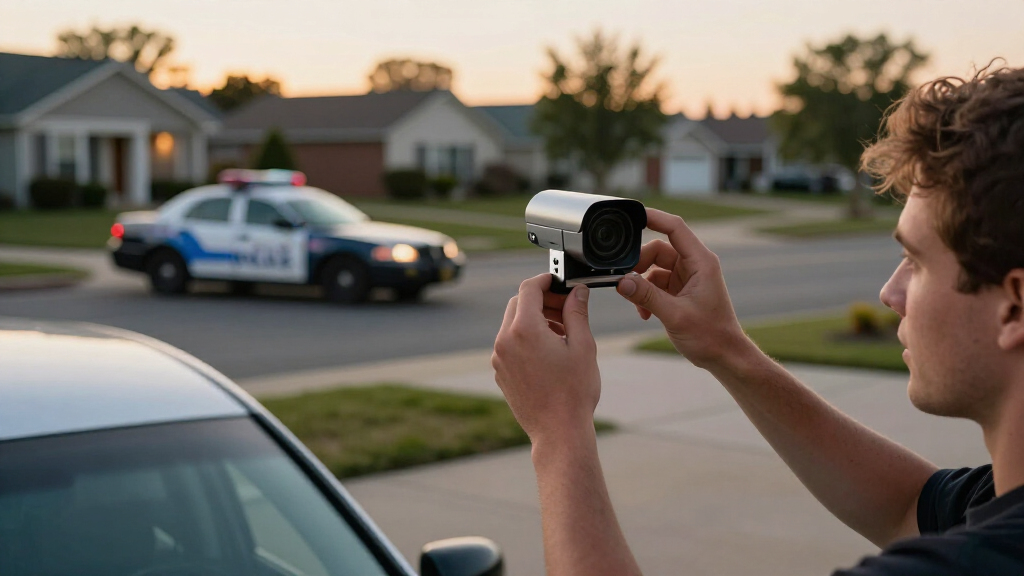
Sistilli, who lives in Brampton, Ontario, said he built his own automatic license-plate recognition, or ALPR, camera about a month before the reported visit. He posted TikTok videos explaining the device and described it as “a personal Flock surveillance camera to Flock the Flockers.” The system was intended to record the movements of police cars, according to Gizmodo’s report.
In a YouTube video posted earlier this week, Sistilli said two officers came to his front door and asked about his “intentions” for the data he had collected. The details available in the report come from Sistilli’s account; it does not establish what the officers said beyond his description or whether police opened an investigation.
Sistilli said one officer described the potential risks of information about officers’ home locations, shifts and daily movements becoming available to others. He said the officer warned that such information could put officers personally at risk. That characterization is Sistilli’s account of the conversation, not a statement from Peel Regional Police.
The Surveillance Double Standard Debate
The episode puts a practical question about license-plate surveillance and public accountability into focus: who can collect vehicle-location data, and how should that data be handled? ALPR cameras can record vehicle plates and locations, creating records that may reveal patterns of movement. Sistilli’s project applies similar technology to police vehicles, while his account of the officers’ concerns highlights the possible personal risks of tracking people over time.
The visit itself is not independently verified in the available reporting, and it does not establish that police objected to the camera or sought to stop its use. Still, the competing concerns described in Sistilli’s video—privacy, safety and scrutiny of public officials—are relevant wherever automated plate-reading systems are deployed. Transparency about collection, access and retention matters because location records can affect both ordinary residents and public employees.
automatic license plate recognition camera
As an affiliate, we earn on qualifying purchases.
As an affiliate, we earn on qualifying purchases.
Brampton’s ALPR Expansion
ALPR systems automatically read vehicle registration plates and can associate those readings with times and locations. Flock Safety is among the companies associated with the technology’s growing use by law enforcement and municipalities. Gizmodo reports that Brampton recently spent C$2 million on high-resolution cameras and ALPR technology; the report does not provide further details about the system’s coverage or data-retention rules.
The technology has faced scrutiny over how collected data is accessed and used. Gizmodo cites reported cases involving alleged misuse, including stalking and harassment. Those broader concerns provide context for Sistilli’s project, but they do not verify the circumstances of the reported police visit or establish that data from his camera was used for any particular purpose.
In his YouTube video, Sistilli uses the reported encounter to discuss how ALPR products are marketed, whether they reduce crime and how long data is retained. The source report does not independently evaluate those questions or provide evidence of the camera’s effect on crime.
““A personal Flock surveillance camera to Flock the Flockers.””
— Anthony Sistilli, in TikTok videos, as quoted by Gizmodo
Police Account and Data Practices
Peel Regional Police’s account of the visit is not available in the cited report. Gizmodo said the department did not immediately respond to its request for comment. It is not clear whether the officers were acting on an official inquiry, whether they requested that Sistilli share or delete data, or whether any further contact occurred.
The reporting also does not specify the camera’s exact capabilities, where it was installed, what plates it recorded, how many observations it collected or how the data is stored and secured. There is no independent confirmation in the source material of the officers’ identities, the conversation or the camera’s results. Those gaps limit what can be concluded about the event and its implications.
Awaiting the Police Department’s Response
The next key development would be a response from Peel Regional Police addressing whether officers visited Sistilli and why. The source report does not say whether the department later replied or whether Sistilli plans to release further details about the encounter or his camera.
Until more information is available, the reported visit should be treated as Sistilli’s account, not an independently confirmed police action. Further reporting could clarify the department’s position, the nature of any data inquiry and how the device collected and handled vehicle information.
Key Questions
Who is Anthony Sistilli?
Anthony Sistilli is a Canadian software engineer and YouTuber from Brampton, Ontario, according to Gizmodo’s report. He posted videos about building an ALPR camera and later described the reported visit by police.
What did Sistilli build?
He says he built an automated license-plate recognition camera to record the movements of police vehicles. The available report does not give a full technical description of the device or its data collection.
Did Peel Regional Police confirm the visit?
No confirmation is included in the source report. Gizmodo said the department had not immediately responded to its request for comment. The reported visit is based on Sistilli’s account.
What remains unknown about the encounter?
It is not clear what prompted the visit, whether officers made a formal request about the data, or whether the department took any further action. The available reporting also does not detail what information Sistilli’s camera recorded or how it was stored.
Source: hn
Fall Picks
fall essentials
As an affiliate, we earn on qualifying purchases.