
TL;DR

Get the latest gadgets delivered free with Prime
- Fast, free delivery on millions of items
- Prime Video, Amazon Music and more included
- Member-only deals all year
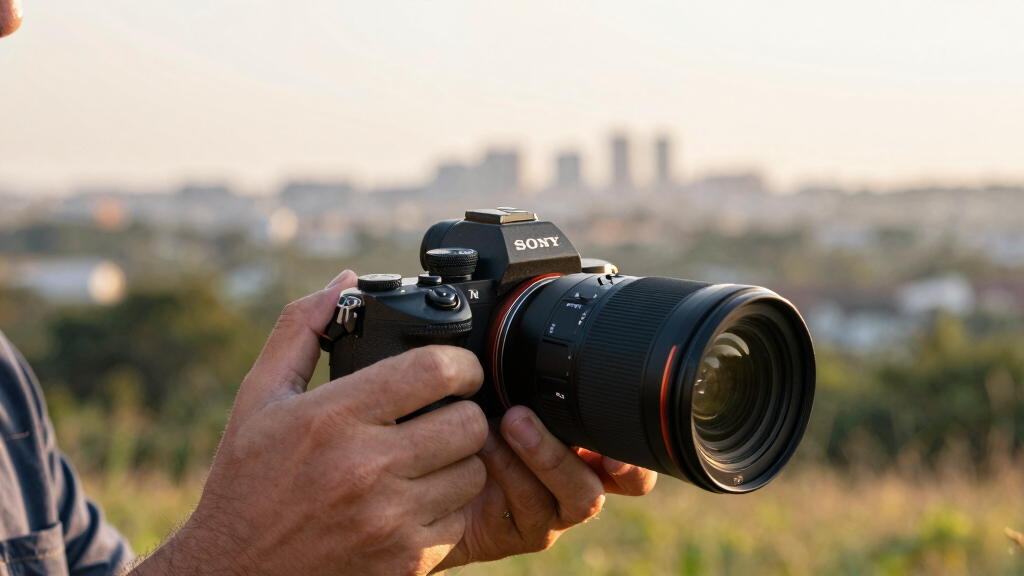
Sony announced the A7R VI, featuring a 66.8-megapixel stacked full-frame sensor and a price increase to $4,500. The new model offers faster readout, enhanced video capabilities, and a new battery, targeting professional photographers. The release marks a notable step in Sony’s high-end mirrorless lineup.
Sony has announced the A7R VI, its latest high-resolution mirrorless camera, featuring a 66.8-megapixel stacked full-frame sensor and a price increase to $4,499.99. The new model introduces faster readout speeds, enhanced autofocus, and improved video capabilities, making it a significant upgrade for professional photographers and videographers.
The Sony A7R VI is equipped with a fully stacked 66.8-megapixel full-frame sensor, offering up to 16 stops of dynamic range. Despite a modest megapixel increase of about six megapixels over the previous A7R V, the stacked architecture enables faster readout speeds, allowing for burst rates of up to 30 frames per second without blackout and improved silent shooting with the electronic shutter. The camera also supports 8K video recording at 30p and 4K at 120p, both without cropping, thanks to advanced heat management. It introduces a new NP-SA100 battery, providing approximately 710 shots per charge, replacing the older NP-FZ100, which is not backward compatible. The camera features a 9.44 million dot OLED viewfinder and enhanced ergonomics with a slightly chunkier grip to accommodate the new battery. Other improvements include in-body stabilization up to 8.5 stops, dual USB-C ports, and support for dual gain shooting to reduce noise and shadow detail loss. The price for the A7R VI is set at $4,499.99, a $600 increase from the A7R V’s launch price in 2022.
Why It Matters
This development matters because it signals Sony’s continued focus on high-resolution, professional-grade mirrorless cameras. The increased price reflects the advanced sensor technology and features aimed at demanding photographers and videographers. The upgrade to a higher-capacity battery and enhanced video capabilities also broaden the camera’s appeal for multimedia professionals. However, the price hike may impact affordability for some users, and the non-backward compatibility of the new battery could influence existing Sony users’ upgrade decisions.
As an affiliate, we earn on qualifying purchases.
Background
The Sony A7R series has been a flagship line for high-resolution imaging since its inception. The A7R V, launched in 2022, introduced AI-based autofocus and a high-resolution sensor. The new A7R VI builds on these features with a stacked sensor architecture, supporting faster readout and higher burst rates. Price increases for Sony’s flagship models have been observed in recent years, partly due to tariffs and supply chain factors, with models like the A1 II and A9 III reaching nearly $7,000. The A7R VI’s price increase aligns with this trend but remains more accessible for professional users focused on resolution and versatility.
“The A7R VI’s stacked sensor and new battery design represent a significant step forward in high-resolution mirrorless camera technology.”
— Sony spokesperson
“The price increase reflects Sony’s investment in cutting-edge sensor and video technology, targeting professional markets willing to pay a premium.”
— Industry analyst
What Remains Unclear
It is not yet clear how the new A7R VI will perform in real-world testing compared to competitors or previous models. The long-term impact of the higher price on sales volume remains uncertain, as does the reception among existing Sony users who may need to invest in new batteries. Details about regional availability and potential firmware updates are still emerging.
What’s Next
Sony is expected to begin shipping the A7R VI in June 2024, with availability in select markets. Reviews and field tests will shed light on its real-world performance. Competitors may respond with their own high-resolution offerings, and Sony could release firmware updates to enhance features or address user feedback. Monitoring sales figures and user feedback over the coming months will clarify the camera’s market impact.
Key Questions
What are the main improvements of the Sony A7R VI over the previous model?
The A7R VI features a 66.8-megapixel stacked sensor, faster readout speeds, improved autofocus with Real-time Recognition AF+, higher burst rates of up to 30 fps, enhanced video recording capabilities including 8K at 30p and 4K at 120p, and a new higher-capacity battery offering more shots per charge.
Why is the price of the A7R VI higher than the A7R V?
The price increase reflects the advanced stacked sensor technology, improved heat management for extended video recording, a new battery system, and other hardware enhancements aimed at professional users.
Will existing Sony users need to buy new batteries for the A7R VI?
Yes, the A7R VI uses a new NP-SA100 battery, which is not backward compatible with older models like the A7R V. This may require existing users to purchase new batteries if upgrading.
When will the Sony A7R VI be available for purchase?
Sony plans to release the A7R VI in June 2024, with initial availability in select markets. Full global distribution details are expected soon.
Halloween Picks
halloween
As an affiliate, we earn on qualifying purchases.