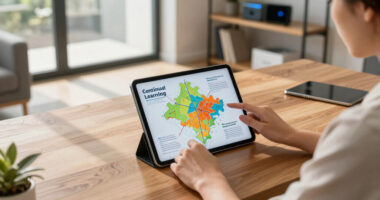
I turned a $80 RK3562 Android tablet into a Debian Linux workstation

A hobbyist successfully installs Debian 12 on an $80 RK3562 Android tablet, turning it into a Linux workstation without official support or vendor help.

A nicer voltmeter clock

A hobbyist has redesigned a voltmeter-based clock, focusing on aesthetics and continuous motion, using affordable parts and precise craftsmanship.

Native all the way, until you need text

Developers find native macOS/iOS tools insufficient for complex rich text and Markdown rendering, leading many to adopt web-based solutions like Electron.

Fujifilm’s X Half is even more whimsical with a $300 price cut

Fujifilm reduces the X Half camera’s price by $300, making it more accessible. The camera remains a whimsical, feature-light device for casual photography.

Japan can’t make robot wolves fast enough to counter the rise in bear attacks that have killed 13 humans this year — $4,000+ animatronic Monster Wolf features intense LEDs and makes loud noises

Japan’s demand for robotic bear deterrents exceeds supply, with Ohta Seiki unable to meet orders for the Monster Wolf amid record bear attacks and sightings.

Gates Foundation Sells Remaining Microsoft Stake

The Bill & Melinda Gates Foundation has sold its remaining shares in Microsoft, ending its direct investment in the tech giant after decades.

I turned a $80 RK3562 Android tablet into a Debian Linux workstation

A user successfully installed Debian 12 on an $80 RK3562-based Android tablet, turning it into a Linux workstation without official support.

Apple Silicon costs more than OpenRouter

Recent analysis shows Apple Silicon hardware is more expensive than OpenRouter for running local AI models, with cost depending on hardware lifespan and token throughput.

Jay Forrester filed the first practical computer RAM patent 75 years ago this week — his Magnetic Core Memory patent would be granted five years later

Celebrating 75 years since MIT engineer Jay Forrester filed the pioneering patent for magnetic core memory, a breakthrough in computer storage technology.

Russia’s Mikron is selling framed test wafers with up to 120,000 processors as souvenirs — 12 designs, priced around $170 each, sold alongside $2 vials of cleanroom air

Mikron is selling limited-edition framed test wafers featuring Russian-made chips, including the AMUR MIK32 RISC-V, as souvenirs, with up to 120,000 processors per wafer.