
TL;DR
Open a free Amazon Business account
Business pricing, bulk buying and tax-exempt orders.
As an affiliate, we earn on qualifying purchases.
Raspberry Pi engineers indicated the Pi 6 is likely to launch around 2028, focusing on faster CPU and IO, with no immediate plans for new features like AI chips. Microcontroller development continues, with supply constraints easing. Software remains a key focus.
Raspberry Pi engineers confirmed during an AMA that the Raspberry Pi 6 is unlikely to launch before early 2028, citing hardware development timelines and global component shortages. This delay means the Pi 5 will remain the flagship model for several more years, with expected hardware improvements focused on CPU and IO speed rather than new features.
During the AMA, Eben Upton and other lead engineers discussed the development cycle of Raspberry Pi products, noting that the Pi 6’s release is projected around 2028, roughly 4-4.5 years after the Pi 5 launched in 2023. They emphasized that the main focus for the Pi 6 would be increased performance through a faster CPU and enhanced IO capabilities, rather than additional features like built-in AI chips, which the team sees as better handled via the CPU for AI compute.
Regarding hardware supply issues, Eben Upton explained that the global DRAM shortage and silicon constraints have impacted development timelines. The team is working with new vendors to address the Pi Zero 2 W’s substrate supply constraints, but a Pi Zero 3 is not currently planned due to cost and design challenges, including the need to move away from single-sided PCBs and higher-cost RAM.
On microcontrollers, James Adams noted that the RP2350 microcontroller’s development faced power and security challenges but has improved with a new silicon revision. He also highlighted that microcontroller shipments surpassed Raspberry Pi SBC sales in 2025, with the gap likely widening as Pi prices increase.
Why It Matters
This update is important because it clarifies the expected timeline for the next major Raspberry Pi release, influencing developers and hobbyists planning long-term projects. The focus on performance improvements without new features suggests a maturation of the platform, emphasizing stability and software support. The ongoing supply constraints highlight the challenges facing the global electronics industry and their impact on affordable computing devices.
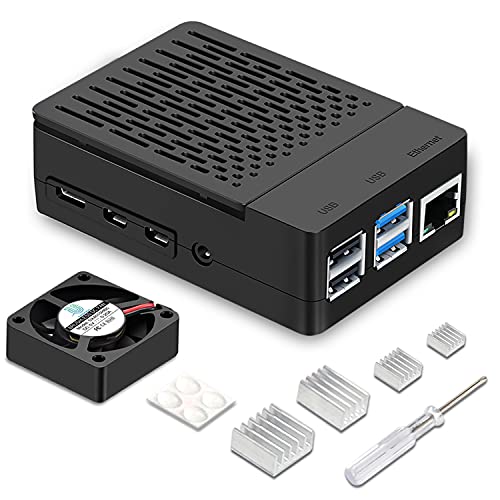
iUniker Case for Raspberry Pi 4, ABS Pi 4 Case with Cooling Fan, Pi 4 Heatsink, Simple Removable Top Cover for Pi 4 Model B/ 4B
- All-in-One Kit: Includes cooling fan, heatsinks, screws, and tools
- Active Cooling Solution: 40mm fan and heatsinks reduce heat during use
- Removable Top Cover: Easy GPIO access without removing the board
As an affiliate, we earn on qualifying purchases.
As an affiliate, we earn on qualifying purchases.
Background
The Raspberry Pi project has historically released new models approximately every 1-3 years, with the Pi 5 launching in 2023. Previous cycles suggest the Pi 6 would typically follow around 2026 or 2027, but supply chain issues have pushed this back. The team’s focus on software support remains a core strength, maintaining the Pi’s relevance despite hardware delays. Microcontroller development continues to be a key area, with shipments surpassing SBC sales, reflecting broader trends in embedded computing.
“The Pi 6 probably won’t come before early 2028, so the Pi 5 will remain our flagship for a while.”
— Eben Upton
“Microcontroller shipments finally surpassed Pi SBC sales in 2025, and the gap is probably widening this year.”
— James Adams
“We’ll spend 95% of our software engineering time supporting and developing libraries, drivers, kernels, and OSes.”
— Gordon Hollingworth
What Remains Unclear
It remains unclear what specific hardware features, if any, will be included in the Pi 6 beyond increased CPU and IO speed. The exact release date could shift due to ongoing supply chain disruptions, and future plans for additional features like integrated AI chips are not confirmed.
What’s Next
Raspberry Pi will likely continue refining the Pi 6’s hardware design and may announce further details as development progresses. Supply chain improvements and vendor partnerships are expected to influence the timeline. The team will also focus on supporting existing hardware through software updates and expanding microcontroller capabilities.
Key Questions
When is the Raspberry Pi 6 expected to be released?
The Raspberry Pi 6 is not expected before early 2028, based on current development timelines shared by engineers.
Will the Pi 6 have new features like built-in AI chips?
No, the focus is on enhancing CPU performance and IO speed rather than adding dedicated AI hardware.
Why is the Pi 6 delayed compared to previous models?
Global component shortages, especially in DRAM and silicon, have impacted the development and supply chain, delaying the release.
What is happening with the Pi Zero 2 W and Pi Zero 3?
The Pi Zero 2 W’s supply constraints are easing with new vendors, but a Pi Zero 3 is not currently planned due to cost and design challenges.
How is Raspberry Pi supporting software development?
Raspberry Pi dedicates about 95% of its software engineering efforts to libraries, drivers, kernels, and OS support, ensuring a strong software ecosystem.
Source: Hacker News
Labor Day sales Picks
labor day deals
As an affiliate, we earn on qualifying purchases.



![SenseTime’s AI Strategy: Dominating AI As Frontier AI Lab [In-Depth Analysis, 2026] – Klover.ai](https://1023jack.com/wp-content/uploads/2026/09/sensetime-s-ai-strategy-dominating-ai-as-frontier-ai-lab-in-depth-analysis-2026-featured-260x140.jpg)