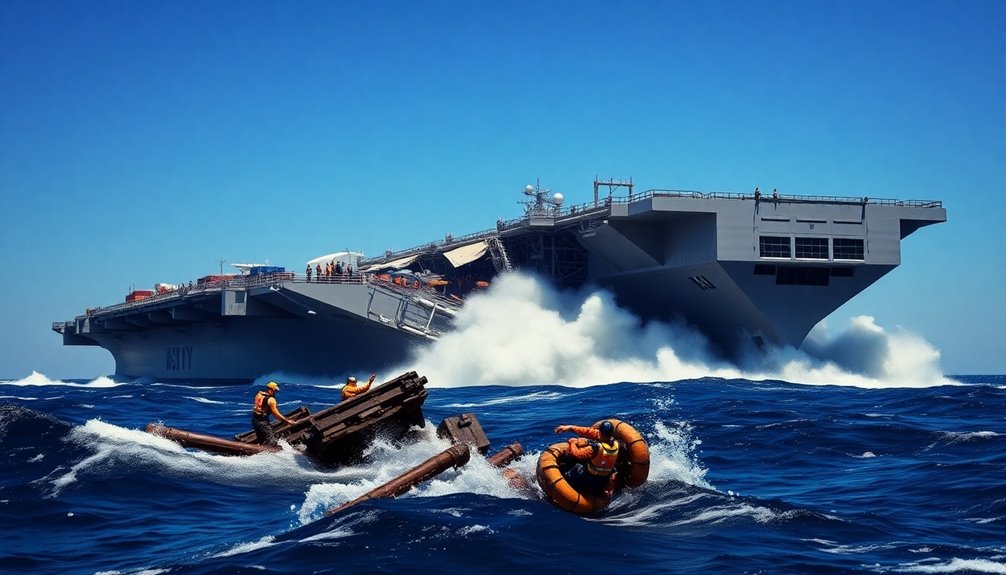

The collision between the USS Harry S. Truman and the merchant vessel Besiktas-M has escalated maritime chaos near the Suez Canal, which is crucial for global trade. With merchant ship traffic declining by 55%, shipping companies face increased costs and delays. The area's congestion and reduced US naval presence raise security risks for navigation. If you're curious about how this situation affects global trade and shipping routes, there's more to uncover on this pressing issue.

Get the latest gadgets delivered free with Prime
- Fast, free delivery on millions of items
- Prime Video, Amazon Music and more included
- Member-only deals all year
Key Takeaways
- The USS Harry S. Truman collided with the Panamanian merchant vessel Besiktas-M in congested waters, causing concern over maritime safety.
- The Suez Canal has seen a significant decline in merchant ship traffic, impacting global trade and shipping routes.
- The USS Truman was in the region to protect against Houthi attacks, but its departure leaves the area vulnerable.
- Increased maritime risks due to high traffic density near the Suez Canal raise concerns for future incidents.
- The ongoing crisis in the Red Sea complicates navigation and may disrupt supply chains further, emphasizing the need for safety measures.
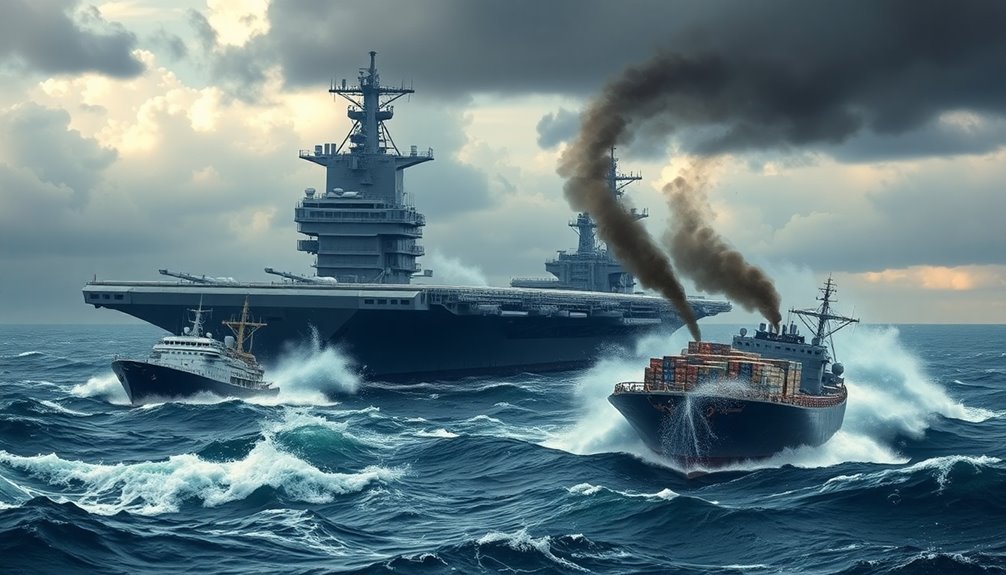
As maritime tensions escalate near the Suez Canal, a recent collision between the USS Harry S. Truman and the Panamanian-flagged merchant vessel, Besiktas-M, has raised alarms. This incident occurred in a congested area, with around 100 ships navigating the waters at the time, highlighting the navigation challenges that have become increasingly pronounced.
Such a collision involving a US aircraft carrier and a commercial vessel is rare; the last one happened back in 2004. You're left wondering what could've caused this, especially since the investigation is still ongoing and the cause remains unclear. Fortunately, the Truman sustained no flooding, while the Besiktas-M is anchored with some damage.
The backdrop to this incident is equally concerning, as the Suez Canal has experienced a significant decline in vessel traffic, with merchant ship traffic plummeting by 55% weekly due to the ongoing Red Sea crisis. In response, many vessels have started rerouting through the Cape of Good Hope, which has seen an increase of up to 98% in traffic. This shift is particularly troubling, given that container ship traffic through the canal has decreased by almost 80% in recent weeks, while tanker traffic has dwindled by over 55%. The ramifications extend beyond immediate maritime safety; global trade is threatened with delays and rising costs.
The USS Harry S. Truman was patrolling the area to defend against Houthi attacks on commercial shipping before the collision. Now, with its departure, Middle Eastern waters are left without a US aircraft carrier for the third time in 15 months, raising security concerns. The Suez Canal's stability is vital for global trade, handling approximately 12% of it which further emphasizes the urgency of addressing the crisis.
Increased maritime risks in these crowded waters only exacerbate the potential for further incidents. As major shipping companies suspend services in the region, the ripple effects on global trade and supply chains become all too clear.
maritime navigation safety equipment
As an affiliate, we earn on qualifying purchases.
As an affiliate, we earn on qualifying purchases.
Frequently Asked Questions
What Caused the Collision Between the US Navy Carrier and the Merchant Ship?
You might find that the collision between the US Navy carrier and the merchant ship was likely due to a combination of navigation challenges and the busy maritime environment.
The area's restricted maneuverability complicates safe passage, especially with many vessels nearby.
It's crucial to consider factors like visibility, crew experience, and adherence to maritime traffic rules, all of which can significantly influence the likelihood of such incidents occurring in crowded shipping lanes.
Are There Any Injuries Reported From the Incident?
Did you know that over 90% of the world's trade travels by sea?
In this incident, there were no injuries reported for either the USS Truman or the merchant ship involved.
Both crews were assessed post-collision, and thankfully, everyone remained safe.
Safety protocols seem to have worked effectively in this case, allowing for a quick response without any medical interventions needed, highlighting the importance of maritime safety in busy shipping lanes.
What Are the Environmental Implications of This Collision?
You should consider that maritime collisions can lead to significant environmental implications.
Oil spills may harm marine life and ecosystems, while the introduction of invasive species can disrupt native populations. Such incidents can also damage habitats, affecting biodiversity.
Furthermore, the economic consequences of cleanup and compensation can be substantial.
Stricter international regulations and better management practices are crucial to mitigate these environmental impacts and protect our oceans.
How Will This Incident Affect Global Shipping Routes?
This incident will disrupt global shipping routes significantly.
You might see delays as vessels reroute around the Cape of Good Hope, adding time and costs to shipments.
Expect increased shipping rates due to heightened demand for alternative routes, leading to potential supply chain disruptions.
The ripple effects can impact various industries, emphasizing the need for resilient logistics and strategic planning to mitigate similar challenges in the future.
Stay informed about these developments!
What Measures Are Being Taken to Prevent Future Collisions?
Like a well-choreographed dance, vessels must now adhere strictly to navigation rules to prevent future collisions.
You'll see enhanced training for pilots and crews, ensuring everyone knows the importance of a proper lookout.
Compliance with COLREGS is emphasized, especially during overtaking maneuvers.
Improved communication protocols will be implemented, alongside regular safety drills.
With these measures, the maritime community aims to keep the waterways safe and minimize the risk of chaos in confined channels.
Conclusion
As you reflect on the chaos that erupted near the Suez Canal, one can't help but wonder: how can such a critical waterway remain safe amid increasing maritime traffic? The collision between the US Navy carrier and the merchant ship not only disrupted global shipping but also raised alarms about navigation protocols. It's a stark reminder that even the most experienced crews can face unexpected challenges. The maritime world must adapt and innovate to prevent future incidents.
Halloween Picks
halloween
As an affiliate, we earn on qualifying purchases.