
TL;DR
A GitHub project translates PSP game code into C++ and WebAssembly, letting God of War: Chains of Olympus and Ghost of Sparta run in a browser through a custom PSP software layer. The project author reports gameplay at up to 60 frames per second in measured scenes, but users must supply their own game data and the results depend on their device and browser.
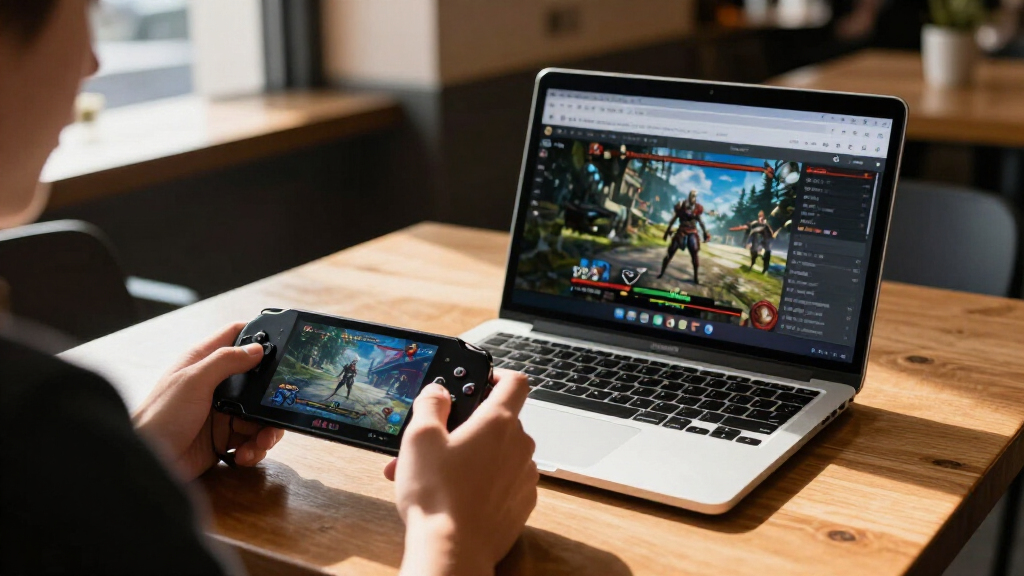
A GitHub project has brought God of War: Chains of Olympus and God of War: Ghost of Sparta to a browser by recompiling their PSP machine code into C++ and WebAssembly, then pairing it with a custom software implementation of parts of the handheld’s system. The project author reports that the games run in Chrome and Firefox, with measured scenes reaching 60 frames per second; the repository does not include game data, which users must supply themselves.

Get the latest gadgets delivered free with Prime
- Fast, free delivery on millions of items
- Prime Video, Amazon Music and more included
- Member-only deals all year
The project, named psp-web-recomp, does not run the games through a conventional PSP emulator, according to its GitHub documentation. Instead, its tools analyze a decrypted game executable, identify functions and generate C++ code. That code is compiled to WebAssembly and runs against a model of the PSP’s registers and memory, alongside a small software layer that handles operating-system functions and graphics.
The browser-side implementation covers systems the games rely on, including threads, memory, files, controller input, audio, save data and message dialogs. Disc data is loaded through HTTP Range requests, so the project says only the executable needs to be downloaded at the start. Graphics are processed through a recreation of the PSP’s display-list behavior and rendered with WebGL2. The project also implements sound effects and uses FFmpeg’s ATRAC3+ decoder for music and speech.
The author says Chains of Olympus has been played from boot through menus, cutscenes and combat, with movies currently skipped. Reported results include up to four times the PSP’s native 480-by-272 resolution, touch controls on phones and 60 frames per second in scenes measured on a laptop. Ghost of Sparta reportedly runs at 55 to 60 frames per second at three times native resolution. Those are project-reported results, not independent tests across devices; performance will depend on the browser and hardware.
A Different Route to Browser Play
The project is notable because it shows one route to running older console software on the web: translate a game’s code ahead of time and recreate the hardware and system services it expects, rather than interpreting every instruction through a conventional emulator during play. That distinction matters for performance. The project author says the first playable build ran at 6 frames per second, and describes later gains from addressing timing behavior, browser graphics overhead and work that could run in parallel.
It also highlights the practical limits of browser-based preservation and access. A game can be made to run in a modern browser, but the project does not supply the copyrighted game files, and users need their own compatible data. Its current results show technical feasibility for these two titles, not a ready-made catalog of PSP games or a guarantee that every game will work.
Products Worth Considering

Samsung Galaxy Tab A11+ Tablet, 6GB RAM, 128GB Storage, Expandable Storage, Gray

Amazon Kindle Paperwhite (2024) – 16GB, 7 Glare-Free Display, Waterproof

Jackery HomePower 3600 Plus Portable Power Station, 3584 Wh, 3600 W
As an affiliate, we earn on qualifying purchases.
How the PSP Code Reaches WebAssembly
The project’s graphics design reflects how PSP games divide work between the main processor and the graphics engine. It runs graphics processing on a worker thread with an OffscreenCanvas, allowing the game to prepare later work while the browser handles rendering. The author says this reduced the cost of a busy fight in Firefox from about 17 milliseconds for combined game and graphics work to about 10 milliseconds when the two ran in parallel.
Performance fixes were specific to the games and browser behavior. The author says Chains of Olympus changed framebuffers without waiting for the screen’s vertical refresh, causing repeated drawing that did not result in additional displayed frames. Adjusting that behavior cut work per displayed frame by a factor of eight, according to the project. The repository also documents browser-specific WebGL buffer problems and extra work needed to reproduce the PSP’s use of the framebuffer alpha channel for stencil effects.
Ghost of Sparta required additional support for a small DRM-protected file, including decryption, as well as system calls and a lighting fix, the project says. The supplied report cuts off while describing the investigation of the lighting issue, so it does not provide the full technical account of that fix.
“PSP games running in the browser without an emulator.”
— The project’s GitHub documentation
Compatibility and Performance Limits
The report does not establish how the project performs across a broad range of computers and phones, or whether the reported frame rates can be reproduced outside the author’s measured scenes. It gives results for Chrome and Firefox on a laptop, along with phone support for touch controls, but does not name the laptop, phone models, browser versions or test methodology.
It is also unclear how much work would be needed to support other PSP games. Ghost of Sparta was brought across using the same scripts, according to the author, but needed additional DRM handling, system-call support and a lighting fix. The project documents no game data distribution, and the supplied report does not specify legal advice, supported disc-image formats, or a complete list of games that have been tested. Movies are skipped in the reported Chains of Olympus build.
Further Games and Browser Testing
The repository offers the immediate next step for readers who want to inspect or try the work: review its instructions and scripts, and supply compatible game data themselves. The project’s account suggests that additional titles may require game-specific investigation even when the same recompilation pipeline can be reused.
No release schedule, compatibility roadmap or independent benchmark plan is included in the supplied material. The next useful milestones would be clearer documentation of supported inputs, additional game tests and reproducible performance results across named browsers and devices. Until then, the confirmed scope remains two reported PSP titles running through a developer-built browser implementation, with some playback limitations.
Key Questions
Which God of War games does the project run?
The project author reports browser support for God of War: Chains of Olympus and God of War: Ghost of Sparta, both originally released for PSP.
Is this a PSP emulator running in a browser?
The project describes its method as recompilation rather than conventional emulation. It translates the games’ machine code into C++, compiles that code to WebAssembly and supplies a software implementation of PSP functions and graphics behavior.
Does the project include the games?
No. The repository says game data is not included; users must provide their own compatible disc image. The supplied material does not give legal advice about obtaining or using game files.
How well do the games run?
The author reports up to 60 frames per second in measured Chains of Olympus scenes on a laptop using Chrome and Firefox, at up to four times native resolution. Ghost of Sparta is reported at 55 to 60 frames per second at three times native resolution. These are project-reported results, not independent benchmarks or guarantees for other devices.
Are all game features working?
Not according to the report. Chains of Olympus reportedly plays through menus, cutscenes and combat, but movies are skipped. The source does not provide a complete compatibility list or establish that every feature works identically across browsers and devices.
Source: hn