
TL;DR

Get the latest gadgets delivered free with Prime
- Fast, free delivery on millions of items
- Prime Video, Amazon Music and more included
- Member-only deals all year
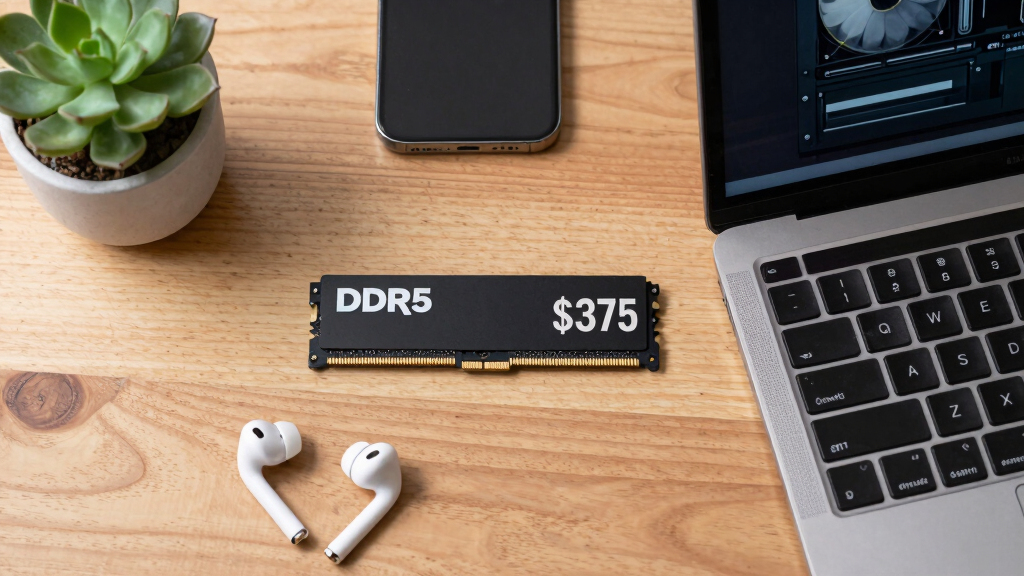
The price of 32GB DDR5 RAM has risen to $375, driven by persistent AI hardware demand. This increase affects PC builders and indicates ongoing supply constraints in the memory market.
The cost of 32GB DDR5 RAM has now reached at least $375, marking a significant increase driven by the ongoing AI hardware shortage, according to price tracking from PCPartPicker. This development impacts PC builders and enthusiasts who previously paid less than $100 for similar memory modules.
Recent price tracking indicates that the cheapest 32GB DDR5 RAM kits now cost around $375, with some models from Silicon Power listed at $374.97 due to promotional codes. This marks a sharp rise from prices below $240 a year ago, reflecting supply constraints caused by high demand for AI chips and related hardware components. Popular brands like Corsair and Crucial are also experiencing price hikes, with RGB and high-performance kits exceeding $400. The trend extends to 64GB configurations, which now cost approximately $680. Meanwhile, 16GB kits are available for around $200, but manufacturing constraints are expected to persist through 2030, limiting future capacity upgrades.
Why It Matters
This price surge significantly impacts PC enthusiasts, gamers, and professionals planning to upgrade or build new systems. As RAM is a core component, its increased cost raises overall build prices and may slow down hardware upgrades. The sustained shortage signals ongoing supply chain disruptions linked to AI chip demand, which could further inflate prices and limit availability across multiple PC components.
As an affiliate, we earn on qualifying purchases.
Background
The current market situation stems from a surge in AI hardware production, which has strained supply chains for memory and storage components. Over the past year, prices for DDR5 RAM have more than doubled, with the lowest available prices now approaching $375 for 32GB modules. Manufacturers like SK hynix have warned that supply constraints will continue through 2030, contributing to the persistent price increases. At recent industry events like Computex 2026, vendors have shown reluctance to set fixed prices amid ongoing demand and supply volatility, especially for high-capacity RAM and SSDs, which have also seen dramatic price jumps.
“The cheapest 32GB DDR5 RAM you can buy is now $375.”
— PCPartPicker
What Remains Unclear
It remains unclear whether prices will stabilize or continue to rise in the coming months. Some vendors may adjust pricing strategies, but supply constraints are expected to persist, making price drops unlikely in the near future. Further industry developments, such as new manufacturing capacities or alternative supply sources, could influence future pricing dynamics.
What’s Next
Industry analysts anticipate that prices may remain high until supply chain issues are alleviated, which could take years. PC builders and consumers should expect ongoing volatility in RAM and storage costs. Manufacturers and vendors might also introduce new product lines or alternative technologies to mitigate shortages, but the timeline remains uncertain.
Key Questions
Why has DDR5 RAM become so expensive?
The surge is primarily due to high demand driven by AI hardware development, which has strained supply chains for memory components, compounded by manufacturing constraints expected to last through 2030.
Will RAM prices go down soon?
Prices are unlikely to decrease significantly in the near term due to persistent supply shortages. They may stabilize at current levels or increase further if demand continues to outpace supply.
How does this affect PC building in 2026?
The rising RAM costs increase overall system build prices, potentially delaying upgrades or discouraging new builds for budget-conscious consumers and enthusiasts alike.
Are there alternative memory options available?
Older DDR4 modules are still available at lower prices, but their compatibility with the latest platforms is limited. Manufacturers are also exploring other memory technologies, but widespread adoption is not imminent.
Source: Hacker News
Halloween Picks
halloween
As an affiliate, we earn on qualifying purchases.