
TL;DR
A smart home security system base station connects compatible sensors, coordinates alerts, and may link your alarm to an app or monitoring service. Before choosing a replacement, compare device compatibility, battery and cellular backup, alert behavior, privacy, and ongoing service requirements; a local siren, app alert, and professional monitoring are separate features.
Replacing a Ring Alarm Base Station (2nd Gen) starts with a practical question: which sensors, alerts, and outage protections does your household need the new system to keep working? A base station connects compatible security devices and coordinates what happens when a sensor detects activity, but a similar-looking unit may not support your existing devices.

Get the latest gadgets delivered free with Prime
- Fast, free delivery on millions of items
- Prime Video, Amazon Music and more included
- Member-only deals all year
Product details and availability can be unclear, so compare systems by the functions you can verify. Check device compatibility, backup power, communication during internet outages, and any service requirements before deciding whether to keep your sensors or replace the whole alarm system.
This guide explains what a base station does, which features matter during outages, and how to assess the available product details. It also covers why siren volume alone does not establish a better fit, how subscriptions can affect everyday features, and what to check before moving sensors around your home.
A base station coordinates compatible devices and alerts; it is not automatically the sensor, camera recorder, or internet router.
Compare battery runtime, cellular backup, local siren behavior, app notifications, and professional monitoring as separate features.
The supplied comparison lists 104 dB and up to 24 hours of backup for the Ring Alarm Base Station (2nd Gen), but that does not establish compatibility with a r…
Check the exact model numbers of existing devices against the replacement maker’s current compatibility list.
Review subscription terms, privacy practices, software updates, and account security before depending on a connected alarm.
Know what the base station controls before you replace it
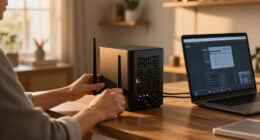
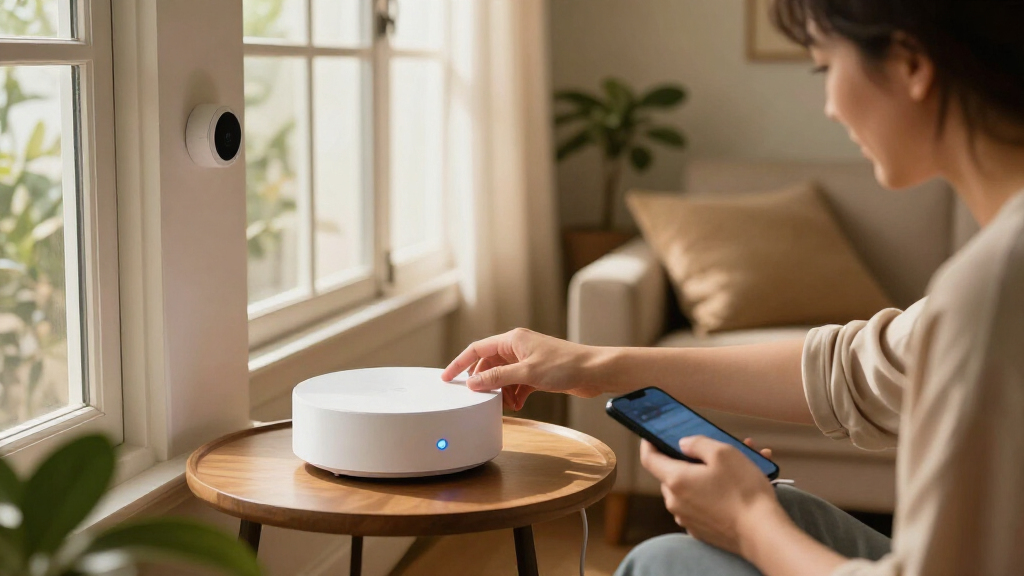
A smart home security system base station is the central unit that coordinates compatible sensors and relays events to an alarm, app, or monitoring service. It works like a switchboard: a door sensor reports that the front door opened, and the system follows the rules you set for that event.
That makes the base station important, but it does not make it every part of the system. It is not necessarily a camera recorder, the sensor itself, or your household internet router. Some setups also use more than one hub or bridge because different devices speak different radio languages.
Say you install a contact sensor on a basement window. The sensor detects that the window opened; the base station receives the signal; and the system may sound a local siren, send an app alert, or relay the event to a monitoring provider. Those actions are separate features, so a siren spec alone cannot tell you whether you will receive phone alerts or outside help.
People often use hub, gateway, and security base station as if they mean the same thing. Vendors choose different labels, and the exact role depends on the product. Before buying, read the maker’s description of what the central unit controls and which devices it supports.
For example, if you want a door sensor to trigger a light as well as an alarm, check that the system supports both that sensor and the lighting integration you plan to use. A broad “smart home compatible” claim does not promise that every brand or feature works together. The practical question is what your exact devices can do through that particular system.
Products Worth Considering

Samsung 27-Inch Odyssey OLED G6 QHD Gaming Monitor (G61SH)

Samsung 32-Inch Odyssey G5 QHD Gaming Monitor (G50F)

Bose QuietComfort Headphones (2nd Gen), Wireless Over-Ear Noise-Cancelling Headphones, Black
As an affiliate, we earn on qualifying purchases.
Compare replacement kits by the protection you can verify
A replacement for the smart home security system base station should meet your household’s needs for devices, backup, alerts, and support. Start with facts the product information actually names, then check the manufacturer’s current compatibility list before you count on a feature.
The supplied comparison gives a useful starting point, but its gaps matter. “Not specified” does not mean a feature is absent; it means you need another source before treating it as part of the system. Product names and feature bundles can also change, so confirm that the details apply to the exact kit and generation you are considering.
| System in supplied comparison | Siren detail | Backup detail | Compatibility detail |
|---|---|---|---|
| Ring Alarm Base Station (2nd Gen) | 104 dB | Yes, up to 24 hours | Ring Sensors, Ring app |
| Home Security System Wireless kit | 120 dB | Built-in rechargeable battery | Not specified |
| SimpliSafe 9 Piece Wireless Home Security | 95 dB | Up to 24 hours | Not specified |
| SimpliSafe 11 Piece Wireless Home Security Gen 3 | Not specified | Not specified | Alexa and Google Assistant |
| SimpliSafe 5 Piece Wireless Home Security | Not specified | Not specified | Alexa and Google Assistant |
For a concrete example, the Home Security System Wireless kit lists a 120 dB siren, compared with the Ring unit’s listed 104 dB. That difference does not prove the kit is a better replacement: the supplied details do not specify its compatibility, and siren volume does not establish sensor support, app behavior, or monitoring arrangements.
The 9-piece SimpliSafe listing names a 95 dB siren and up to 24 hours of battery backup. The 11-piece and 5-piece listings name Alexa and Google Assistant compatibility, but the supplied comparison leaves siren and backup details unspecified for them. Match each kit to the devices and outage behavior you want, and verify details directly with the manufacturer before purchase.
Check what still works when power or internet fails
A base station keeps working through an outage only to the extent its backup hardware and communication paths support it. A battery may keep the unit powered for a stated period, while cellular backup may preserve some connection when broadband goes down; neither feature is universal.
Picture a storm that knocks out power but leaves the home internet equipment offline too. A base station with a charged battery might still receive nearby sensor signals and sound a local alarm. App alerts could stop if the station has no working internet or cellular connection, even while local parts of the system continue to function.
Separate four questions when you read product details: does the hub have a backup battery, how long does it last, is there cellular backup, and which functions remain active? A listed “up to 24 hours” is a stated maximum, not a promise that every feature will run for that duration in every home. Battery age, configuration, and the system’s operating conditions can affect runtime.
In the supplied comparison, the Ring unit and the 9-piece SimpliSafe kit both list up to 24 hours of battery backup. The Home Security System Wireless kit lists a built-in rechargeable battery, but the comparison does not give a duration. That leaves an important question unanswered if your priority is knowing how long monitoring or notifications may continue during a long outage.
A local siren, app alert, cellular connection, and professional monitoring are different pieces of the response. Ask what the system does if broadband fails, then check whether cellular service requires an active plan. If you live where outages are common, write down which functions remain available on battery and what stops when the connection is lost.
Make sure your current sensors can join the new system
A security hub connects only devices its maker supports, and a shared radio standard does not guarantee full feature compatibility. Before replacing a base station, check the exact model numbers of your sensors, cameras, locks, and sirens against the replacement system’s current device list.
This is the step that can save you from opening a box and finding that yesterday’s working door sensors have nowhere to connect. Write down the model on each device or photograph its label, then look for explicit support from the hub manufacturer. If the manufacturer names only its own sensor family, do not assume another brand will pair just because both use wireless signals.
Even when a device connects, some features may not cross brand lines. A motion sensor might report movement but not expose its battery level; a camera might appear in an app without triggering the alarm; a voice assistant might arm a system but not offer every status detail. A “works with” badge is a useful lead, not a full feature map.
Standards such as Matter aim to improve smart-home interoperability, but support for Matter does not mean every alarm sensor or security function works across every system. Compatibility depends on the device, software version, and manufacturer implementation. Check the current documentation for the exact features you care about, especially if the setup involves sensors from several brands.
For example, a household with Ring contact sensors may value an existing Ring app workflow. A move to another system could mean replacing those sensors or accepting a different integration path. Count the devices you already own and confirm the migration cost in time and effort, not just the central hub’s headline features.
Choose a location that gives sensors a clear path
Place the base station where it can reach its sensors, stay connected to reliable power, and follow the manufacturer’s placement instructions. A central, open spot often gives wireless signals a better path than a cabinet tucked behind a television or a metal utility panel.
Wireless range is not a simple circle printed on a box. Brick walls, floors, metal, appliances, interference, and the layout of your home can all change how well a sensor communicates. A contact sensor at the far end of a long house may work in one layout and struggle in another, even when the distance seems modest.
Imagine a two-story home with the base station near a router in a front-office cabinet and a basement sensor below a thick concrete floor. If that sensor misses check-ins, moving the hub to an open central shelf may improve the path. Follow the maker’s directions, then use the system’s own connection or sensor status indicators to see whether devices remain reachable.
Keep the base station accessible enough to inspect, but not somewhere a routine bump can unplug it. If it has a backup battery, a reliable outlet still matters: backup power only helps after the unit has charged. Keep it away from likely sources of interference, and do not hide it in an enclosed space unless the manufacturer recommends that location.
Some systems let you add a repeater, bridge, or second hub to cover a difficult corner of the home. These additions can help, but each introduces another compatibility and power question. A simple floor plan with the hub, sensors, and thick walls marked on it can make placement decisions easier before you attach anything.
Read the subscription details before you rely on alerts
A base station may connect your devices without a paid plan, while cellular backup, professional monitoring, cloud recording, or advanced app features may depend on a subscription. Read the plan terms to find out which functions continue if you cancel or let a plan end.
That distinction matters on an ordinary Tuesday, not only during an emergency. You may expect to review a camera clip after a delivery, receive alerts away from home, or have a monitoring provider contact you after an alarm. Those functions can depend on different services, and the hub itself does not guarantee them.
Consider a household that uses an app to check a back door while traveling. If remote access depends on cloud services, a broadband outage or service-plan change might affect what the owner can see or control. A local siren may still work, but that is a different kind of protection than a remote notification.
Ask the provider to spell out what is included, what costs extra, and what remains after a plan ends. Check whether cellular backup is included or separately activated, whether camera recordings are stored, and whether professional monitoring is available where you live. Response procedures and emergency dispatch can depend on the provider’s service and local rules.
Do not choose a system based only on the phrase “no subscription required” or on a list of paid features. Map each feature to your real routine: who receives an alert, whether anyone can respond, and what happens when your phone is offline. That makes the tradeoff visible before you depend on it.
Protect your account as carefully as your front door
A connected alarm depends on both physical devices and the account that controls them. Use a unique password, turn on multifactor authentication when available, and keep the system’s software updated so your security setup is not protected by a flimsy digital key.
Privacy details deserve a place in your comparison. Look for clear information about encryption, account security, data retention, software updates, and access to cameras or microphones. A system that records video may handle more personal information than a hub that coordinates contact sensors alone, so understand what data the product collects and how you can manage it.
For a family, account access can become a practical issue fast. If one person sets up the system and later changes phones, make sure another trusted household member knows how to regain access using the provider’s official recovery process. Avoid sharing a single password casually, and use separate household permissions if the service offers them.
Smart-home integrations add convenience, but they can also widen the number of accounts and devices involved. If a voice assistant can arm the alarm, check how it authenticates requests and what commands it allows. Keep the assistant and security app updated, and remove old integrations or accounts you no longer use.
These steps are maintenance, not a one-time setup chore. A periodic check of account access, notification settings, sensor batteries, and available updates helps catch quiet failures before you need the alarm. Put a reminder on your calendar after installation and revisit it when you change phones, routers, or household members.
Use this five-step check before you choose a system
A short checklist can turn a crowded product page into a clear decision. Write down what your existing setup must keep doing, then verify each requirement against the exact replacement model and its current documentation.
- List your devices. Note each sensor, camera, lock, siren, and smart-home platform you want to keep, including model numbers.
- Check exact compatibility. Use the manufacturer’s current list and confirm the functions you need, rather than relying on a general compatibility badge.
- Map outage behavior. Record battery duration, cellular backup, and which local or remote functions continue without power or broadband.
- Compare alerts and monitoring. Decide whether app alerts are enough or whether you want professional monitoring, then check any service requirements.
- Review privacy and ongoing needs. Look at account protections, updates, data handling, and what features change if a subscription ends.
For example, a renter with three door sensors and no cameras might put sensor compatibility and a loud local siren first. A homeowner with cameras and frequent power interruptions may care more about backup duration, cellular communication, and cloud recording terms. Neither priority list is universal; the right fit follows the way you use the home.
Keep a copy of the maker’s answers or product documentation with your setup notes. If a feature is absent from the supplied comparison, mark it “unconfirmed” rather than filling in the blank with a guess. That small habit protects you from treating missing information as a guarantee.
Finally, think through a real event: the front door opens while you are away, or the power fails while you are asleep. Which device detects it, which unit reacts, who receives a message, and what still works if the internet drops? If you can answer those questions, you are comparing systems on their actual behavior rather than marketing labels.
Frequently Asked Questions
What does a security system base station do?
A base station connects compatible devices, coordinates security functions, and relays events to an alarm, app, or monitoring service. For example, it can receive a door sensor’s signal and trigger the response configured for that system.
Is a base station the same as a hub?
Often the terms are used interchangeably, though product names vary. “Base station” commonly describes the central unit in an alarm system, while a smart home may also use separate hubs or bridges for other devices.
Will my alarm work if the internet goes down?
Possibly, depending on the system. Local sensor communication or a siren may continue, while remote app alerts and cloud features may stop; cellular backup can preserve some communication if the system includes it and the service is active.
Will a base station work during a power outage?
Only while its backup battery can power it, if it has a battery at all. Check the stated runtime and ask which features remain active, since a battery does not automatically provide cellular service or remote notifications.
Can I use sensors from another brand?
Sometimes, but shared wireless technology does not guarantee that a hub supports every sensor or its full feature set. Confirm the exact model and required functions in the hub manufacturer’s current compatibility information.
Does a base station need a subscription?
The hub may offer some functions without a plan, while cellular backup, professional monitoring, cloud recording, or advanced services may require one. Check what remains usable when a subscription ends before choosing a system.
Does Matter work with security alarm systems?
Matter aims to help smart-home devices work together, but it does not guarantee support for every alarm sensor or security function. Compatibility depends on the devices, software versions, and manufacturer implementation, so verify the specific feature you need.
Conclusion
Choose a replacement by tracing one real event from sensor to response: what detects it, what the base station does, who receives an alert, and what still works if power or broadband fails. Then confirm every device and service against the exact system’s current documentation.
A box can sit quietly on a shelf for months. The useful one is the system whose signals still find their way through your home when the night is dark and the weather turns.