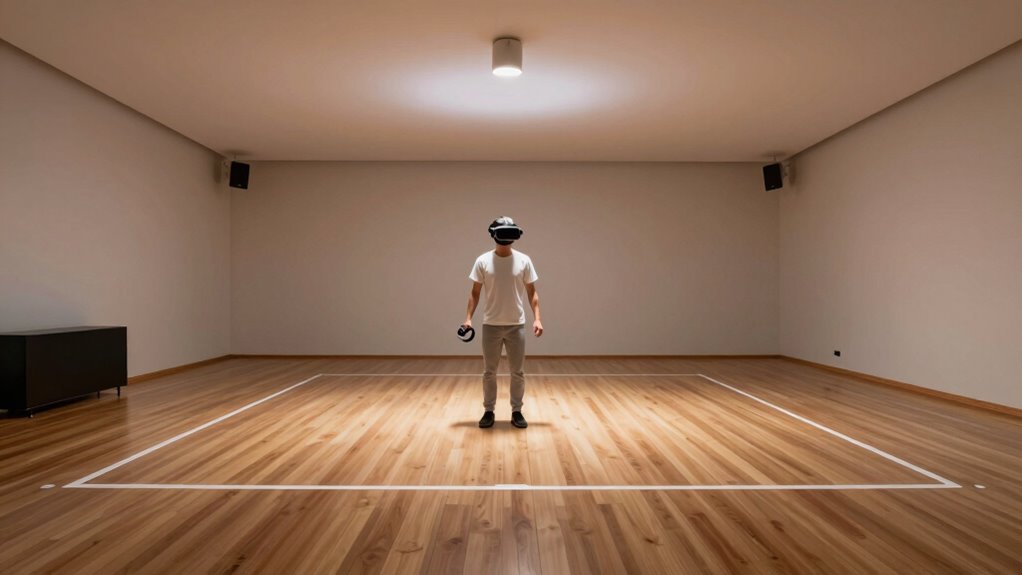
To set up an ideal room-scale VR experience, you need a clear space of at least 6.5 by 6.5 feet, free of furniture and obstacles. Make sure the area allows for free movement and is well-lit without direct sunlight, which can interfere with sensors. Proper sensor placement ensures accurate tracking, and calibration aligns your headset with the environment. Correct setup improves safety and immersion, and paying attention to these details helps you get the most out of your VR sessions. Keep going to learn more about creating the perfect space.
Key Takeaways
- Ensure a minimum of 6.5 ft x 6.5 ft clear space for safe, immersive room-scale VR gameplay.
- Follow manufacturer guidelines for sensor or base station placement to cover the entire play area.
- Clear the area of furniture, cords, and objects to prevent tripping and ensure free movement.
- Calibrate sensors and hand tracking accurately to reduce tracking errors and improve immersion.
- Test the setup with movement and gesture exercises to confirm proper tracking and safety before gameplay.
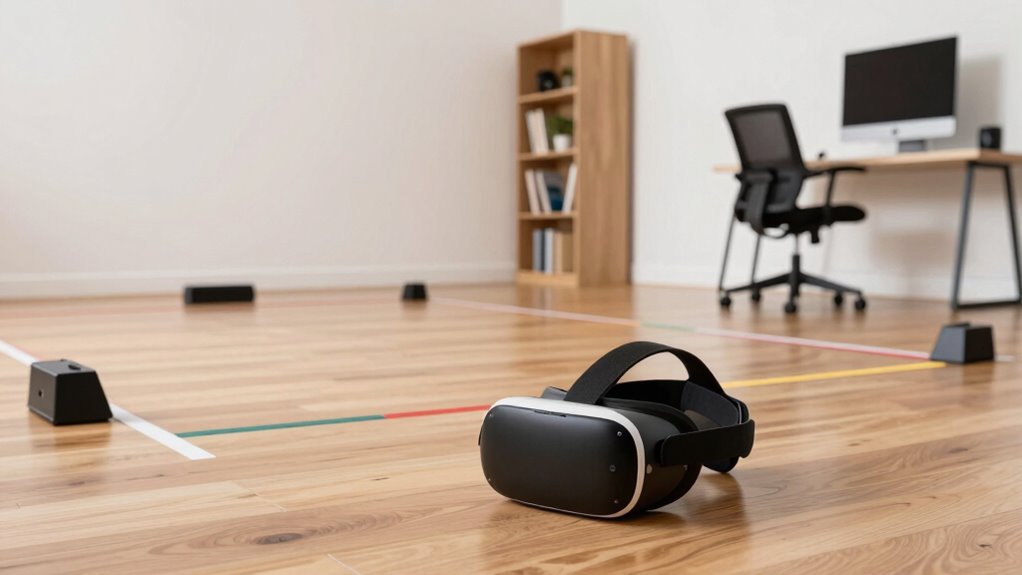
Setting up a room-scale VR headset requires enough space to move freely and enjoy an immersive experience. Without sufficient room, you might find yourself restricted in your movements or risking accidents, which can ruin the enjoyment and even cause damage. Ideally, you want a clear area that’s at least 6.5 feet by 6.5 feet, but larger is better if you have the space. Before you start, clear out furniture, cords, or any objects that could trip you up. Once the space is ready, set up the sensors or base stations as per the manufacturer’s instructions, making sure they cover the entire play area. Proper sensor placement guarantees accurate tracking of your movements and prevents dead zones where tracking might falter.
Next, you should focus on calibration procedures, which are essential for a smooth VR experience. Calibration aligns the headset’s sensors with your physical environment, ensuring your movements are accurately reflected in the virtual world. Many VR systems include automatic calibration routines, but you might need to manually adjust sensors or base stations for best coverage. Follow the device’s instructions carefully—this often involves marking the play area, setting the height, and confirming that the sensors recognize your space. Proper calibration minimizes tracking errors, which can lead to lag or jitter, breaking immersion and causing discomfort. Additionally, understanding the importance of projector specifications like contrast ratio and color accuracy can significantly enhance your home cinema setup, creating a more immersive viewing experience.
Hand tracking adds another layer of immersion and can eliminate the need for controllers, but it requires precise setup. To enable hand tracking, ensure your sensors are positioned correctly to capture your hands clearly. During calibration, you might be prompted to perform specific gestures or hold your hands in certain positions. These calibration procedures are essential because they teach your system how to interpret your hand movements accurately. If hand tracking isn’t calibrated properly, the system might misinterpret gestures or lose track of your hands altogether, negatively impacting gameplay and interaction.
Throughout the setup process, pay close attention to lighting conditions as well. Bright or uneven lighting can interfere with sensors, especially for hand tracking. Keep the room well-lit but avoid direct sunlight hitting the sensors. Once everything is calibrated and sensors are in place, do a few test runs to verify that your movements and gestures are recognized correctly. Adjust sensor angles or calibrate again if needed. Proper setup and calibration aren’t just technical steps—they’re essential to creating an immersive, safe, and enjoyable VR experience. When done correctly, you’ll find yourself moving naturally and interacting seamlessly within your virtual environment.
room-scale VR headset sensors
As an affiliate, we earn on qualifying purchases.
As an affiliate, we earn on qualifying purchases.
Frequently Asked Questions
Can I Use a VR Headset Outdoors Safely?
You can use a VR headset outdoors, but prioritize outdoor safety and consider environmental factors. Make sure you have a clear, obstacle-free space to avoid accidents. Watch out for uneven terrain, bright sunlight, and weather conditions like rain or wind that can affect device performance and your safety. Use a shaded, flat area, and stay alert to your surroundings. Proper setup and caution will help you enjoy outdoor VR experiences safely.
How Do I Prevent Tripping Hazards During Gameplay?
To prevent tripping hazards during gameplay, you should focus on cable management and obstacle clearance. Use cable clips or sleeves to keep cords tidy and out of your way. Clear the play area of any furniture or objects that could cause you to trip. Regularly check your space for new obstacles, and create a dedicated, clutter-free zone to ensure safe, immersive VR experiences without accidents.
What Are the Power Source Requirements for Room-Scale Setups?
Think of your room like a race car: it needs a reliable power source to perform smoothly. You should guarantee your power outlet placement is convenient, ideally near your play area, and use a surge protector to guard against voltage spikes. Many gamers opt for power strips with multiple outlets, so all devices stay powered without clutter. Proper wiring keeps your gameplay seamless and safe, just like a well-tuned engine.
How Often Should I Recalibrate My VR Sensors?
You should recalibrate your VR sensors whenever you notice tracking inaccuracies or if you move to a different room. Regular sensor calibration helps maintain tracking accuracy, ensuring smooth gameplay. Typically, doing it every few weeks or after significant physical changes in your space keeps your system functioning at its best. Keep an eye out for tracking issues, and recalibrate promptly to enjoy a seamless, immersive experience.
Are There Specific Safety Guidelines for Children Using VR?
You should prioritize child safety by always supervising children during VR use. Limit session times and make certain the VR environment is free of obstacles to prevent accidents. Use age-appropriate content and make sure the headset fits comfortably. Keep an eye on their reactions, and never leave children unattended. Regularly check the equipment for safety and follow manufacturer guidelines for children’s VR use to guarantee a safe and enjoyable experience.
VR sensor base stations
As an affiliate, we earn on qualifying purchases.
As an affiliate, we earn on qualifying purchases.
Conclusion
To get the most out of your VR headset, make sure you have enough room—ideally at least 6.5 feet by 6.5 feet—for safe, immersive gameplay. Did you know that a survey found 78% of users experienced fewer accidents when setting up a dedicated play area? By properly configuring your space, you’ll enjoy smoother sessions and reduce the risk of injuries. So, take the time to set up your room-scale environment—you’ll thank yourself during every virtual adventure.
VR space clearance mats
As an affiliate, we earn on qualifying purchases.
As an affiliate, we earn on qualifying purchases.
VR calibration tools
As an affiliate, we earn on qualifying purchases.
As an affiliate, we earn on qualifying purchases.